Urban Resilience.AI Lab, Zachry Department of Civil and Environmental Engineering, Texas A&M University, College Station, TX, USA.
J R Soc Interface. 2021 Apr;18(177):20210158. doi: 10.1098/rsif.2021.0158. Epub 2021 Apr 28.
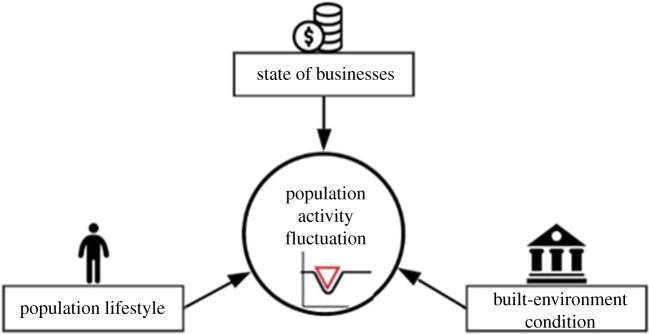
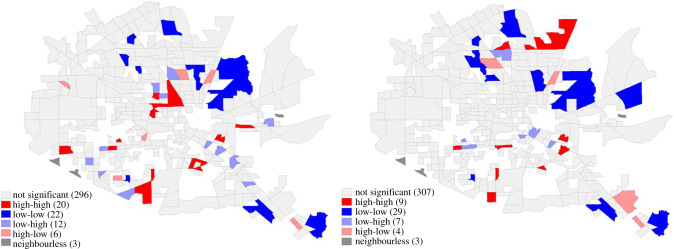
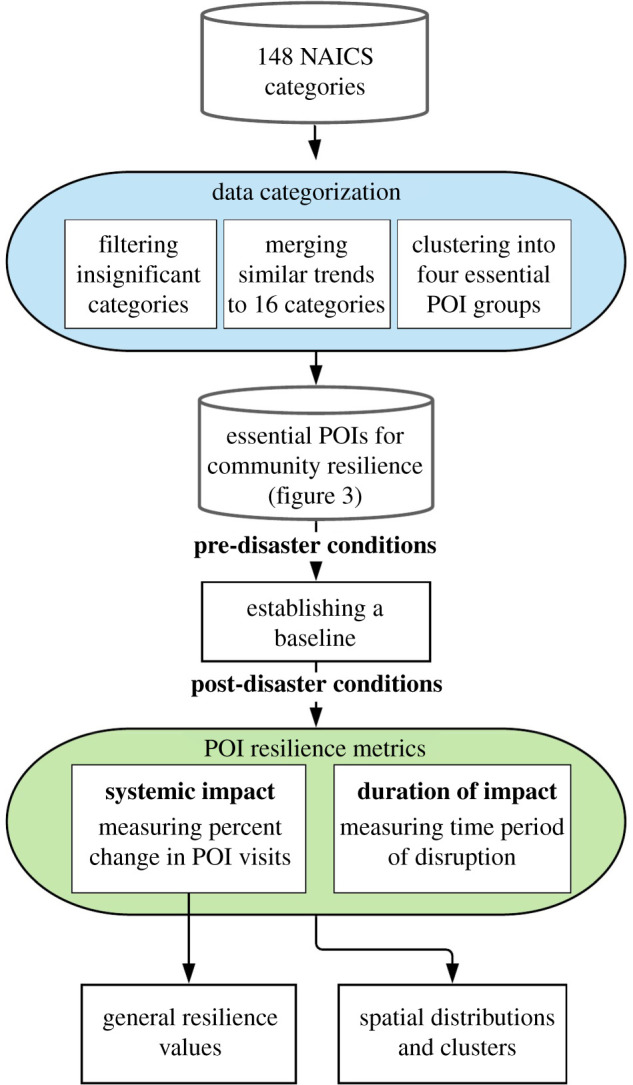
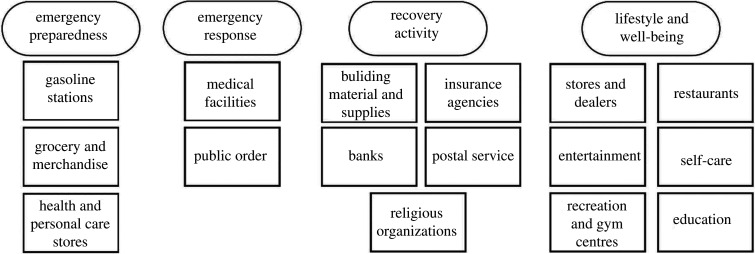
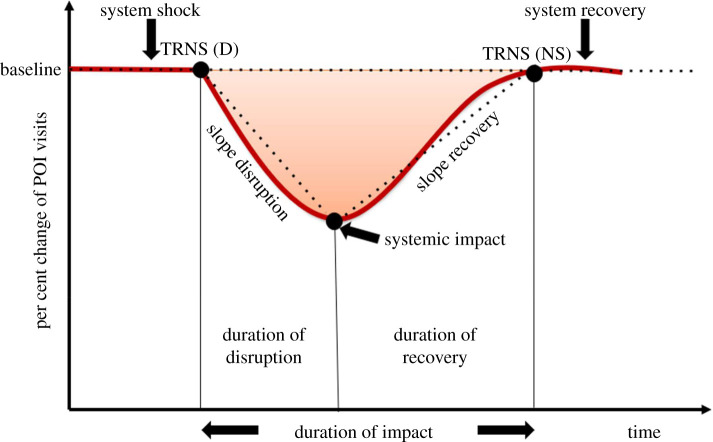
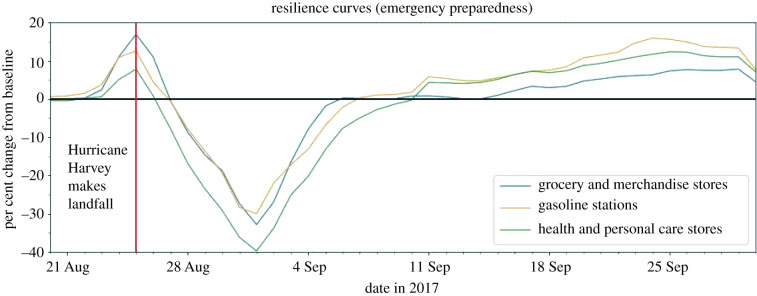
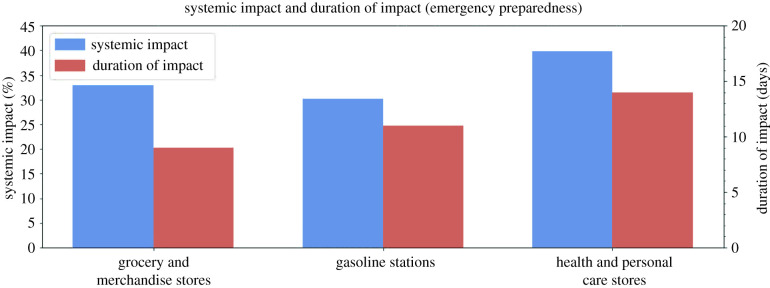
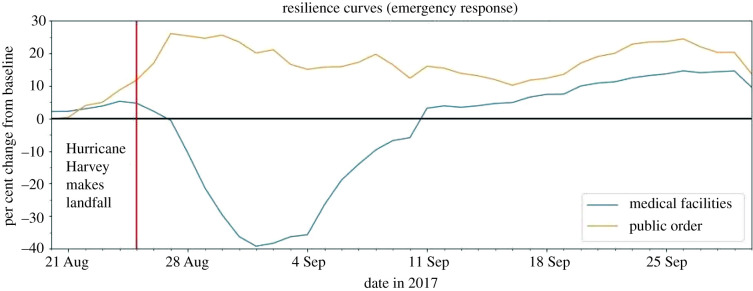
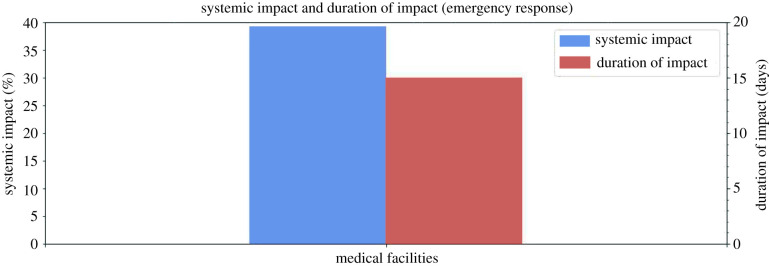
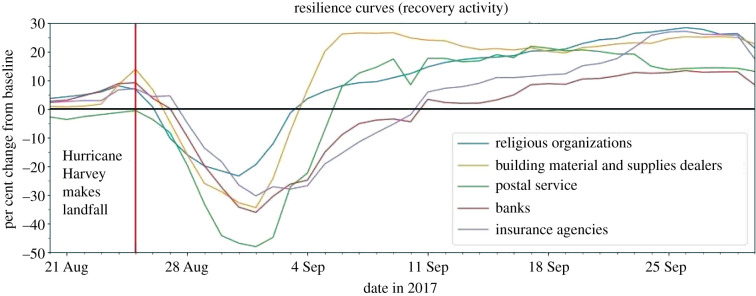
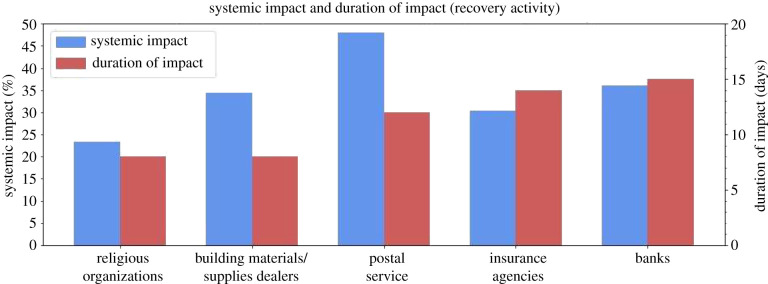
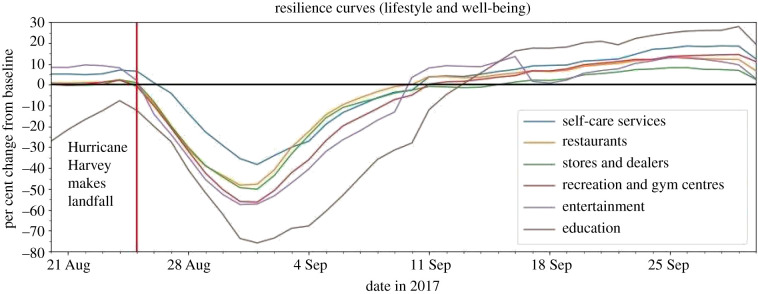
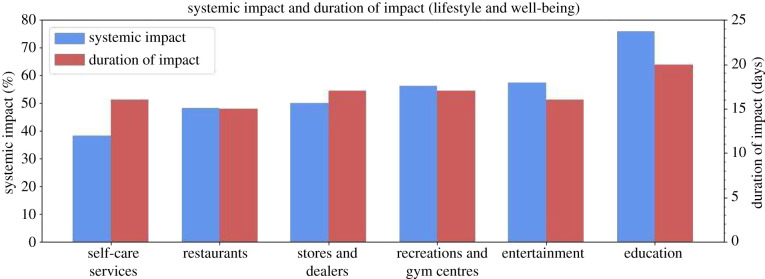
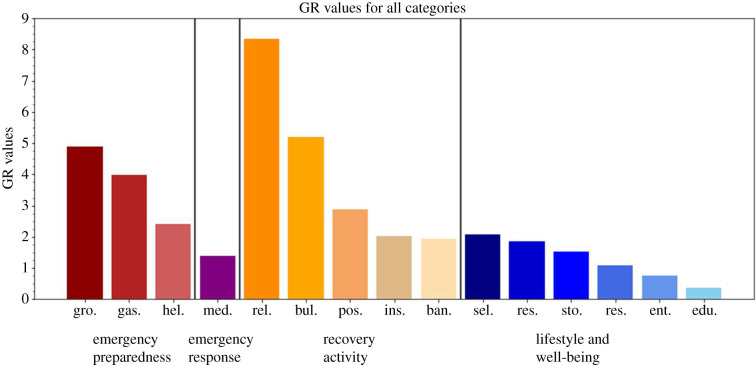
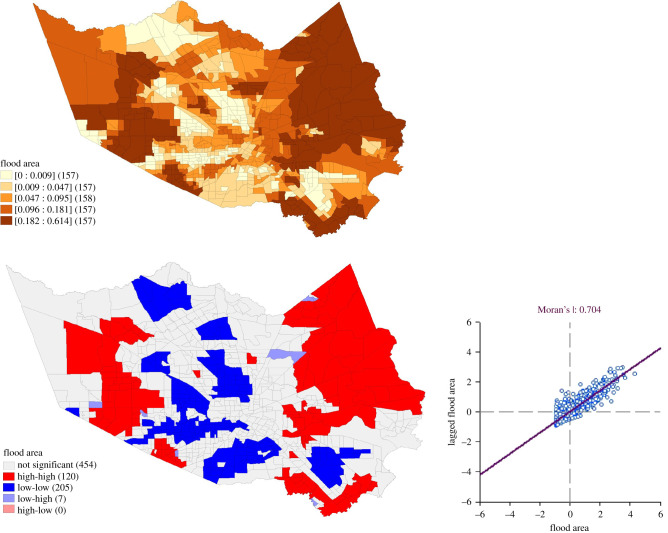
This research establishes a methodological framework for quantifying community resilience based on fluctuations in a population's activity during a natural disaster. Visits to points-of-interests (POIs) over time serve as a proxy for activities to capture the combined effects of perturbations in lifestyles, the built environment and the status of business. This study used digital trace data related to unique visits to POIs in the Houston metropolitan area during Hurricane Harvey in 2017. Resilience metrics in the form of systemic impact, duration of impact, and general resilience (GR) values were examined for the region along with their spatial distributions. The results show that certain categories, such as religious organizations and building material and supplies dealers had better resilience metrics-low systemic impact, short duration of impact, and high GR. Other categories such as medical facilities and entertainment had worse resilience metrics-high systemic impact, long duration of impact and low GR. Spatial analyses revealed that areas in the community with lower levels of resilience metrics also experienced extensive flooding. This insight demonstrates the validity of the approach proposed in this study for quantifying and analysing data for community resilience patterns using digital trace/location-intelligence data related to population activities. While this study focused on the Houston metropolitan area and only analysed one natural hazard, the same approach could be applied to other communities and disaster contexts. Such resilience metrics bring valuable insight into prioritizing resource allocation in the recovery process.
本研究基于自然灾害期间人口活动的波动,建立了量化社区弹性的方法框架。随着时间的推移,对兴趣点(POI)的访问可以作为活动的代理,以捕捉生活方式、建筑环境和商业状况变化的综合影响。本研究使用了与 2017 年休斯顿大都市区哈维飓风期间独特访问 POI 相关的数字跟踪数据。研究还检查了该地区的系统影响、影响持续时间和一般弹性(GR)值等弹性指标及其空间分布。结果表明,某些类别(如宗教组织和建筑材料及供应经销商)具有更好的弹性指标,即低系统影响、短影响持续时间和高 GR。其他类别,如医疗设施和娱乐设施,具有较差的弹性指标,即高系统影响、长影响持续时间和低 GR。空间分析表明,社区中弹性指标较低的区域也经历了广泛的洪水。这一见解证明了本研究提出的方法的有效性,该方法使用与人口活动相关的数字跟踪/位置智能数据来量化和分析社区弹性模式的数据。虽然本研究集中在休斯顿大都市区,并且只分析了一种自然灾害,但同样的方法可以应用于其他社区和灾害情况。这些弹性指标为资源在恢复过程中的分配提供了有价值的见解。