Department of Neurobiology and Acupuncture Research, Key Laboratory of Acupuncture and Neurology of Zhejiang Province, The Third Clinical Medical College, Zhejiang Chinese Medical University, Hangzhou, China.
Department of Acupuncture and Massage, Affiliated Hangzhou First People's Hospital, Zhejiang University School of Medicine, Hangzhou, China.
Mol Pain. 2021 Jan-Dec;17:17448069211011315. doi: 10.1177/17448069211011315.
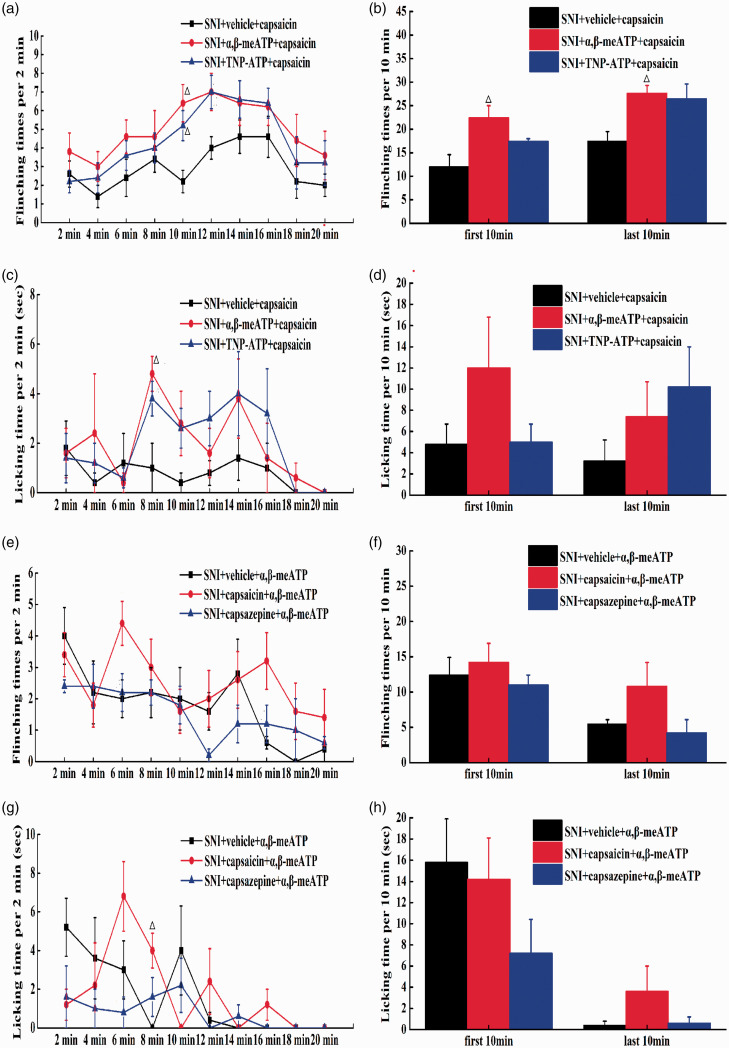
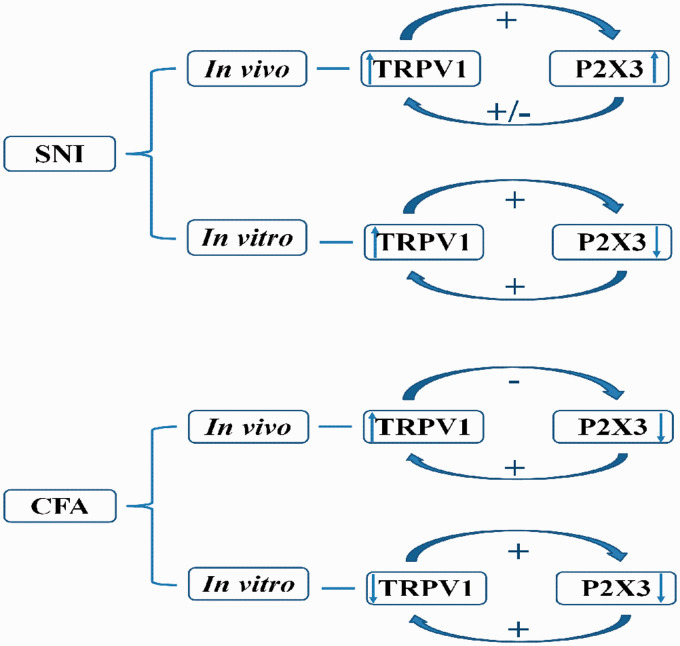
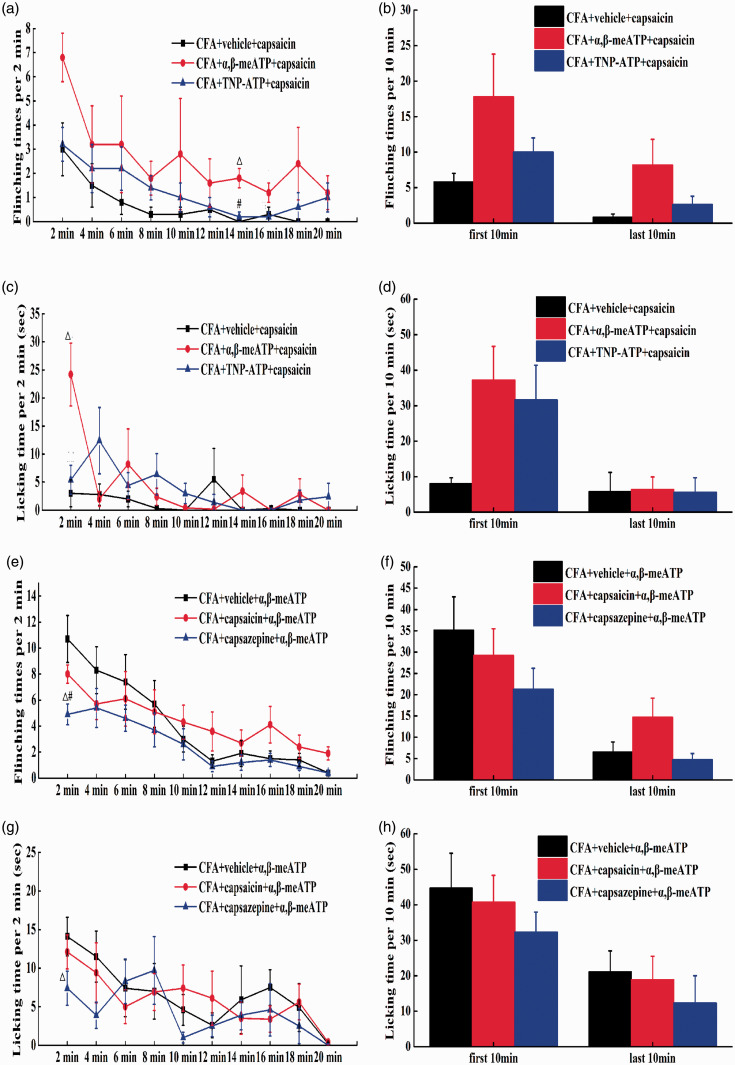
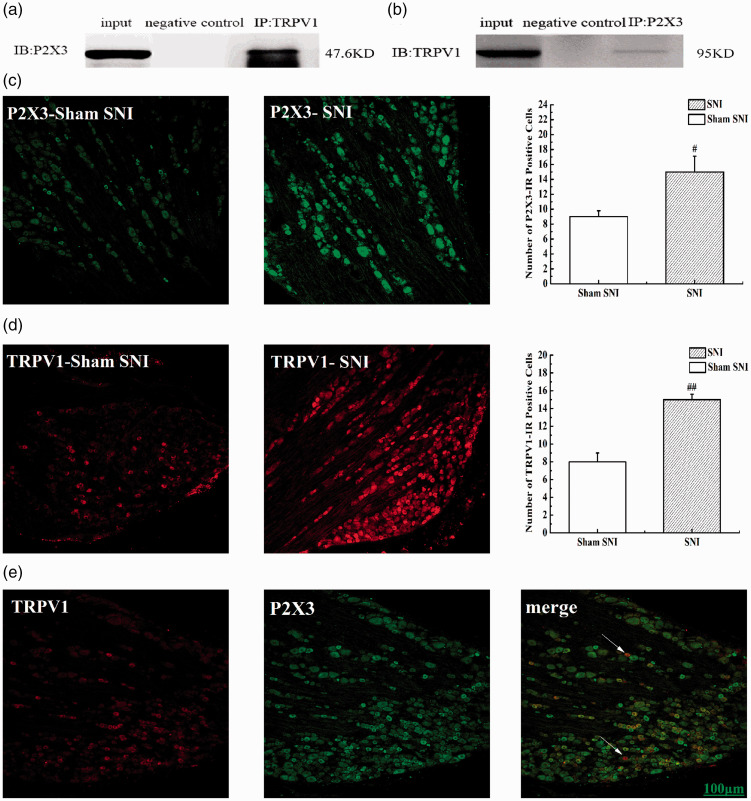
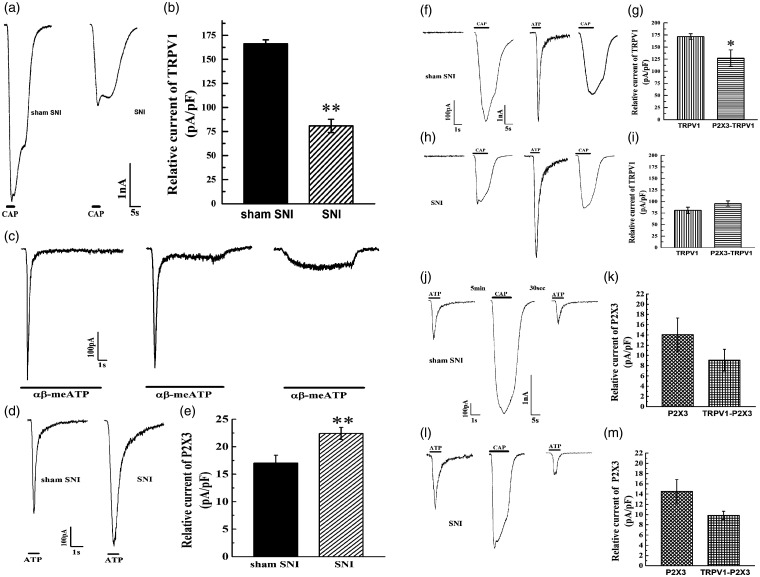
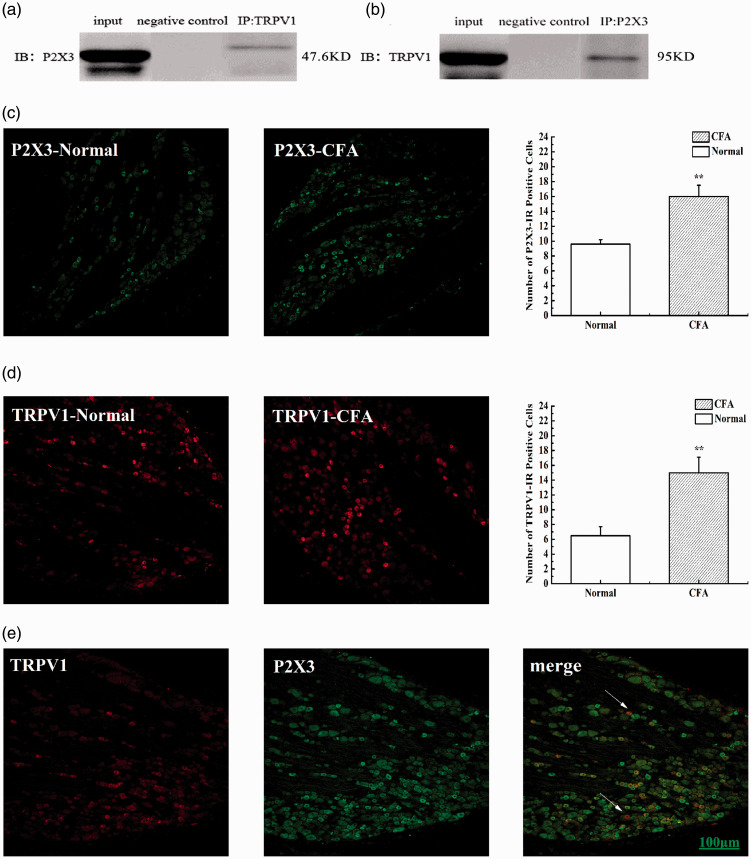
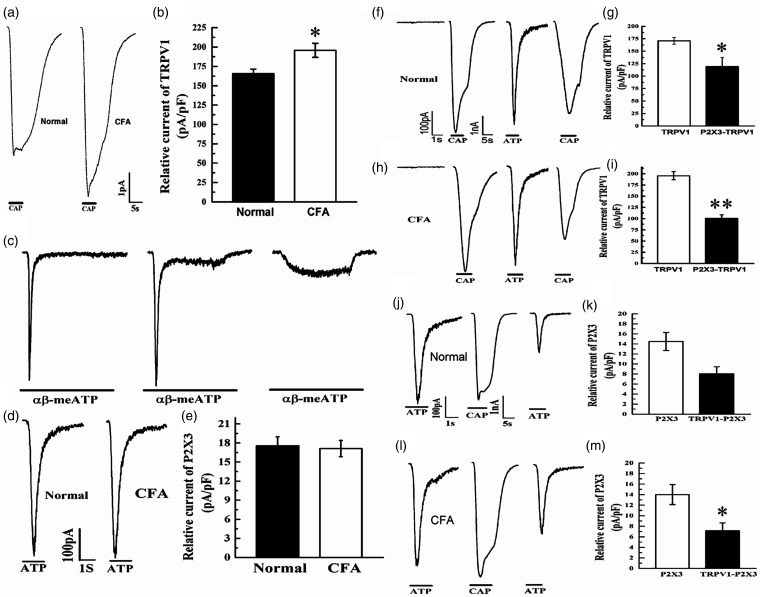
Peripheral inflammatory and neuropathic pain are closely related to the activation of purinergic receptor P2X ligand-gated ion channel 3 (P2X3) and transient receptor potential vanilloid 1 (TRPV1), but the interaction between P2X3 and TRPV1 in different types of pathological pain has rarely been reported. In this study, complete Freund's adjuvant (CFA)-induced inflammatory pain and spared nerve injury (SNI)-induced neuropathic pain models were established in adult rats. The interactions between P2X3 and TRPV1 in the dorsal root ganglion were observed by pharmacological, co-immunoprecipitation, immunofluorescence and whole-cell patch-clamp recording assays. TRPV1 was shown to promote the induction of spontaneous pain caused by P2X3 in the SNI model, but the induction of spontaneous pain behaviour by TRPV1 was not completely dependent on P2X3 . In both the CFA and SNI models, the activation of peripheral P2X3 enhanced the effect of TRPV1 on spontaneous pain, while the inhibition of peripheral TRPV1 reduced the induction of spontaneous pain by P2X3 in the CFA model. TRPV1 and P2X3 had inhibitory effects on each other in the inflammatory pain model. During neuropathic pain, P2X3 facilitated the function of TRPV1, while TRPV1 had an inhibitory effect on P2X3. These results suggest that the mutual effects of P2X3 and TRPV1 differ in cases of inflammatory and neuropathic pain in rats.
周围炎性疼痛和神经性疼痛与嘌呤能受体 P2X 配体门控离子通道 3 (P2X3) 和瞬时受体电位香草醛 1 (TRPV1) 的激活密切相关,但 P2X3 和 TRPV1 在不同类型病理性疼痛中的相互作用鲜有报道。本研究建立了成年大鼠完全弗氏佐剂 (CFA) 诱导的炎性疼痛和 spared 神经损伤 (SNI) 诱导的神经性疼痛模型。通过药理学、共免疫沉淀、免疫荧光和全细胞膜片钳记录检测,观察背根神经节中 P2X3 和 TRPV1 之间的相互作用。结果显示,TRPV1 促进 SNI 模型中 P2X3 引起的自发性疼痛的诱导,但 TRPV1 引起的自发性疼痛行为不完全依赖于 P2X3。在 CFA 和 SNI 模型中,外周 P2X3 的激活增强了 TRPV1 对自发性疼痛的作用,而外周 TRPV1 的抑制降低了 CFA 模型中 P2X3 引起的自发性疼痛的诱导。TRPV1 和 P2X3 在炎性疼痛模型中相互抑制。在神经性疼痛期间,P2X3 促进 TRPV1 的功能,而 TRPV1 对 P2X3 有抑制作用。这些结果表明,在大鼠炎性和神经性疼痛中,P2X3 和 TRPV1 的相互作用不同。