
糖皮质激素在治疗新冠病毒肺炎和癌症方面是把双刃剑。
Glucocorticoids are double-edged sword in the treatment of COVID-19 and cancers.
作者信息
Yang Ruixin, Yu Yingyan
机构信息
Department of General Surgery of Ruijin Hospital, Shanghai Institute of Digestive Surgery, and Shanghai Key Laboratory for Gastric Neoplasms, Shanghai Jiao Tong University School of Medicine, 200025, Shanghai, China.
出版信息
Int J Biol Sci. 2021 Apr 10;17(6):1530-1537. doi: 10.7150/ijbs.58695. eCollection 2021.
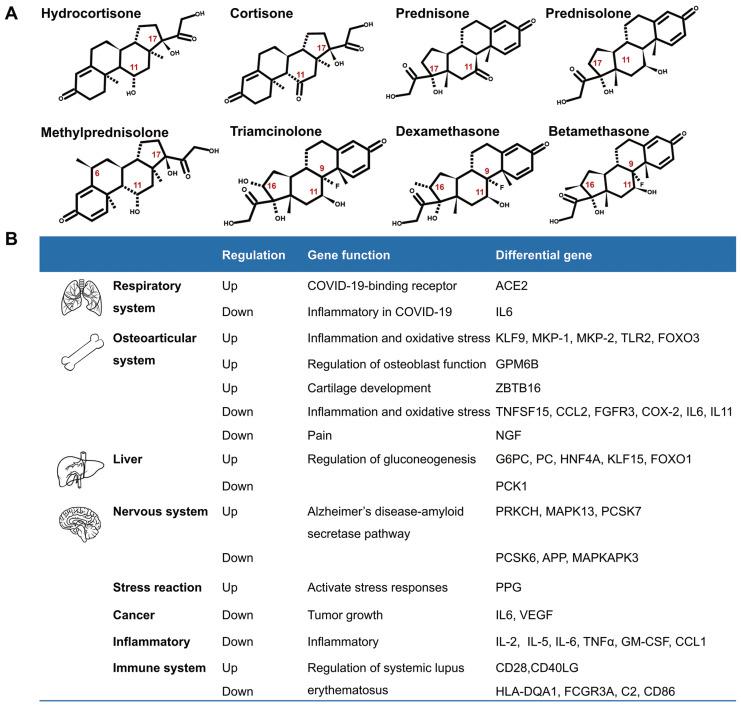
Glucocorticoids are important steroid hormones. As an outstanding scientific discovery, the scientist who discovered glucocorticoids was awarded the Nobel Prize in Physiology and Medicine in 1950. Cortisone (hydrocortisone) is a natural glucocorticoid, which is secreted with circadian rhythm by the cortical cells of adrenal glands. Physiologically, about 10-20 mg of hydrocortisone are secreted each day for maintaining homeostasis. Since the biological half-life of natural glucocorticoid is short, scientists developed various synthetic glucocorticoids including prednisone, prednisolone, methylprednisolone, triamcinolone, dexamethasone, betamethasone, and so on. These synthetic glucocorticoids are generated by modifying some structures based on the cortisone backbone, leading to extension of their biological half-life with stronger activities. In the face of severe infection, allergy, shock, trauma, pain, and other stresses, the demand for glucocorticoids increases dramatically. It is critical to supplement extra glucocorticoids to protect the biological functions of vital organs. However, the amount and duration of glucocorticoid administration need to be carefully adjusted, because a series of side effects may occur after long-term or high-dose usage of glucocorticoids. This review article will discuss the application of glucocorticoids in the treatment of patients with severe or critical COVID-19 and solid tumors of advanced stage. The controversy of using glucocorticoid in medical community will also be discussed. This review article will help doctors and basic researchers better understand the practical application of glucocorticoids.
糖皮质激素是重要的甾体激素。作为一项杰出的科学发现,发现糖皮质激素的科学家于1950年被授予诺贝尔生理学和医学奖。可的松(氢化可的松)是一种天然糖皮质激素,由肾上腺皮质细胞按昼夜节律分泌。生理情况下,每天分泌约10 - 20毫克氢化可的松以维持体内稳态。由于天然糖皮质激素的生物半衰期较短,科学家们开发了多种合成糖皮质激素,包括泼尼松、泼尼松龙、甲泼尼龙、曲安奈德、地塞米松、倍他米松等。这些合成糖皮质激素是在可的松骨架的基础上通过修饰一些结构而产生的,从而延长了它们的生物半衰期并具有更强的活性。面对严重感染、过敏、休克、创伤、疼痛等应激情况时,对糖皮质激素的需求会急剧增加。补充额外的糖皮质激素以保护重要器官的生物学功能至关重要。然而,糖皮质激素的给药剂量和持续时间需要仔细调整,因为长期或大剂量使用糖皮质激素后可能会出现一系列副作用。这篇综述文章将讨论糖皮质激素在治疗重症或危重症新型冠状病毒肺炎患者以及晚期实体瘤中的应用。还将讨论医学界使用糖皮质激素的争议。这篇综述文章将帮助医生和基础研究人员更好地理解糖皮质激素的实际应用。
 Zotero 插件