El-Fatyany Aya, Wang Hongzhi, Abd El-Atty Saied M
School of Computer Science and Technology, Harbin Institute of Technology (HIT), Harbin, China.
Department of Mathematics, Faculty of Science, Menoufia University, Shebin El‑Kom, Egypt.
Arab J Sci Eng. 2021;46(10):9965-9980. doi: 10.1007/s13369-021-05651-2. Epub 2021 Apr 22.
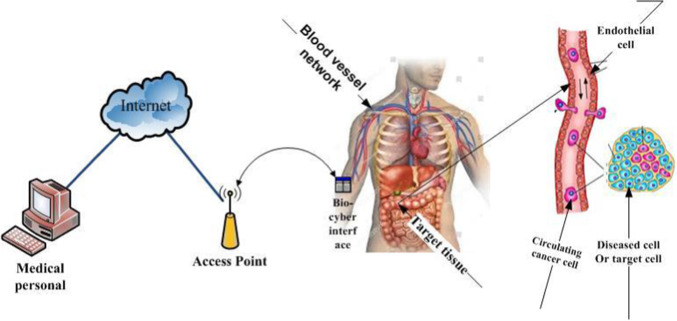
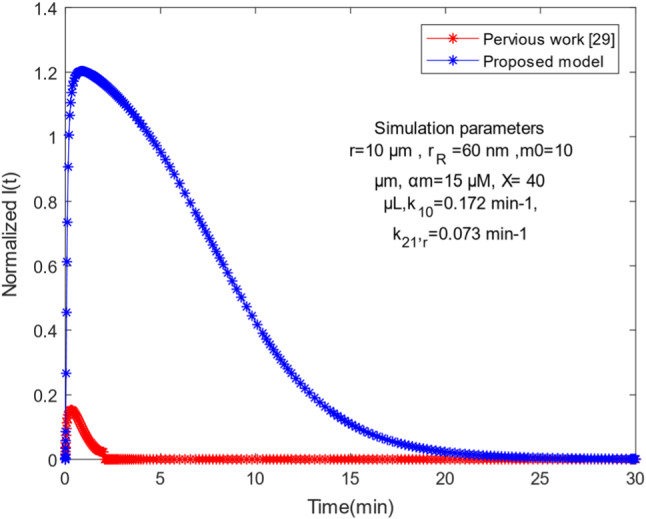
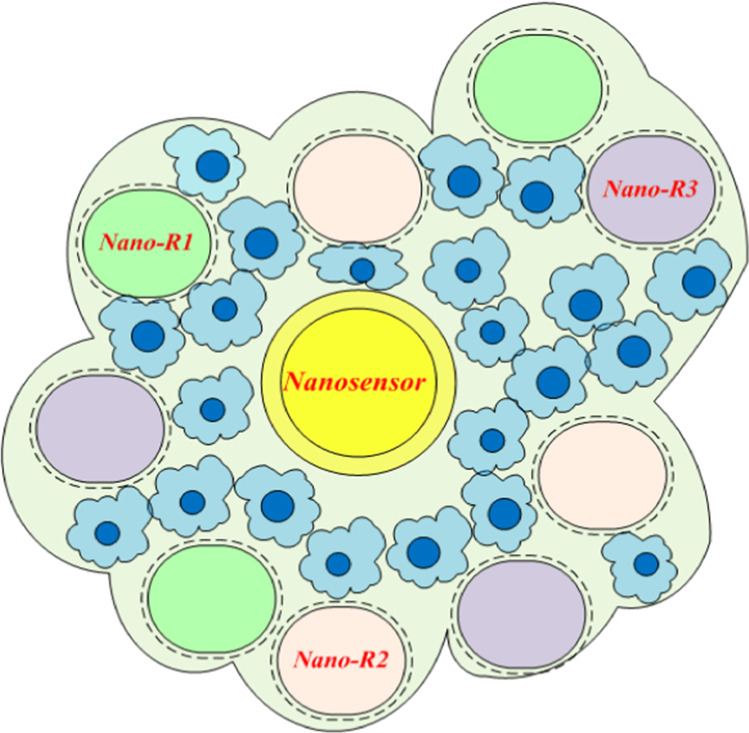
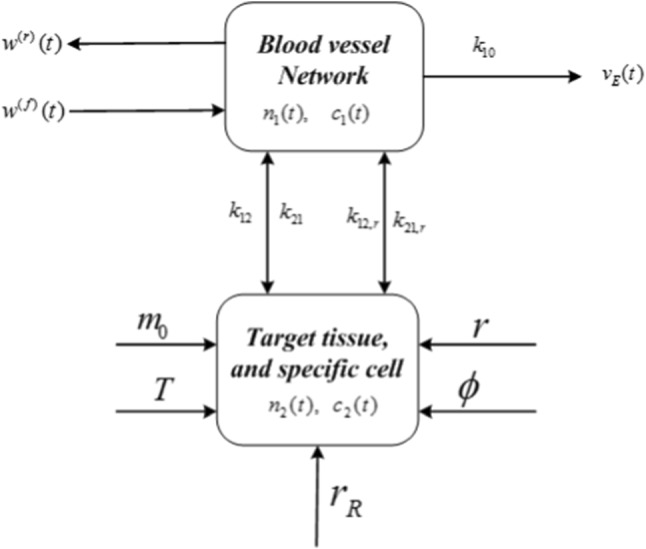
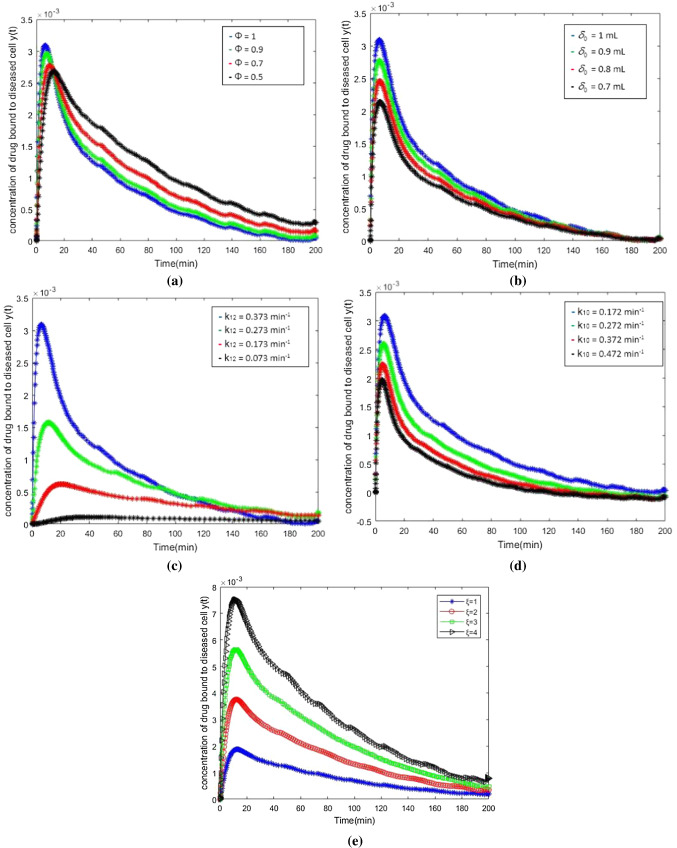
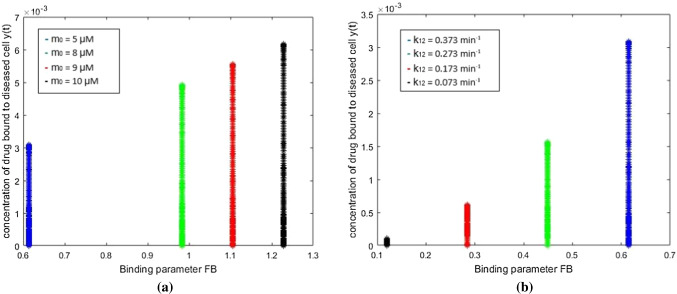
The Internet of Bio-NanoThings (IoBNTs) is a novel paradigm that derives from synthetic biology and advances in nanotechnology for controlling the embedded nanodevices in various medical applications. However, numerous studies have focused on communication efficiency among the nanodevices in a given network, the challenges such as the design and the development of the nanodevices, and the coordination of molecular communication within the wireless body area network (BAN), and the interface connection between the BAN and the Internet are yet to be addressed. Therefore, in this study, we present a framework analysis comprising of the compartmental model, for studying the effects and variances in drug concentration that occur inside intra-body nanonetworks through IoBNT, while taking into account the properties of target cells as well as the ligand-receptor binding mechanism. A performance analysis of the proposed framework for the forward link (i.e., from the Internet to the intra-body nanonetwork) and reverse link (i.e., from the intra-body nanonetwork to the Internet) is presented. The simulation results of the developed framework reveal its ability to enhance the delivery of therapeutic drugs to the target cell while minimizing the side effects in healthy cells.
生物纳米物联网(IoBNTs)是一种源自合成生物学和纳米技术进步的新型范式,用于在各种医学应用中控制嵌入式纳米设备。然而,众多研究集中在给定网络中纳米设备之间的通信效率、纳米设备的设计与开发等挑战、无线体域网(BAN)内分子通信的协调,而BAN与互联网之间的接口连接仍有待解决。因此,在本研究中,我们提出了一个由隔室模型组成的框架分析,用于研究通过IoBNT在体内纳米网络中发生的药物浓度的影响和变化,同时考虑靶细胞的特性以及配体-受体结合机制。对所提出的前向链路(即从互联网到体内纳米网络)和反向链路(即从体内纳米网络到互联网)框架进行了性能分析。所开发框架的仿真结果表明,它能够在将治疗药物递送至靶细胞的同时,将对健康细胞的副作用降至最低。