Department of Neuroscience, The Scripps Research Institute, 10550 N. Torrey Pines Rd., La Jolla, CA, 92037, USA.
Department of Psychiatry, University of California, San Diego School of Medicine, San Diego, CA,, 92093, USA.
Psychopharmacology (Berl). 2021 Aug;238(8):2201-2211. doi: 10.1007/s00213-021-05845-4. Epub 2021 Apr 28.
Cannabidiol (CBD) reduces craving in animal models of alcohol and cocaine use and is known to modulate nicotinic receptor function, suggesting that it may alleviate symptoms of nicotine withdrawal. However, preclinical evaluation of its efficacy is still lacking.
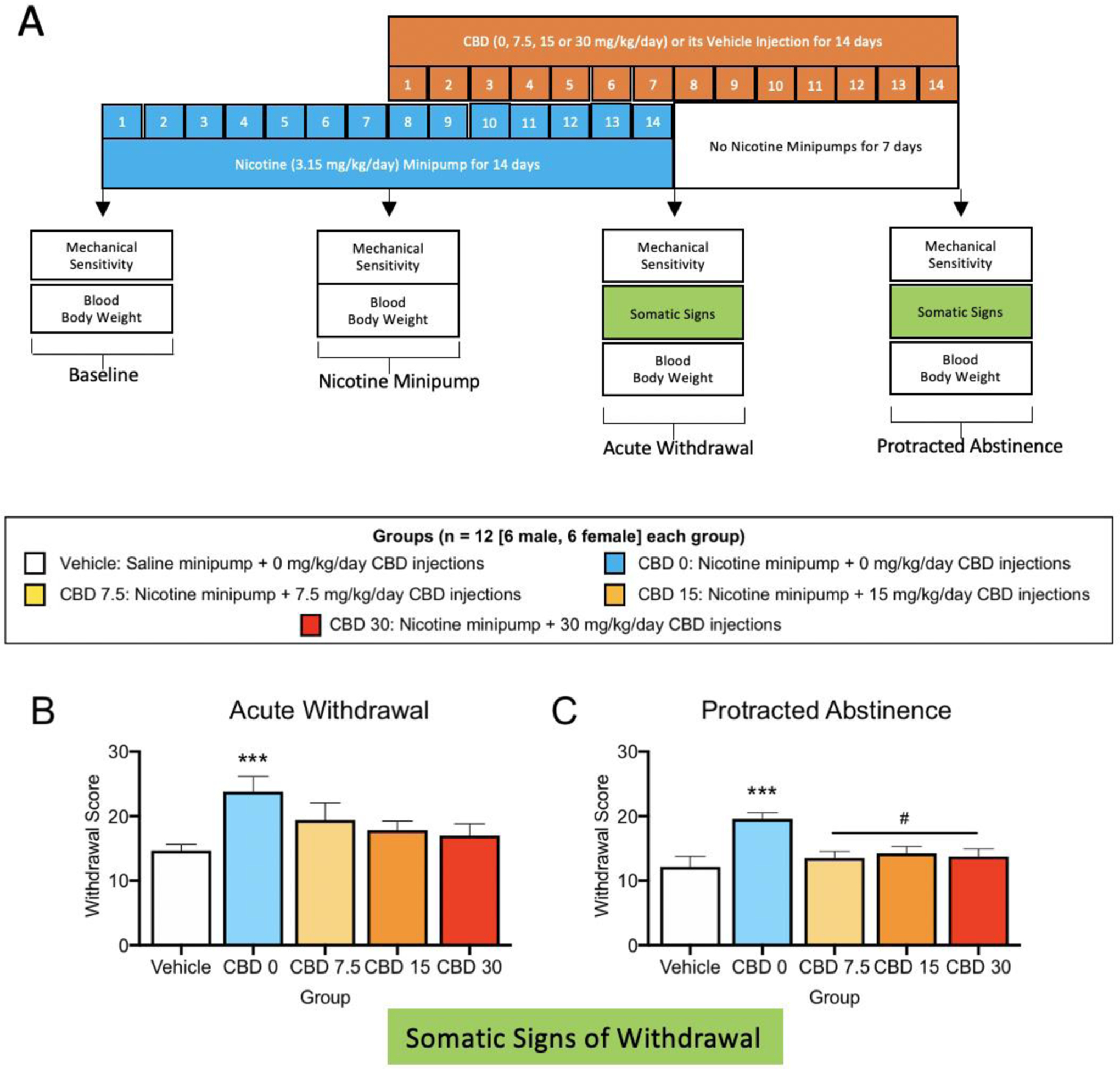
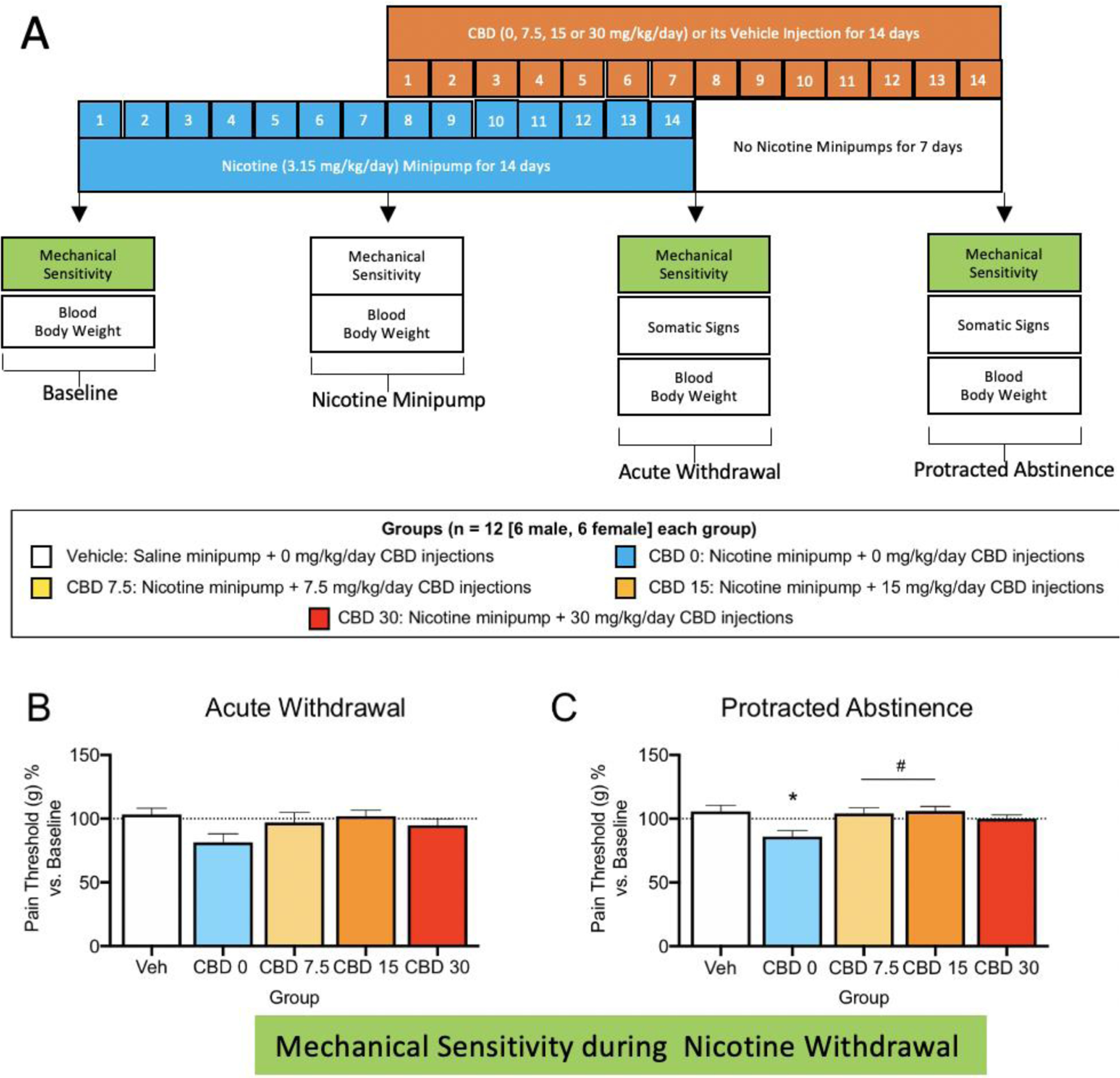
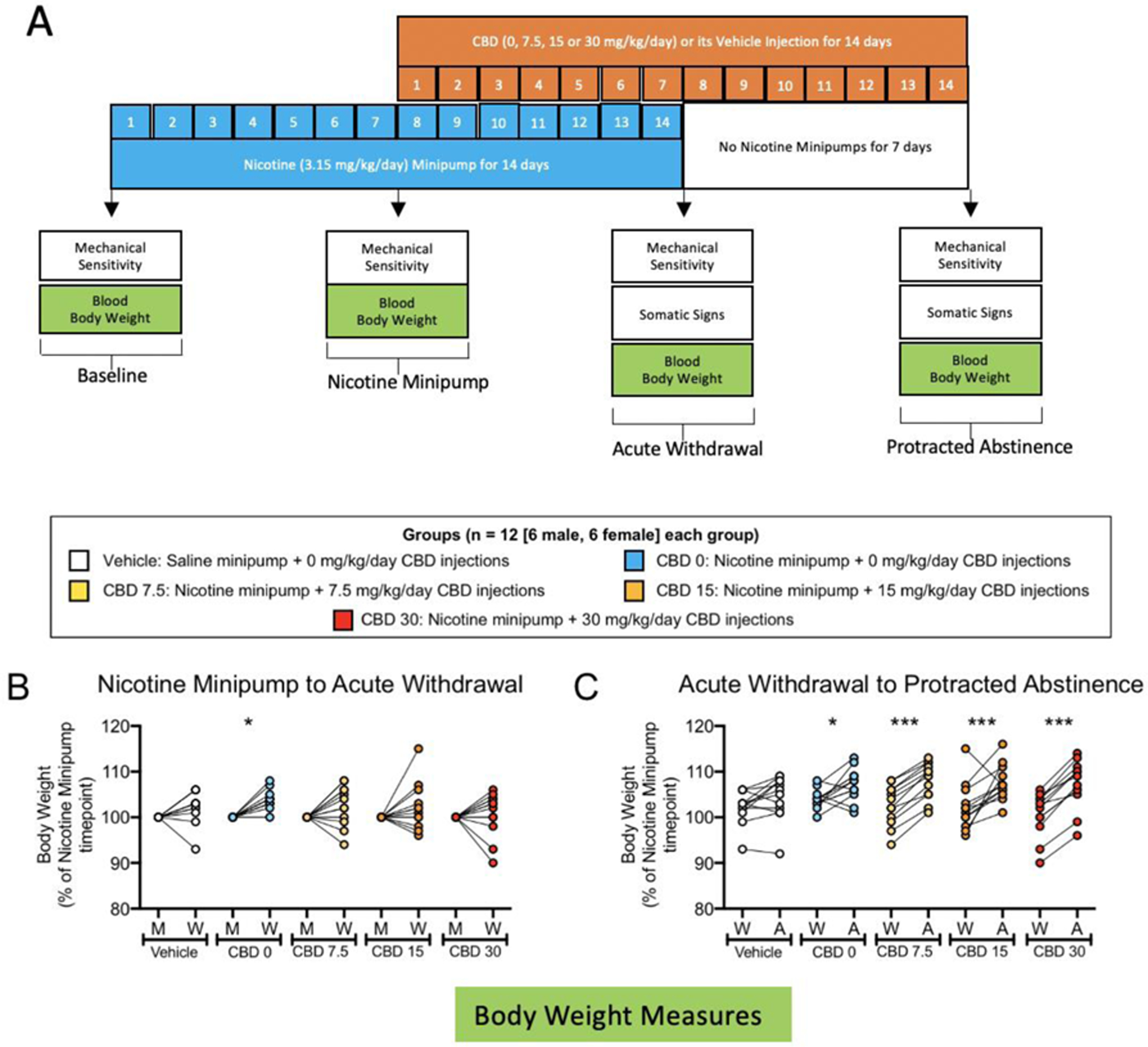
The goal of this study was to test the preclinical efficacy of a chronic CBD treatment in reducing nicotine dependence using measures of withdrawal symptoms including somatic signs, hyperalgesia, and weight gain during acute and protracted abstinence.
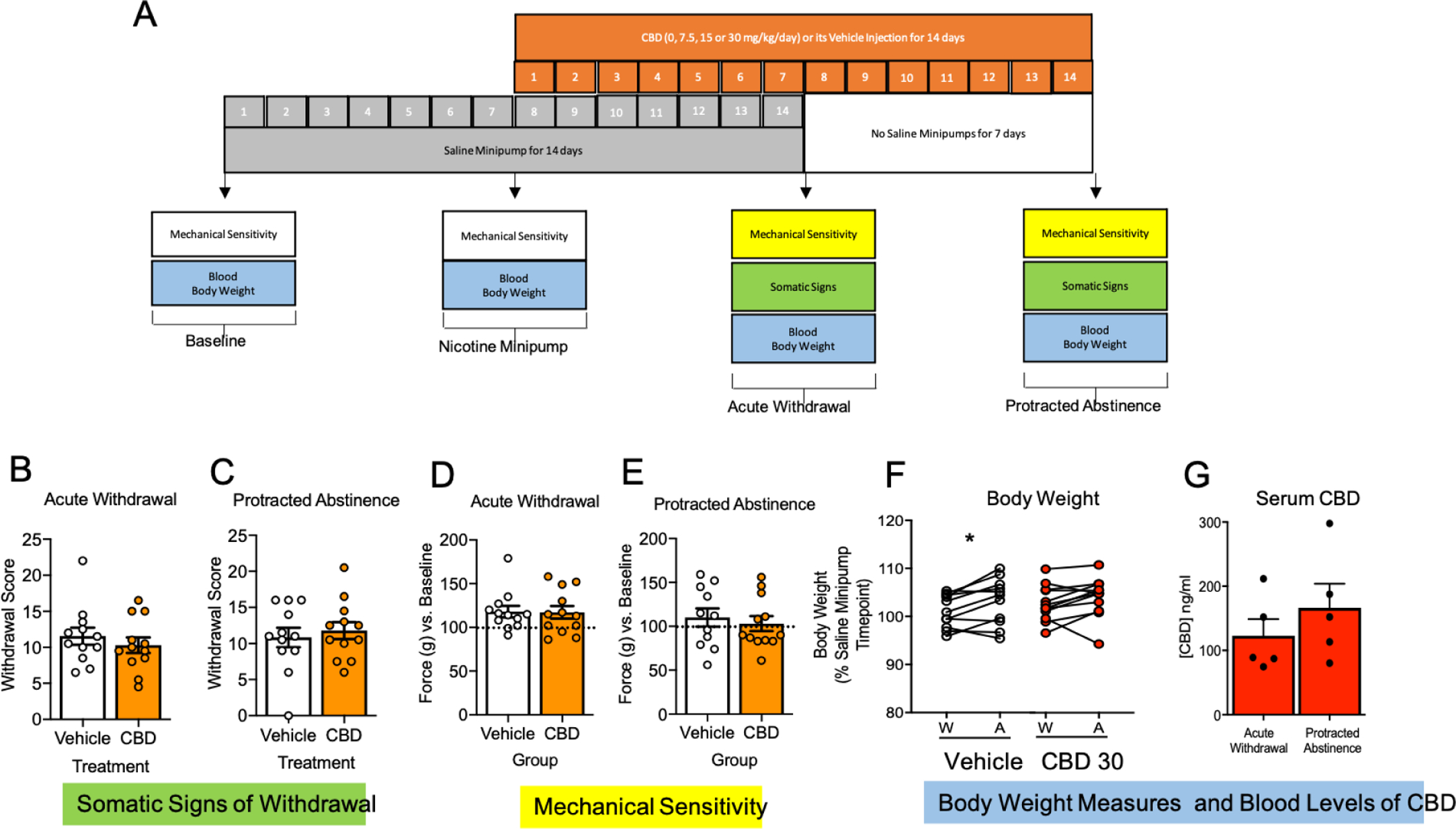
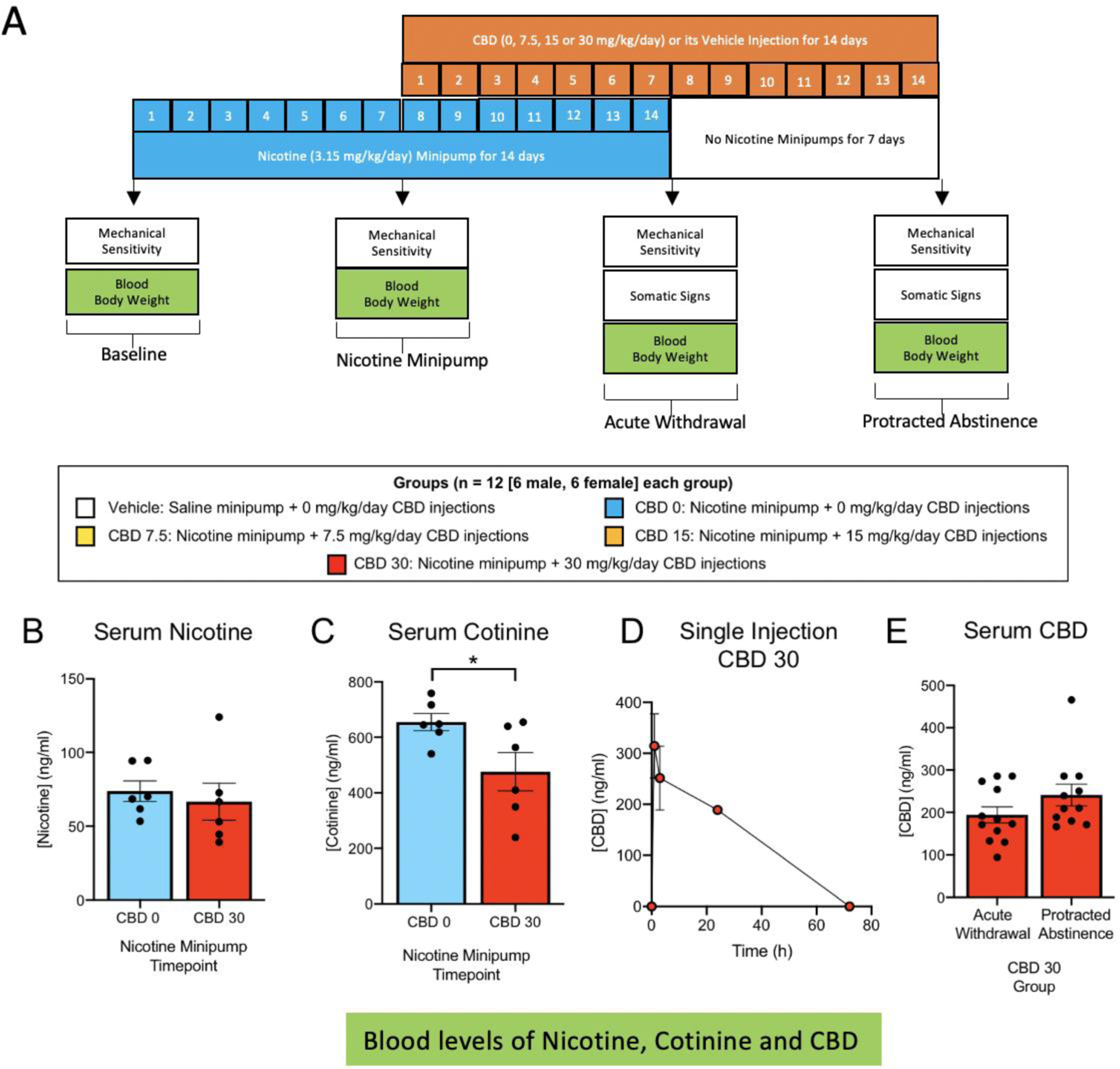
Male and female Wistar rats were made dependent on nicotine using osmotic minipumps (3.15 mg/kg/day) for 2 weeks, after which minipumps were removed to induce spontaneous withdrawal. Three groups received CBD injections at doses of 7.5, 15, and 30 mg/kg/day for 2 weeks, starting 1 week into chronic nicotine infusion. The control groups included rats with nicotine minipumps that received vehicle injections of sesame oil instead of CBD; rats implanted with saline minipumps received sesame oil injections (double vehicle) or the highest dose of CBD 30 mg/kg/day. Throughout the experiment, serum was collected for determination of CBD and nicotine concentrations, mechanical sensitivity threshold and withdrawal scores were measured, and body weight was recorded.
CBD prevented rats from exhibiting somatic signs of withdrawal and hyperalgesia during acute and protracted abstinence. There was no dose-response observed for CBD, suggesting a ceiling effect at the doses used and the potential for lower effective doses of CBD. The saline minipump group did not show either somatic signs of withdrawal or hyperalgesia during acute and protracted abstinence, and the highest dose of CBD used (30 mg/kg/day) did not alter these results.
This preclinical study suggests that using CBD as a strategy to alleviate the withdrawal symptoms upon nicotine cessation may be beneficial.
大麻二酚(CBD)可减少酒精和可卡因使用动物模型中的觅药行为,且已知其可调节烟碱型乙酰胆碱受体功能,提示 CBD 可能缓解尼古丁戒断症状。然而,其临床前疗效评估仍存在不足。
本研究旨在通过评估急性和慢性戒断期间戒断症状(包括躯体症状、痛觉过敏和体重减轻),测试 CBD 慢性治疗减轻尼古丁依赖的临床前疗效。
雄性和雌性 Wistar 大鼠通过渗透微型泵(3.15mg/kg/天)连续给药 2 周以产生尼古丁依赖,随后去除微型泵以诱导自发性戒断。3 组大鼠在慢性尼古丁输注开始后 1 周,分别接受 7.5、15 和 30mg/kg/天的 CBD 注射,共 2 周。对照组包括接受 CBD 替代物芝麻油注射的尼古丁微型泵大鼠(双载体)、接受盐水微型泵的大鼠(盐水载体)和接受最高剂量 CBD(30mg/kg/天)的大鼠。在整个实验过程中,采集血清以测定 CBD 和尼古丁浓度,测量机械敏感性阈值和戒断评分,并记录体重。
CBD 预防了大鼠在急性和慢性戒断期间出现躯体戒断症状和痛觉过敏。CBD 无剂量反应,提示在使用的剂量下可能存在天花板效应和 CBD 较低有效剂量的可能性。盐水微型泵组在急性和慢性戒断期间既未出现躯体戒断症状,也未出现痛觉过敏,而使用的最高剂量 CBD(30mg/kg/天)也未改变这些结果。
这项临床前研究提示,使用 CBD 作为减轻尼古丁戒断后戒断症状的策略可能是有益的。