University of Oxford, Department of Zoology, Oxford, UK.
Laboratory of Medical Microbiology, Vaccine and Infectious Disease Institute, University of Antwerp, Wilrijk, Belgium.
Nat Commun. 2021 Apr 28;12(1):2460. doi: 10.1038/s41467-021-22814-9.
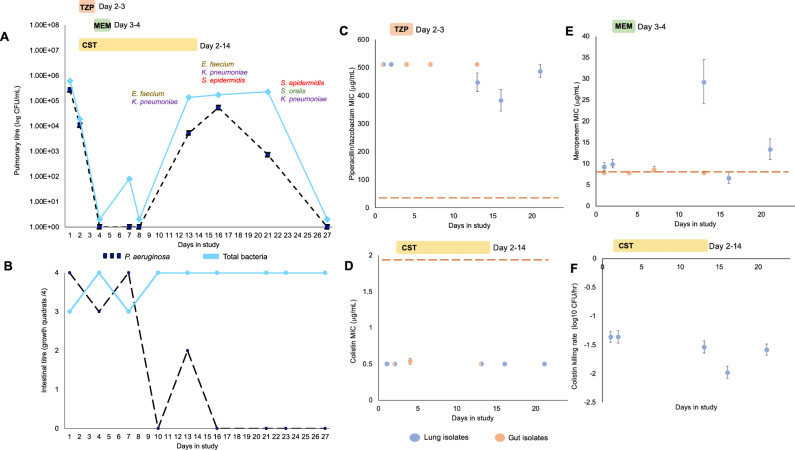
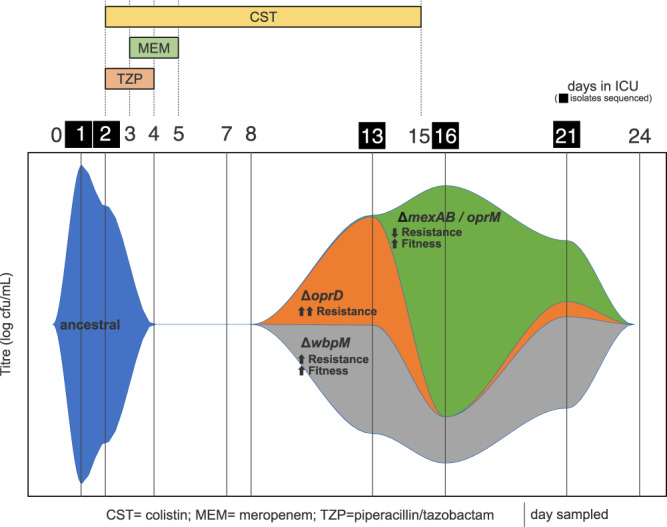
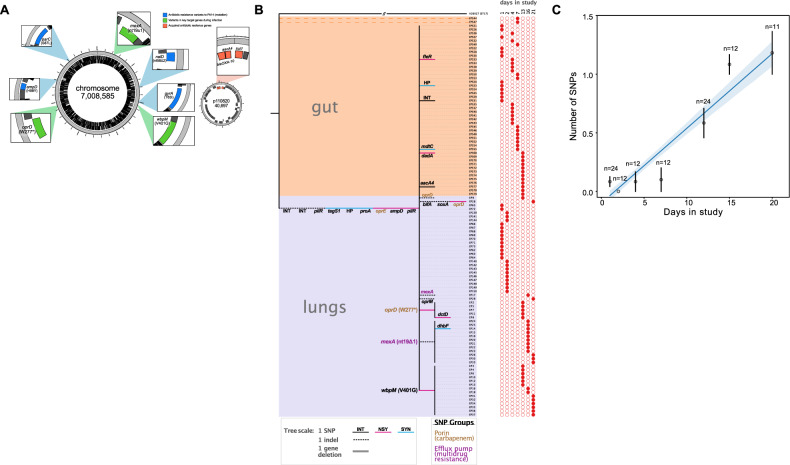
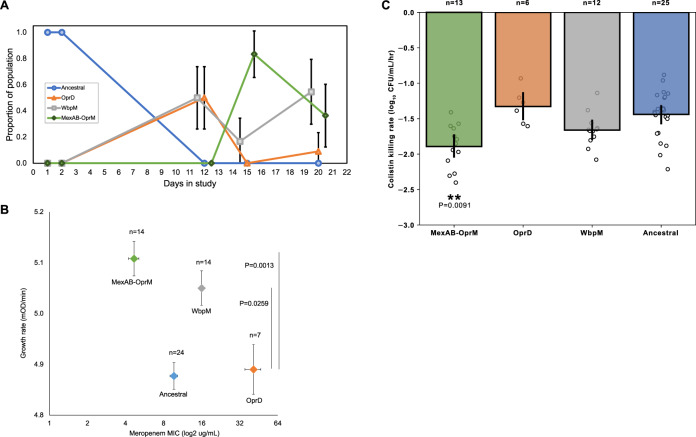
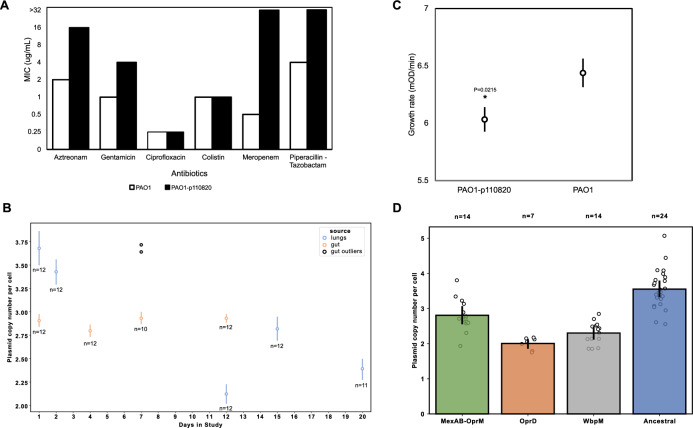
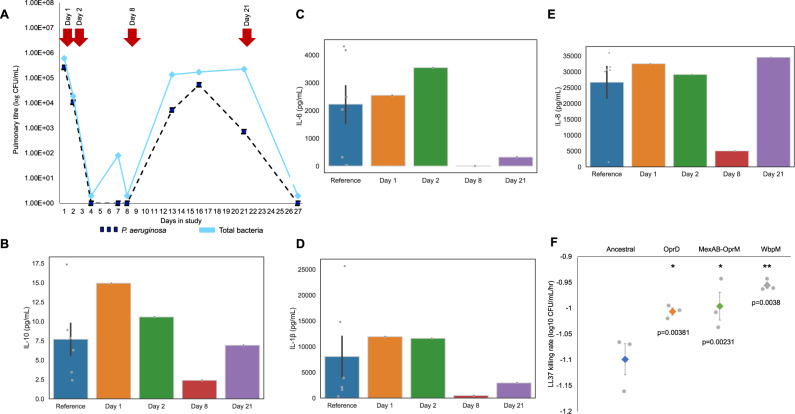
It is well established that antibiotic treatment selects for resistance, but the dynamics of this process during infections are poorly understood. Here we map the responses of Pseudomonas aeruginosa to treatment in high definition during a lung infection of a single ICU patient. Host immunity and antibiotic therapy with meropenem suppressed P. aeruginosa, but a second wave of infection emerged due to the growth of oprD and wbpM meropenem resistant mutants that evolved in situ. Selection then led to a loss of resistance by decreasing the prevalence of low fitness oprD mutants, increasing the frequency of high fitness mutants lacking the MexAB-OprM efflux pump, and decreasing the copy number of a multidrug resistance plasmid. Ultimately, host immunity suppressed wbpM mutants with high meropenem resistance and fitness. Our study highlights how natural selection and host immunity interact to drive both the rapid rise, and fall, of resistance during infection.
众所周知,抗生素治疗会选择出耐药性,但人们对感染过程中这一过程的动态了解甚少。在这里,我们在一名 ICU 患者的肺部感染期间,以高清晰度绘制了铜绿假单胞菌对治疗的反应。宿主免疫和用美罗培南进行的抗生素治疗抑制了铜绿假单胞菌,但由于在原位进化出了 oprD 和 wbpM 美罗培南耐药突变体,第二次感染浪潮出现了。选择导致耐药性的丧失,方法是降低低适应性 oprD 突变体的流行率,增加缺乏 MexAB-OprM 外排泵的高适应性突变体的频率,并降低多药耐药质粒的拷贝数。最终,宿主免疫抑制了具有高美罗培南耐药性和适应性的 wbpM 突变体。我们的研究强调了自然选择和宿主免疫如何相互作用,在感染过程中推动耐药性的迅速上升和下降。