Department of Immunology, Duke University Medical Center, Durham, NC, United States.
Suzhou Institute of Systems Medicine, Chinese Academy of Medical Sciences, Suzhou, China.
Front Immunol. 2021 Apr 12;12:656817. doi: 10.3389/fimmu.2021.656817. eCollection 2021.
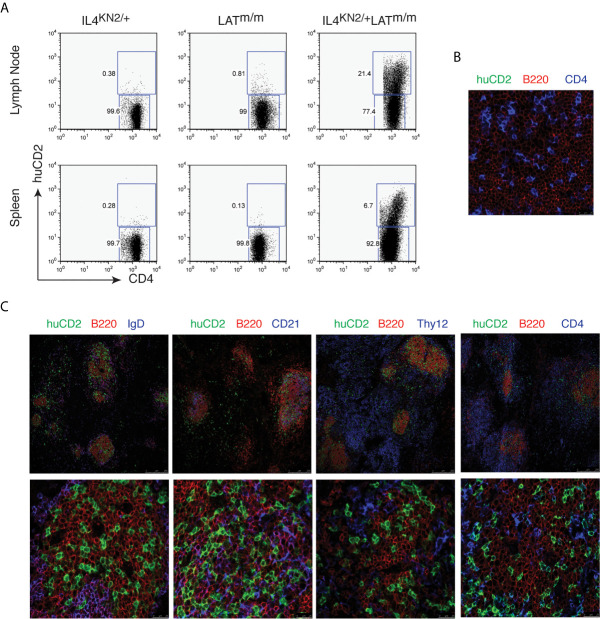
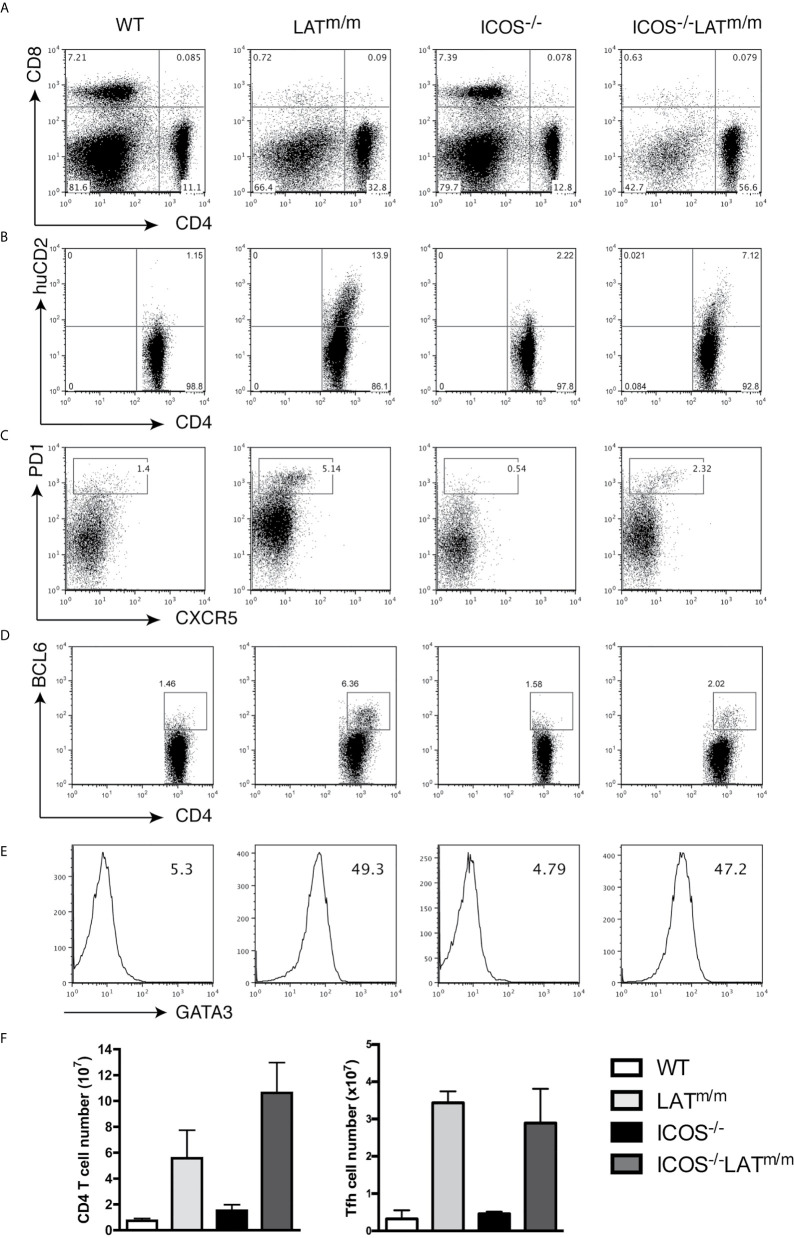
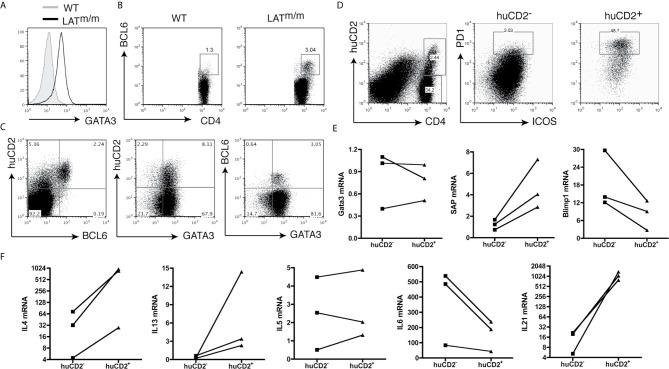
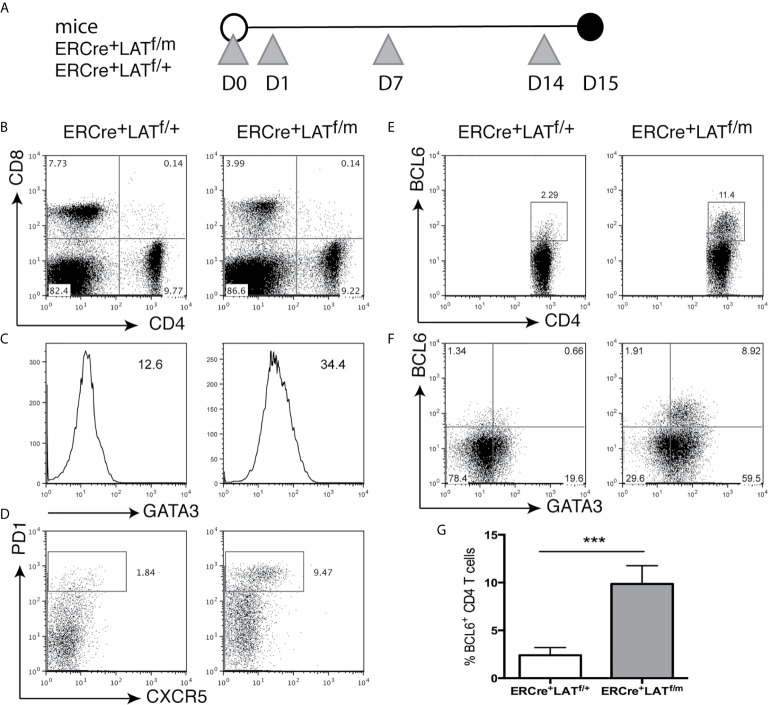
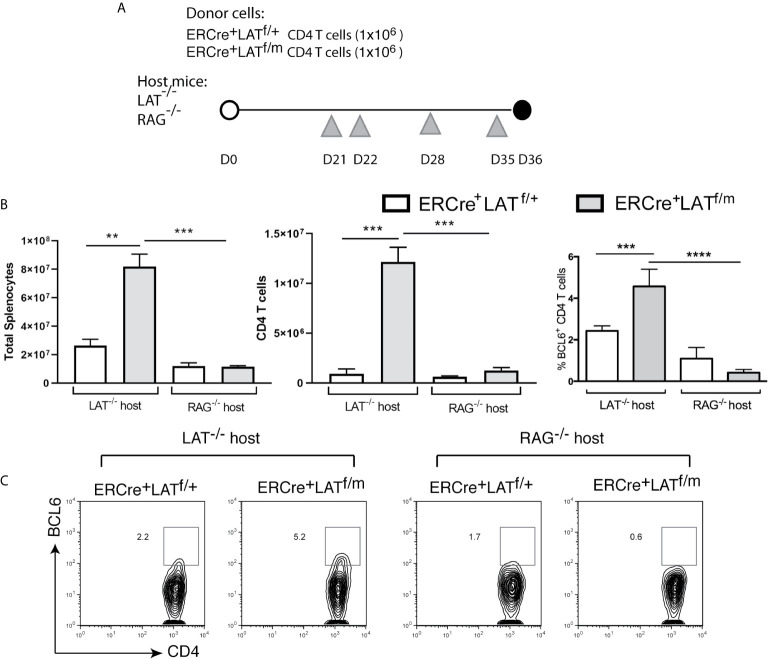
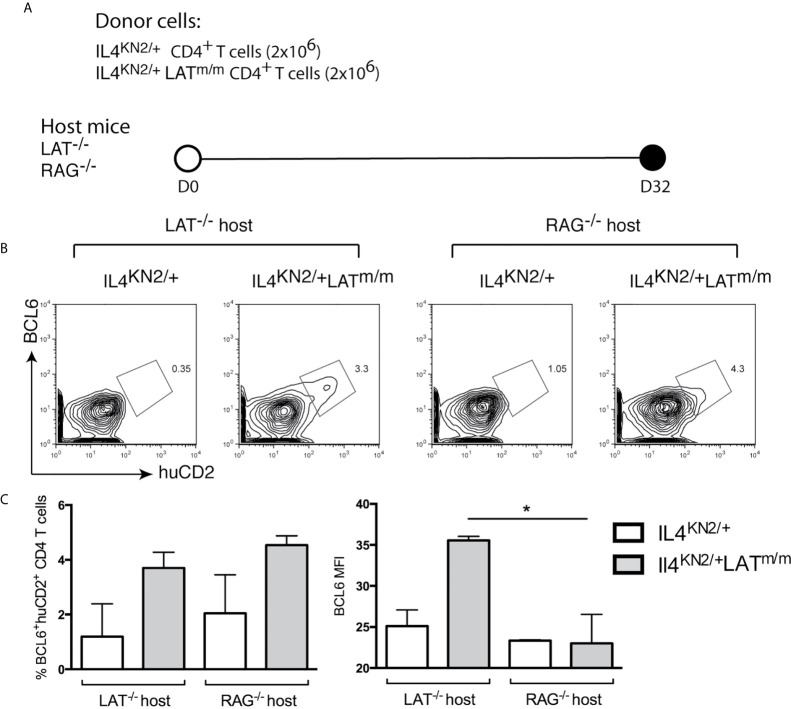
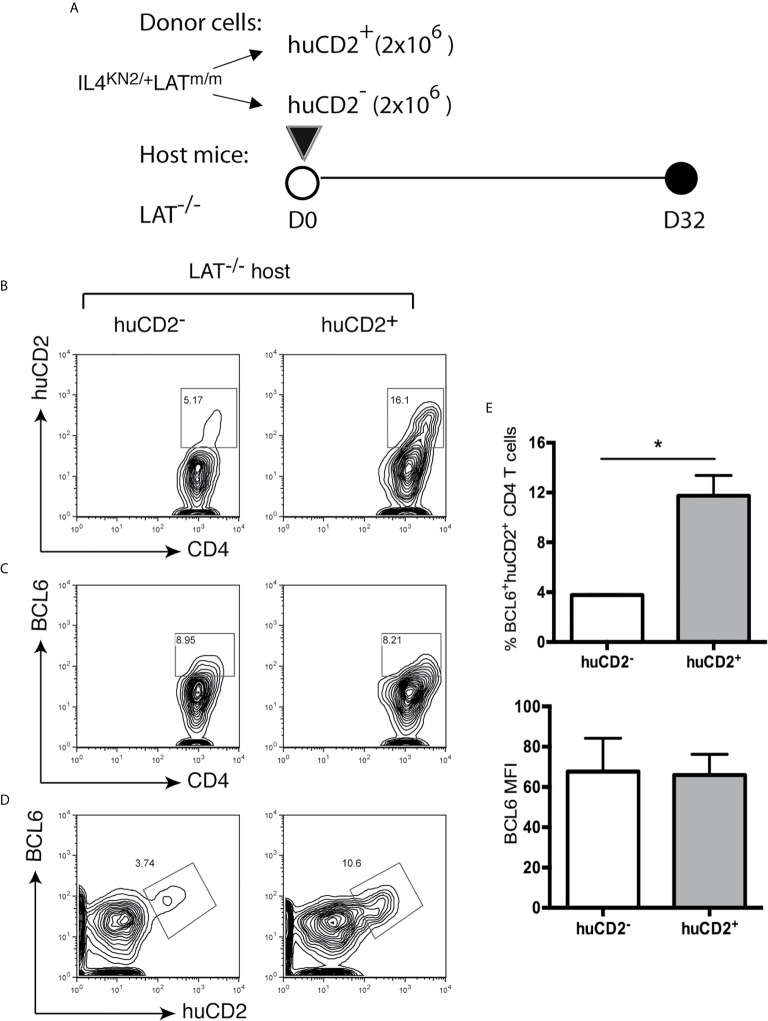
Mice with a mutation at the LAT-PLCγ1 binding site (Y136) have a defect in thymocyte development due to dampened TCR signaling. CD4 T cells that do reach the periphery are hyper-activated and skewed to Th2. Over time, these mice develop an autoimmune-like syndrome, characterize by overproduction of Th2 cytokines, T cell infiltration into various organs, and B cell activation, isotype switching, and autoantibody production. In this study, we examined IL4 production by CD4 T cells in the LATY136F mice using the KN2 reporter mice, in which human CD2 expression marks T cells that are actively producing IL4 protein. We showed that these mice had spontaneous Tfh differentiation. Despite the fact that the majority of CD4 T cells were skewed to Th2 and were GATA3, only a small subset of them were actively secreting IL4. These T cells were Tfh cells that expressed BCL6 and were localized to B cell-rich germinal centers within the spleen. Interestingly, these Tfh cells expressed high levels of both BCL6 and GATA3. By using LAT conditional knockout mice that inducibly express only the LATY136F allele, we further showed that Tfh cell differentiation was likely the result of defective LAT-PLCγ1 signaling in the periphery. In addition, B cells were required for spontaneous development of Tfh cells and uncontrolled T cell expansion in these mice. Together, these results indicated a novel role for tonic LAT-PLCγ1 signaling in modulating Tfh cell differentiation during development of autoimmune syndrome.
在 LAT-PLCγ1 结合位点(Y136)发生突变的小鼠中,由于 TCR 信号转导减弱,胸腺细胞发育出现缺陷。尽管达到外周的 CD4 T 细胞过度激活并偏向 Th2,但这些小鼠最终会发展出自免疫样综合征,其特征是 Th2 细胞因子过度产生、T 细胞浸润到各种器官以及 B 细胞激活、同种型转换和自身抗体产生。在这项研究中,我们使用 KN2 报告小鼠检查了 LATY136F 小鼠中 CD4 T 细胞的 IL4 产生情况,在这种小鼠中,人 CD2 的表达标志着正在积极产生 IL4 蛋白的 T 细胞。我们表明,这些小鼠自发地分化出 Tfh。尽管大多数 CD4 T 细胞偏向 Th2 并表达 GATA3,但只有一小部分细胞正在积极分泌 IL4。这些 T 细胞是 Tfh 细胞,表达 BCL6 并定位于脾脏中富含 B 细胞的生发中心。有趣的是,这些 Tfh 细胞表达高水平的 BCL6 和 GATA3。通过使用仅诱导表达 LATY136F 等位基因的 LAT 条件性敲除小鼠,我们进一步表明 Tfh 细胞分化可能是外周 LAT-PLCγ1 信号缺陷的结果。此外,B 细胞对于这些小鼠中 Tfh 细胞的自发发育和不受控制的 T 细胞扩增是必需的。总之,这些结果表明,在自身免疫综合征发展过程中,持续的 LAT-PLCγ1 信号在调节 Tfh 细胞分化中具有新的作用。