Quain Anne, Mullan Siobhan, McGreevy Paul D, Ward Michael P
Faculty of Science, Sydney School of Veterinary Science, University of Sydney, Camperdown, NSW, Australia.
Bristol Veterinary School, University of Bristol, Langford, United Kingdom.
Front Vet Sci. 2021 Apr 12;8:647108. doi: 10.3389/fvets.2021.647108. eCollection 2021.
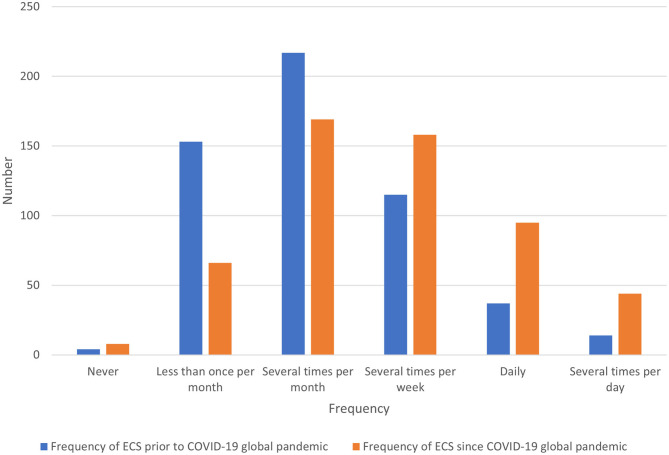
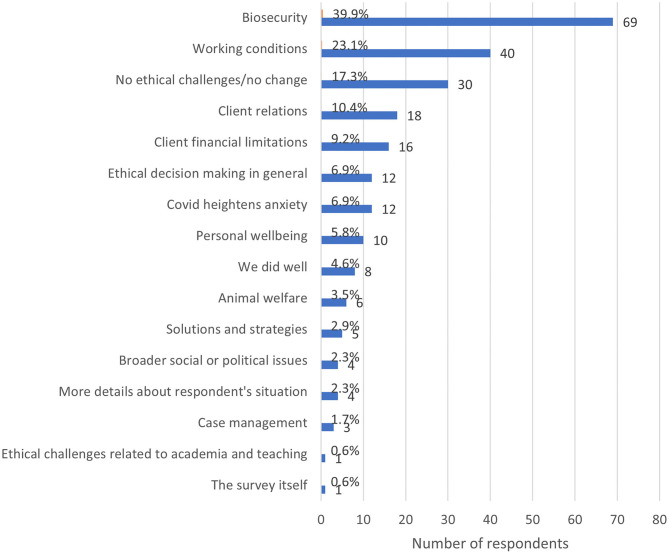
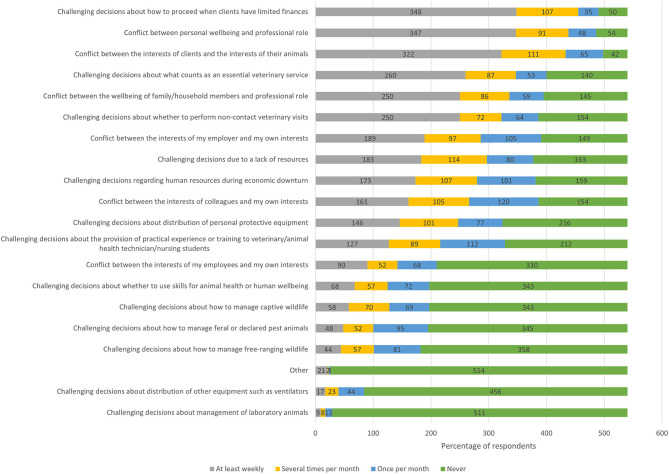
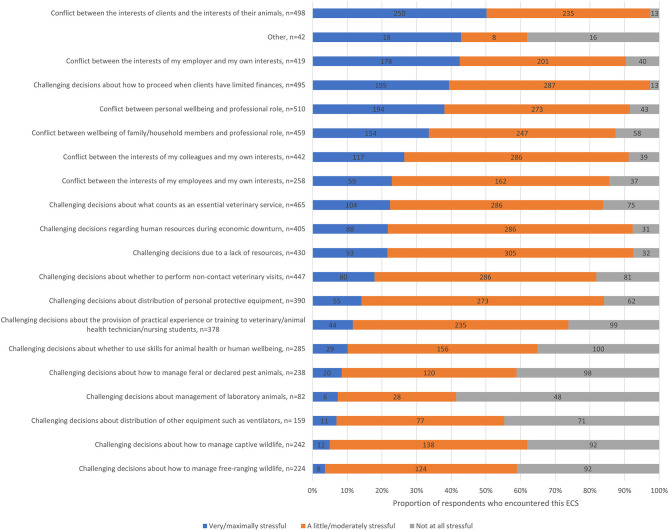
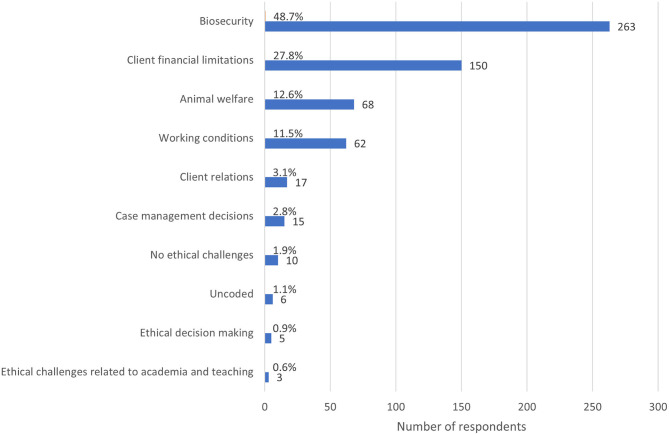
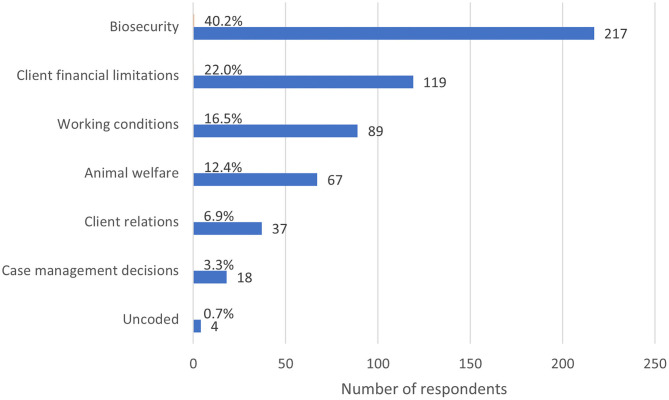
Ethically challenging situations (ECS) are common in veterinary settings and can lead to moral stress. However, there is no published information about how a global pandemic affects the frequency and types of ECS encountered by veterinary team members. An online mixed methods survey was developed to determine the frequency, stressfulness and types of ECS experienced by veterinarians, animal health technicians and veterinary nurses since the advent of the global COVID-19 pandemic in March 2020. Responses from 540 veterinary team members from 22 countries were analyzed. With the advent of the COVID-19 pandemic, the median frequency of ECS encountered by respondents increased from several times per month to several times per week (Spearman Rank Correlation 0.619, < 0.0001). The most common ECS (encountered at least several times per week) were: (64.4%), (64.3%), (59.6%). These were followed by (48.1%); (46.3%); and (46.3%). The most stressful ECS (reported to be very or maximally stressful) were: (50.2%), (42.9%), (42.5%), (39.4%), (38.0%), and (33.6%). Thematic analysis of free-text responses revealed biosecurity, client financial limitations, animal welfare, working conditions, and client relations as prominent themes. This is, to the best of our knowledge, the first study to describe the impacts of the pandemic on ECS experienced by veterinary teams globally. It identifies an increase in the frequency of ECS associated with the COVID-19 pandemic, and a number of stressors unique to the pandemic. We identified a number of resources and strategies that may help veterinary team members navigate ethical challenges that may emerge in their daily work, as well as in the context of global crises.
在兽医工作环境中,具有伦理挑战性的情况(ECS)很常见,并且可能导致道德压力。然而,关于全球大流行如何影响兽医团队成员所遇到的ECS的频率和类型,尚无公开信息。开展了一项在线混合方法调查,以确定自2020年3月全球COVID-19大流行出现以来,兽医、动物健康技术员和兽医护士所经历的ECS的频率、压力程度和类型。对来自22个国家的540名兽医团队成员的回复进行了分析。随着COVID-19大流行的出现,受访者遇到ECS的频率中位数从每月几次增加到每周几次(斯皮尔曼等级相关性为0.619,<0.0001)。最常见的ECS(每周至少遇到几次)为:(64.4%),(64.3%),(59.6%)。其次是(48.1%);(46.3%);以及(46.3%)。压力最大的ECS(报告为非常有压力或压力极大)为:(50.2%),(42.9%),(42.5%),(39.4%),(38.0%),以及(33.6%)。对自由文本回复的主题分析显示,生物安全、客户经济限制、动物福利、工作条件和客户关系是突出主题。据我们所知,这是第一项描述大流行对全球兽医团队所经历的ECS的影响的研究。它确定了与COVID-19大流行相关的ECS频率增加,以及该大流行特有的一些压力源。我们确定了一些资源和策略,这些资源和策略可能有助于兽医团队成员应对其日常工作以及全球危机背景下可能出现的伦理挑战。