Palmer Matthew B, Abedini Amin, Jackson Casey, Blady Shira, Chatterjee Shatakshee, Sullivan Katie Marie, Townsend Raymond R, Brodbeck Jens, Almaani Salem, Srivastava Anand, Avasare Rupali, Ross Michael J, Mottl Amy K, Argyropoulos Christos, Hogan Jonathan, Susztak Katalin
Department of Pathology and Laboratory Medicine, University of Pennsylvania, Perelman School of Medicine, Philadelphia, Pennsylvania, USA.
Renal, Electrolyte, and Hypertension Division, Department of Medicine, University of Pennsylvania, Perelman School of Medicine, Philadelphia, Pennsylvania, USA.
Kidney Int Rep. 2021 Feb 3;6(4):1066-1080. doi: 10.1016/j.ekir.2021.01.025. eCollection 2021 Apr.
Although diabetic kidney disease (DKD) is responsible for more than half of all chronic and end-stage kidney disease (ESKD), the association of light (LM) and electron microscopic (EM) structural changes with clinical parameters and prognosis in DKD is incompletely understood.
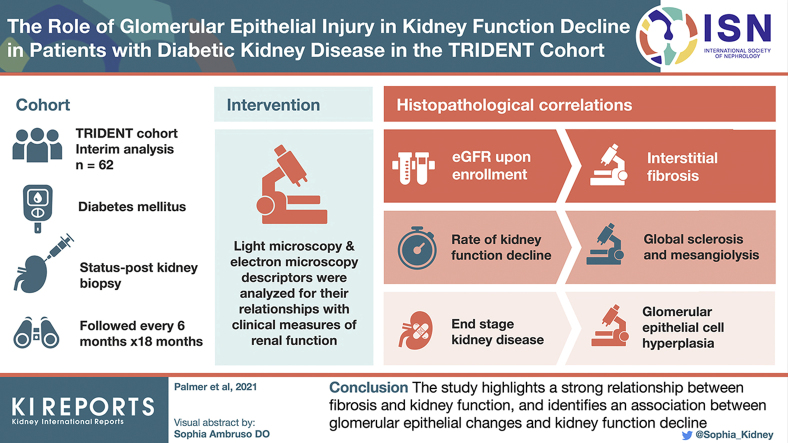
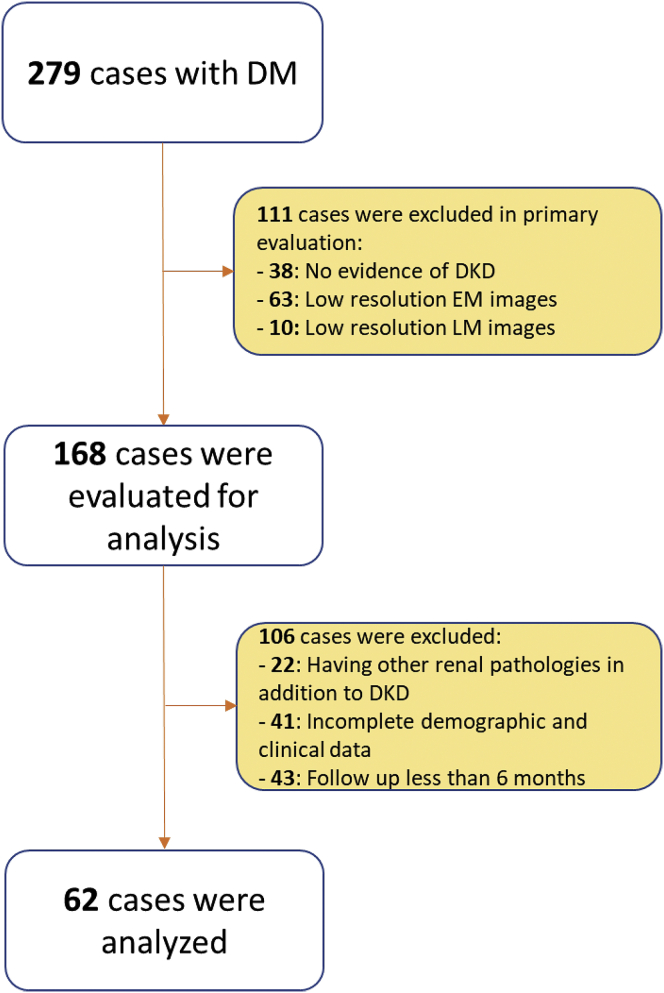
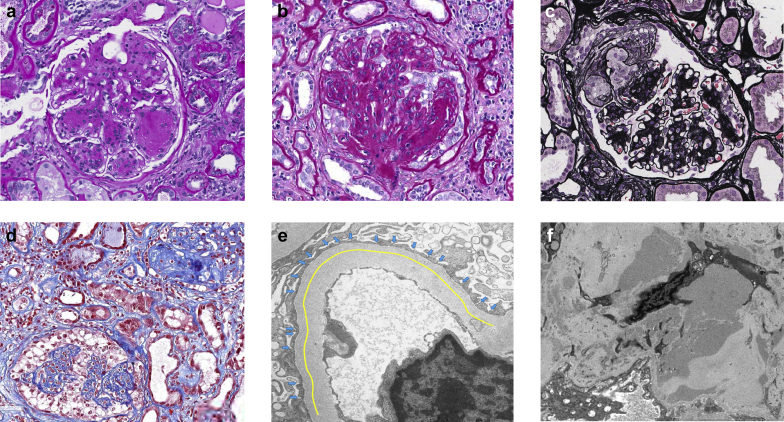
This is an interim analysis of 62 patients diagnosed with biopsy-confirmed DKD from the multicenter TRIDENT (Transformative Research in Diabetic Nephropathy) study. Twelve LM and 8 EM descriptors, representing changes in glomeruli, tubulointerstitium, and vasculature were analyzed for their relationship with clinical measures of renal function. Patients were followed every 6 months.
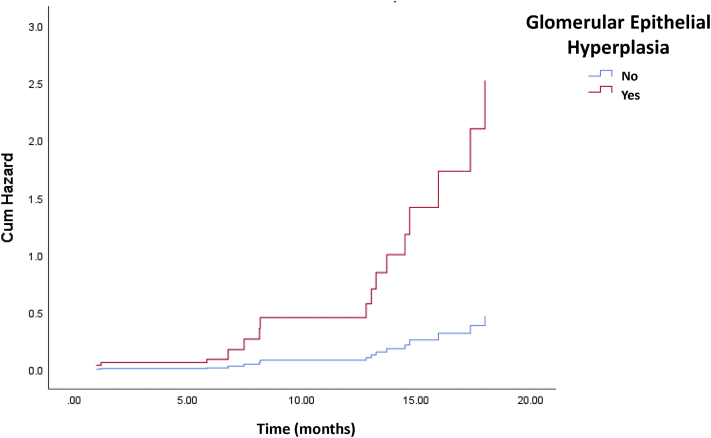
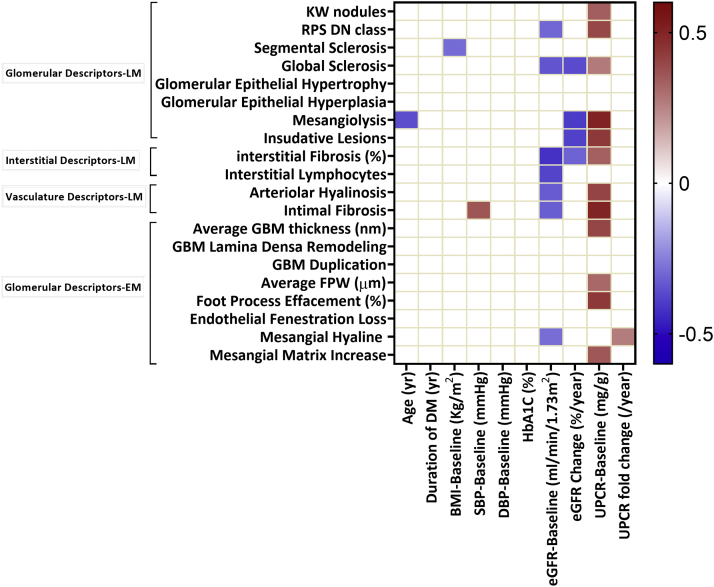
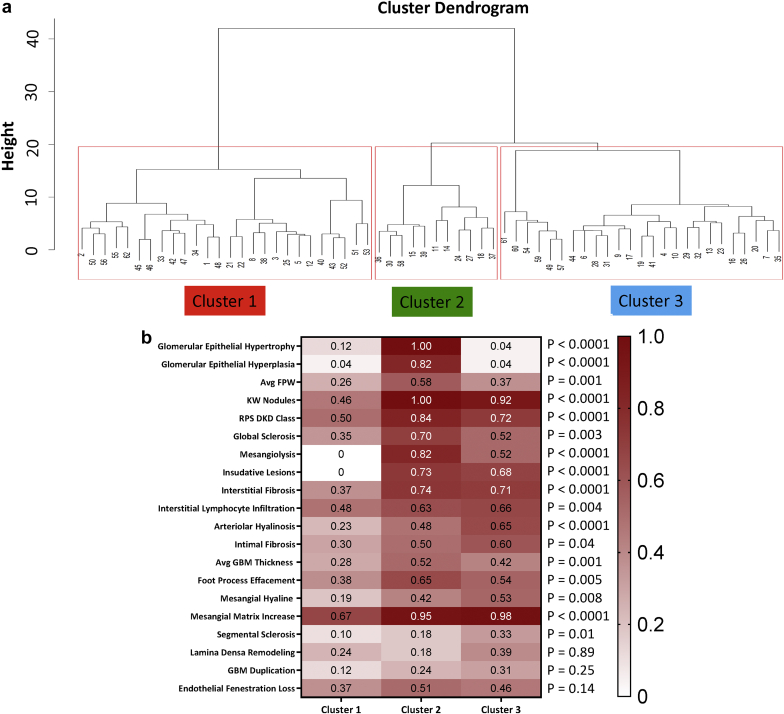
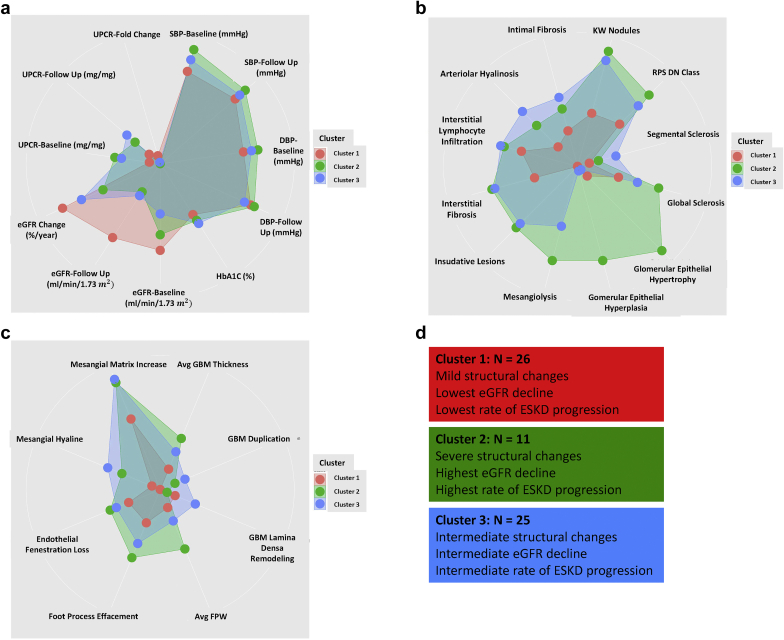
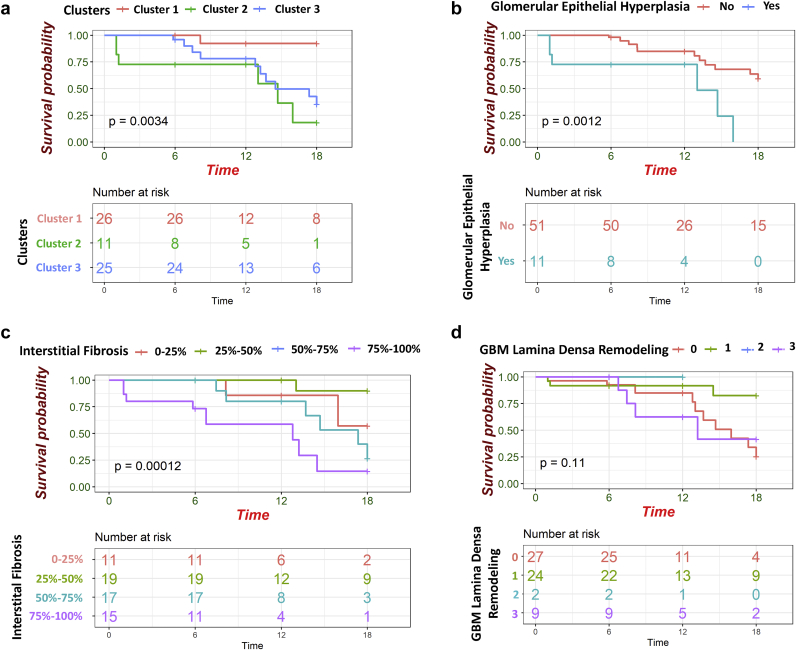
Multivariable linear regression analysis revealed that estimated glomerular filtration rate (eGFR) upon enrollment correlated the best with interstitial fibrosis. On the other hand, the rate of kidney function decline (eGFR slope) correlated the most with glomerular lesions including global glomerulosclerosis and mesangiolysis. Unbiased clustering analysis based on histopathologic data identified 3 subgroups. The first cluster, encompassing subjects with the mildest histologic lesions, had the most preserved kidney function. The second and third clusters had similar degrees of kidney dysfunction and structural damage, but differed in the degree of glomerular epithelial cell and podocyte injury (podocytopathy DKD subtype). Cox proportional hazard analysis showed that subjects in cluster 2 had the highest risk to reach ESKD (hazard ratio: 17.89; 95% confidence interval: 2.13-149.79). Glomerular epithelial hyperplasia and interstitial fibrosis were significant predictors of ESKD in the multivariate model.
The study highlights the association between fibrosis and kidney function and identifies the role of glomerular epithelial changes and kidney function decline.
尽管糖尿病肾病(DKD)是所有慢性和终末期肾病(ESKD)的半数以上病因,但对于DKD中光镜(LM)和电镜(EM)结构变化与临床参数及预后之间的关联,我们尚未完全了解。
这是一项对来自多中心TRIDENT(糖尿病肾病转化研究)研究中62例经活检确诊为DKD患者的中期分析。分析了代表肾小球、肾小管间质和血管系统变化的12个光镜和8个电镜指标与肾功能临床指标之间的关系。患者每6个月随访一次。
多变量线性回归分析显示,入组时的估计肾小球滤过率(eGFR)与间质纤维化的相关性最佳。另一方面,肾功能下降率(eGFR斜率)与包括全球肾小球硬化和血管系膜溶解在内的肾小球病变相关性最大。基于组织病理学数据的无偏聚类分析确定了3个亚组。第一组包括组织学病变最轻的受试者,其肾功能保存最完好。第二组和第三组有相似程度的肾功能障碍和结构损伤,但在肾小球上皮细胞和足细胞损伤程度(足细胞病DKD亚型)方面有所不同。Cox比例风险分析显示,第2组受试者达到ESKD的风险最高(风险比:17.89;95%置信区间:2.13 - 149.79)。在多变量模型中,肾小球上皮增生和间质纤维化是ESKD的重要预测指标。
该研究强调了纤维化与肾功能之间的关联,并确定了肾小球上皮变化和肾功能下降的作用。