Department of Neurology, The First Hospital of China Medical University, Shenyang, China.
Key Laboratory of Neurological Disease Big Data of Liaoning Province, Shenyang, China.
Sci Prog. 2021 Apr-Jun;104(2):368504211011836. doi: 10.1177/00368504211011836.
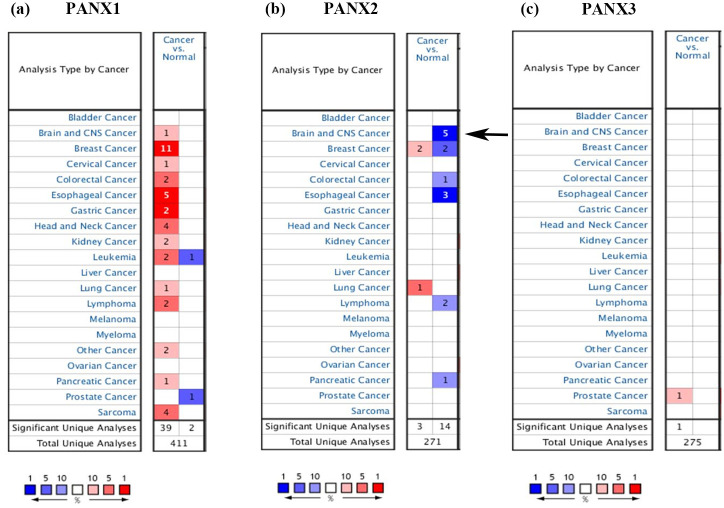
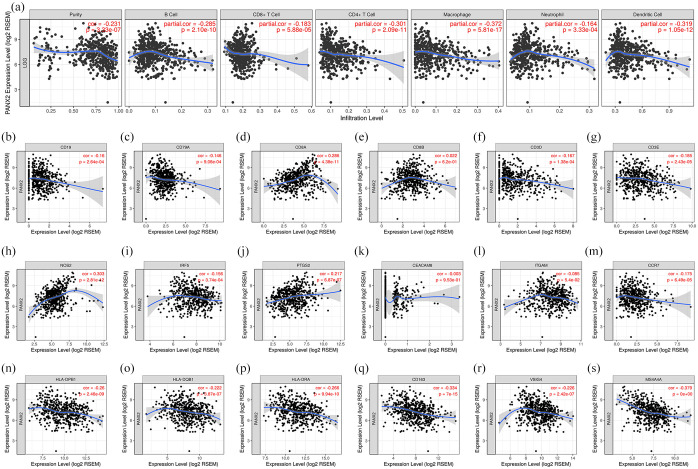
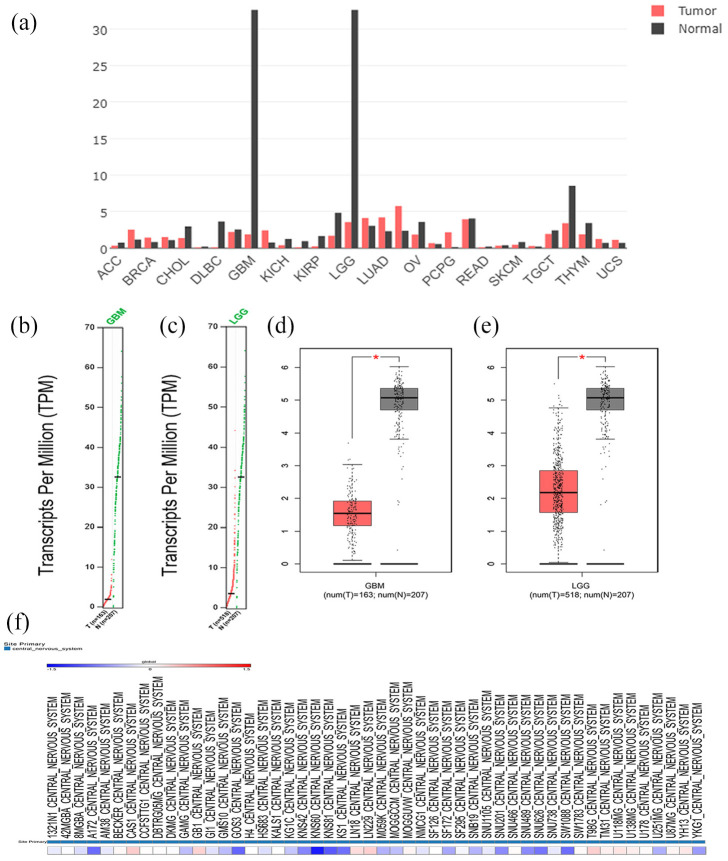
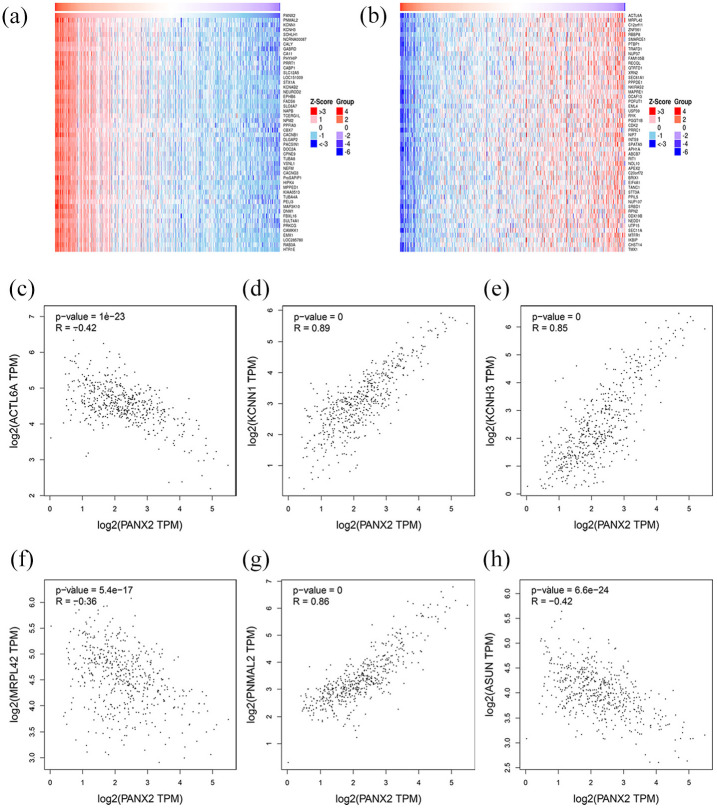
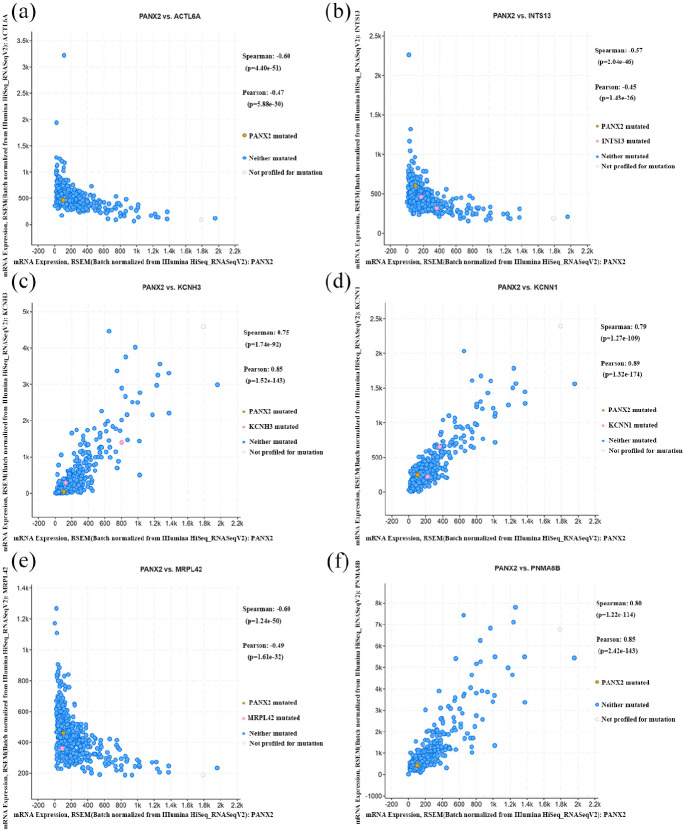
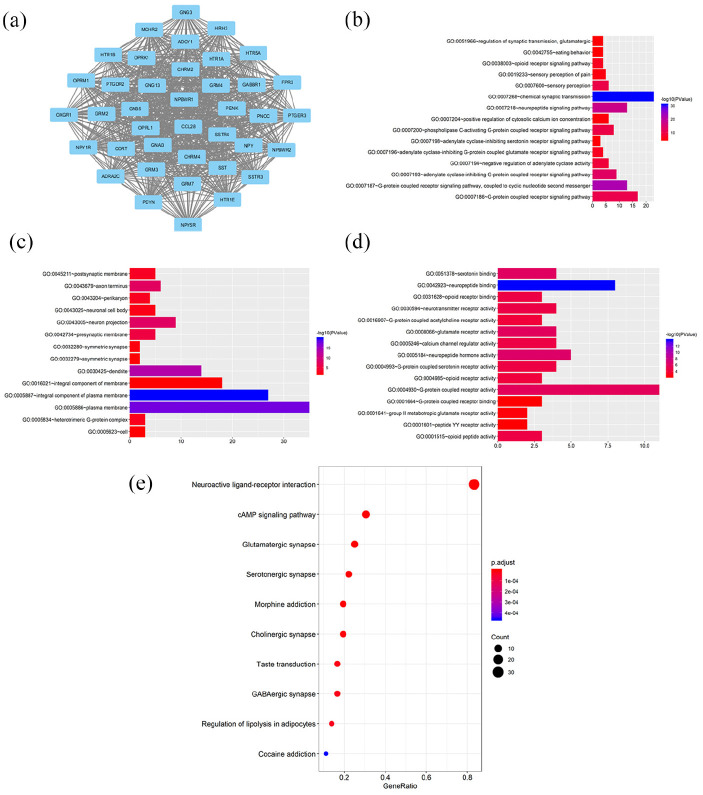
PANX2 forms large-pore channels mediating ATP release in response to physiological and pathological stimuli. Although PANX2 shows involvements in glioma genesis, the underlying mechanism remains unclear. PANX2 mRNA expression was analyzed via Oncomine and was confirmed via Gene Expression Profiling Interactive Analysis (GEPIA). The influence of PANX2 on overall survival (OS) of glioma was evaluated using LinkedOmics and further assessed through Cox regression analysis. The correlated genes with PANX2 acquired from LinkedOmics were validated through GEPIA and cBioPortal. Protein-protein interaction (PPI) of these genes was then obtained using Search Tool for the Retrieval of Interacting Genes (STRING) and Cytoscape with MCODE plug-in. All the PANX2-related genes underwent Gene Ontology (GO) enrichment and Kyoto Encyclopedia of Genes and Genomes (KEGG) pathway analyses. The correlation between PANX2 and cancer immune infiltrates was evaluated via Tumor Immune Estimation Resource (TIMER). A higher expression of PANX2 only revealed a better OS in brain low grade glioma (LGG). PANX2-related genes in LGG functionally enriched in neuroactive ligand-receptor interaction, synaptic vesicle cycle, and calcium signaling. The hub genes from highest module of PPI were mainly linked to chemical synaptic transmission, plasma membrane, neuropeptide, and the pathway of neuroactive ligand-receptor interaction. Besides, PANX2 expression was negatively associated with infiltrating levels of macrophage, dendritic cells, and CD4+ T cells. This study demonstrated that PANX2 likely participated in LGG pathogenesis by affecting multiple molecular pathways and immune-related processes. PANX2 was associated with LGG prognosis and might become a promising therapeutic target of LGG.
PANX2 形成大孔通道,介导 ATP 释放,以响应生理和病理刺激。尽管 PANX2 显示参与了神经胶质瘤的发生,但潜在的机制仍不清楚。通过 Oncomine 分析 PANX2 mRNA 表达,并通过基因表达谱交互分析(GEPIA)进行验证。使用 LinkedOmics 评估 PANX2 对神经胶质瘤总生存期(OS)的影响,并通过 Cox 回归分析进一步评估。从 LinkedOmics 获得与 PANX2 相关的基因,通过 GEPIA 和 cBioPortal 进行验证。使用 Search Tool for the Retrieval of Interacting Genes(STRING)和 Cytoscape 与 MCODE 插件获取这些基因的蛋白质-蛋白质相互作用(PPI)。对所有与 PANX2 相关的基因进行基因本体论(GO)富集和京都基因与基因组百科全书(KEGG)通路分析。通过肿瘤免疫估计资源(TIMER)评估 PANX2 与癌症免疫浸润的相关性。PANX2 的高表达仅显示在脑低级别神经胶质瘤(LGG)中具有更好的 OS。LGG 中与 PANX2 相关的基因在神经活性配体-受体相互作用、突触小泡循环和钙信号传导等功能上得到富集。PPI 最高模块的枢纽基因主要与化学突触传递、质膜、神经肽和神经活性配体-受体相互作用途径相关。此外,PANX2 的表达与巨噬细胞、树突状细胞和 CD4+T 细胞的浸润水平呈负相关。本研究表明,PANX2 可能通过影响多个分子途径和免疫相关过程参与 LGG 的发病机制。PANX2 与 LGG 的预后相关,可能成为 LGG 的有前途的治疗靶点。