Department of Microbiology & Immunology, The University of Melbourne at the Peter Doherty Institute for Infection & Immunity, Melbourne, Victoria, Australia.
Peter MacCallum Cancer Centre Melbourne, Melbourne, Victoria, Australia.
J Exp Med. 2021 Jun 7;218(6). doi: 10.1084/jem.20200940.
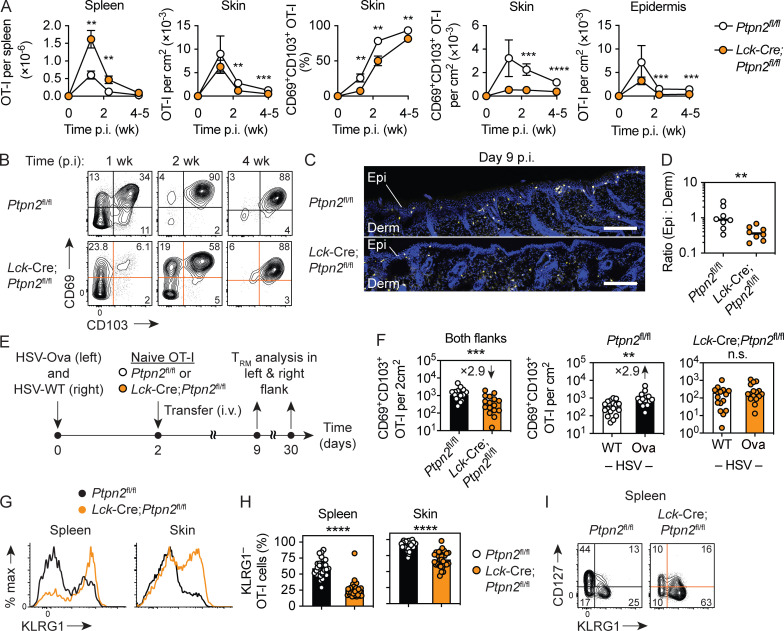
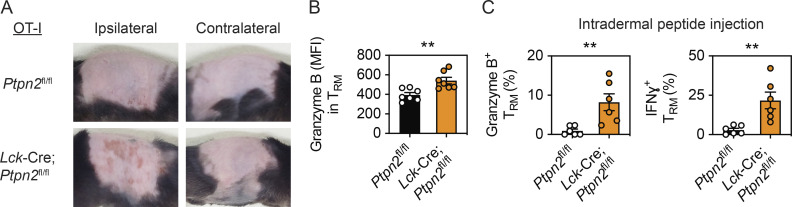
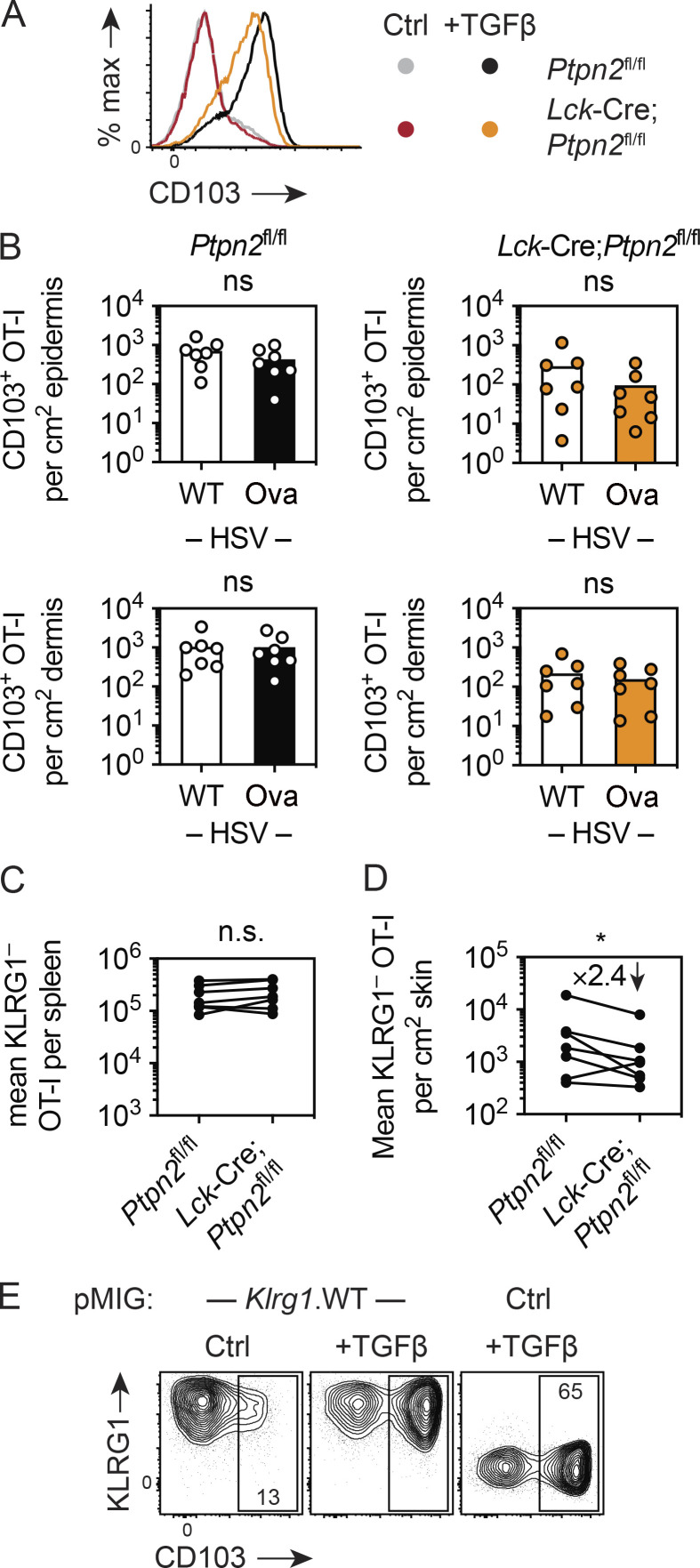
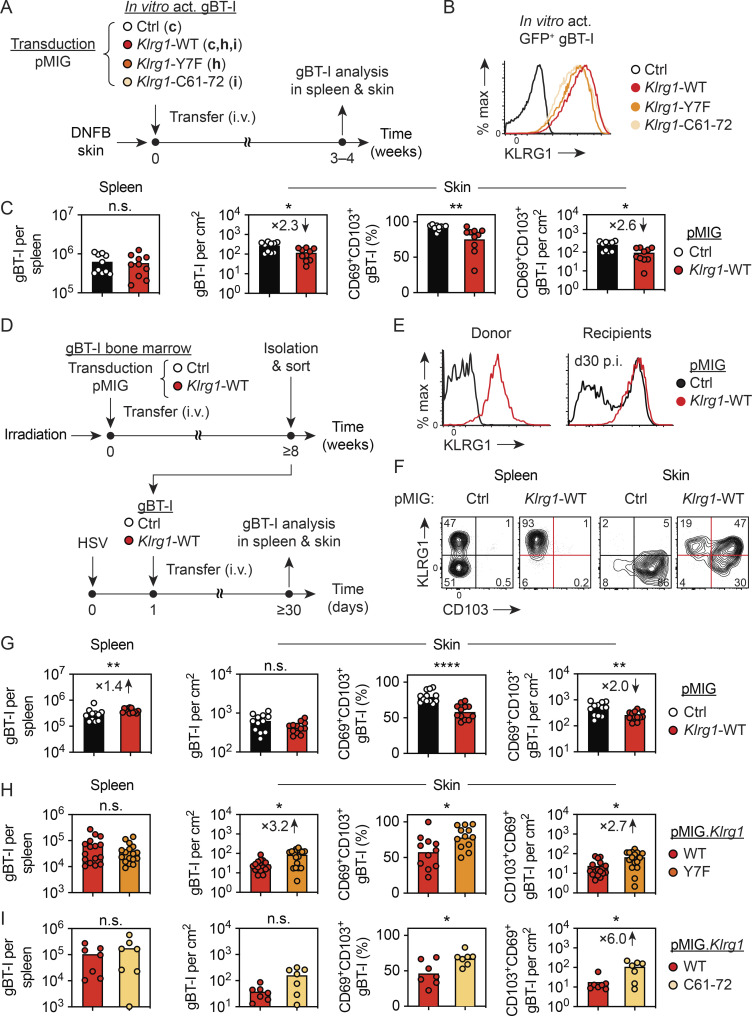
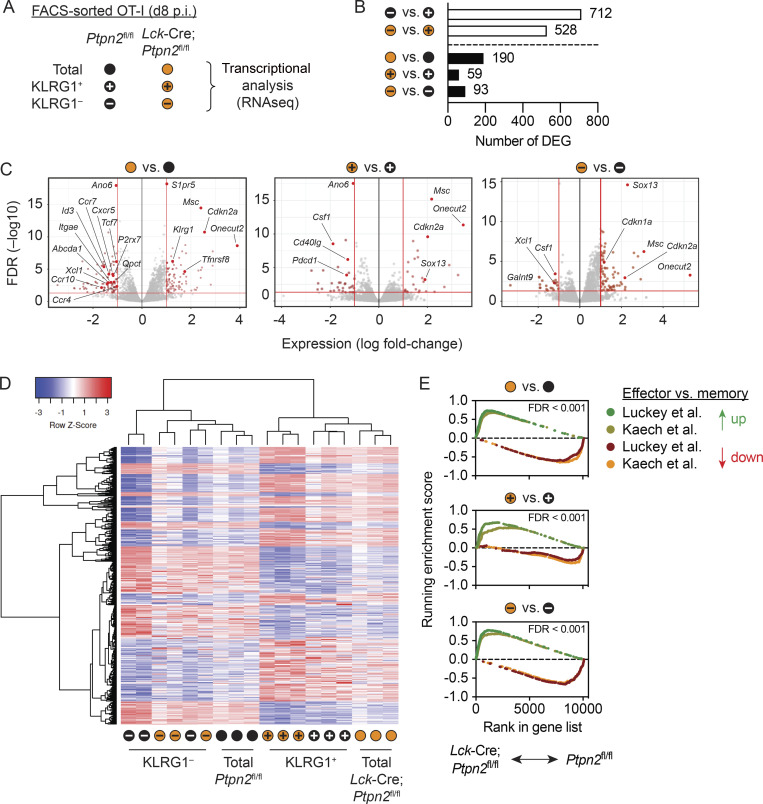
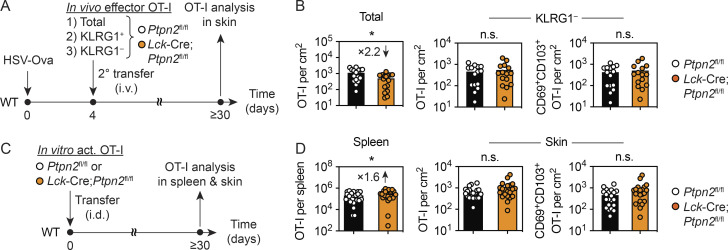
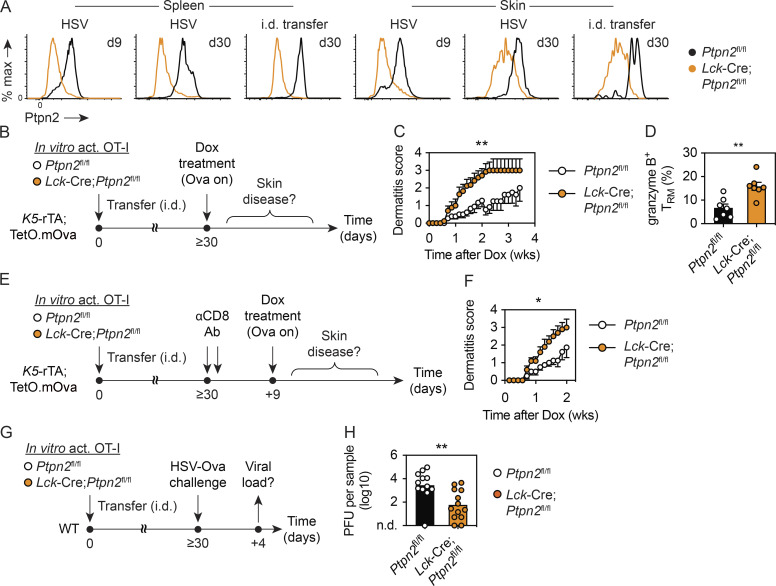
Tissue-resident memory T cells (TRM cells) are key elements of tissue immunity. Here, we investigated the role of the regulator of T cell receptor and cytokine signaling, Ptpn2, in the formation and function of TRM cells in skin. Ptpn2-deficient CD8+ T cells displayed a marked defect in generating CD69+ CD103+ TRM cells in response to herpes simplex virus type 1 (HSV-1) skin infection. This was accompanied by a reduction in the proportion of KLRG1- memory precursor cells and a transcriptional bias toward terminal differentiation. Of note, forced expression of KLRG1 was sufficient to impede TRM cell formation. Normalizing memory precursor frequencies by transferring equal numbers of KLRG1- cells restored TRM generation, demonstrating that Ptpn2 impacted skin seeding with precursors rather than downstream TRM cell differentiation. Importantly, Ptpn2-deficient TRM cells augmented skin autoimmunity but also afforded superior protection from HSV-1 infection. Our results emphasize that KLRG1 repression is required for optimal TRM cell formation in skin and reveal an important role of Ptpn2 in regulating TRM cell functionality.
组织驻留记忆 T 细胞(TRM 细胞)是组织免疫的关键要素。在这里,我们研究了 T 细胞受体和细胞因子信号转导调节剂 Ptpn2 在皮肤中 TRM 细胞形成和功能中的作用。Ptpn2 缺陷的 CD8+T 细胞在对单纯疱疹病毒 1(HSV-1)皮肤感染的反应中表现出生成 CD69+CD103+TRM 细胞的明显缺陷。这伴随着 KLRG1-记忆前体细胞比例的减少和终末分化的转录偏向。值得注意的是,强制表达 KLRG1 足以阻碍 TRM 细胞的形成。通过转移相等数量的 KLRG1-细胞来使记忆前体细胞频率正常化,恢复了 TRM 的生成,表明 Ptpn2 影响了皮肤播种前体细胞,而不是下游 TRM 细胞分化。重要的是,Ptpn2 缺陷的 TRM 细胞增强了皮肤自身免疫,但也提供了对 HSV-1 感染的更好保护。我们的研究结果强调了 KLRG1 抑制对于皮肤中最佳 TRM 细胞形成的必要性,并揭示了 Ptpn2 在调节 TRM 细胞功能中的重要作用。