Institute of Biology, Martin-Luther-University Halle-Wittenberg, Halle, Germany.
Institute for Evolution and Biodiversity, Westfälische-Wilhelms University, Münster, Germany.
Genome Biol Evol. 2021 Jun 8;13(6). doi: 10.1093/gbe/evab075.
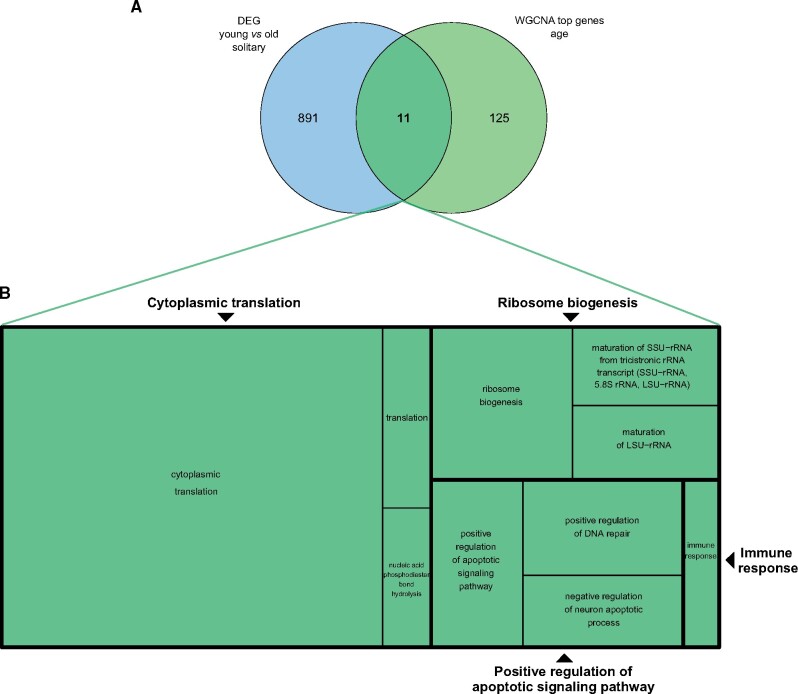
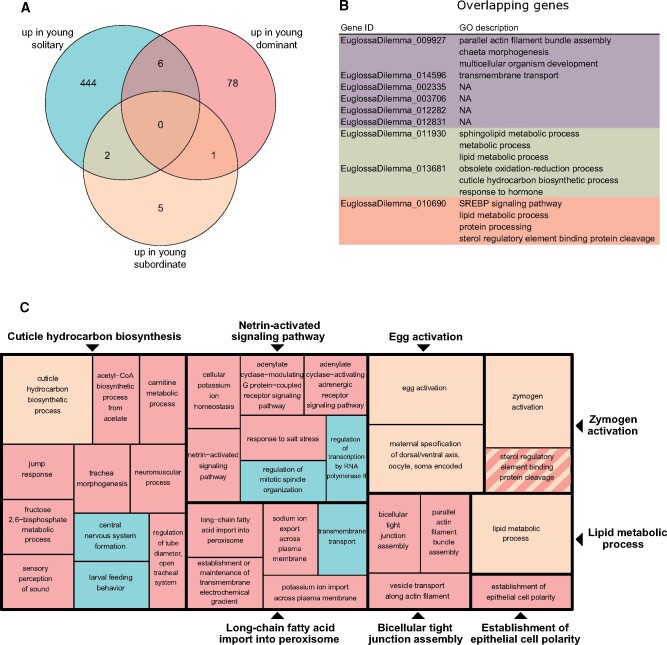
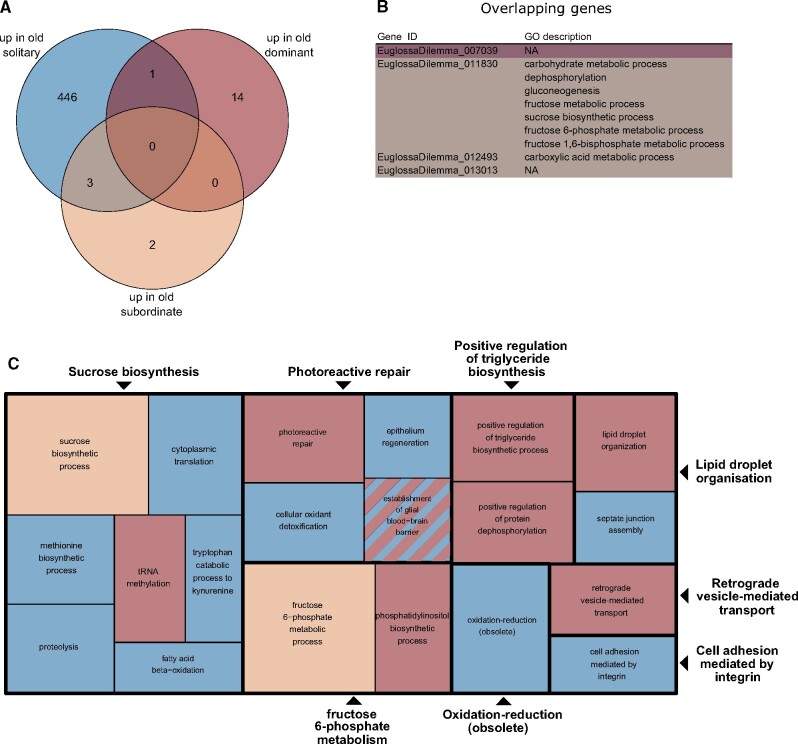
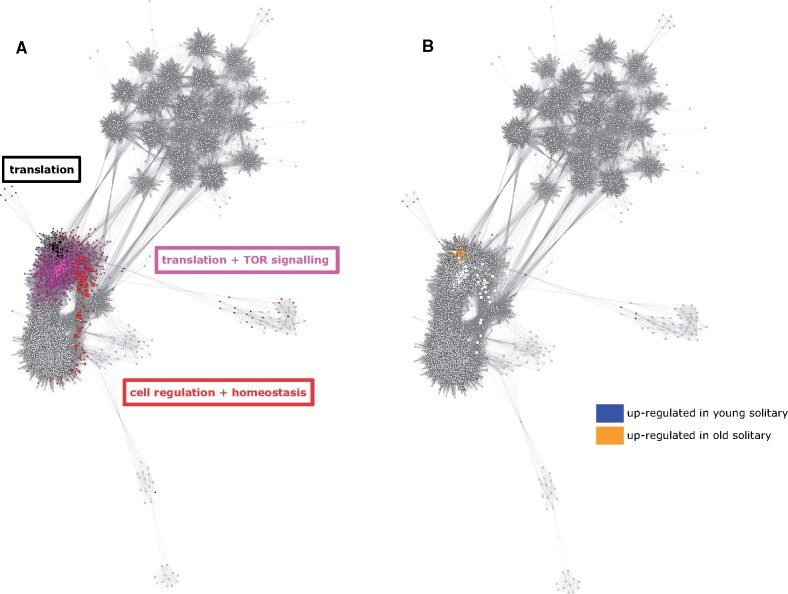
Eusocial insect queens are remarkable in their ability to maximize both fecundity and longevity, thus escaping the typical trade-off between these two traits. Several mechanisms have been proposed to underlie the remolding of the trade-off, such as reshaping of the juvenile hormone (JH) pathway, or caste-specific susceptibility to oxidative stress. However, it remains a challenge to disentangle the molecular mechanisms underlying the remolding of the trade-off in eusocial insects from caste-specific physiological attributes that have subsequently arisen. The socially polymorphic orchid bee Euglossa viridissima represents an excellent model to address the role of sociality per se in longevity as it allows direct comparisons of solitary and social individuals within a common genetic background. We investigated gene expression and JH levels in young and old bees from both solitary and social nests. We found 902 genes to be differentially expressed with age in solitary females, including genes involved in oxidative stress, versus only 100 genes in social dominant females, and 13 genes in subordinate females. A weighted gene coexpression network analysis further highlights pathways related to ageing in this species, including the target of rapamycin pathway. Eleven genes involved in translation, apoptosis, and DNA repair show concurrent age-related expression changes in solitary but not in social females, representing potential differences based on social status. JH titers did not vary with age or social status. Our results represent an important step in understanding the proximate mechanisms underlying the remodeling of the fecundity/longevity trade-off that accompanies the evolutionary transition from solitary life to eusociality.
社会性昆虫的女王具有非凡的能力,可以最大限度地提高繁殖力和寿命,从而避免了这两个特征之间的典型权衡。已经提出了几种机制来解释这种权衡的重塑,例如重塑保幼激素(JH)途径,或特定级别的对氧化应激的敏感性。然而,从随后出现的特定级别的生理属性中,分离出社会性昆虫中权衡重塑的分子机制仍然是一个挑战。社会多态性兰花蜜蜂 Euglossa viridissima 是一个很好的模型,可以解决社会性本身在长寿中的作用,因为它允许在共同的遗传背景下直接比较独居和群居个体。我们研究了来自独居和群居巢的年轻和年老蜜蜂的基因表达和 JH 水平。我们发现,902 个基因在独居雌性中随年龄而差异表达,包括与氧化应激相关的基因,而在社会优势雌性中只有 100 个基因,在从属雌性中只有 13 个基因。加权基因共表达网络分析进一步强调了该物种与衰老相关的途径,包括雷帕霉素靶蛋白途径。11 个参与翻译、细胞凋亡和 DNA 修复的基因在独居雌性中表现出与年龄相关的表达变化,但在群居雌性中没有,这代表了基于社会地位的潜在差异。JH 滴度不随年龄或社会地位而变化。我们的研究结果是理解伴随从独居生活到社会性进化过渡而来的繁殖力/寿命权衡重塑的近似机制的重要一步。