Department of Developmental Biology, Washington University School of Medicine, 660 S. Euclid Avenue St, Louis, MO, 63110, USA.
Neurochem Int. 2021 Jul;147:105039. doi: 10.1016/j.neuint.2021.105039. Epub 2021 Apr 27.
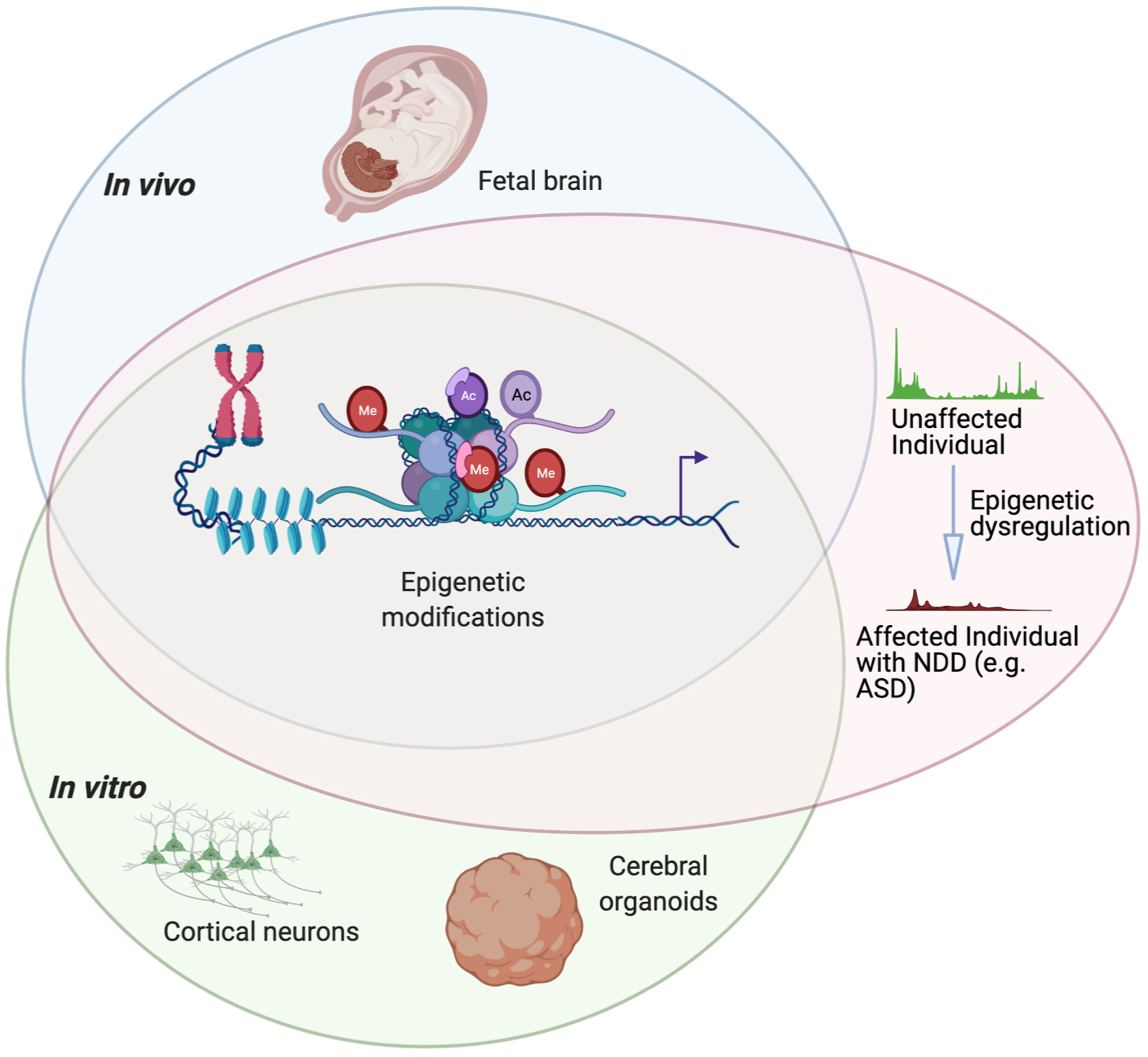
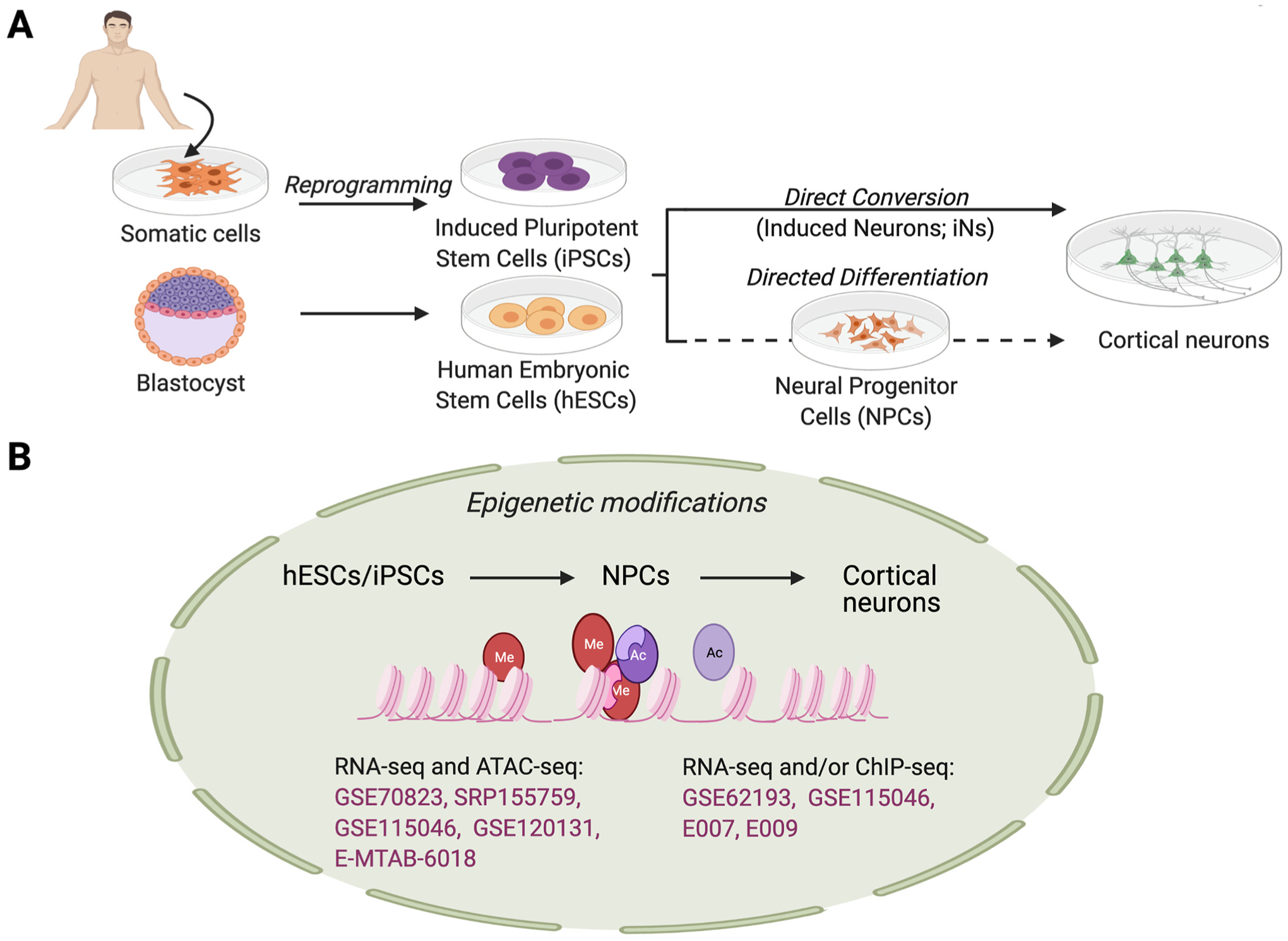
Epigenetic regulation plays an important role in controlling gene expression during complex processes, such as development of the human brain. Mutations in genes encoding chromatin modifying proteins and in the non-protein coding sequences of the genome can potentially alter transcription factor binding or chromatin accessibility. Such mutations can frequently cause neurodevelopmental disorders, therefore understanding how epigenetic regulation shapes brain development is of particular interest. While epigenetic regulation of neural development has been extensively studied in murine models, significant species-specific differences in both the genome sequence and in brain development necessitate human models. However, access to human fetal material is limited and these tissues cannot be grown or experimentally manipulated ex vivo. Therefore, models that recapitulate particular aspects of human fetal brain development, such as the in vitro differentiation of human pluripotent stem cells (hPSCs), are instrumental for studying the epigenetic regulation of human neural development. Here, we examine recent studies that have defined changes in the epigenomic landscape during fetal brain development. We compare these studies with analogous data derived by in vitro differentiation of hPSCs into specific neuronal cell types or as three-dimensional cerebral organoids. Such comparisons can be informative regarding which aspects of fetal brain development are faithfully recapitulated by in vitro differentiation models and provide a foundation for using experimentally tractable in vitro models of human brain development to study neural gene regulation and the basis of its disruption to cause neurodevelopmental disorders.
表观遗传调控在控制复杂过程中的基因表达中起着重要作用,例如人类大脑的发育。编码染色质修饰蛋白的基因和基因组中非蛋白编码序列中的突变可能改变转录因子结合或染色质可及性。这种突变经常会导致神经发育障碍,因此了解表观遗传调控如何塑造大脑发育是特别感兴趣的。虽然在鼠模型中已经广泛研究了神经发育的表观遗传调控,但在基因组序列和大脑发育方面存在显著的种间差异,需要人类模型。然而,获取人类胎儿材料是有限的,这些组织不能在体外生长或进行实验操作。因此,能够重现人类胎儿大脑发育特定方面的模型,例如人多能干细胞(hPSC)的体外分化,对于研究人类神经发育的表观遗传调控至关重要。在这里,我们检查了最近定义胎儿大脑发育过程中表观基因组景观变化的研究。我们将这些研究与通过体外分化 hPSC 成特定神经元细胞类型或三维大脑类器官获得的类似数据进行了比较。这些比较可以提供有关哪些方面的胎儿大脑发育能够通过体外分化模型忠实地重现的信息,并为使用实验上易于处理的体外人类大脑发育模型来研究神经基因调控及其破坏导致神经发育障碍的基础提供了基础。