Sun Shangqin, Xu Liwen, Zhang Xinxin, Pang Lin, Long Zhilin, Deng Chunyu, Zhu Jiali, Zhou Shuting, Wan Linyun, Pang Bo, Xiao Yun
College of Bioinformatics Science and Technology, Harbin Medical University, Harbin 150081, China.
School of Life Sciences, Westlake University, Hangzhou 310024, China.
Cancers (Basel). 2021 Apr 1;13(7):1639. doi: 10.3390/cancers13071639.
Immune checkpoint blockade (ICB) therapy has yielded successful clinical responses in treatment of a minority of patients in certain cancer types. Substantial efforts were made to establish biomarkers for predicting responsiveness to ICB. However, the systematic assessment of these ICB response biomarkers remains insufficient.
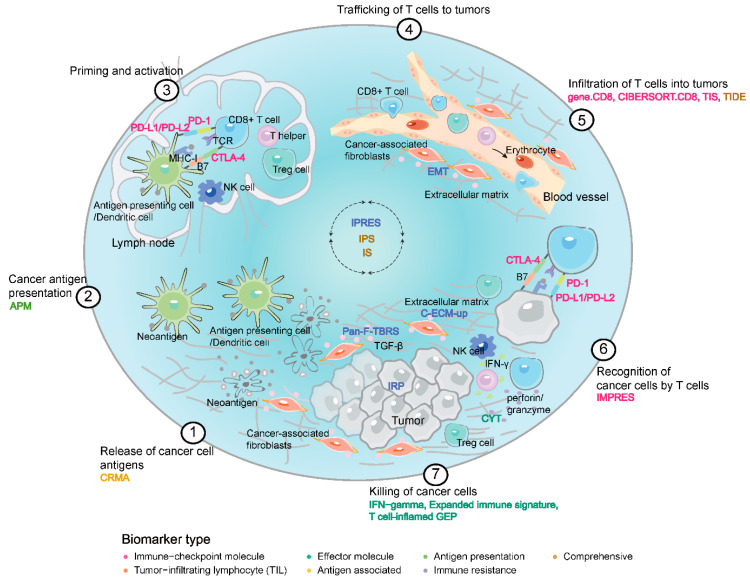
We collected 22 transcriptome-based biomarkers for ICB response and constructed multiple benchmark datasets to evaluate the associations with clinical response, predictive performance, and clinical efficacy of them in pre-treatment patients with distinct ICB agents in diverse cancers.
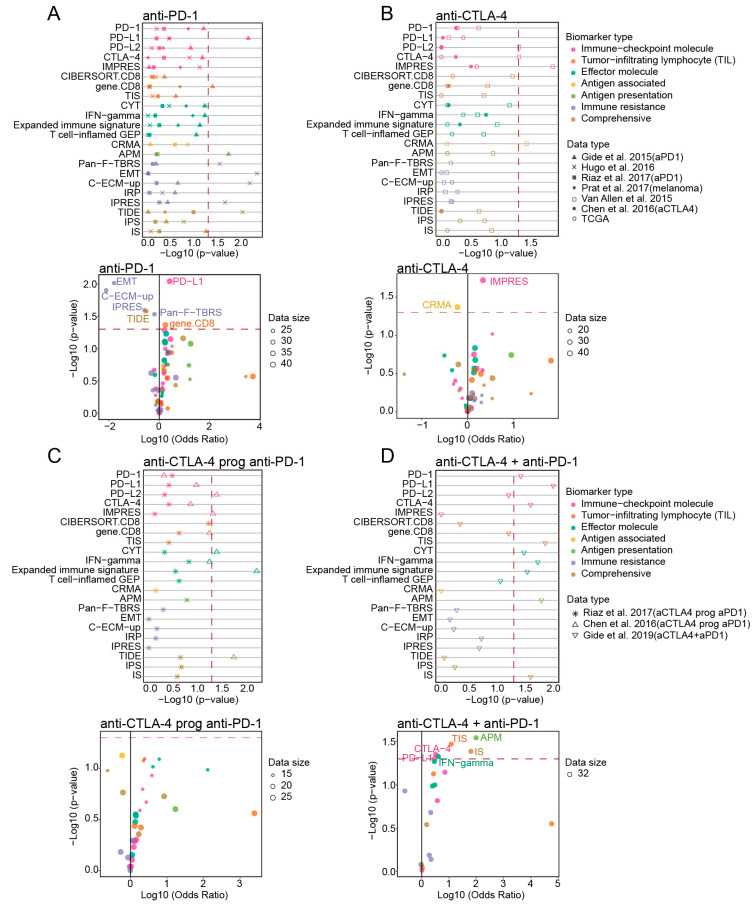
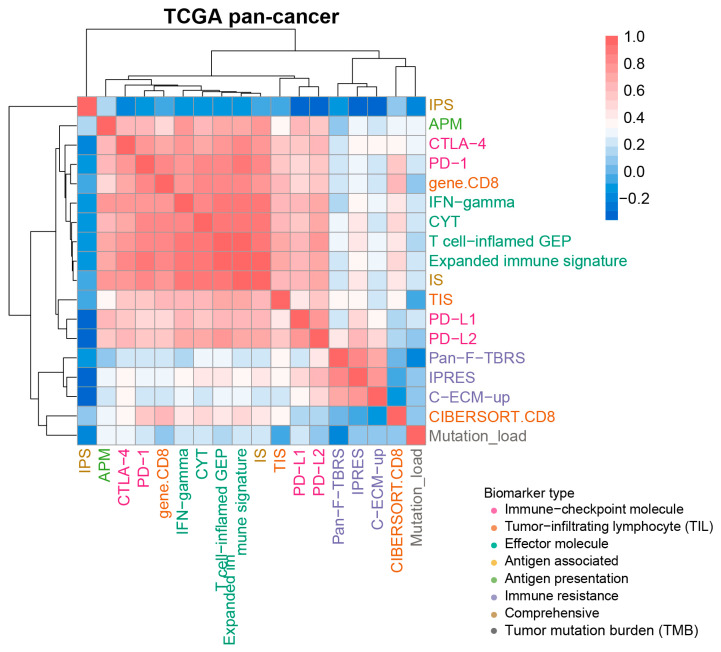
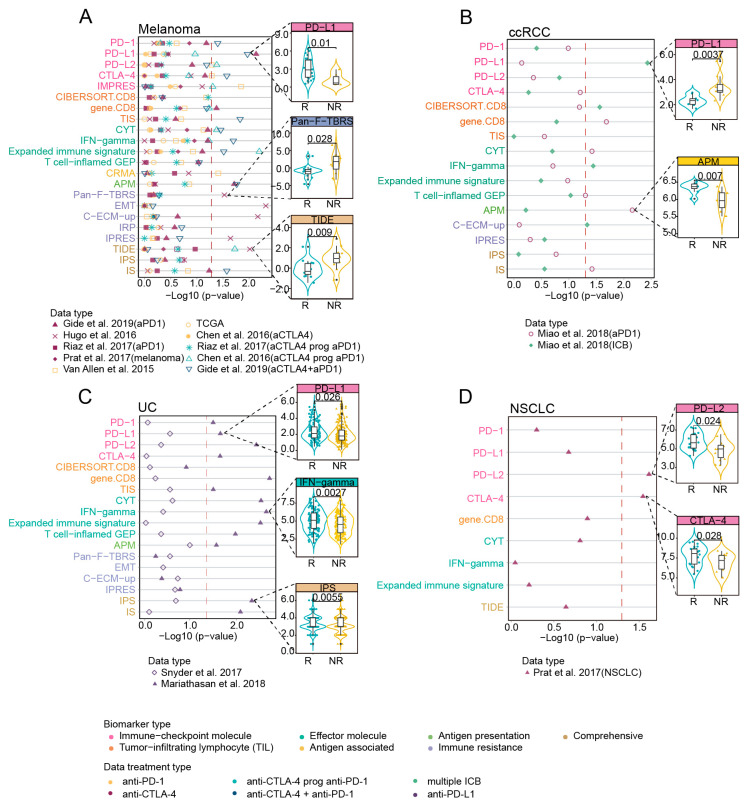
Overall, "Immune-checkpoint molecule" biomarkers PD-L1, PD-L2, CTLA-4 and IMPRES and the "Effector molecule" biomarker CYT showed significant associations with ICB response and clinical outcomes. These immune-checkpoint biomarkers and another immune effector IFN-gamma presented predictive ability in melanoma, urothelial cancer (UC) and clear cell renal-cell cancer (ccRCC). In non-small cell lung cancer (NSCLC), only PD-L2 and CTLA-4 showed preferable correlation with clinical response. Under different ICB therapies, the top-performing biomarkers were usually mutually exclusive in patients with anti-PD-1 and anti-CTLA-4 therapy, and most of biomarkers presented outstanding predictive power in patients with combined anti-PD-1 and anti-CTLA-4 therapy.
Our results show these biomarkers had different performance in predicting ICB response across distinct ICB agents in diverse cancers.
免疫检查点阻断(ICB)疗法在某些癌症类型的少数患者治疗中取得了成功的临床反应。人们为建立预测ICB反应性的生物标志物付出了巨大努力。然而,对这些ICB反应生物标志物的系统评估仍然不足。
我们收集了22种基于转录组的ICB反应生物标志物,并构建了多个基准数据集,以评估它们与不同癌症中使用不同ICB药物的预处理患者的临床反应、预测性能和临床疗效之间的关联。
总体而言,“免疫检查点分子”生物标志物PD-L1、PD-L2、CTLA-4和IMPRES以及“效应分子”生物标志物CYT与ICB反应和临床结果显示出显著关联。这些免疫检查点生物标志物和另一种免疫效应因子IFN-γ在黑色素瘤、尿路上皮癌(UC)和透明细胞肾细胞癌(ccRCC)中具有预测能力。在非小细胞肺癌(NSCLC)中,只有PD-L2和CTLA-4与临床反应显示出较好的相关性。在不同的ICB治疗下,在接受抗PD-1和抗CTLA-4治疗的患者中,表现最佳的生物标志物通常相互排斥,并且大多数生物标志物在接受抗PD-1和抗CTLA-4联合治疗的患者中表现出出色的预测能力。
我们的结果表明,这些生物标志物在预测不同癌症中不同ICB药物的ICB反应方面具有不同的表现。