Department of Hematology, Sichuan Academy of Medical Sciences & Sichuan Provincial People's Hospital, University of Electronic Science and Technology of China, Chengdu, China.
College of Bioinformatics Science and Technology, Harbin Medical University, Harbin, China.
Front Immunol. 2021 Dec 23;12:813331. doi: 10.3389/fimmu.2021.813331. eCollection 2021.
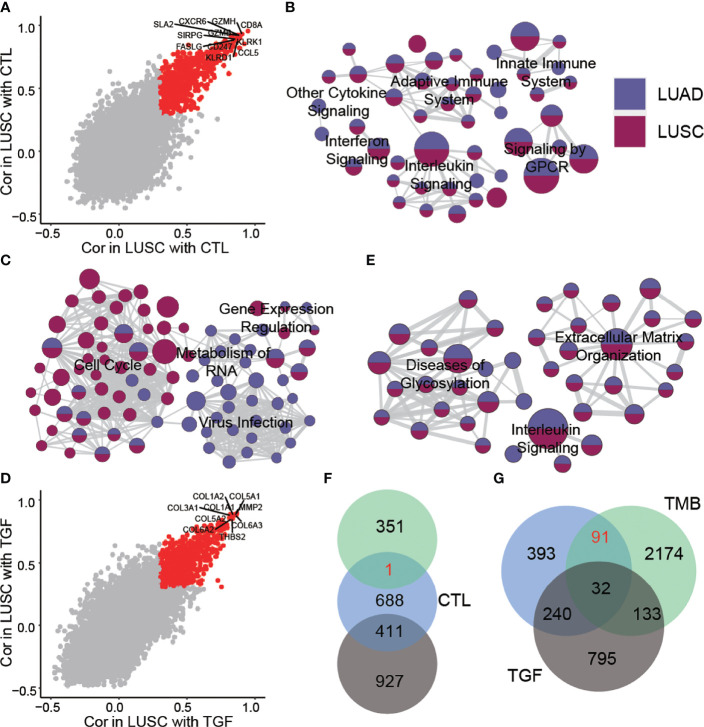
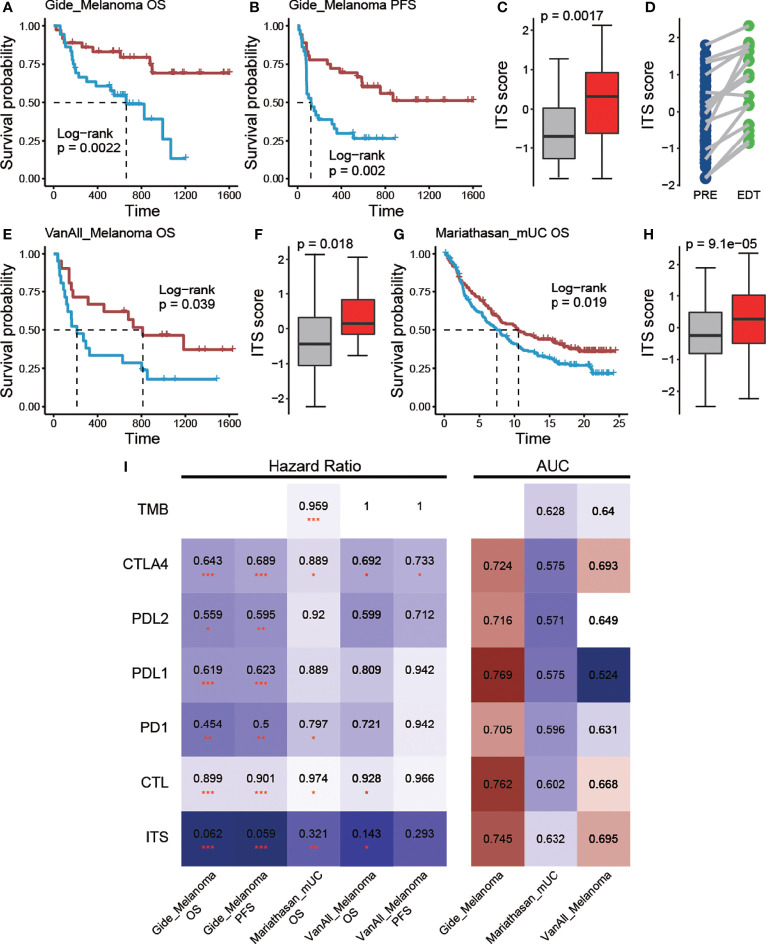
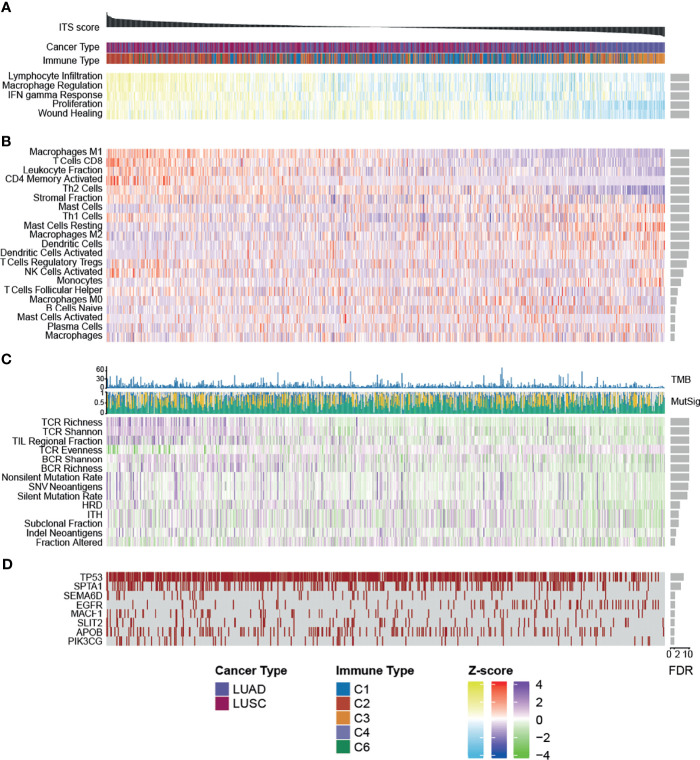
Immune checkpoint blockade (ICB) therapy has provided clinical benefits for patients with advanced non-small-cell lung cancer (NSCLC), but the majority still do not respond. Although a few biomarkers of ICB treatment response have been developed, the predictive power of these biomarkers showed substantial variation across datasets. Therefore, predicting response to ICB therapy remains a challenge. Here, we provided a concise combinatorial strategy for predicting ICB therapy response and constructed the ICB treatment signature (ITS) in lung cancer. The prediction performance of ITS has been validated in an independent ICB treatment cohort of NSCLC, where patients with higher ITS score were significantly associated with longer progression-free survival and better response. And ITS score was more powerful than traditional biomarkers, such as TMB and PD-L1, in predicting the ICB treatment response in NSCLC. In addition, ITS scores still had predictive effects in other cancer data sets, showing strong scalability and robustness. Further research showed that a high ITS score represented comprehensive immune activation characteristics including activated immune cell infiltration, increased mutation load, and TCR diversity. In conclusion, our practice suggested that the combination of biomarkers will lead to a better prediction of ICB treatment prognosis, and the ITS score will provide NSCLC patients with better ICB treatment decisions.
免疫检查点阻断 (ICB) 疗法为晚期非小细胞肺癌 (NSCLC) 患者提供了临床获益,但大多数患者仍无反应。尽管已经开发出了一些 ICB 治疗反应的生物标志物,但这些生物标志物的预测能力在不同的数据集中存在很大差异。因此,预测对 ICB 治疗的反应仍然是一个挑战。在这里,我们提供了一种简明的组合策略来预测 ICB 治疗反应,并构建了肺癌中的 ICB 治疗特征 (ITS)。ITS 的预测性能在 NSCLC 的独立 ICB 治疗队列中得到了验证,其中 ITS 评分较高的患者与更长的无进展生存期和更好的反应显著相关。并且 ITS 评分在预测 NSCLC 中的 ICB 治疗反应方面比传统生物标志物(如 TMB 和 PD-L1)更有效。此外,ITS 评分在其他癌症数据集仍具有预测效果,表现出很强的可扩展性和稳健性。进一步的研究表明,高 ITS 评分代表了全面的免疫激活特征,包括激活的免疫细胞浸润、增加的突变负荷和 TCR 多样性。总之,我们的实践表明,生物标志物的组合将导致更好地预测 ICB 治疗预后,而 ITS 评分将为 NSCLC 患者提供更好的 ICB 治疗决策。