Department of Electrical Engineering, National Sun Yat-sen University, Kaohsiung 80424, Taiwan.
Sensors (Basel). 2021 Apr 1;21(7):2425. doi: 10.3390/s21072425.
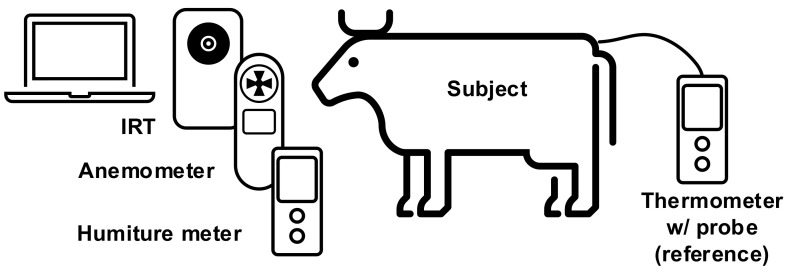
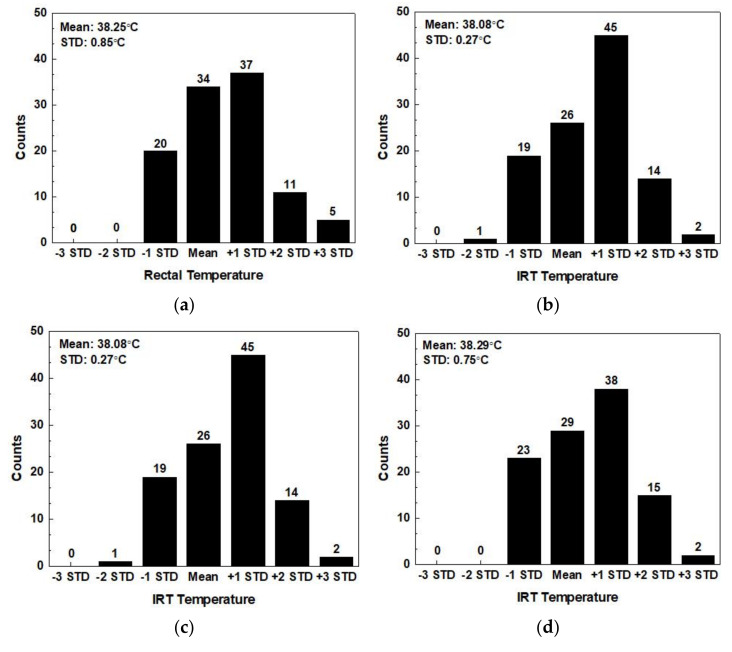
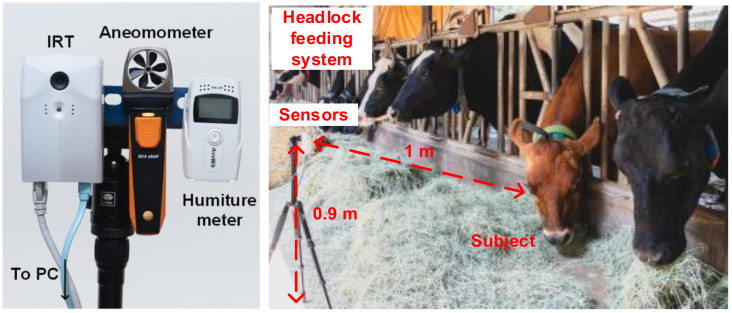
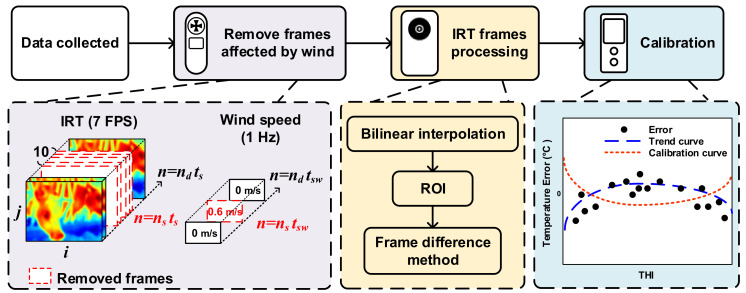
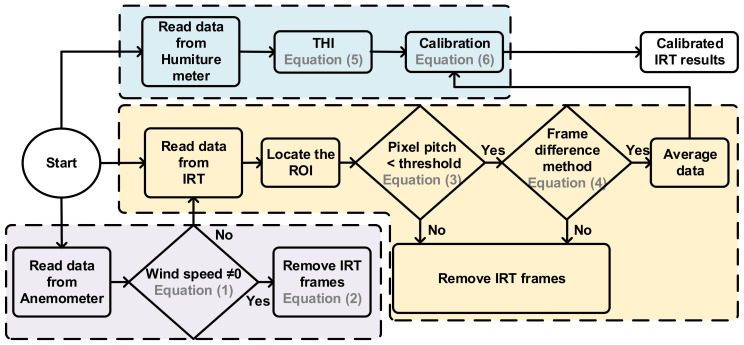
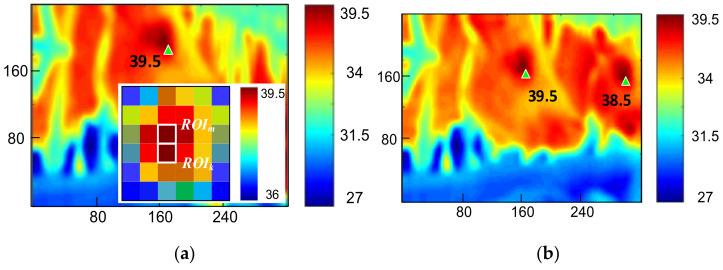
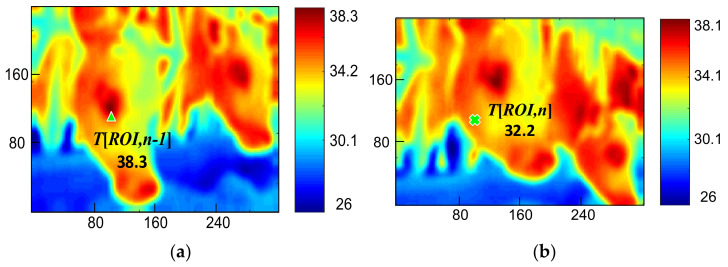
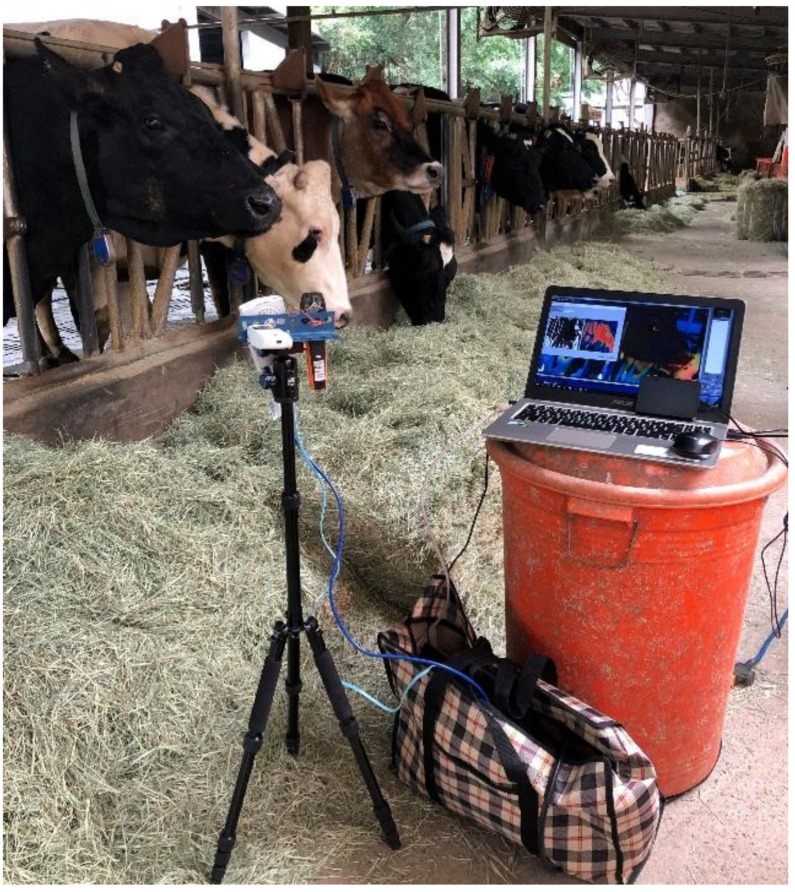
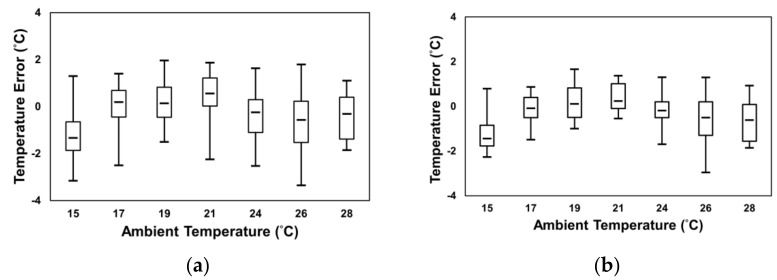
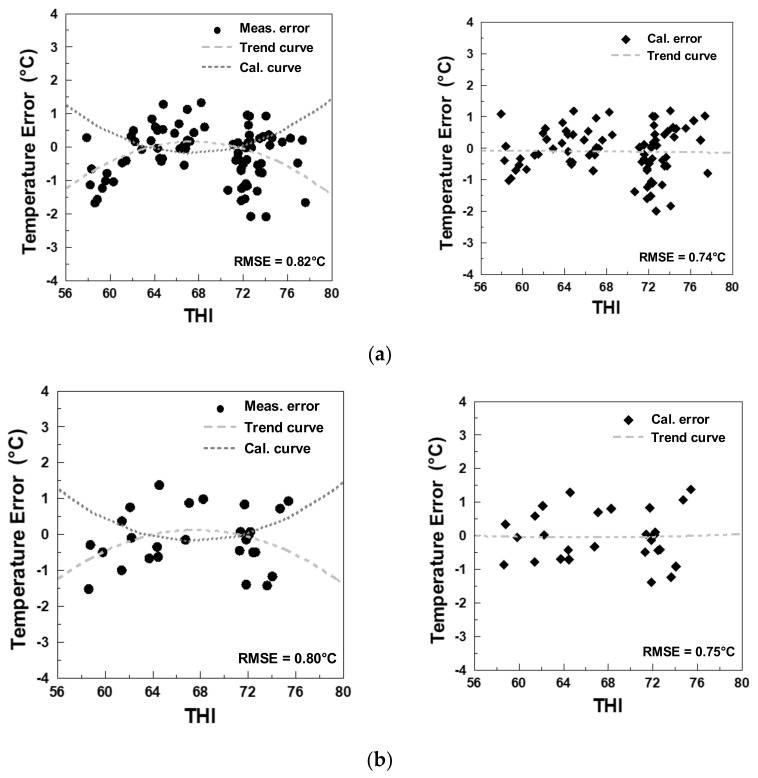
To achieve a sensitive and accurate method in body temperature measurement of cattle, this study explores the uses of infrared thermography (IRT), an anemometer, and a humiture meter as a multiple sensors architecture. The influence of environmental factors on IRT, such as wind speed, ambient temperature, and humidity, was considered. The proposed signal processes removed the IRT frames affected by air flow, and also eliminated the IRT frames affected by random body movement of cattle using the frame difference method. In addition, the proposed calibration method reduced the impact of ambient temperature and humidity on IRT results, thereby increasing the accuracy of IRT temperature. The difference of mean value and standard deviation value between recorded rectal reference temperature and IRT temperature were 0.04 °C and 0.10 °C, respectively, and the proposed system substantially improved the measurement consistency of the IRT temperature and reference on cattle body temperature. Moreover, with a relatively small IRT image sensor, the combination of multiple sensors architecture and proper data processing still achieved good temperature accuracy. The result of the root-mean-square error (RMSE) was 0.74 °C, which is quite close to the accurate result of the IRT measurement.
为了实现牛只体温测量的灵敏准确方法,本研究探索了将红外热像仪(IRT)、风速计和温湿度计作为多传感器架构的应用。考虑了环境因素对 IRT 的影响,如风速、环境温度和湿度。所提出的信号处理方法去除了受气流影响的 IRT 帧,还使用帧差法消除了受牛只随机身体运动影响的 IRT 帧。此外,所提出的校准方法降低了环境温度和湿度对 IRT 结果的影响,从而提高了 IRT 温度的准确性。记录的直肠参考温度和 IRT 温度之间的平均值和标准偏差值的差异分别为 0.04°C 和 0.10°C,该系统显著提高了 IRT 温度和牛体参考温度测量的一致性。此外,由于 IRT 图像传感器相对较小,多传感器架构和适当的数据处理的结合仍然实现了良好的温度准确性。均方根误差(RMSE)的结果为 0.74°C,与 IRT 测量的准确结果相当接近。