Clinic of Gastroenterology, Hepatology and Infectious Diseases, Heinrich Heine University, Moorenstraße 5, 40225 Düsseldorf, Germany.
Cells. 2021 Apr 4;10(4):804. doi: 10.3390/cells10040804.
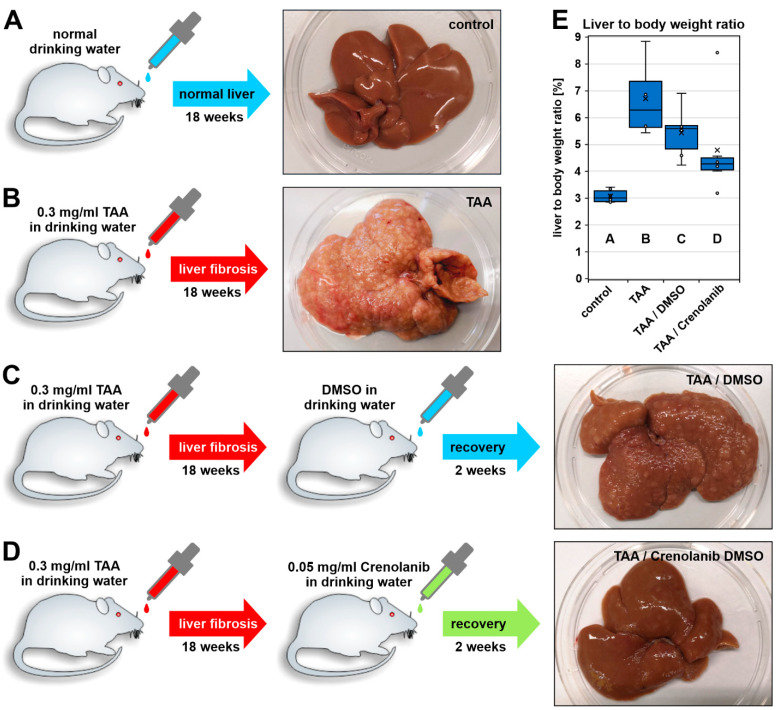
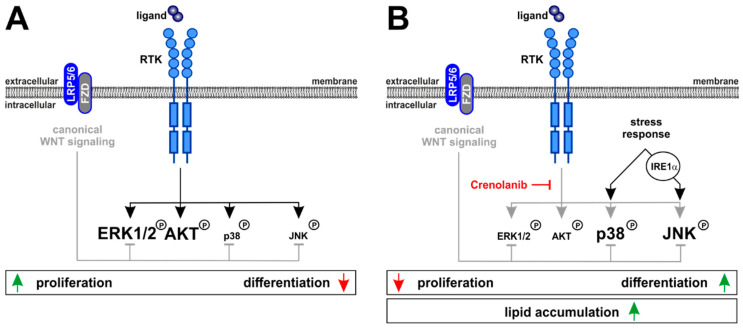
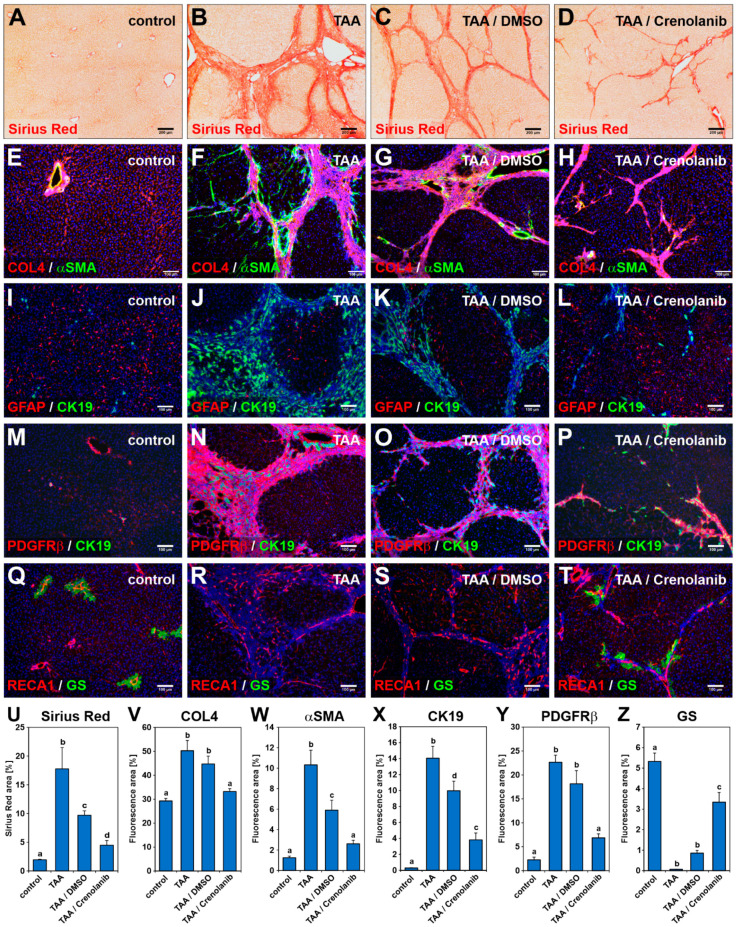
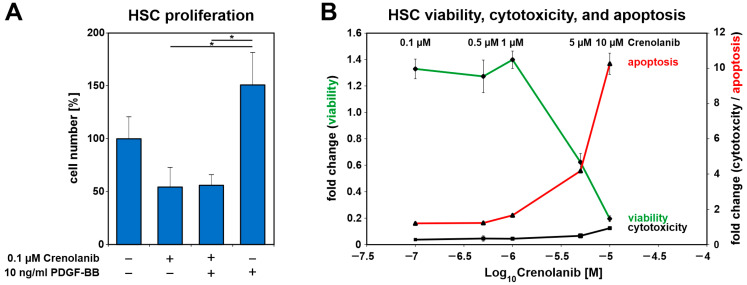
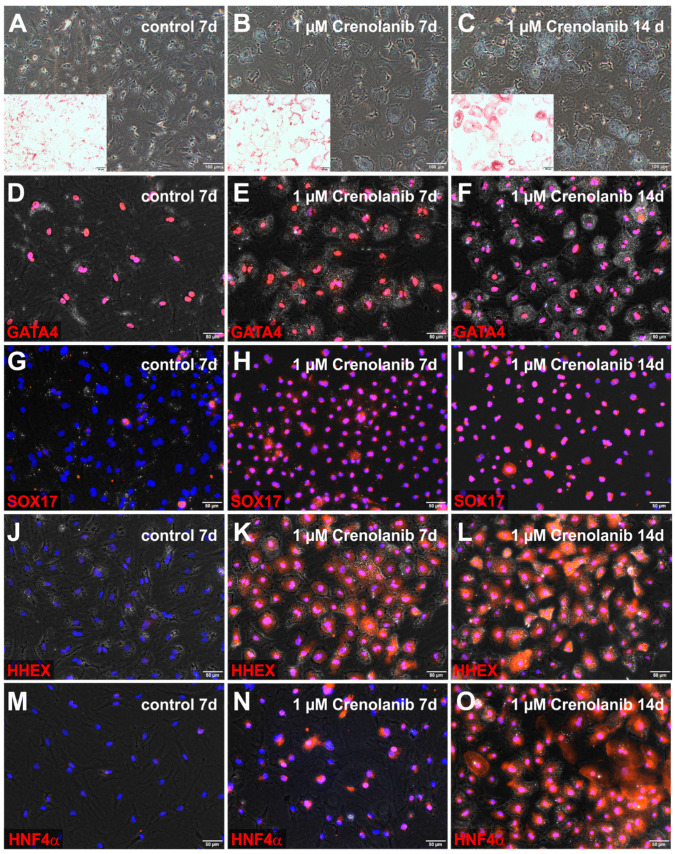
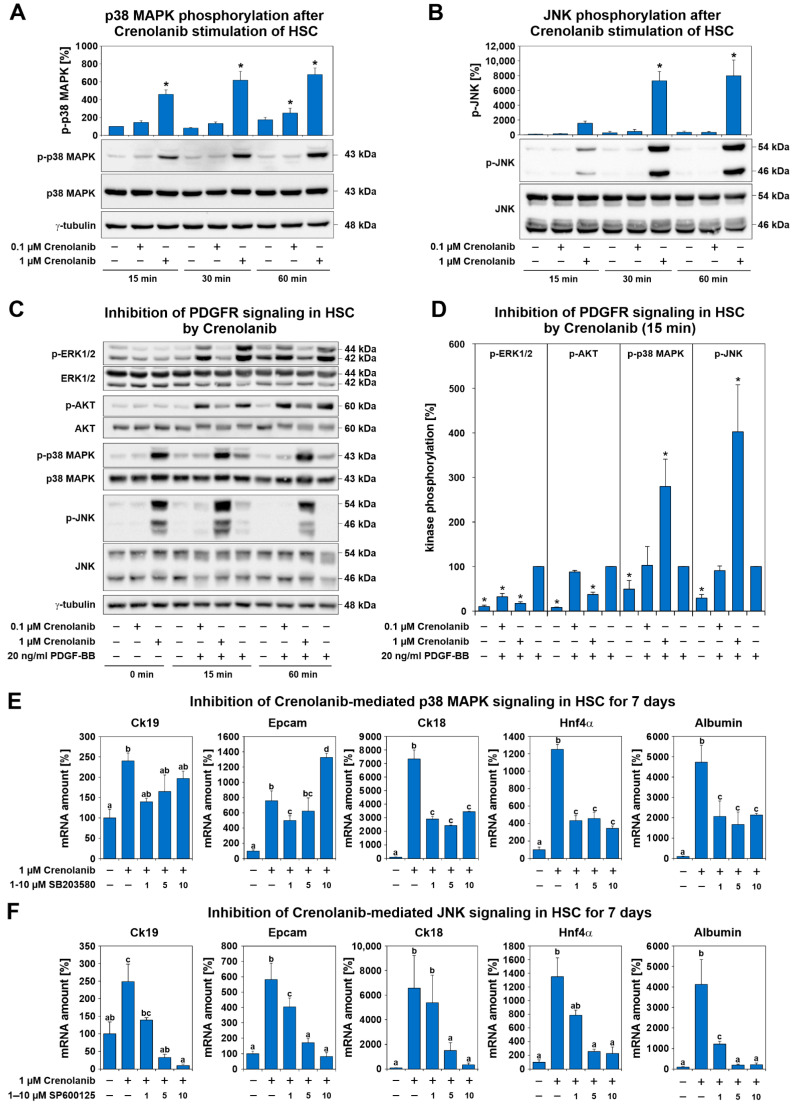
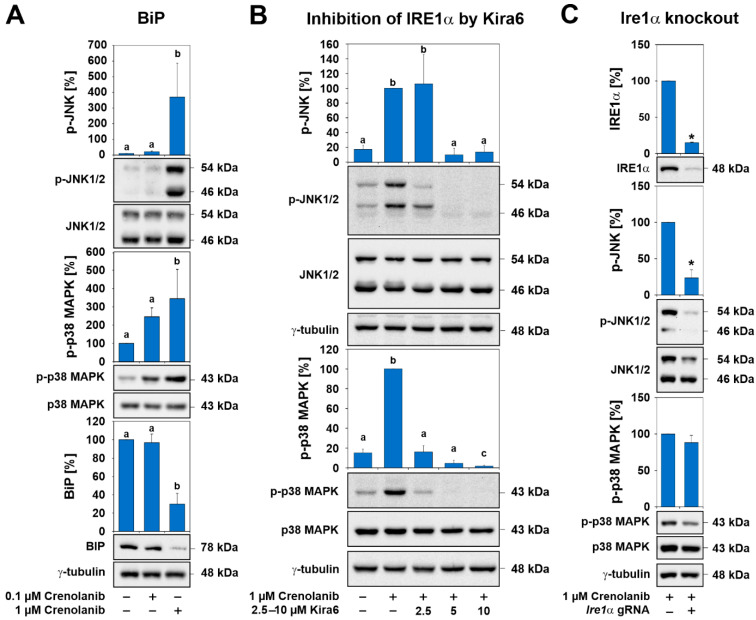
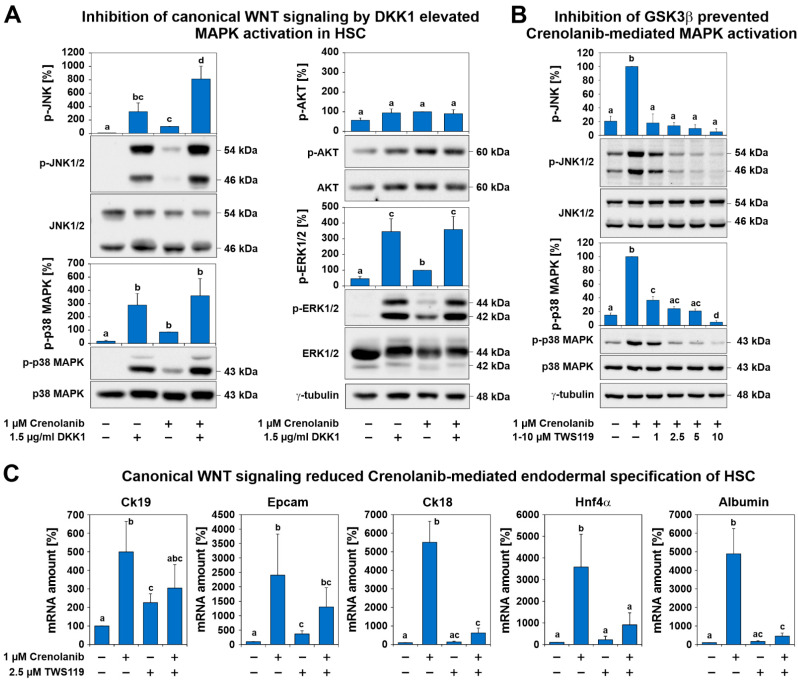
Chronic liver diseases are associated with excessive deposition of extracellular matrix proteins. This so-called fibrosis can progress to cirrhosis and impair vital functions of the liver. We examined whether the receptor tyrosine kinase (RTK) class III inhibitor Crenolanib affects the behavior of hepatic stellate cells (HSC) involved in fibrogenesis. Rats were treated with thioacetamide (TAA) for 18 weeks to trigger fibrosis. After TAA treatment, the animals received Crenolanib for two weeks, which significantly improved recovery from liver fibrosis. Because Crenolanib predominantly inhibits the RTK platelet-derived growth factor receptor-β, impaired HSC proliferation might be responsible for this beneficial effect. Interestingly, blocking of RTK signaling by Crenolanib not only hindered HSC proliferation but also triggered their specification into hepatic endoderm. Endodermal specification was mediated by p38 mitogen-activated kinase (p38 MAPK) and c-Jun-activated kinase (JNK) signaling; however, this process remained incomplete, and the HSC accumulated lipids. JNK activation was induced by stress response-associated inositol-requiring enzyme-1α (IRE1α) in response to Crenolanib treatment, whereas β-catenin-dependent WNT signaling was able to counteract this process. In conclusion, the Crenolanib-mediated inhibition of RTK impeded HSC proliferation and triggered stress responses, initiating developmental processes in HSC that might have contributed to improved recovery from liver fibrosis in TAA-treated rats.
慢性肝脏疾病与细胞外基质蛋白的过度沉积有关。这种所谓的纤维化可进展为肝硬化,并损害肝脏的重要功能。我们研究了受体酪氨酸激酶(RTK)III 类抑制剂 Crenolanib 是否会影响参与纤维化的肝星状细胞(HSC)的行为。大鼠用硫代乙酰胺(TAA)处理 18 周以引发纤维化。在 TAA 治疗后,动物接受 Crenolanib 治疗两周,这显著改善了肝纤维化的恢复。由于 Crenolanib 主要抑制 RTK 血小板衍生生长因子受体-β,受损的 HSC 增殖可能是这种有益效果的原因。有趣的是,Crenolanib 阻断 RTK 信号不仅抑制了 HSC 的增殖,还触发了它们向肝内胚层的特化。内胚层特化由 p38 有丝分裂原激活蛋白激酶(p38 MAPK)和 c-Jun 激活的激酶(JNK)信号介导;然而,这个过程是不完全的,HSC 积累了脂质。JNK 激活是由 Crenolanib 处理诱导的与应激反应相关的肌醇需求酶 1α(IRE1α)诱导的,而β-连环蛋白依赖性 WNT 信号能够抵消这个过程。总之,Crenolanib 介导的 RTK 抑制抑制了 HSC 的增殖并触发了应激反应,启动了 HSC 中的发育过程,这可能有助于改善 TAA 处理大鼠的肝纤维化恢复。