Sordo-Bahamonde Christian, Lorenzo-Herrero Seila, Gonzalez-Rodriguez Ana P, R Payer Ángel, González-García Esther, López-Soto Alejandro, Gonzalez Segundo
Department of Functional Biology, Immunology, Universidad de Oviedo, 33006 Oviedo, Spain.
Instituto Universitario de Oncología del Principado de Asturias (IUOPA), 33006 Oviedo, Spain.
Cancers (Basel). 2021 Apr 7;13(8):1766. doi: 10.3390/cancers13081766.
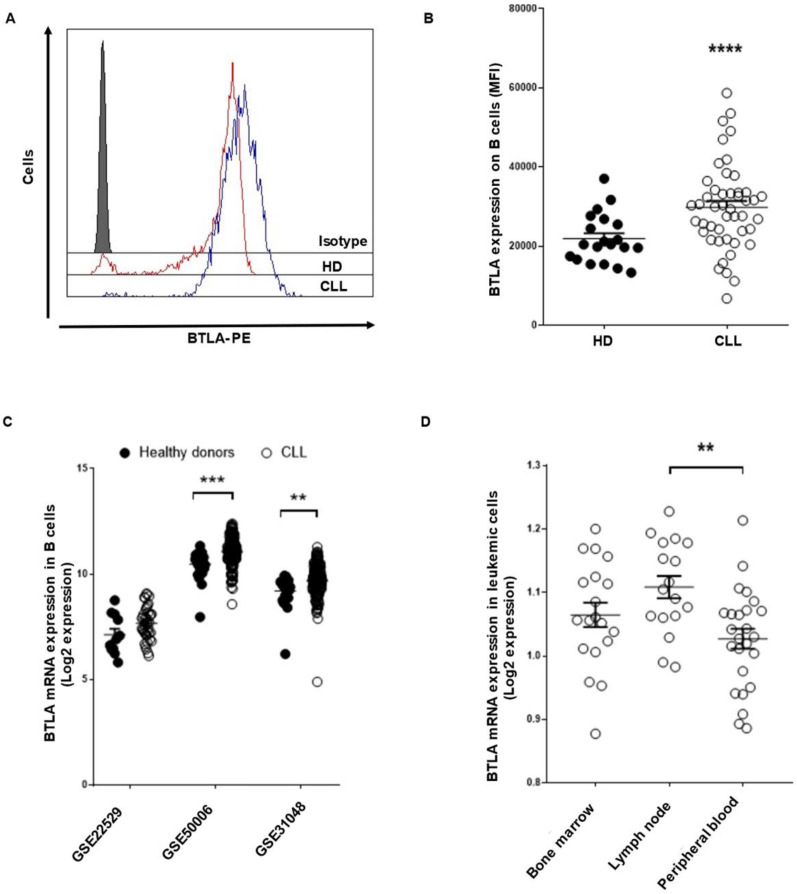
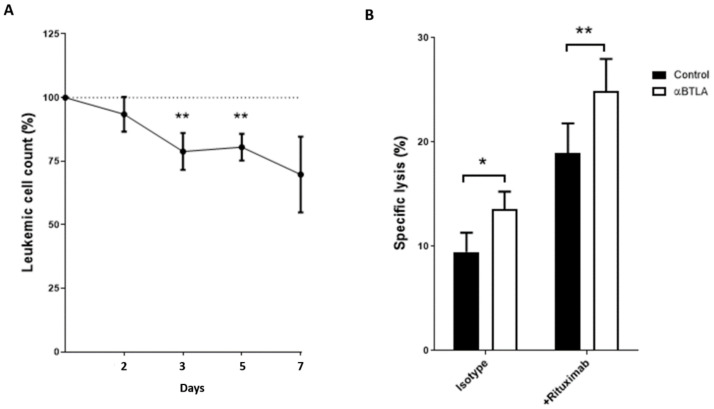
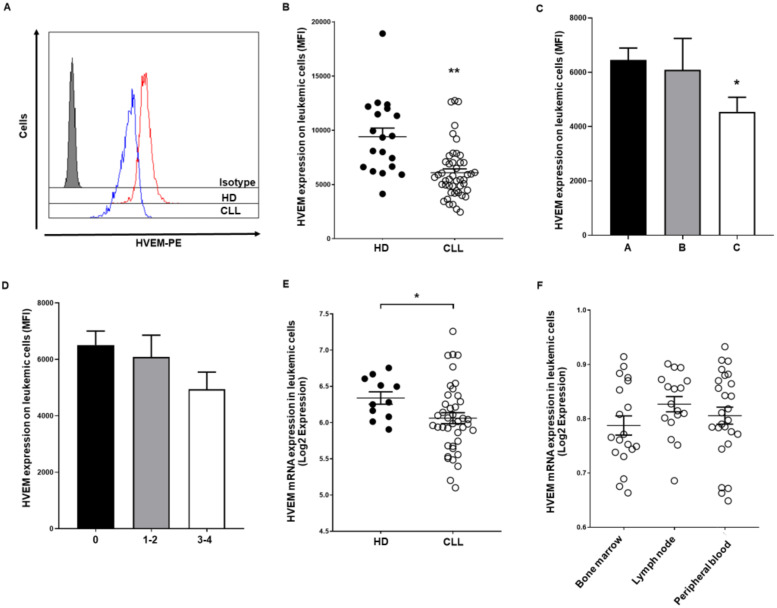
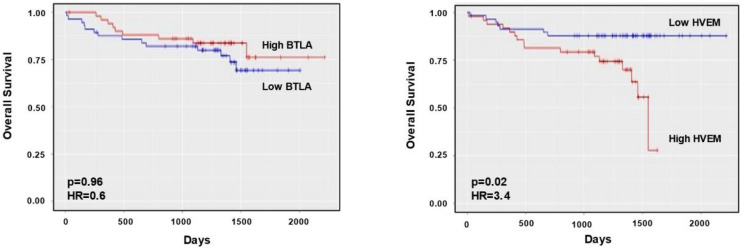
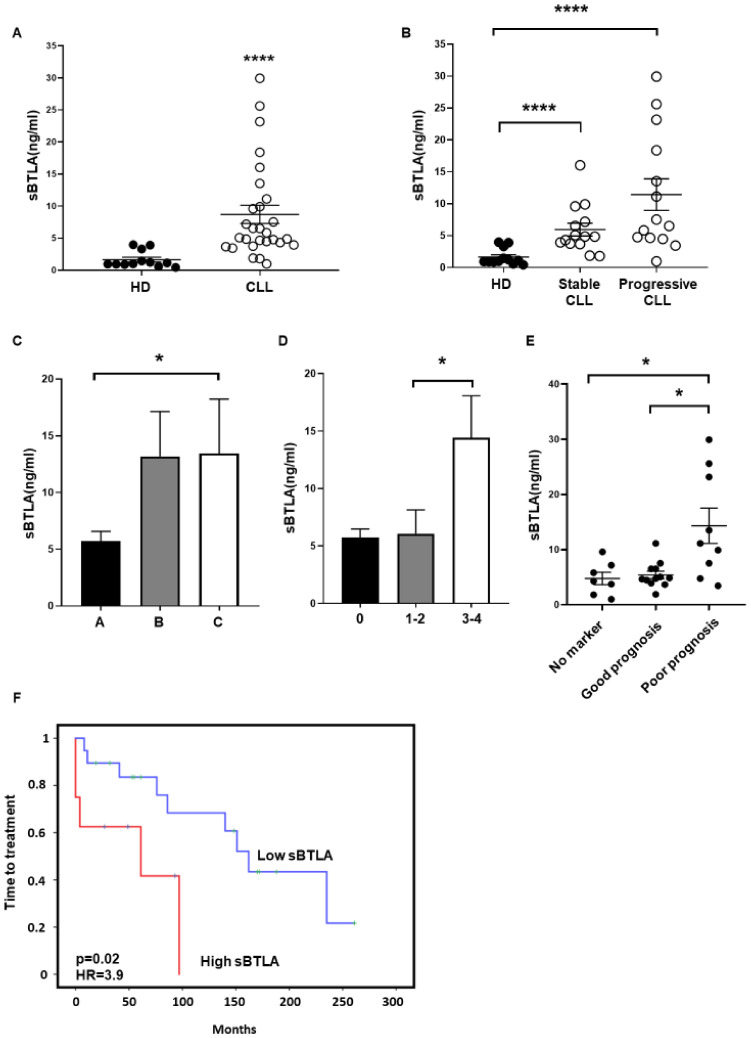
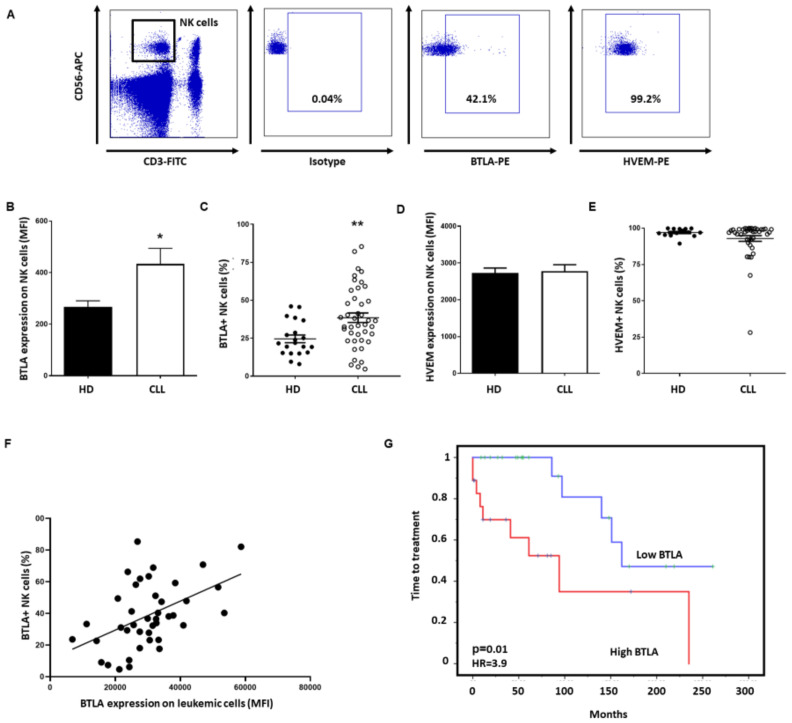
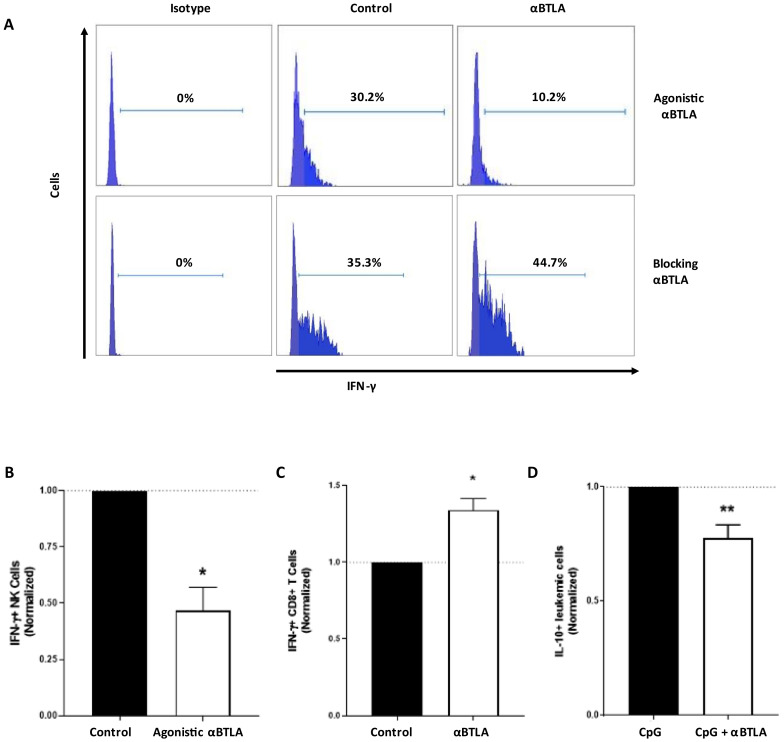
Chronic lymphocytic leukemia (CLL) is characterized by progressive immunosuppression and diminished cancer immunosurveillance. Immune checkpoint blockade (ICB)-based therapies, a major breakthrough against cancer, have emerged as a powerful tool to reinvigorate antitumor responses. Herein, we analyzed the role of the novel inhibitory checkpoint BTLA and its ligand, HVEM, in the regulation of leukemic and natural killer (NK) cells in CLL. Flow cytometry analyses showed that BTLA expression is upregulated on leukemic cells and NK cells from patients with CLL, whereas HVEM is downregulated only in leukemic cells, especially in patients with advanced Rai-Binet stage. In silico analysis revealed that increased , but not , mRNA expression in leukemic cells correlated with diminished overall survival. Further, soluble BTLA (sBTLA) was found to be increased in the sera of patients with CLL and highly correlated with poor prognostic markers and shorter time to treatment. BTLA blockade with an anti-BTLA monoclonal antibody depleted leukemic cells and boosted NK cell-mediated responses ex vivo by increasing their IFN-γ production, cytotoxic capability, and antibody-dependent cytotoxicity (ADCC). In agreement with an inhibitory role of BTLA in NK cells, surface BTLA expression on NK cells was associated with poor outcome in patients with CLL. Overall, this study is the first to bring to light a role of BTLA/HVEM in the suppression of NK cell-mediated immune responses in CLL and its impact on patient's prognosis, suggesting that BTLA/HVEM axis may be a potential therapeutic target in this disease.
慢性淋巴细胞白血病(CLL)的特征是进行性免疫抑制和癌症免疫监视减弱。基于免疫检查点阻断(ICB)的疗法是抗癌领域的一项重大突破,已成为重振抗肿瘤反应的有力工具。在此,我们分析了新型抑制性检查点BTLA及其配体HVEM在CLL中白血病细胞和自然杀伤(NK)细胞调节中的作用。流式细胞术分析表明,CLL患者白血病细胞和NK细胞上BTLA表达上调,而HVEM仅在白血病细胞中下调,尤其是在Rai-Binet分期较晚的患者中。计算机分析显示,白血病细胞中BTLA而非HVEM的mRNA表达增加与总生存期缩短相关。此外,发现CLL患者血清中可溶性BTLA(sBTLA)增加,且与不良预后标志物和较短的治疗时间高度相关。用抗BTLA单克隆抗体阻断BTLA可在体外清除白血病细胞,并通过增加NK细胞的IFN-γ产生、细胞毒性能力和抗体依赖性细胞毒性(ADCC)来增强NK细胞介导的反应。与BTLA在NK细胞中的抑制作用一致,NK细胞表面BTLA表达与CLL患者的不良预后相关。总体而言,本研究首次揭示了BTLA/HVEM在抑制CLL中NK细胞介导的免疫反应及其对患者预后的影响中的作用,表明BTLA/HVEM轴可能是该疾病的潜在治疗靶点。