Zoet Harmen A, de Jongh Ad, van Minnen Agnes
PSYTREC, 3723 MB Bilthoven, The Netherlands.
Academic Centre for Dentistry Amsterdam (ACTA), University of Amsterdam and VU University Amsterdam, 1081 LA Amsterdam, The Netherlands.
J Clin Med. 2021 Apr 7;10(8):1553. doi: 10.3390/jcm10081553.
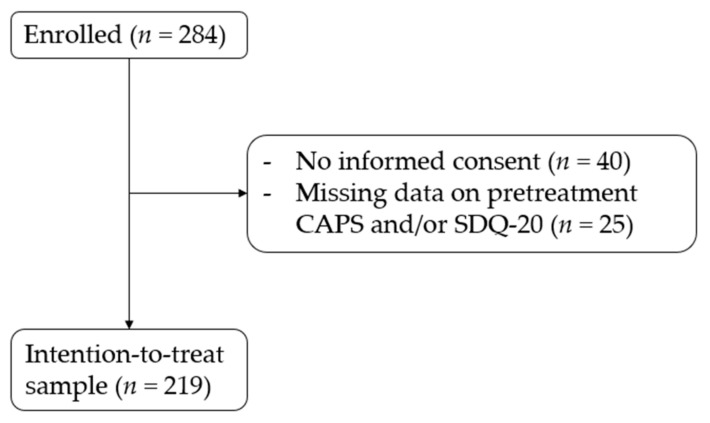
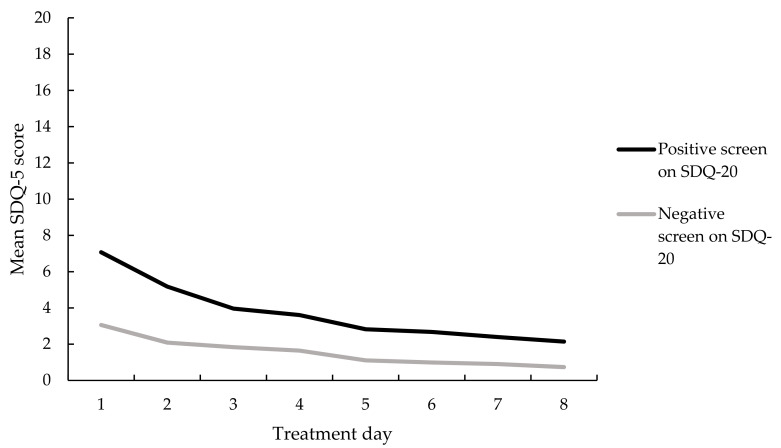
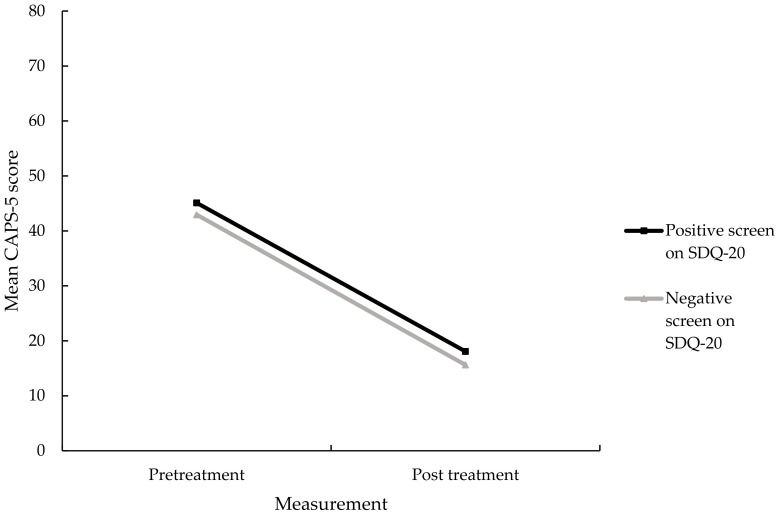
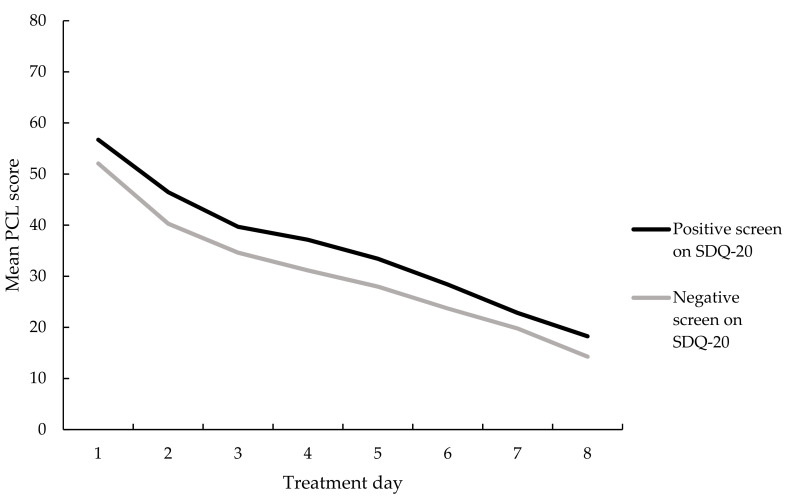
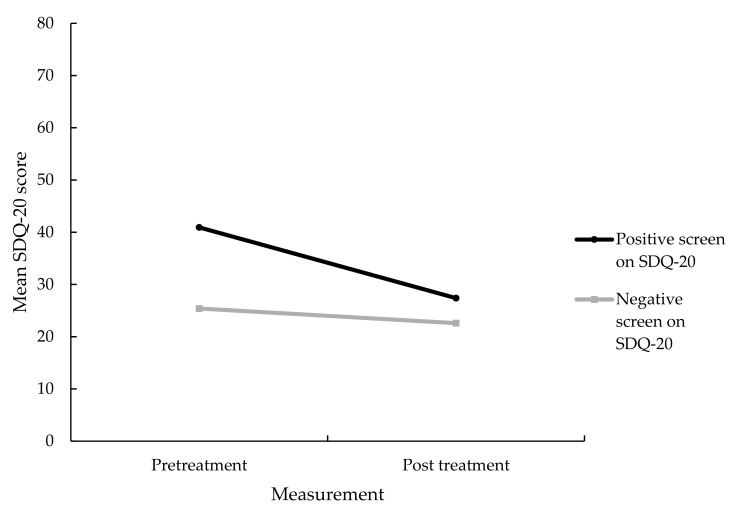
For patients with complex or other severe forms of PTSD, particularly in cases with dissociative symptoms, different treatment approaches have been suggested. However, the influence of somatoform dissociation on the effectiveness of trauma-focused treatment has hardly ever been studied. This study aims to test the hypotheses that (1) PTSD patients reporting a low level and those reporting a high level of somatoform dissociative symptoms would both benefit from an intensive trauma-focused treatment, and that (2) somatoform dissociative symptoms would alleviate. Participants were 220 patients with severe PTSD, enrolled in an intensive treatment program combining EMDR therapy and prolonged exposure therapy, without a preceding stabilization phase. Trauma history was diversified, and comorbidity was high. PTSD symptoms (CAPS-5 and PCL-5) and somatoform dissociative symptoms (SDQ-5 and SDQ-20) were assessed at pre-treatment, post-treatment and at six months after completion of treatment. The course of both PTSD and somatoform dissociative symptoms was compared for individuals reporting low and for those reporting high levels of somatoform dissociative symptoms. Large effect sizes were observed regarding PTSD symptoms reduction for patients with both low and high levels of somatoform dissociation. Somatoform dissociation did not impact improvement in terms of PTSD symptom reduction. The severity of somatoform dissociative symptoms decreased significantly in both groups. This decrease was greater for those with a positive screen for a dissociative disorder. These results add further support to the notion that the presence of strong somatoform dissociative symptoms in patients with PTSD does not necessarily call for a different treatment approach. Clinical implications are discussed.
对于患有复杂或其他严重形式创伤后应激障碍(PTSD)的患者,尤其是存在解离症状的情况,已提出了不同的治疗方法。然而,躯体形式解离对以创伤为重点的治疗效果的影响几乎从未被研究过。本研究旨在检验以下假设:(1)报告低水平和高水平躯体形式解离症状的PTSD患者都将从强化的以创伤为重点的治疗中获益,以及(2)躯体形式解离症状会减轻。参与者为220名患有严重PTSD的患者,他们参加了一个结合眼动脱敏再处理疗法(EMDR)和延长暴露疗法的强化治疗项目,且没有前期的稳定阶段。创伤史多样,共病率高。在治疗前、治疗后以及治疗结束后六个月评估PTSD症状(CAPS - 5和PCL - 5)和躯体形式解离症状(SDQ - 5和SDQ - 20)。比较了报告低水平和高水平躯体形式解离症状的个体的PTSD和躯体形式解离症状的病程。观察到,无论躯体形式解离水平高低,患者在PTSD症状减轻方面都有较大的效应量。躯体形式解离对PTSD症状减轻方面的改善没有影响。两组中躯体形式解离症状的严重程度均显著降低。对于解离障碍筛查呈阳性的患者,这种降低更为明显。这些结果进一步支持了这样一种观点,即PTSD患者中存在强烈的躯体形式解离症状不一定需要采用不同的治疗方法。文中讨论了临床意义。