Ferreira João Paulo de Lima, Queiroz Alexandre José de Melo, Figueirêdo Rossana Maria Feitosa de, Silva Wilton Pereira da, Gomes Josivanda Palmeira, Santos Dyego da Costa, Silva Hanndson Araujo, Rocha Ana Paula Trindade, Paiva Anna Catarina Costa de, Chaves Alan Del Carlos Gomes, Lima Antônio Gilson Barbosa de, Andrade Romário Oliveira de
Department of Agricultural Engineering, Federal University of Campina Grande, Campina Grande 58429-900, Brazil.
Department of Physics, Federal University of Campina Grande, Campina Grande 58429-900, Brazil.
Foods. 2021 Apr 6;10(4):788. doi: 10.3390/foods10040788.
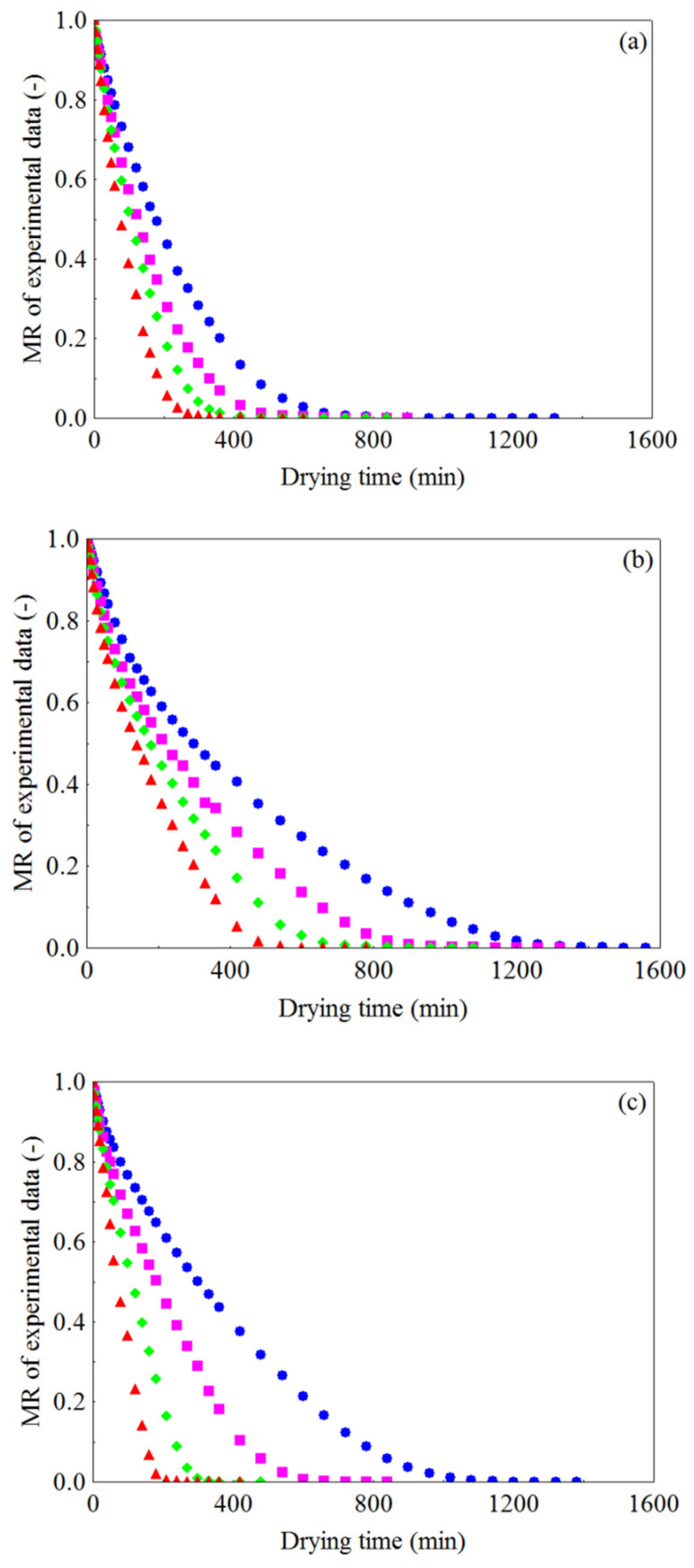
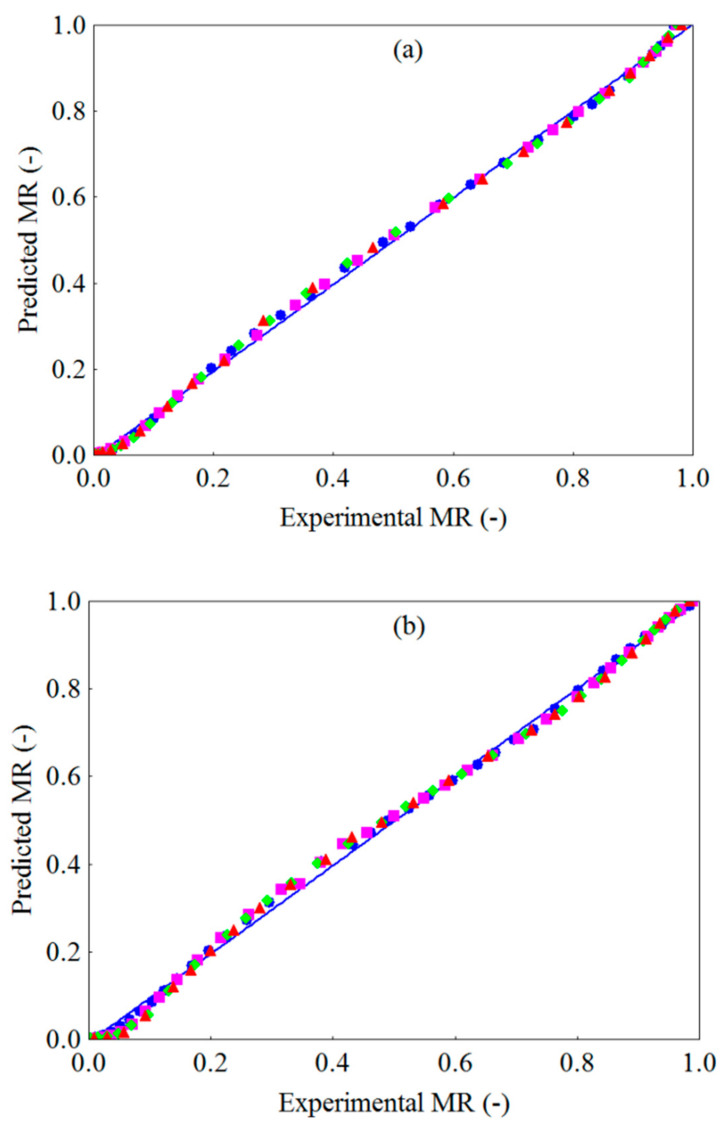
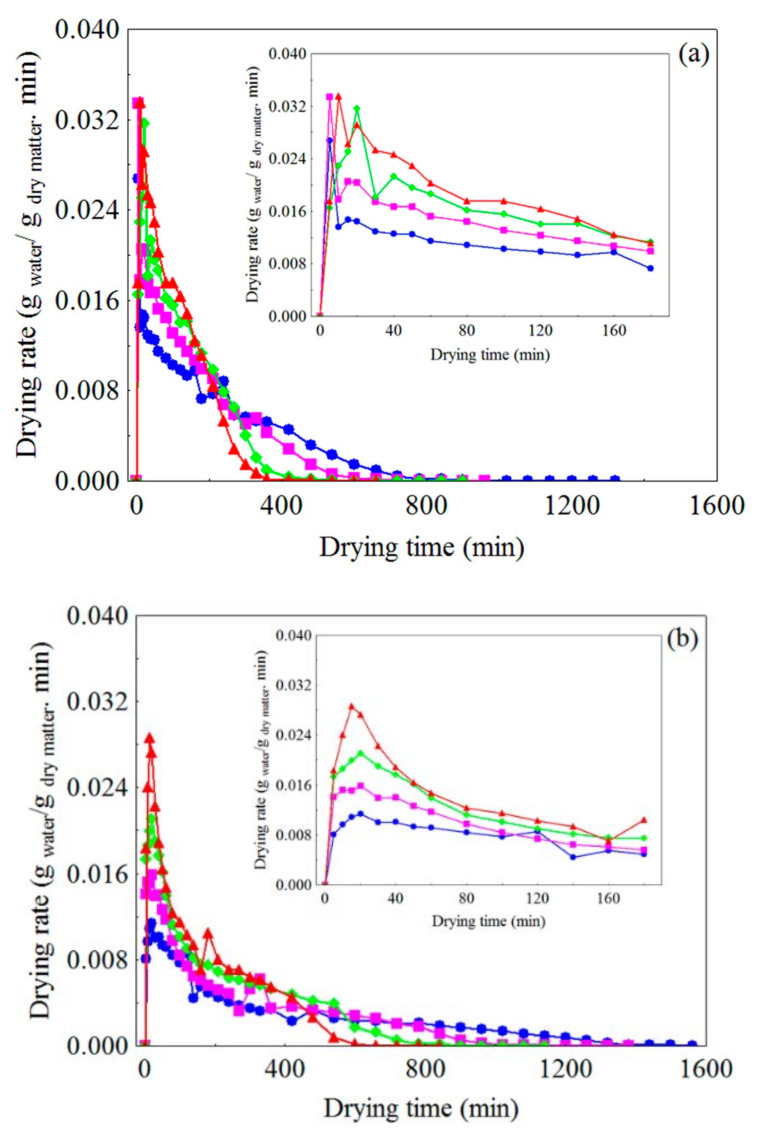
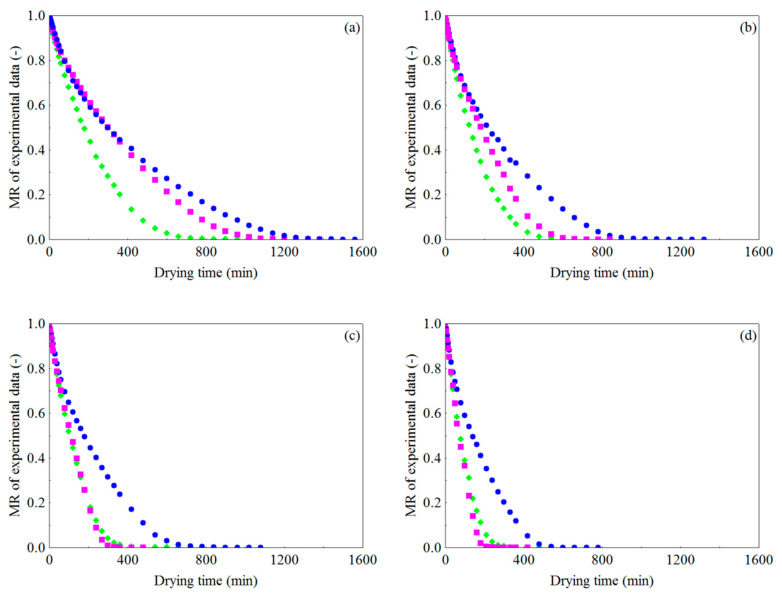
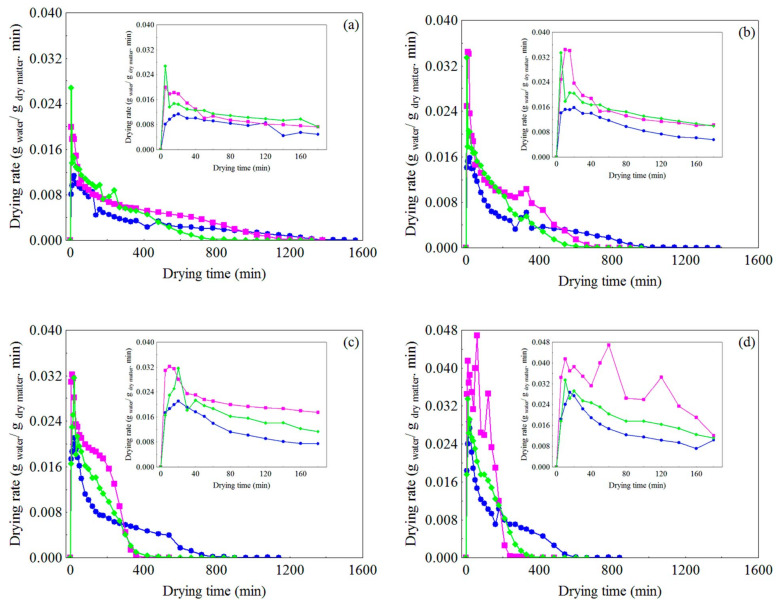
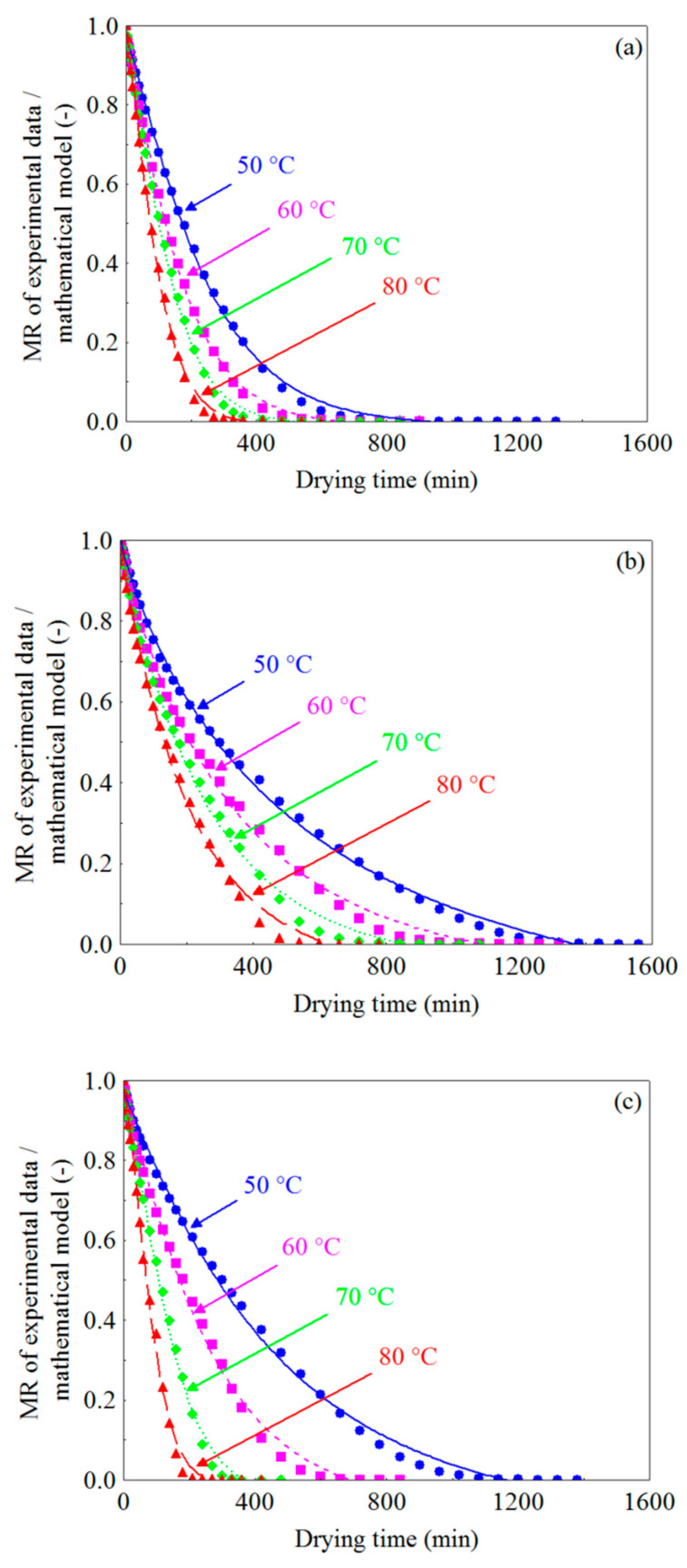
The residue generated from the processing of (cumbeba) fruit pulp represents a large amount of material that is discarded without proper application. Despite that, it is a raw material that is source of ascorbic acid, carotenoids and phenolic compounds, which are valued in nutraceutical diets for allegedly combating free radicals generated in metabolism. This research paper presents a study focused on the mathematical modeling of drying kinetics and the effect of the process on the level of bioactive of cumbeba residue. The experiments of cumbeba residue drying (untreated or whole residue (WR), crushed residue (CR) and residue in the form of foam (FR)) were carried out in a fixed-bed dryer at four air temperatures (50, 60, 70 and 80 °C). Effective water diffusivity (D) was determined by the inverse method and its dependence on temperature was described by an Arrhenius-type equation. It was observed that, regardless of the type of pretreatment, the increase in air temperature resulted in higher rate of water removal. The Midilli model showed better simulation of cumbeba residue drying kinetics than the other models tested within the experimental temperature range studied. Effective water diffusivity (D) ranged from 6.4890 to 11.1900 × 10 m/s, 2.9285 to 12.754 × 10 m/s and 1.5393 × 10 to 12.4270 × 10 m/s with activation energy of 22.3078, 46.7115 and 58.0736 kJ/mol within the temperature range of 50-80 °C obtained for the whole cumbeba, crushed cumbeba and cumbeba residue in the form of foam, respectively. In relation to bioactive compounds, it was observed that for a fixed temperature the whole residue had higher retention of bioactive compounds, especially phenolic compounds, whereas the crushed residue and the residue in the form of foam had intermediate and lower levels, respectively. This study provides evidence that cumbeba residue in its whole form can be used for the recovery of natural antioxidant bioactive compounds, mainly phenolic compounds, with the possibility of application in the food and pharmaceutical industries.
(卡姆贝巴)果肉加工产生的残渣是大量未经妥善利用就被丢弃的物质。尽管如此,它仍是一种原材料,是抗坏血酸、类胡萝卜素和酚类化合物的来源,这些物质在营养膳食中因据称能对抗新陈代谢产生的自由基而受到重视。本研究论文呈现了一项聚焦于干燥动力学数学建模以及该过程对卡姆贝巴残渣生物活性水平影响的研究。卡姆贝巴残渣干燥实验(未处理或完整残渣(WR)、粉碎残渣(CR)和泡沫状残渣(FR))在固定床干燥器中于四种空气温度(50、60、70和80°C)下进行。有效水分扩散系数(D)通过反演法测定,其与温度的关系用阿伦尼乌斯型方程描述。观察到,无论预处理类型如何,空气温度升高都会导致更高的水分去除率。在所研究的实验温度范围内,米迪利模型对卡姆贝巴残渣干燥动力学的模拟比其他测试模型更好。完整卡姆贝巴、粉碎卡姆贝巴和泡沫状卡姆贝巴残渣在50 - 80°C温度范围内的有效水分扩散系数(D)分别为6.4890至11.1900×10⁻¹⁰m²/s、2.9285至12.754×10⁻¹⁰m²/s和1.5393×10⁻¹⁰至12.4270×10⁻¹⁰m²/s,活化能分别为22.3078、46.7115和58.0736 kJ/mol。关于生物活性化合物,观察到在固定温度下,完整残渣具有更高的生物活性化合物保留率,尤其是酚类化合物,而粉碎残渣和泡沫状残渣的保留率分别处于中等和较低水平。本研究提供了证据表明完整形式的卡姆贝巴残渣可用于回收天然抗氧化生物活性化合物,主要是酚类化合物,并有可能应用于食品和制药行业。