Shaw Priyanka, Kumar Naresh, Privat-Maldonado Angela, Smits Evelien, Bogaerts Annemie
Research Group PLASMANT, Department of Chemistry, University of Antwerp, 2610 Antwerp, Belgium.
Solid Tumor Immunology Group, Center for Oncological Research (CORE), Integrated Personalized and Precision Oncology Network (IPPON), University of Antwerp, 2610 Antwerp, Belgium.
Cancers (Basel). 2021 Apr 8;13(8):1780. doi: 10.3390/cancers13081780.
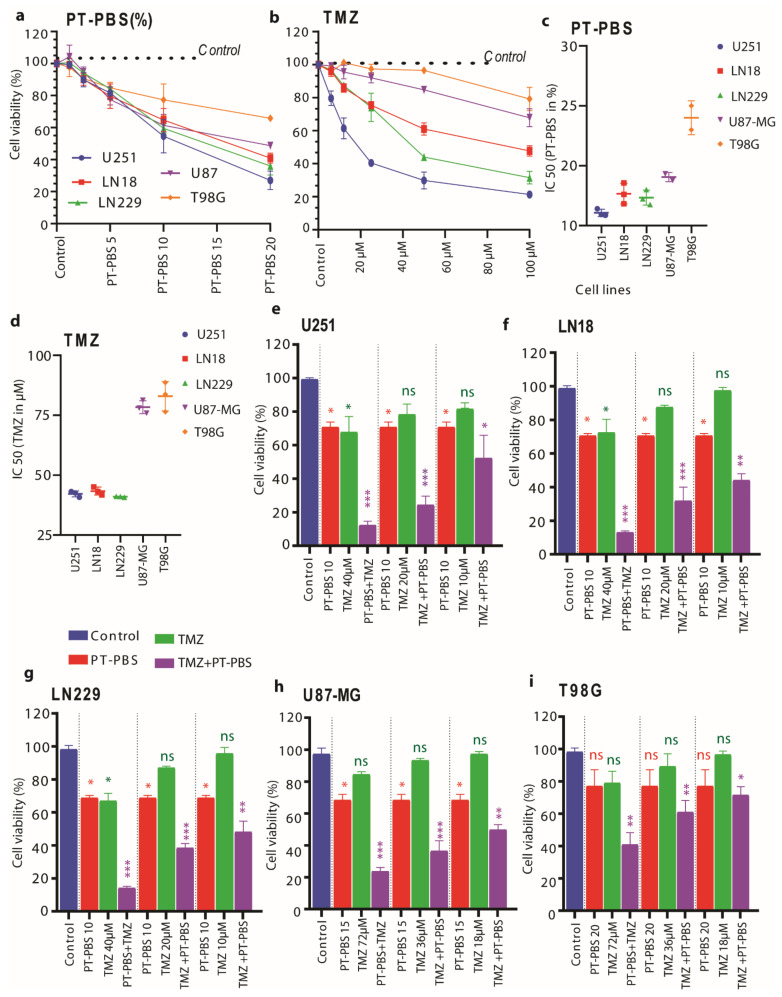
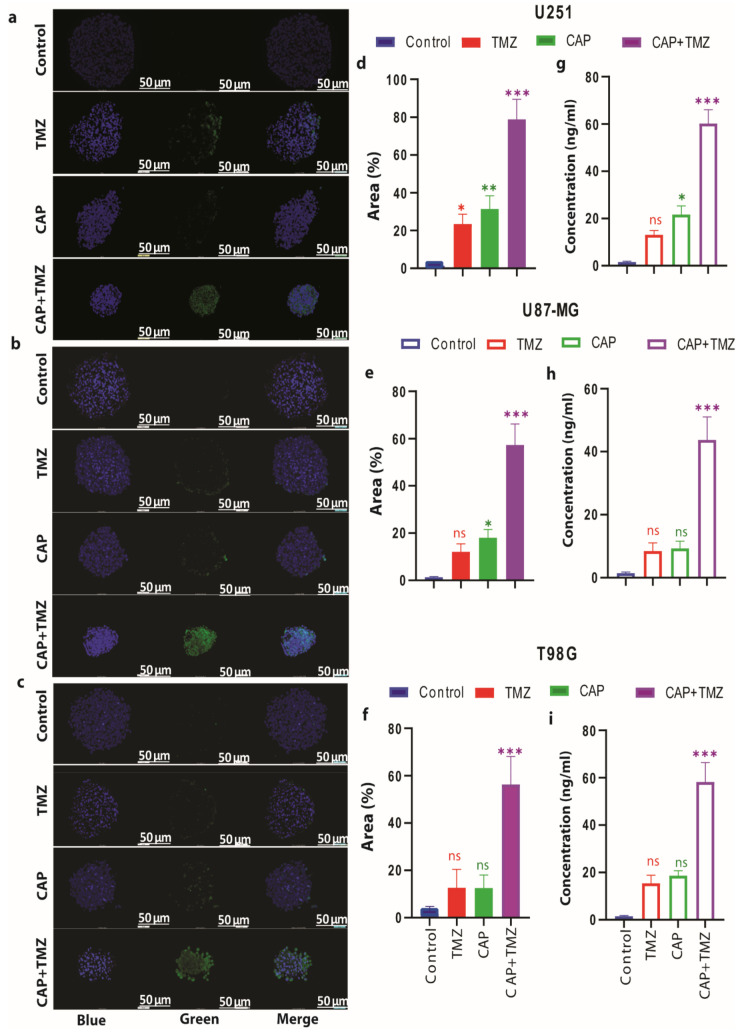
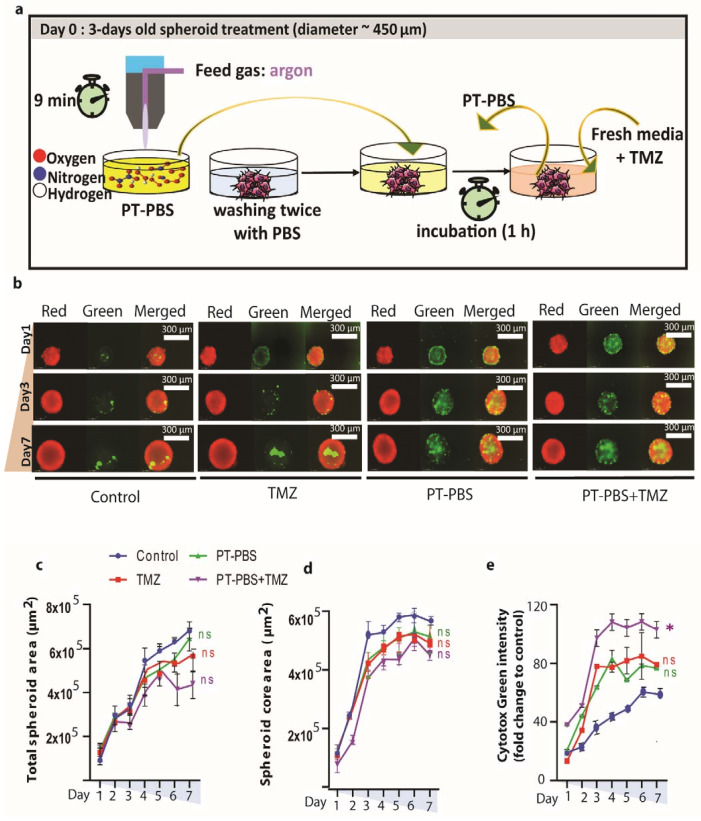
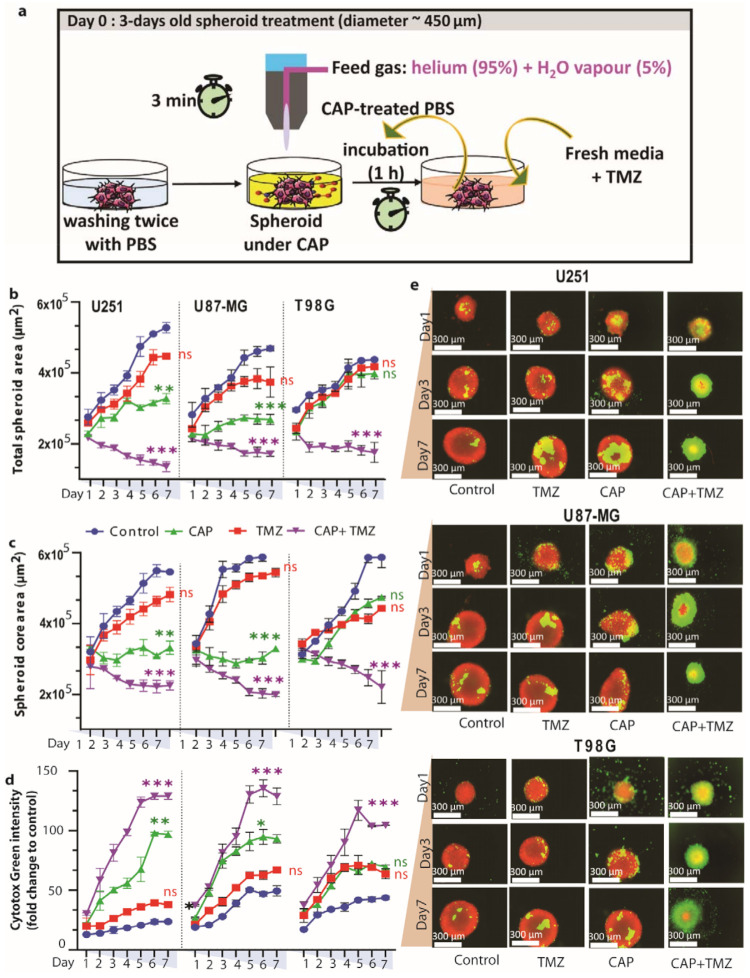
Glioblastoma multiforme (GBM) is the most frequent and aggressive primary malignant brain tumor in adults. Current standard radiotherapy and adjuvant chemotherapy with the alkylating agent temozolomide (TMZ) yield poor clinical outcome. This is due to the stem-like properties of tumor cells and genetic abnormalities in GBM, which contribute to resistance to TMZ and progression. In this study, we used cold atmospheric plasma (CAP) to enhance the sensitivity to TMZ through inhibition of antioxidant signaling (linked to TMZ resistance). We demonstrate that CAP indeed enhances the cytotoxicity of TMZ by targeting the antioxidant specific glutathione (GSH)/glutathione peroxidase 4 (GPX4) signaling. We optimized the threshold concentration of TMZ on five different GBM cell lines (U251, LN18, LN229, U87-MG and T98G). We combined TMZ with CAP and tested it on both TMZ-sensitive (U251, LN18 and LN229) and TMZ-resistant (U87-MG and T98G) cell lines using two-dimensional cell cultures. Subsequently, we used a three-dimensional spheroid model for the U251 (TMZ-sensitive) and U87-MG and T98G (TMZ-resistant) cells. The sensitivity of TMZ was enhanced, i.e., higher cytotoxicity and spheroid shrinkage was obtained when TMZ and CAP were administered together. We attribute the anticancer properties to the release of intracellular reactive oxygen species, through inhibiting the GSH/GPX4 antioxidant machinery, which can lead to DNA damage. Overall, our findings suggest that the combination of CAP with TMZ is a promising combination therapy to enhance the efficacy of TMZ towards the treatment of GBM spheroids.
多形性胶质母细胞瘤(GBM)是成人中最常见且侵袭性最强的原发性恶性脑肿瘤。目前使用烷化剂替莫唑胺(TMZ)进行的标准放疗和辅助化疗临床效果不佳。这是由于肿瘤细胞的干细胞样特性以及GBM中的基因异常,这些因素导致对TMZ产生耐药性并促使肿瘤进展。在本研究中,我们使用冷大气等离子体(CAP)通过抑制抗氧化信号传导(与TMZ耐药性相关)来增强对TMZ的敏感性。我们证明CAP确实通过靶向抗氧化剂特异性谷胱甘肽(GSH)/谷胱甘肽过氧化物酶4(GPX4)信号传导来增强TMZ的细胞毒性。我们在五种不同的GBM细胞系(U251、LN18、LN229、U87 - MG和T98G)上优化了TMZ的阈值浓度。我们将TMZ与CAP联合使用,并在二维细胞培养中对TMZ敏感(U251、LN18和LN229)和TMZ耐药(U87 - MG和T98G)细胞系进行测试。随后,我们对U251(TMZ敏感)、U87 - MG和T98G(TMZ耐药)细胞使用三维球体模型。当TMZ和CAP联合使用时,TMZ的敏感性增强,即获得了更高的细胞毒性和球体收缩。我们将抗癌特性归因于通过抑制GSH/GPX4抗氧化机制释放细胞内活性氧,这可导致DNA损伤。总体而言,我们的研究结果表明,CAP与TMZ联合是一种有前景的联合疗法,可增强TMZ对GBM球体的治疗效果。