Department of Vascular Surgery, Xuanwu Hospital, Capital Medical University and Institute of Vascular Surgery, Capital Medical University, Beijing 100053, China.
Vascular Biology & Therapeutics Program, Yale School of Medicine, New Haven, CT 06519, USA.
Cells. 2021 Apr 2;10(4):792. doi: 10.3390/cells10040792.
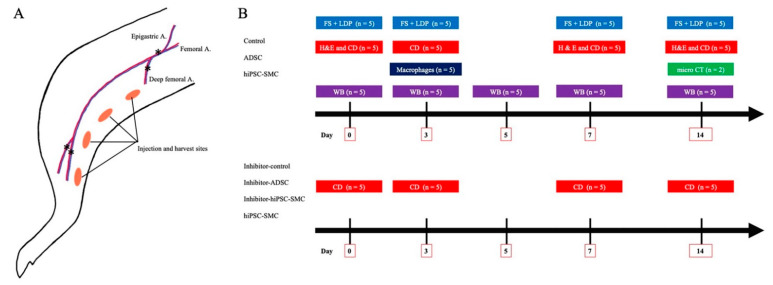
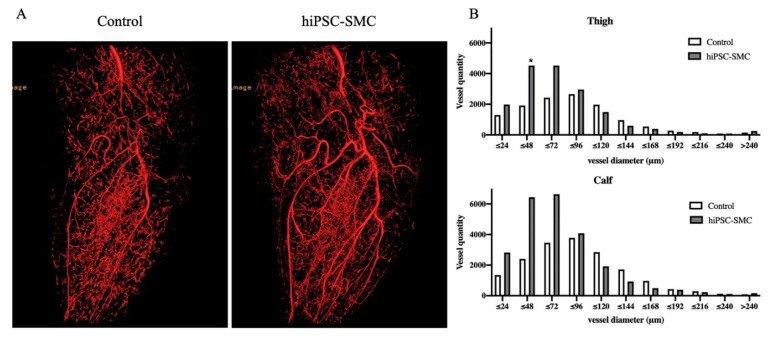
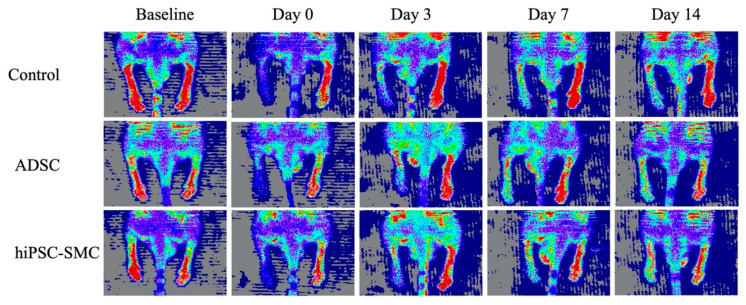
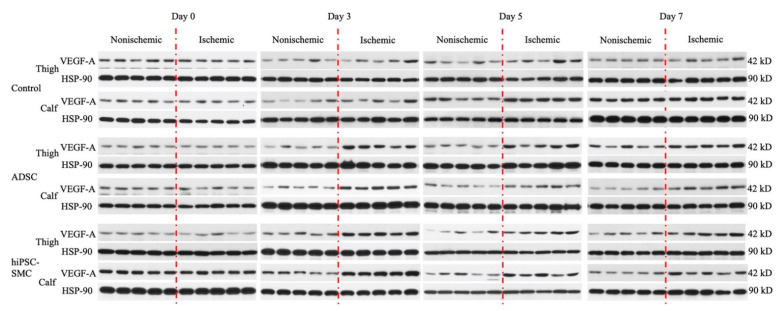
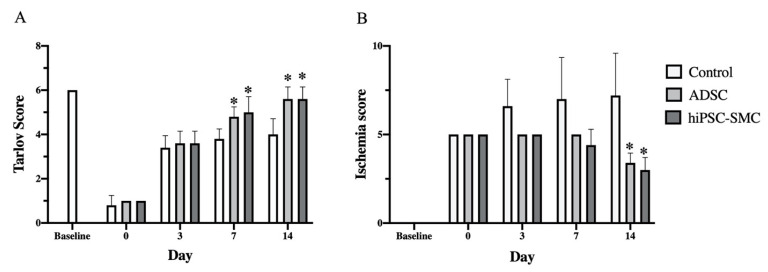
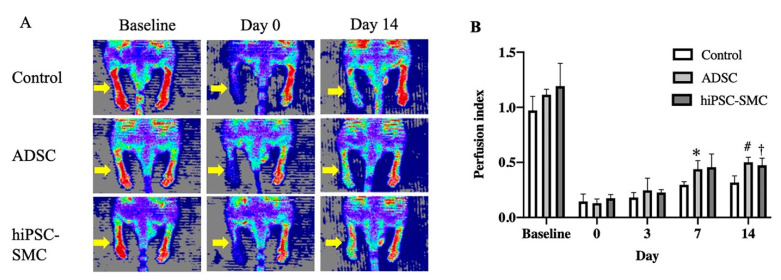
Induced pluripotent stem cells (iPSC) represent an innovative, somatic cell-derived, easily obtained and renewable stem cell source without considerable ethical issues. iPSC and their derived cells may have enhanced therapeutic and translational potential compared with other stem cells. We previously showed that human iPSC-derived smooth muscle cells (hiPSC-SMC) promote angiogenesis and wound healing. Accordingly, we hypothesized that hiPSC-SMC may be a novel treatment for human patients with chronic limb-threatening ischemia who have no standard options for therapy. We determined the angiogenic potential of hiPSC-SMC in a murine hindlimb ischemia model. hiPSC-SMC were injected intramuscularly into nude mice after creation of hindlimb ischemia. Functional outcomes and perfusion were measured using standardized scores, laser Doppler imaging, microCT, histology and immunofluorescence. Functional outcomes and blood flow were improved in hiPSC-SMC-treated mice compared with controls (Tarlov score, < 0.05; Faber score, < 0.05; flow, = 0.054). hiPSC-SMC-treated mice showed fewer gastrocnemius fibers ( < 0.0001), increased fiber area ( < 0.0001), and enhanced capillary density ( < 0.01); microCT showed more arterioles (<96 μm). hiPSC-SMC treatment was associated with fewer numbers of macrophages, decreased numbers of M1-type ( < 0.05) and increased numbers of M2-type macrophages ( < 0.0001). Vascular endothelial growth factor (VEGF) expression in ischemic limbs was significantly elevated with hiPSC-SMC treatment ( < 0.05), and inhibition of VEGFR-2 with SU5416 was associated with fewer capillaries in hiPSC-SMC-treated limbs ( < 0.0001). hiPSC-SMC promote VEGF-mediated angiogenesis, leading to improved hindlimb ischemia. Stem cell therapy using iPSC-derived cells may represent a novel and potentially translatable therapy for limb-threatening ischemia.
诱导多能干细胞(iPSC)代表了一种创新性的、源自体细胞的、易于获得和可再生的干细胞来源,不存在重大的伦理问题。与其他干细胞相比,iPSC 及其衍生细胞可能具有增强的治疗和转化潜力。我们之前曾表明,人诱导多能干细胞衍生的平滑肌细胞(hiPSC-SMC)可促进血管生成和伤口愈合。因此,我们假设 hiPSC-SMC 可能是一种治疗慢性肢体威胁性缺血患者的新方法,这些患者没有标准的治疗选择。我们在小鼠后肢缺血模型中确定了 hiPSC-SMC 的血管生成潜力。在创建后肢缺血后,将 hiPSC-SMC 肌肉内注射到裸鼠中。使用标准化评分、激光多普勒成像、microCT、组织学和免疫荧光测定来测量功能结果和灌注。与对照组相比,hiPSC-SMC 治疗的小鼠功能结果和血流得到改善(Tarlov 评分, < 0.05;Faber 评分, < 0.05;流量, = 0.054)。hiPSC-SMC 治疗的小鼠腓肠肌纤维减少( < 0.0001),纤维面积增加( < 0.0001),毛细血管密度增强( < 0.01);microCT 显示更多的小动脉(<96 μm)。hiPSC-SMC 治疗与巨噬细胞数量减少、M1 型( < 0.05)数量减少和 M2 型巨噬细胞数量增加( < 0.0001)有关。hiPSC-SMC 治疗后缺血肢体的血管内皮生长因子(VEGF)表达显著升高( < 0.05),而用 SU5416 抑制 VEGFR-2 与 hiPSC-SMC 治疗肢体中毛细血管减少有关( < 0.0001)。hiPSC-SMC 促进 VEGF 介导的血管生成,从而改善后肢缺血。使用 iPSC 衍生细胞的干细胞治疗可能代表一种治疗肢体威胁性缺血的新的、潜在可转化的治疗方法。