Kariž Mirko, Tomec Daša Krapež, Dahle Sebastian, Kuzman Manja Kitek, Šernek Milan, Žigon Jure
Biotechnical Faculty, University of Ljubljana, Jamnikarjeva 101, 1000 Ljubljana, Slovenia.
Polymers (Basel). 2021 Apr 9;13(8):1211. doi: 10.3390/polym13081211.
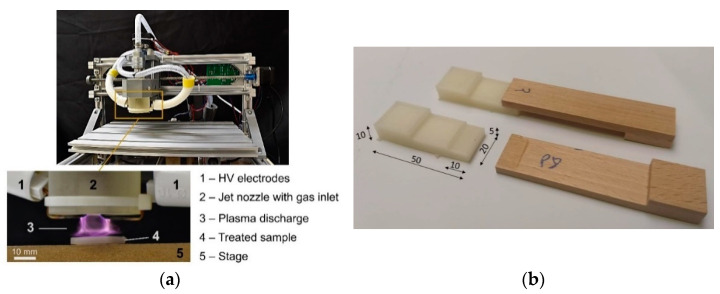
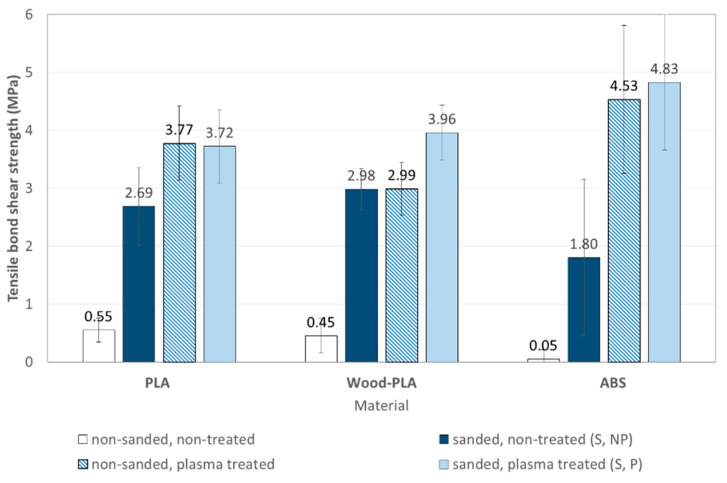
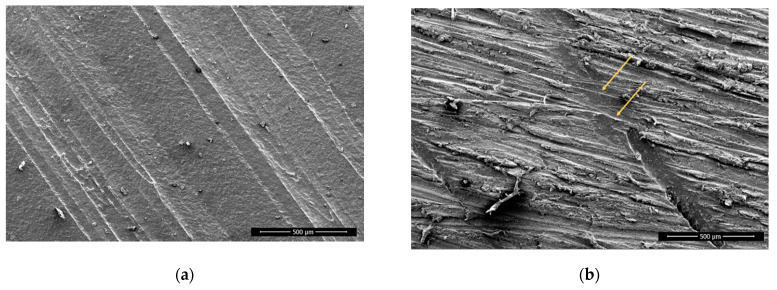
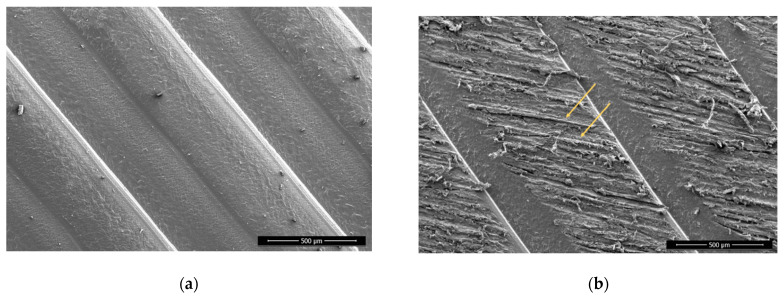
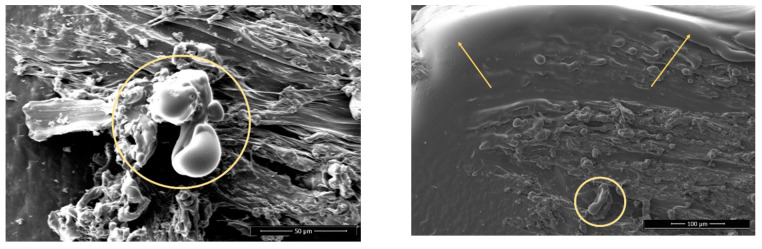
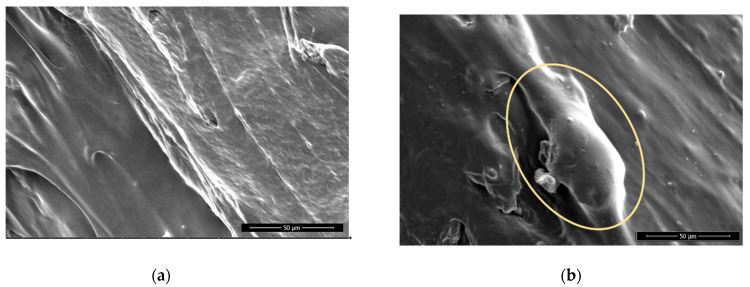
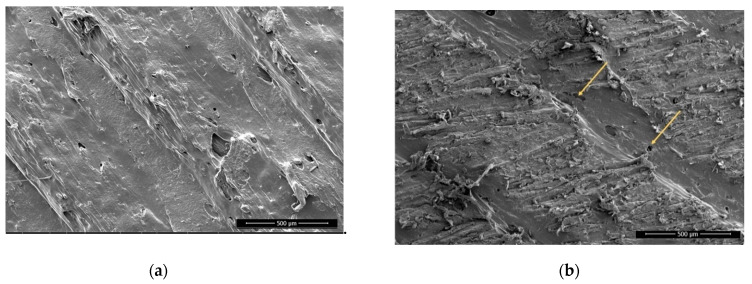
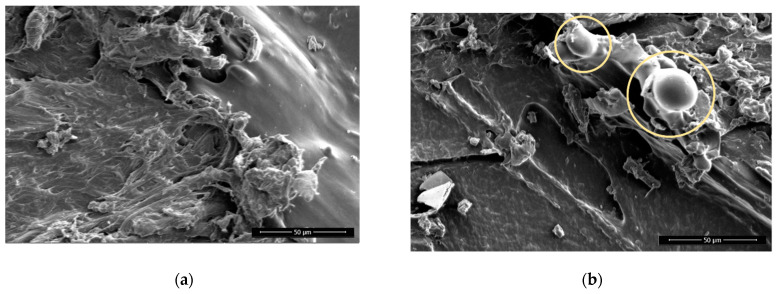
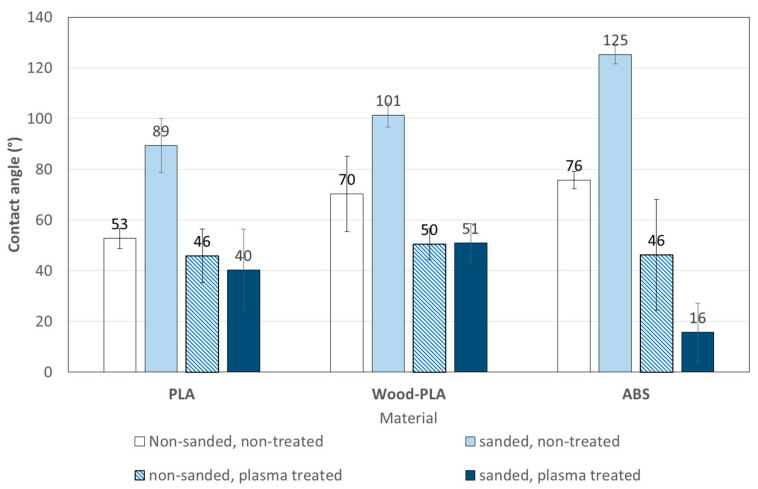
Additive manufacturing is becoming increasingly important for manufacturing end products, not just prototyping. However, the size of 3D-printed products is limited due to available printer sizes and other technological limitations. For example, making furniture from 3D-printed parts and wooden elements requires adequate adhesive joints. Since materials for 3D printing usually do not bond very well with adhesives designed for woodworking, they require special surface preparation to improve adhesion. In this study, fused deposition modelling (FDM) 3D-printed parts made of polylactic acid (PLA), polylactic acid with wood flour additive (Wood-PLA), and acrylonitrile-butadiene-styrene (ABS) polymers were bonded to wood with polyvinyl acetate (PVAc) adhesive. The surfaces of the samples were bonded as either non-treated, sanded, plasma treated, or sanded and plasma treated to evaluate the effect of each surface preparation on the bondability of the 3D-printed surfaces. Different surface preparations affected the bond shear strength in different ways. The plasma treatment significantly reduced water contact angles on all tested printing materials and increased the bond tensile shear strength of the adhesive used. The increase in bond strength was highest for the surfaces that had been both sanded and plasma treated. The highest increase was found for the ABS material (untreated 0.05 MPa; sanded and plasma treated 4.83 MPa) followed by Wood-PLA (from 0.45 MPa to 3.96 MPa) and PLA (from 0.55 MPa to 3.72 MPa). Analysis with a scanning electron microscope showed the smooth surfaces of the 3D-printed parts, which became rougher with sanding with more protruded particles, but plasma treatment partially melted the surface structures on the thermoplastic polymer surfaces.
增材制造对于制造最终产品正变得越来越重要,而不仅仅是用于原型制作。然而,由于现有打印机尺寸和其他技术限制,3D打印产品的尺寸受到限制。例如,用3D打印部件和木质元件制作家具需要合适的粘结接头。由于3D打印材料通常与木工用胶粘剂的粘结效果不太好,因此需要进行特殊的表面处理以提高粘结力。在本研究中,将由聚乳酸(PLA)、含木粉添加剂的聚乳酸(Wood-PLA)和丙烯腈-丁二烯-苯乙烯(ABS)聚合物制成的熔融沉积建模(FDM)3D打印部件用聚醋酸乙烯酯(PVAc)胶粘剂粘结到木材上。样品表面分别进行未处理、打磨、等离子处理或打磨并等离子处理,以评估每种表面处理对3D打印表面粘结性的影响。不同的表面处理对粘结剪切强度有不同的影响。等离子处理显著降低了所有测试打印材料上的水接触角,并提高了所用胶粘剂的粘结拉伸剪切强度。对于经过打磨和等离子处理的表面,粘结强度的增加最为显著。ABS材料的粘结强度增加最高(未处理为0.05MPa;打磨并等离子处理为4.83MPa),其次是Wood-PLA(从0.45MPa增至3.96MPa)和PLA(从0.55MPa增至3.72MPa)。扫描电子显微镜分析显示3D打印部件表面光滑,打磨后表面变得更粗糙,有更多突出颗粒,但等离子处理使热塑性聚合物表面的结构部分熔化。