Departament de Nutrició, Ciències de l'Alimentació i Gastronomia, Facultat de Farmàcia i Ciències de l'Alimentació, Campus de l'Alimentació de Torribera, Universitat de Barcelona (UB), Av. Prat de la Riba 171, 8921 Santa Coloma de Gramenet, Spain.
Institut de Recerca en Nutrició i Seguretat Alimentària (INSA·UB), Universitat de Barcelona (UB), Av. Prat de la Riba 171, 8921 Santa Coloma de Gramenet, Spain.
Nutrients. 2021 Apr 21;13(5):1395. doi: 10.3390/nu13051395.
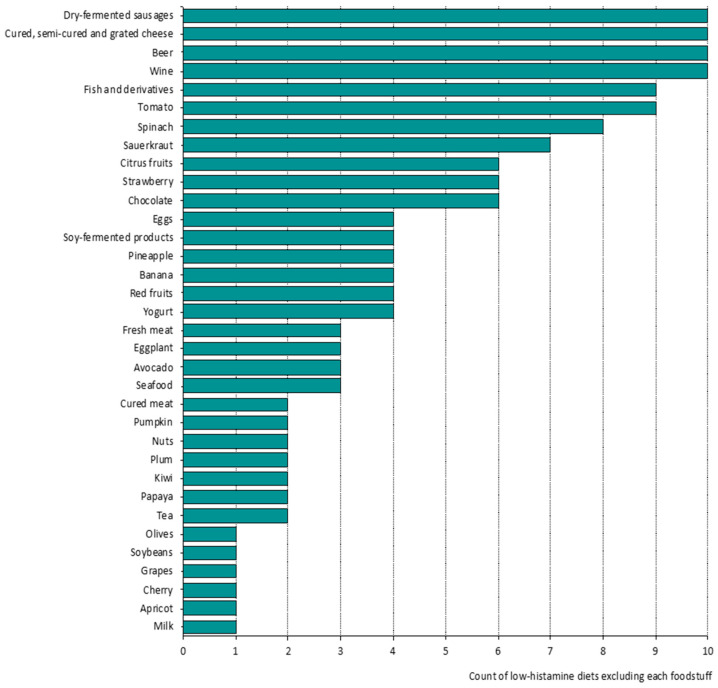
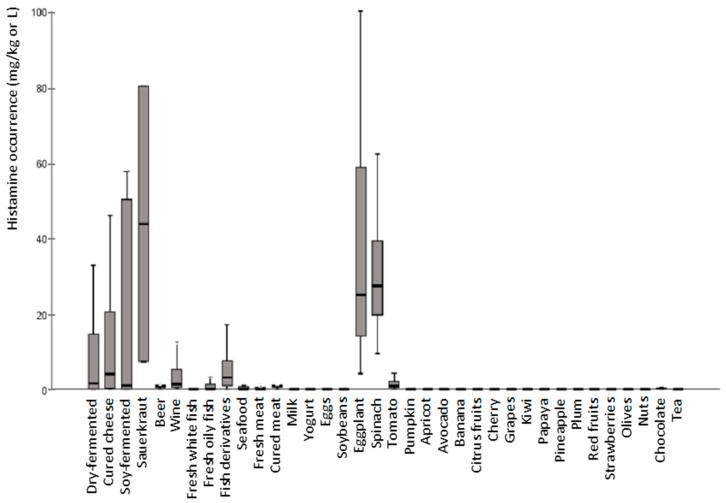
A low-histamine diet is currently the most advised strategy to prevent the symptomatology of histamine intolerance. Conceptually, these diets should be founded on the exclusion of histamine-containing foods, although a certain disparity is found within the list of excluded foods in accordance with the different low-histamine diets available in the literature. This study aimed to critically review low-histamine diets reported in the scientific literature, according to the histamine and other biogenic amine contents of the excluded foods. A total of ten scientific studies that provided specific recommendations on the foods that must be avoided within the framework of a low-histamine diet were found. Overall, the comparative review brought out the great heterogenicity in the type of foods that are advised against for histamine intolerant individuals. Excluded foods were, in most cases, different depending on the considered diet. Only fermented foods were unanimously excluded. The exclusion of 32% of foods could be explained by the occurrence of high contents of histamine. The presence of putrescine, which may interfere with histamine degradation by the DAO enzyme at the intestinal level, could partly explain the reason why certain foods (i.e., citrus fruits and bananas) were also frequently reported in low-histamine diets. Finally, there was a range of excluded foods with an absence or very low levels of biogenic amines. In this case, certain foods have been tagged as histamine-liberators, although the mechanism responsible has not yet been elucidated.
低组胺饮食目前是预防不耐受组胺症状的最推荐策略。从概念上讲,这些饮食应该基于排除含组胺的食物,尽管根据文献中提供的不同低组胺饮食,排除食物的清单存在一定差异。本研究旨在根据排除食物中的组胺和其他生物胺含量,批判性地回顾科学文献中报道的低组胺饮食。共发现 10 项提供了关于低组胺饮食框架内必须避免的食物的具体建议的科学研究。总体而言,比较性综述显示出针对组胺不耐受个体建议的食物类型存在很大的异质性。在大多数情况下,根据所考虑的饮食,排除的食物是不同的。只有发酵食品被一致排除。32%的食物被排除在外,这可以用高组胺含量来解释。腐胺的存在可能会干扰肠道中 DAO 酶对组胺的降解,这可以部分解释为什么某些食物(如柑橘类水果和香蕉)也经常出现在低组胺饮食中。最后,还有一系列被排除的食物,它们不含或生物胺含量非常低。在这种情况下,某些食物被标记为组胺释放剂,尽管负责的机制尚未阐明。