Sobska Joanna, Waszkielewicz Magdalena, Podleśny-Drabiniok Anna, Olesiak-Banska Joanna, Krężel Wojciech, Matczyszyn Katarzyna
Advanced Materials Engineering and Modelling Group, Wroclaw University of Science and Technology, WybrzezeWyspianskiego 27, 50-370 Wroclaw, Poland.
Institut de Génétique et de Biologie Moléculaire et Cellulaire, Department of Development and Stem Cells, 1 Rue Laurent Fries, 67404 Illkirch, France.
Nanomaterials (Basel). 2021 Apr 21;11(5):1066. doi: 10.3390/nano11051066.
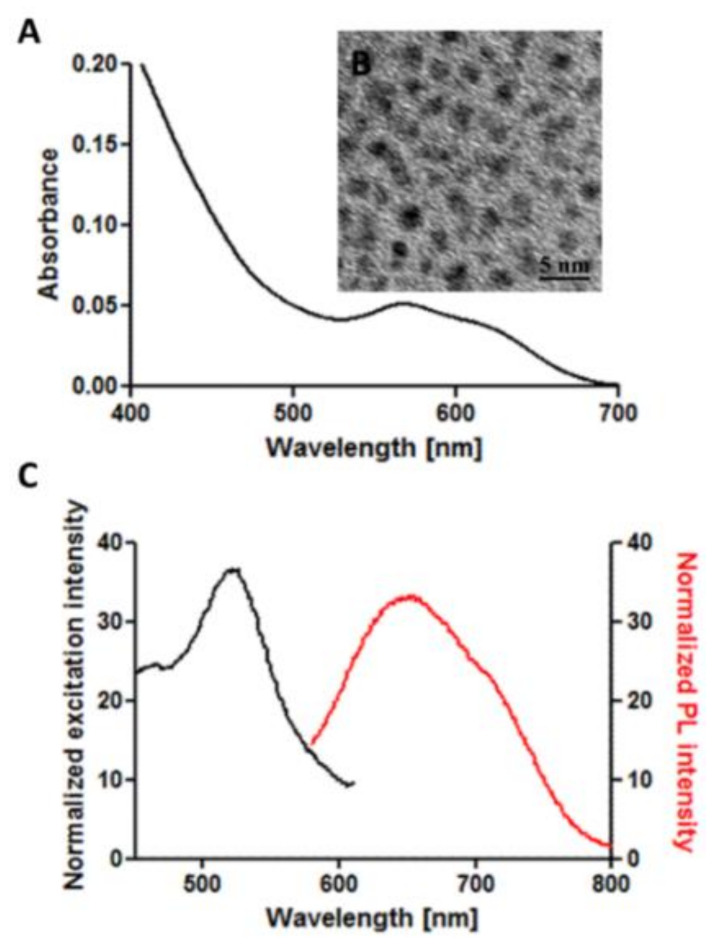
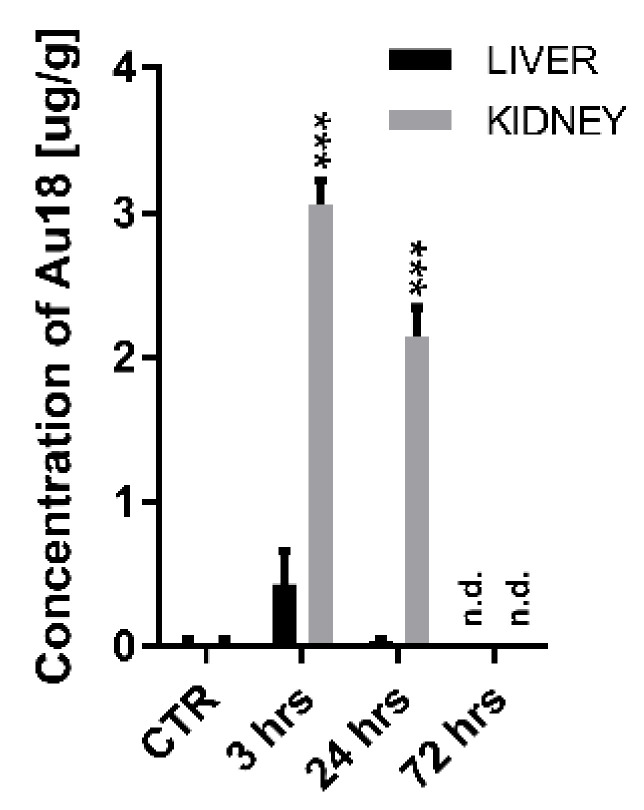
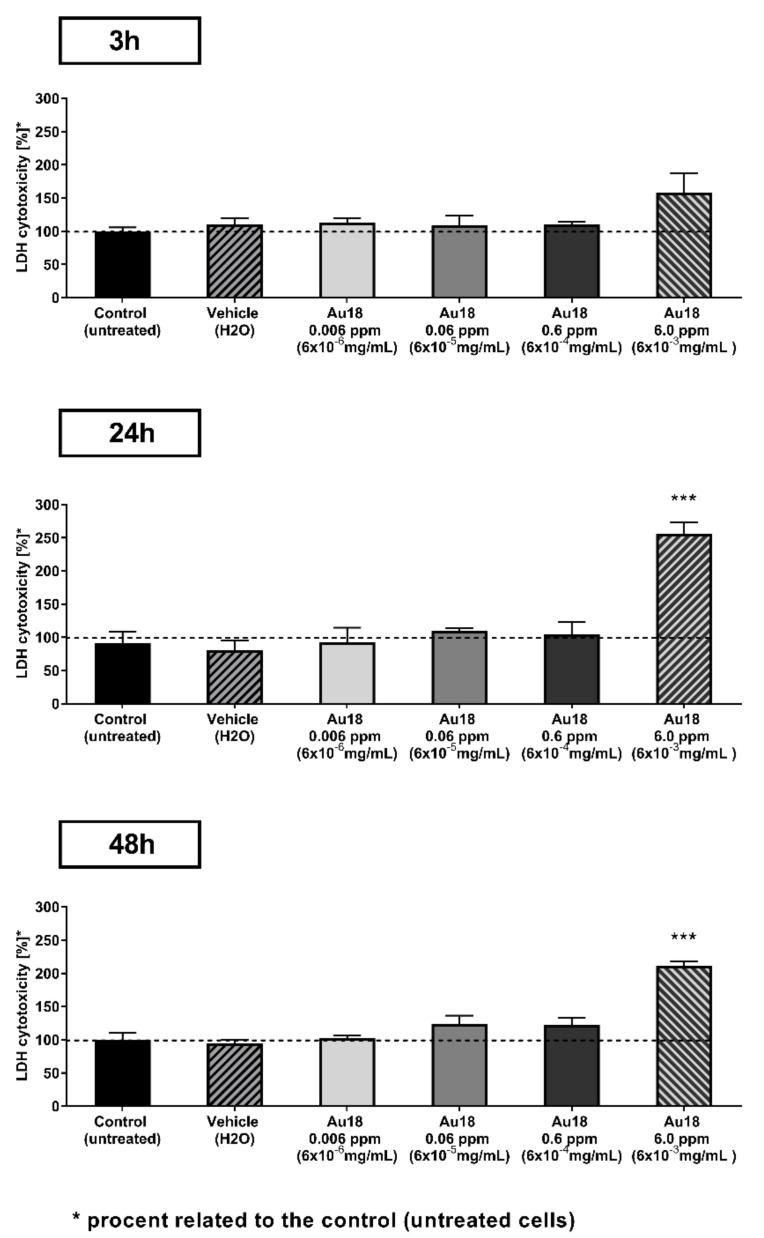
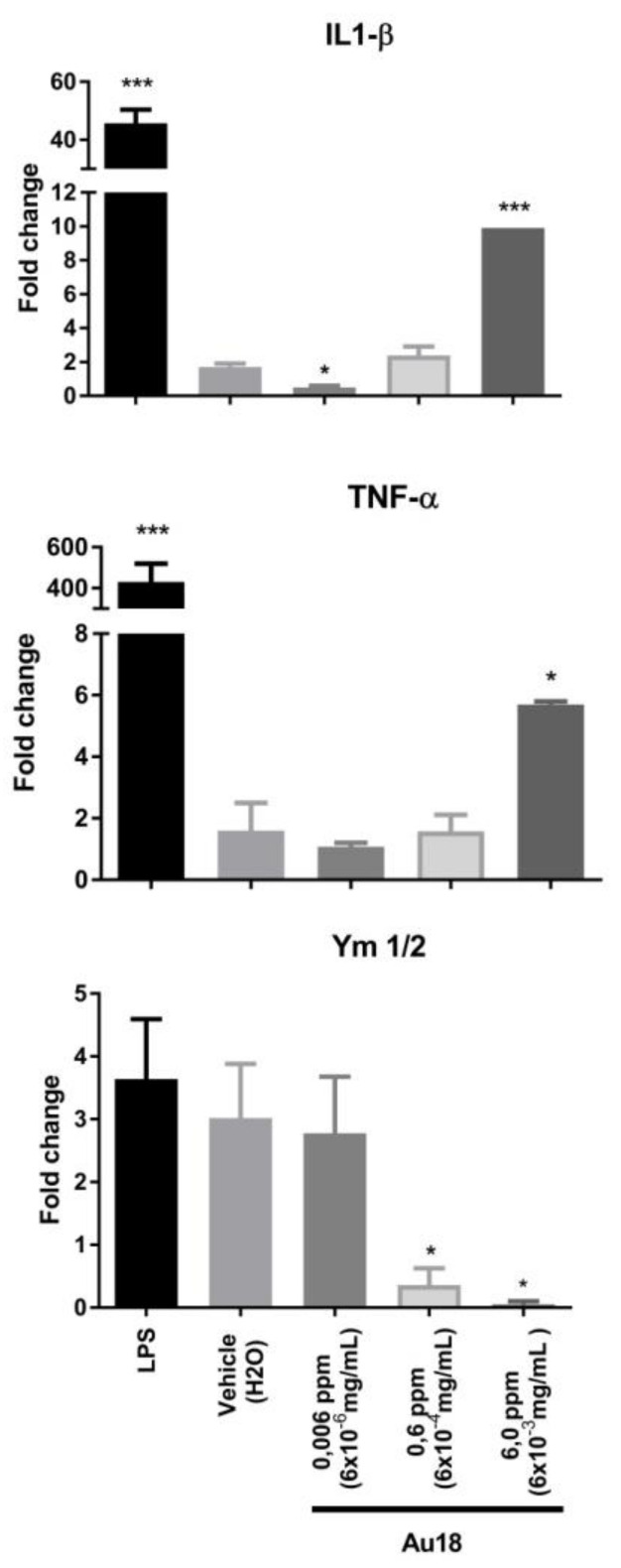
Gold nanoparticles hold a great promise for both clinical and preclinical applications. The major factors impeding such applications are toxicity of new nanomaterials including e.g., pro-apoptotic activities or inflammatory effects, but also their potential to accumulate in the body or inadequate absorption, distribution, metabolism and excretion (ADME) profiles. Since such adverse effects depend on the size, form and coating of nanomaterials, the search for new, less toxic nanomaterials with low tendency to accumulate is highly active domain of research. Here, we describe optical and biological properties of Au18 gold nanoclusters (NCs), small gold nanoparticles composed of 18 atoms of gold and stabilized with glutathione ligands. These nanoclusters may be suitable for in vivo applications owing to their low toxicity and biodistribution profile. Specifically, using lactate dehydrogenase (LDH) test in P19 cell line we found that Au18 NCs display low toxicity in vitro. Importantly, using primary microglial cells we showed that at low concentrations Au18 NCs display anti-inflammatory signaling on evidence of reduced interleukin 1-β (IL1-β) levels and unchanged levels of tumor necrosis factor (TNF-α) or Ym1/2. Such effect was dose dependent as higher concentrations of Au18 NCs induced expression of pro-inflammatory cytokines and suppression of anti-inflammatory cytokine Ym1/2, pointing, thus, to global inflammatory activity. Finally, we also showed that within 3 days Au18 NCs can be completely eliminated from the liver reported as the major target organ for accumulation of gold nanoparticles. These data point to a potential of gold nanoparticles for further biomedical studies.
金纳米颗粒在临床和临床前应用方面都具有巨大的前景。阻碍此类应用的主要因素包括新纳米材料的毒性,例如促凋亡活性或炎症效应,还有它们在体内积累的可能性或吸收、分布、代谢和排泄(ADME)特性不足。由于这些不良反应取决于纳米材料的尺寸、形态和涂层,寻找新的、毒性较低且积累倾向较小的纳米材料是一个非常活跃的研究领域。在此,我们描述了Au18金纳米团簇(NCs)的光学和生物学特性,Au18金纳米团簇是由18个金原子组成并用谷胱甘肽配体稳定的小金纳米颗粒。这些纳米团簇因其低毒性和生物分布特性可能适用于体内应用。具体而言,通过在P19细胞系中进行乳酸脱氢酶(LDH)测试,我们发现Au18纳米团簇在体外显示出低毒性。重要的是,使用原代小胶质细胞我们表明,在低浓度下,Au18纳米团簇在白细胞介素1-β(IL1-β)水平降低以及肿瘤坏死因子(TNF-α)或Ym1/2水平不变的情况下显示出抗炎信号。这种效应是剂量依赖性的,因为较高浓度的Au18纳米团簇会诱导促炎细胞因子的表达并抑制抗炎细胞因子Ym1/2,从而表明存在整体炎症活性。最后,我们还表明,在3天内,Au18纳米团簇可以从肝脏中完全清除,肝脏被报道为金纳米颗粒积累的主要靶器官。这些数据表明金纳米颗粒在进一步生物医学研究方面具有潜力。