Functional Nutrition, Oxidation, and Cardiovascular Diseases Group (NFOC-Salut), Healthy Environment Chair, Facultat de Medicina i Ciències de la Salut, Universitat Rovira i Virgili, 43201 Reus, Spain.
Institut d'Investigació Sanitaria Pere Virgili, 43204 Reus, Spain.
Nutrients. 2021 Apr 18;13(4):1350. doi: 10.3390/nu13041350.
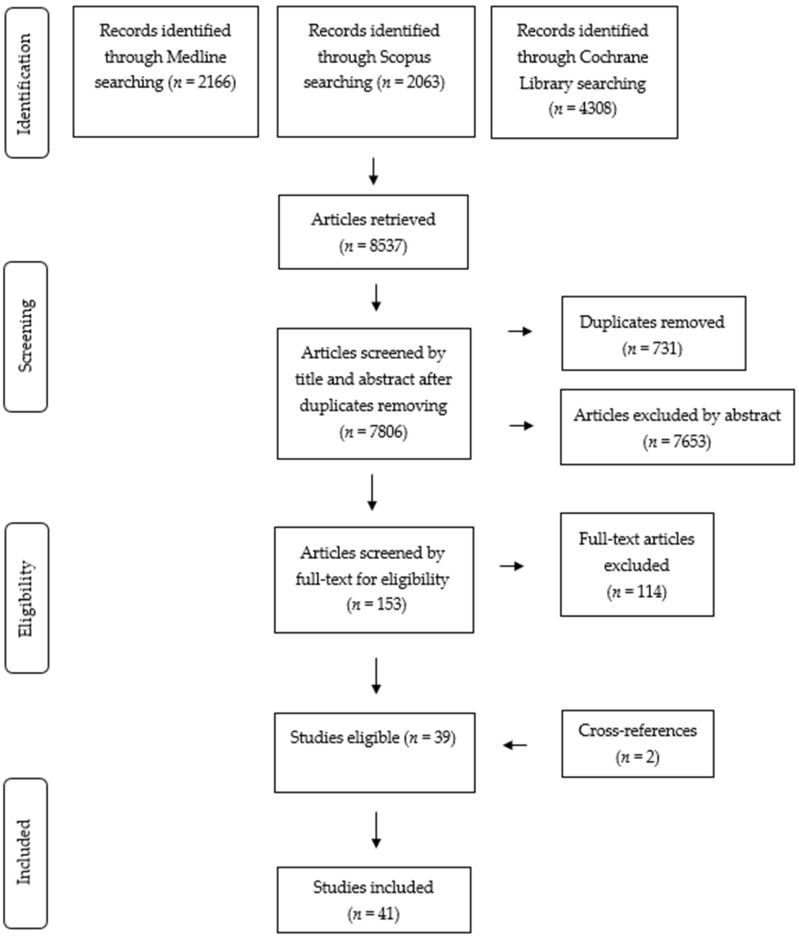
Out-of-home eating is increasing, but evidence about its healthiness is limited. The present systematic review and meta-analysis aimed to elucidate the effectiveness of full-service restaurant and canteen-based interventions in increasing the dietary intake, food availability, and food purchase of healthy meals. Studies from 2000-2020 were searched in Medline, Scopus, and Cochrane Library using the PRISMA checklist. A total of 35 randomized controlled trials (RCTs) and 6 non-RCTs were included in the systematic review and analyzed by outcome, intervention strategies, and settings (school, community, workplace). The meta-analysis included 16 RCTs (excluding non-RCTs for higher quality). For dietary intake, the included RCTs increased healthy foods (+0.20 servings/day; 0.12 to 0.29; < 0.001) and decreased fat intake (-9.90 g/day; -12.61 to -7.19; < 0.001), favoring the intervention group. For food availability, intervention schools reduced the risk of offering unhealthy menu items by 47% (RR 0.53; 0.34 to 0.85; = 0.008). For food purchases, a systematic review showed that interventions could be partially effective in improving healthy foods. Lastly, restaurant- and canteen-based interventions improved the dietary intake of healthy foods, reduced fat intake, and increased the availability of healthy menus, mainly in schools. Higher-quality RCTs are needed to strengthen the results. Moreover, from our results, intervention strategy recommendations are provided.
外出就餐的现象越来越普遍,但有关其健康性的证据有限。本系统评价和荟萃分析旨在阐明全服务餐厅和食堂干预措施在增加健康膳食的饮食摄入、食物供应和购买方面的有效性。使用 PRISMA 清单在 Medline、Scopus 和 Cochrane Library 中搜索了 2000 年至 2020 年的研究。共有 35 项随机对照试验 (RCT) 和 6 项非 RCT 被纳入系统评价,并根据结果、干预策略和设置(学校、社区、工作场所)进行了分析。荟萃分析包括 16 项 RCT(排除非 RCT 以提高质量)。对于饮食摄入,纳入的 RCT 增加了健康食品(+0.20 份/天;0.12 至 0.29;<0.001)和减少了脂肪摄入(-9.90 克/天;-12.61 至-7.19;<0.001),有利于干预组。对于食物供应,干预学校提供不健康菜单项目的风险降低了 47%(RR 0.53;0.34 至 0.85;=0.008)。对于食物购买,系统评价表明干预措施在改善健康食品方面可能部分有效。最后,餐馆和食堂为基础的干预措施改善了健康食品的饮食摄入,减少了脂肪摄入,并增加了健康菜单的供应,主要是在学校。需要更高质量的 RCT 来加强结果。此外,根据我们的结果,提供了干预策略建议。