Liu Dan-Yang, Liu Jia-Chen, Liang Shuang, Meng Xiang-He, Greenbaum Jonathan, Xiao Hong-Mei, Tan Li-Jun, Deng Hong-Wen
Laboratory of Molecular and Statistical Genetics, College of Life Sciences, Hunan Normal University, Changsha 410081, China.
Center for System Biology, Data Sciences, and Reproductive Health, School of Basic Medical Science, Central South University, Changsha 410013, China.
Pharmaceutics. 2021 Apr 14;13(4):545. doi: 10.3390/pharmaceutics13040545.
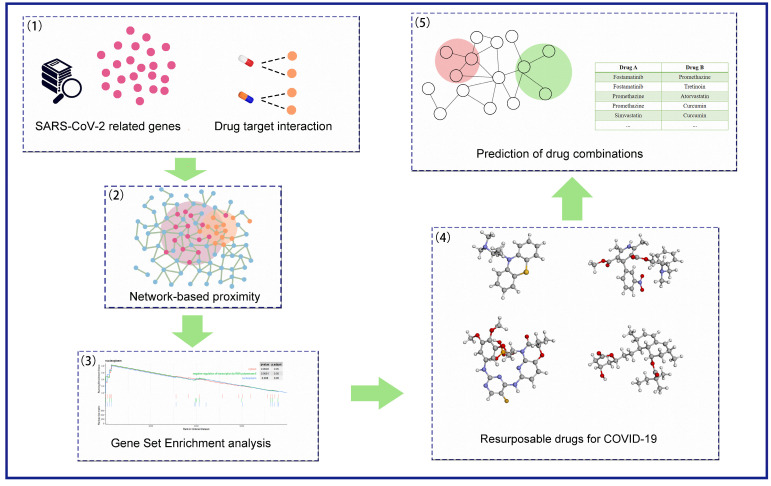
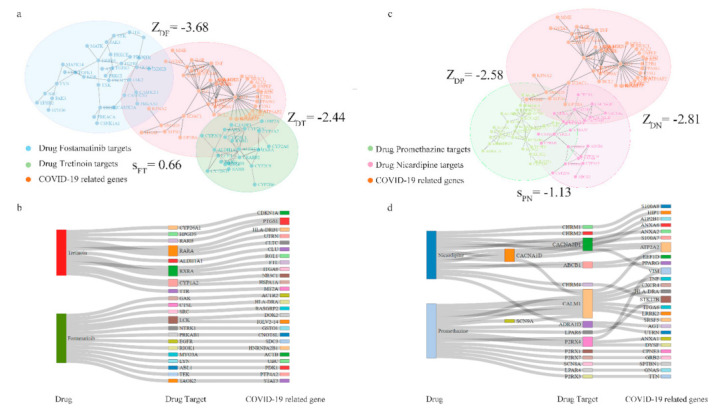
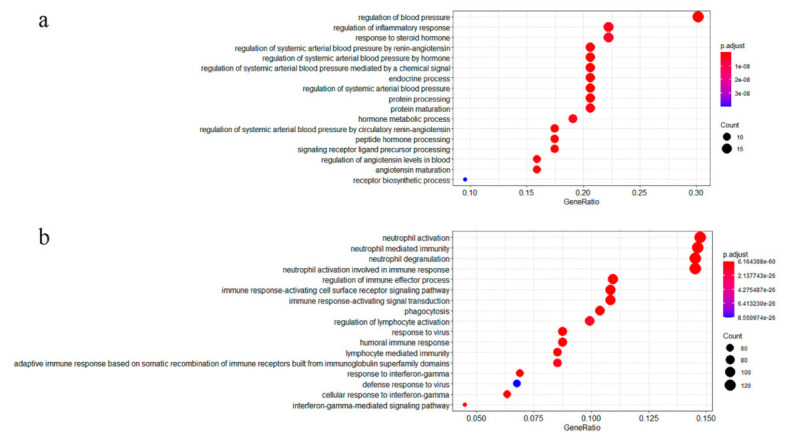
Since coronavirus disease 2019 (COVID-19) is a serious new worldwide public health crisis with significant morbidity and mortality, effective therapeutic treatments are urgently needed. Drug repurposing is an efficient and cost-effective strategy with minimum risk for identifying novel potential treatment options by repositioning therapies that were previously approved for other clinical outcomes. Here, we used an integrated network-based pharmacologic and transcriptomic approach to screen drug candidates novel for COVID-19 treatment. Network-based proximity scores were calculated to identify the drug-disease pharmacological effect between drug-target relationship modules and COVID-19 related genes. Gene set enrichment analysis (GSEA) was then performed to determine whether drug candidates influence the expression of COVID-19 related genes and examine the sensitivity of the repurposing drug treatment to peripheral immune cell types. Moreover, we used the complementary exposure model to recommend potential synergistic drug combinations. We identified 18 individual drug candidates including nicardipine, orantinib, tipifarnib and promethazine which have not previously been proposed as possible treatments for COVID-19. Additionally, 30 synergistic drug pairs were ultimately recommended including fostamatinib plus tretinoin and orantinib plus valproic acid. Differential expression genes of most repurposing drugs were enriched significantly in B cells. The findings may potentially accelerate the discovery and establishment of an effective therapeutic treatment plan for COVID-19 patients.
由于2019冠状病毒病(COVID-19)是一场严重的新型全球公共卫生危机,具有很高的发病率和死亡率,因此迫切需要有效的治疗方法。药物再利用是一种高效且具有成本效益的策略,通过重新定位先前已被批准用于其他临床结果的疗法来确定新的潜在治疗方案,风险最小。在此,我们使用了一种基于网络的综合药理学和转录组学方法来筛选用于COVID-19治疗的新型候选药物。计算基于网络的接近度分数,以确定药物-靶点关系模块与COVID-19相关基因之间的药物-疾病药理效应。然后进行基因集富集分析(GSEA),以确定候选药物是否会影响COVID-19相关基因的表达,并检查重新利用的药物治疗对外周免疫细胞类型的敏感性。此外,我们使用互补暴露模型来推荐潜在的协同药物组合。我们确定了18种单独的候选药物,包括尼卡地平、奥拉替尼、替匹法尼和异丙嗪,这些药物此前尚未被提议作为COVID-19的可能治疗方法。此外,最终推荐了30对协同药物,包括福司他替尼加维甲酸和奥拉替尼加丙戊酸。大多数重新利用药物的差异表达基因在B细胞中显著富集。这些发现可能会加速为COVID-19患者发现和建立有效的治疗方案。