• 文献检索
  • 文档翻译
  • 深度研究
  • 学术资讯
  • Suppr Zotero 插件Zotero 插件
  • 邀请有礼
  • 套餐&价格
  • 历史记录
应用&插件
Suppr Zotero 插件Zotero 插件浏览器插件Mac 客户端Windows 客户端微信小程序
定价
高级版会员购买积分包购买API积分包
服务
文献检索文档翻译深度研究API 文档MCP 服务
关于我们
关于 Suppr公司介绍联系我们用户协议隐私条款
关注我们

Suppr 超能文献

核心技术专利:CN118964589B侵权必究
粤ICP备2023148730 号-1Suppr @ 2026

文献检索

告别复杂PubMed语法,用中文像聊天一样搜索,搜遍4000万医学文献。AI智能推荐,让科研检索更轻松。

立即免费搜索

文件翻译

保留排版,准确专业,支持PDF/Word/PPT等文件格式,支持 12+语言互译。

免费翻译文档

深度研究

AI帮你快速写综述,25分钟生成高质量综述,智能提取关键信息,辅助科研写作。

立即免费体验

更新纳米生物传感器作为冠状病毒家族成员诊断有前途的设备的使用:系统评价。

Updating the use of nano-biosensors as promising devices for the diagnosis of coronavirus family members: A systematic review.

机构信息

Center for Food Analysis (NAL), Technological Development Support Laboratory (LADETEC), Federal University of Rio de Janeiro (UFRJ), Cidade Universitária, Rio de Janeiro, RJ 21941-598, Brazil; Laboratory of Advanced Analysis in Biochemistry and Molecular Biology (LAABBM), Department of Biochemistry, Federal University of Rio de Janeiro (UFRJ), Cidade Universitária, Rio de Janeiro, RJ 21941-909, Brazil; Graduate Program in Chemistry (PGQu), Institute of Chemistry, Federal University of Rio de Janeiro (UFRJ), Cidade Universitária, Rio de Janeiro, RJ 21941-909, Brazil; Nanotechnology Network, Carlos Chagas Filho Research Support Foundation of the State of Rio de Janeiro (FAPERJ), Rio de Janeiro, RJ 20020-000, Brazil.

Laboratory of Advanced Analysis in Biochemistry and Molecular Biology (LAABBM), Department of Biochemistry, Federal University of Rio de Janeiro (UFRJ), Cidade Universitária, Rio de Janeiro, RJ 21941-909, Brazil; Graduate Program in Food Science (PPGCAL), Institute of Chemistry (IQ), Federal University of Rio de Janeiro (UFRJ), Cidade Universitária, Rio de Janeiro, RJ 21941-909, Brazil; Graduate Program in Chemistry (PGQu), Institute of Chemistry, Federal University of Rio de Janeiro (UFRJ), Cidade Universitária, Rio de Janeiro, RJ 21941-909, Brazil; Nanotechnology Network, Carlos Chagas Filho Research Support Foundation of the State of Rio de Janeiro (FAPERJ), Rio de Janeiro, RJ 20020-000, Brazil.

出版信息

J Pharm Biomed Anal. 2022 Mar 20;211:114608. doi: 10.1016/j.jpba.2022.114608. Epub 2022 Jan 25.

DOI:10.1016/j.jpba.2022.114608
PMID:35123330
原文链接:https://pmc.ncbi.nlm.nih.gov/articles/PMC8788102/
Abstract

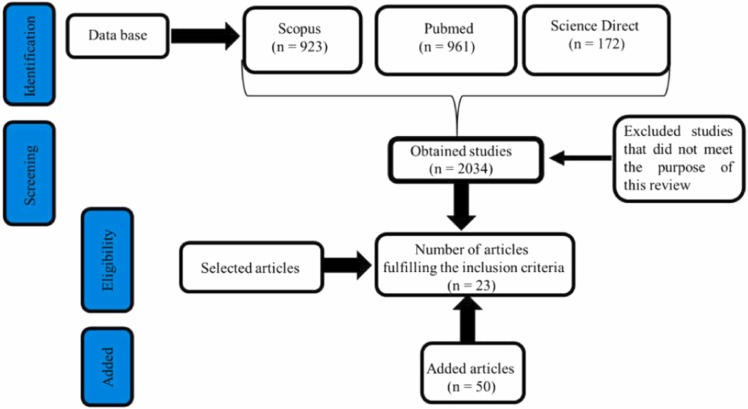
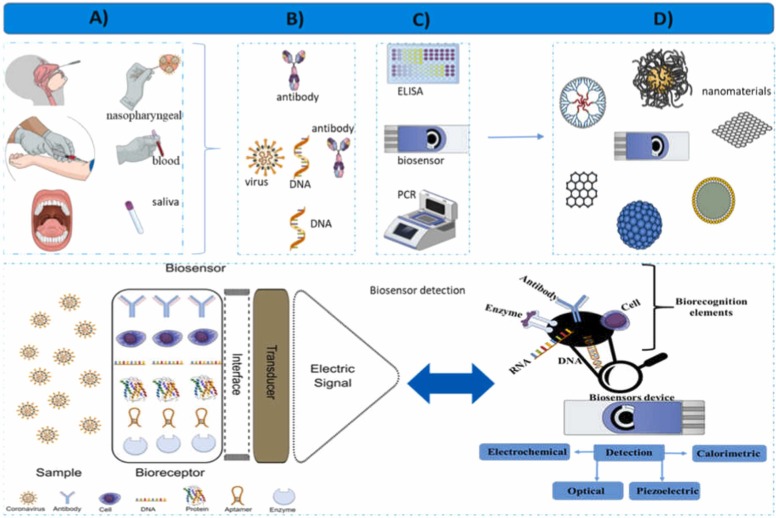
Coronavidae viruses, such as SARS-CoV, SARS-CoV-2, and MERS-CoV, cause severe lower respiratory tract infection, acute respiratory distress syndrome and extrapulmonary manifestations, such as diarrhea and fever, eventually leading to death. Fast, accurate, reproductible, and cost-effective SARS-CoV-2 identification can be achieved employing nano-biosensors, reinforcing conventional methodologies to avoid the spread of COVID-19 within and across communities. Nano-biosensors built using gold, silver, graphene, InO nanowire and iron oxide nanoparticles, Quantum Dots and carbon nanofibers have been successfully employed to detect specific virus antigens - nucleic acid sequences and/or proteins -or host antibodies produced in response to viral infection. Biorecognition counterpart molecules have been immobilized on the surface of these nanomaterials, leading to selective virus detection by optical or electrochemical transducer systems. This systematic review assessed studies on described and tested immunonsensors and genosensors designed from distinct nanomaterials available at the Pubmed, Scopus, and Science Direct databases. Twenty-three nano biosensors were found suitable for unequivocal coronavirus detection in clinical samples. Nano-biosensors coupled to RT-LAMP/RT-PCR assays can optimize RNA extraction, reduce analysis times and/or eliminate sophisticated instrumentation. Although promising for the diagnosis of Coronavidae family members, further trials in large populations must be adequately and rigorously conducted to address nano-biosensor applicability in the clinical practice for early coronavirus infection detection.

摘要

冠状病毒科病毒,如 SARS-CoV、SARS-CoV-2 和 MERS-CoV,可引起严重的下呼吸道感染、急性呼吸窘迫综合征和肺外表现,如腹泻和发热,最终导致死亡。快速、准确、可重复且具有成本效益的 SARS-CoV-2 鉴定可以通过纳米生物传感器来实现,从而加强传统方法,以避免 COVID-19 在社区内和社区之间的传播。使用金、银、石墨烯、InO 纳米线和氧化铁纳米粒子、量子点和碳纤维构建的纳米生物传感器已成功用于检测特定的病毒抗原——核酸序列和/或蛋白质——或宿主对病毒感染产生的抗体。生物识别对应分子被固定在这些纳米材料的表面上,通过光学或电化学换能器系统实现对病毒的选择性检测。本系统评价评估了来自 Pubmed、Scopus 和 Science Direct 数据库中描述和测试的免疫传感器和基因传感器的研究,这些传感器是由不同的纳米材料设计的。发现 23 种纳米生物传感器适用于临床样本中冠状病毒的明确检测。与 RT-LAMP/RT-PCR 检测法偶联的纳米生物传感器可以优化 RNA 提取,缩短分析时间和/或消除复杂的仪器。尽管在冠状病毒家族成员的诊断方面很有前景,但必须在大人群中进行充分和严格的进一步试验,以解决纳米生物传感器在临床实践中用于早期冠状病毒感染检测的适用性问题。
https://cdn.ncbi.nlm.nih.gov/pmc/blobs/23be/8788102/4a38216ddb12/gr2_lrg.jpg
https://cdn.ncbi.nlm.nih.gov/pmc/blobs/23be/8788102/b5302e91999b/ga1_lrg.jpg
https://cdn.ncbi.nlm.nih.gov/pmc/blobs/23be/8788102/81ef305dc807/gr1_lrg.jpg
https://cdn.ncbi.nlm.nih.gov/pmc/blobs/23be/8788102/4a38216ddb12/gr2_lrg.jpg
https://cdn.ncbi.nlm.nih.gov/pmc/blobs/23be/8788102/b5302e91999b/ga1_lrg.jpg
https://cdn.ncbi.nlm.nih.gov/pmc/blobs/23be/8788102/81ef305dc807/gr1_lrg.jpg
https://cdn.ncbi.nlm.nih.gov/pmc/blobs/23be/8788102/4a38216ddb12/gr2_lrg.jpg

相似文献

1
Updating the use of nano-biosensors as promising devices for the diagnosis of coronavirus family members: A systematic review.更新纳米生物传感器作为冠状病毒家族成员诊断有前途的设备的使用:系统评价。
J Pharm Biomed Anal. 2022 Mar 20;211:114608. doi: 10.1016/j.jpba.2022.114608. Epub 2022 Jan 25.
2
Rapid, point-of-care antigen tests for diagnosis of SARS-CoV-2 infection.用于 SARS-CoV-2 感染诊断的快速、即时抗原检测。
Cochrane Database Syst Rev. 2022 Jul 22;7(7):CD013705. doi: 10.1002/14651858.CD013705.pub3.
3
Antibody tests for identification of current and past infection with SARS-CoV-2.抗体检测用于鉴定 SARS-CoV-2 的现症感染和既往感染。
Cochrane Database Syst Rev. 2022 Nov 17;11(11):CD013652. doi: 10.1002/14651858.CD013652.pub2.
4
Signs and symptoms to determine if a patient presenting in primary care or hospital outpatient settings has COVID-19.在基层医疗机构或医院门诊环境中,如果患者出现以下症状和体征,可判断其是否患有 COVID-19。
Cochrane Database Syst Rev. 2022 May 20;5(5):CD013665. doi: 10.1002/14651858.CD013665.pub3.
5
Measures implemented in the school setting to contain the COVID-19 pandemic.学校为控制 COVID-19 疫情而采取的措施。
Cochrane Database Syst Rev. 2022 Jan 17;1(1):CD015029. doi: 10.1002/14651858.CD015029.
6
Workplace interventions to reduce the risk of SARS-CoV-2 infection outside of healthcare settings.工作场所干预措施以降低医疗机构外 SARS-CoV-2 感染的风险。
Cochrane Database Syst Rev. 2022 May 6;5(5):CD015112. doi: 10.1002/14651858.CD015112.pub2.
7
SARS-CoV-2-neutralising monoclonal antibodies for treatment of COVID-19.用于治疗 COVID-19 的 SARS-CoV-2 中和单克隆抗体。
Cochrane Database Syst Rev. 2021 Sep 2;9(9):CD013825. doi: 10.1002/14651858.CD013825.pub2.
8
Cost-effectiveness of using prognostic information to select women with breast cancer for adjuvant systemic therapy.利用预后信息为乳腺癌患者选择辅助性全身治疗的成本效益
Health Technol Assess. 2006 Sep;10(34):iii-iv, ix-xi, 1-204. doi: 10.3310/hta10340.
9
Comparison of the effectiveness of inhaler devices in asthma and chronic obstructive airways disease: a systematic review of the literature.吸入装置在哮喘和慢性阻塞性气道疾病中的有效性比较:文献系统评价
Health Technol Assess. 2001;5(26):1-149. doi: 10.3310/hta5260.
10
SARS-CoV-2-neutralising monoclonal antibodies to prevent COVID-19.SARS-CoV-2 中和单克隆抗体预防 COVID-19。
Cochrane Database Syst Rev. 2022 Jun 17;6(6):CD014945. doi: 10.1002/14651858.CD014945.pub2.

引用本文的文献

1
Nanomaterial-enhanced biosensors for polycystic ovarian syndrome diagnosis and pathophysiological insights.用于多囊卵巢综合征诊断及病理生理学洞察的纳米材料增强型生物传感器
Mikrochim Acta. 2025 Aug 1;192(8):547. doi: 10.1007/s00604-025-07415-3.
2
Nanobiosensors for revolutionizing parasitic infections diagnosis: a critical review to improve global health with an update on future challenges prospect.用于革新寄生虫感染诊断的纳米生物传感器:为改善全球健康的批判性综述及对未来挑战与前景的更新
Eur J Med Res. 2025 Jun 16;30(1):484. doi: 10.1186/s40001-025-02685-2.
3
Recent Progress of Polymer-Based Biosensors for Cancer Diagnostic Applications: Natural versus Synthetic Polymers.

本文引用的文献

1
P-FAB: A Fiber-Optic Biosensor Device for Rapid Detection of COVID-19.P-FAB:一种用于快速检测新冠病毒的光纤生物传感器设备。
Trans Indian Natl Acad Eng. 2020;5(2):211-215. doi: 10.1007/s41403-020-00122-w. Epub 2020 Jun 18.
2
A simplified viral RNA extraction method based on magnetic nanoparticles for fast and high-throughput detection of SARS-CoV-2.基于磁性纳米颗粒的简化病毒 RNA 提取方法,用于 SARS-CoV-2 的快速高通量检测。
Talanta. 2023 Jun 1;258:124479. doi: 10.1016/j.talanta.2023.124479. Epub 2023 Mar 23.
3
Development of RNA-Based Assay for Rapid Detection of SARS-CoV-2 in Clinical Samples.
用于癌症诊断应用的聚合物基生物传感器的最新进展:天然聚合物与合成聚合物
ACS Omega. 2025 Mar 3;10(9):8816-8831. doi: 10.1021/acsomega.4c10652. eCollection 2025 Mar 11.
4
Explicating the publication paradigm by bibliometric approaches: A case of interplay between nanoscience and ferroptosis.通过文献计量学方法阐释出版范式:以纳米科学与铁死亡之间的相互作用为例。
Health Care Sci. 2022 Aug 9;1(2):93-110. doi: 10.1002/hcs2.5. eCollection 2022 Oct.
5
Emerging Trends of Gold Nanostructures for Point-of-Care Biosensor-Based Detection of COVID-19.用于基于即时检测生物传感器的 COVID-19 检测的金纳米结构的新兴趋势
Mol Biotechnol. 2025 Apr;67(4):1398-1422. doi: 10.1007/s12033-024-01157-y. Epub 2024 May 4.
6
COVID severity test (CoST sensor)-An electrochemical immunosensing approach to stratify disease severity.新冠严重程度测试(CoST传感器)——一种用于分层疾病严重程度的电化学免疫传感方法。
Bioeng Transl Med. 2023 Jul 11;8(5):e10566. doi: 10.1002/btm2.10566. eCollection 2023 Sep.
7
Trends in Drug Delivery Systems for Natural Bioactive Molecules to Treat Health Disorders: The Importance of Nano-Liposomes.用于治疗健康疾病的天然生物活性分子给药系统的趋势:纳米脂质体的重要性。
Pharmaceutics. 2022 Dec 15;14(12):2808. doi: 10.3390/pharmaceutics14122808.
8
Ultrasensitive voltammetric detection of SARS-CoV-2 in clinical samples.临床样本中新型冠状病毒2019(SARS-CoV-2)的超灵敏伏安检测
Sens Actuators B Chem. 2022 Nov 15;371:132539. doi: 10.1016/j.snb.2022.132539. Epub 2022 Aug 23.
9
Use of Cysteamine and Glutaraldehyde Chemicals for Robust Functionalization of Substrates with Protein Biomarkers-An Overview on the Construction of Biosensors with Different Transductions.半胱胺和戊二醛化学品在蛋白质生物标志物的坚固功能化基质中的应用-关于不同转导的生物传感器构建的概述。
Biosensors (Basel). 2022 Jul 29;12(8):581. doi: 10.3390/bios12080581.
10
Research progress of biosensors for detection of SARS-CoV-2 variants based on ACE2.基于 ACE2 的 SARS-CoV-2 变体检测生物传感器的研究进展。
Talanta. 2023 Jan 1;251:123813. doi: 10.1016/j.talanta.2022.123813. Epub 2022 Aug 6.
用于临床样本中快速检测新型冠状病毒(SARS-CoV-2)的基于RNA的检测方法的开发。
Intervirology. 2022;65(4):181-187. doi: 10.1159/000522337. Epub 2022 Feb 22.
4
Biomedical Text Link Prediction for Drug Discovery: A Case Study with COVID-19.用于药物发现的生物医学文本链接预测:以COVID-19为例的案例研究
Pharmaceutics. 2021 May 26;13(6):794. doi: 10.3390/pharmaceutics13060794.
5
Drug Repurposing for COVID-19 Treatment by Integrating Network Pharmacology and Transcriptomics.整合网络药理学和转录组学用于新冠肺炎治疗的药物重定位
Pharmaceutics. 2021 Apr 14;13(4):545. doi: 10.3390/pharmaceutics13040545.
6
Interaction of Remdesivir with Clinically Relevant Hepatic Drug Uptake Transporters.瑞德西韦与临床相关肝脏药物摄取转运体的相互作用。
Pharmaceutics. 2021 Mar 10;13(3):369. doi: 10.3390/pharmaceutics13030369.
7
5G-enabled ultra-sensitive fluorescence sensor for proactive prognosis of COVID-19.5G 赋能的超高灵敏度荧光传感器,用于主动预测 COVID-19。
Biosens Bioelectron. 2021 Jun 1;181:113160. doi: 10.1016/j.bios.2021.113160. Epub 2021 Mar 13.
8
Repurposing of Sitagliptin- Melittin Optimized Nanoformula against SARS-CoV-2: Antiviral Screening and Molecular Docking Studies.西他列汀-蜂毒肽优化纳米制剂对新型冠状病毒的重新利用:抗病毒筛选及分子对接研究
Pharmaceutics. 2021 Feb 26;13(3):307. doi: 10.3390/pharmaceutics13030307.
9
Rapid SARS-CoV-2 Detection Using Electrochemical Immunosensor.基于电化学生物传感器的 SARS-CoV-2 快速检测
Sensors (Basel). 2021 Jan 8;21(2):390. doi: 10.3390/s21020390.
10
Development of a Low-Cost Cotton-Tipped Electrochemical Immunosensor for the Detection of SARS-CoV-2.低成本棉拭子电化学免疫传感器的研制及其用于 SARS-CoV-2 的检测。
Anal Chem. 2021 Jan 26;93(3):1826-1833. doi: 10.1021/acs.analchem.0c04719. Epub 2020 Dec 28.