Morgan Adams Brain Tumor Research Program, Department of Pediatrics, Division of Hematology/Oncology/Bone Marrow Transplant, University of Colorado Anschutz Medical Campus, Aurora, CO 80045, USA.
Cells. 2021 Apr 14;10(4):893. doi: 10.3390/cells10040893.
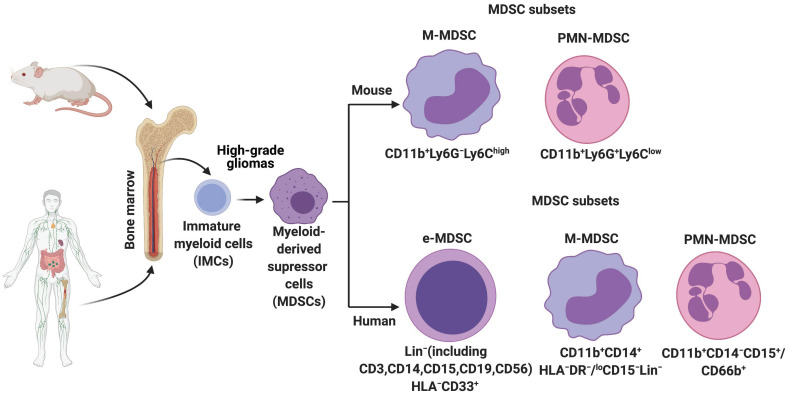
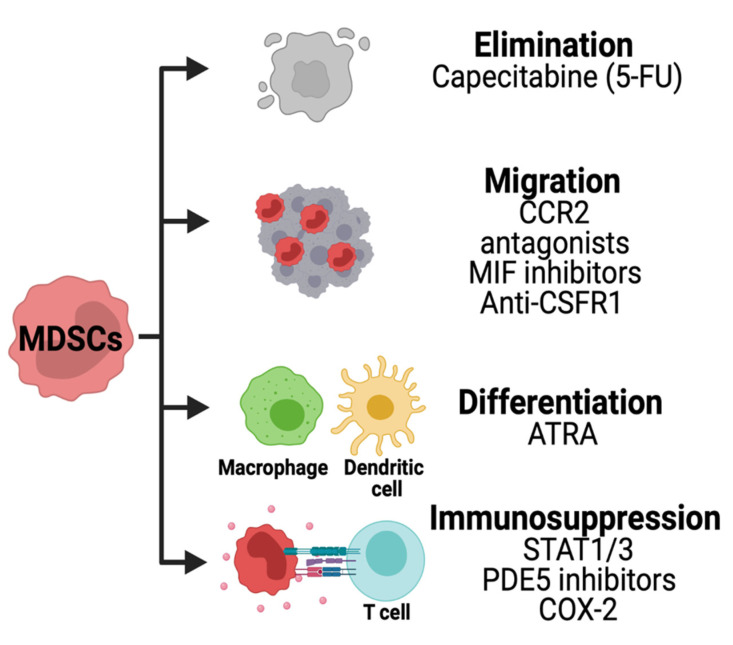
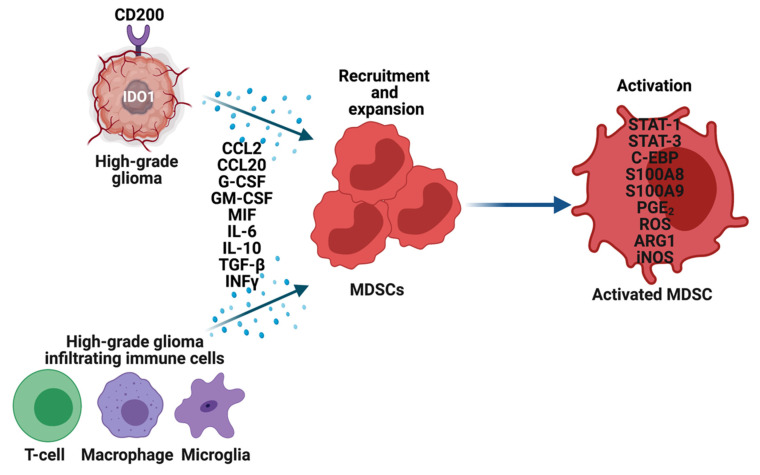
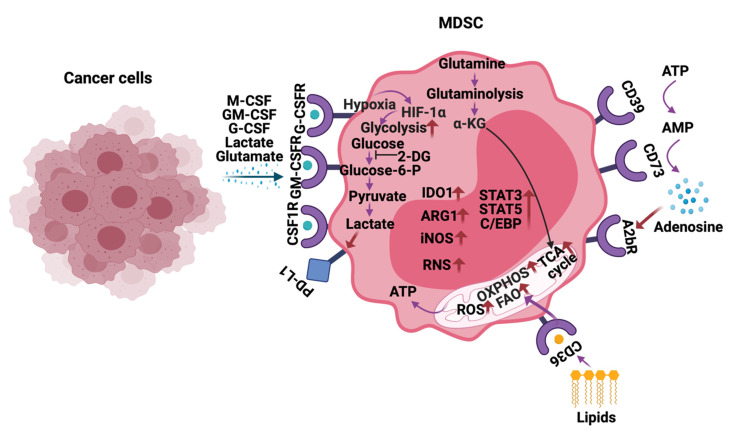
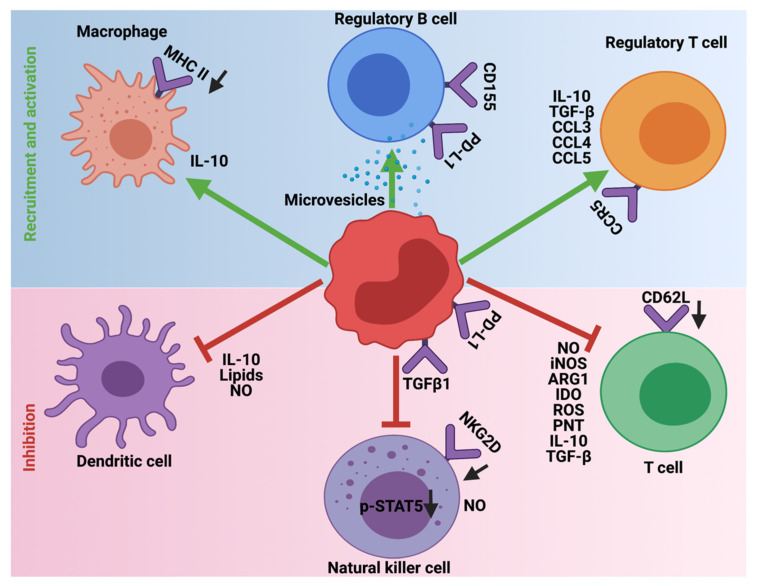
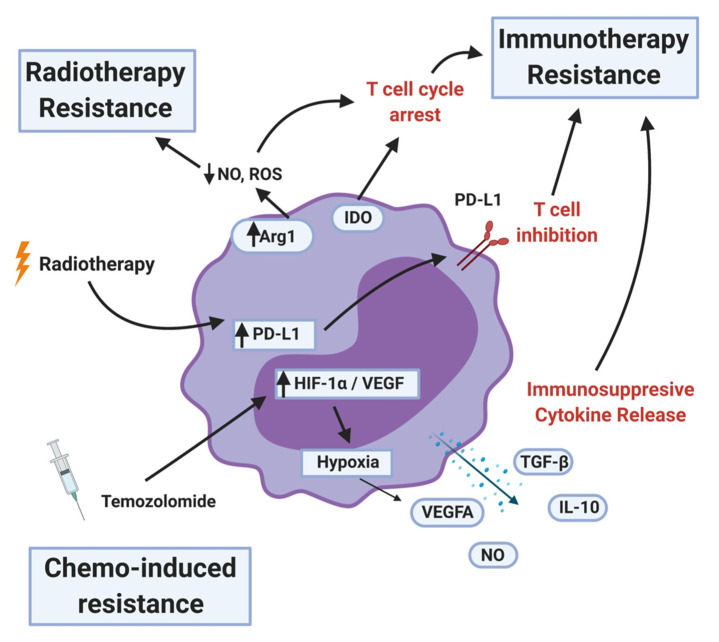
Cancer cells "hijack" host immune cells to promote growth, survival, and metastasis. The immune microenvironment of high-grade gliomas (HGG) is a complex and heterogeneous system, consisting of diverse cell types such as microglia, bone marrow-derived macrophages (BMDMs), myeloid-derived suppressor cells (MDSCs), dendritic cells, natural killer (NK) cells, and T-cells. Of these, MDSCs are one of the major tumor-infiltrating immune cells and are correlated not only with overall worse prognosis but also poor clinical outcomes. Upon entry from the bone marrow into the peripheral blood, spleen, as well as in tumor microenvironment (TME) in HGG patients, MDSCs deploy an array of mechanisms to perform their immune and non-immune suppressive functions. Here, we highlight the origin, function, and characterization of MDSCs and how they are recruited and metabolically reprogrammed in HGG. Furthermore, we discuss the mechanisms by which MDSCs contribute to immunosuppression and resistance to current therapies. Finally, we conclude by summarizing the emerging approaches for targeting MDSCs alone as a monotherapy or in combination with other standard-of-care therapies to improve the current treatment of high-grade glioma patients.
癌细胞“劫持”宿主免疫细胞以促进生长、存活和转移。高级别神经胶质瘤 (HGG) 的免疫微环境是一个复杂而异质的系统,由多种细胞类型组成,如小胶质细胞、骨髓来源的巨噬细胞 (BMDMs)、髓系来源的抑制细胞 (MDSCs)、树突状细胞、自然杀伤 (NK) 细胞和 T 细胞。其中,MDSCs 是主要的肿瘤浸润免疫细胞之一,不仅与整体预后较差相关,也与不良的临床结局相关。MDSCs 从骨髓进入外周血、脾脏以及 HGG 患者的肿瘤微环境 (TME) 后,会部署一系列机制来发挥其免疫和非免疫抑制功能。在这里,我们重点介绍 MDSCs 的起源、功能和特征,以及它们如何在 HGG 中被招募和代谢重编程。此外,我们还讨论了 MDSCs 如何导致免疫抑制和对现有治疗的耐药性的机制。最后,我们总结了单独靶向 MDSCs 作为单一疗法或与其他标准治疗联合使用以改善高级别神经胶质瘤患者当前治疗的新方法。