Woodward Alison, Pandele Alina, Abdelrazig Salah, Ortori Catherine A, Khan Iqbal, Uribe Marcos Castellanos, May Sean, Barrett David A, Grundy Richard G, Kim Dong-Hyun, Rahman Ruman
Children's Brain Tumour Research Centre, School of Medicine, Biodiscovery Institute, University of Nottingham, Nottingham NG7 2RD, UK.
Centre for Analytical Bioscience, Advanced Materials and Healthcare Division, School of Pharmacy, University of Nottingham, Nottingham NG7 2RD, UK.
Metabolites. 2021 Apr 14;11(4):240. doi: 10.3390/metabo11040240.
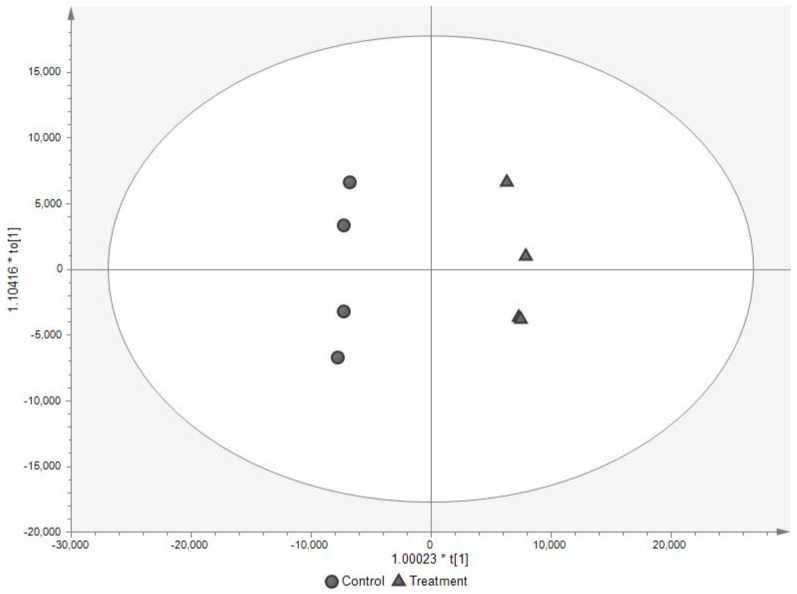
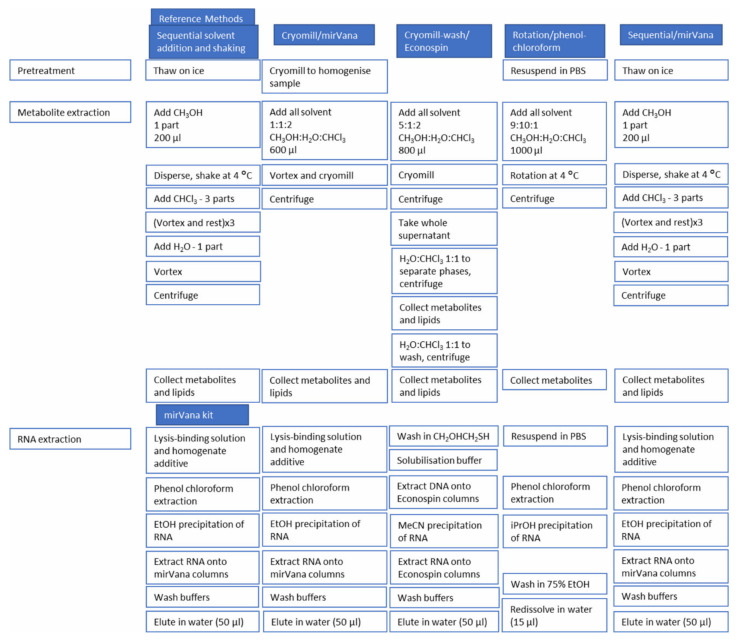
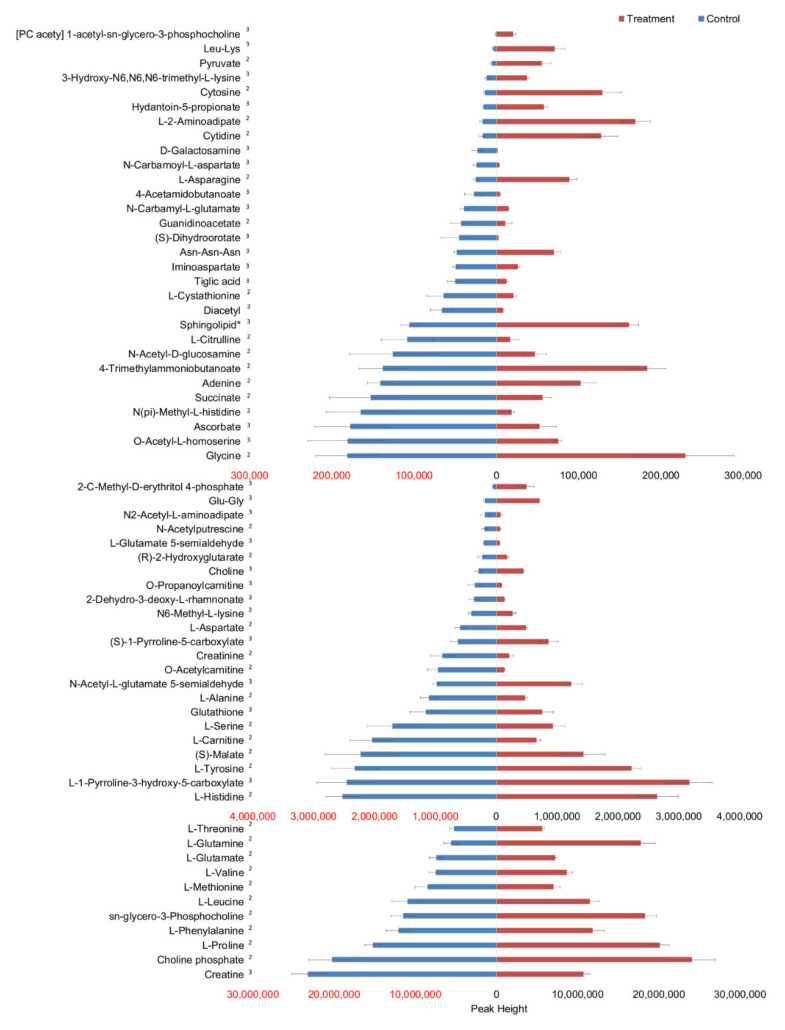
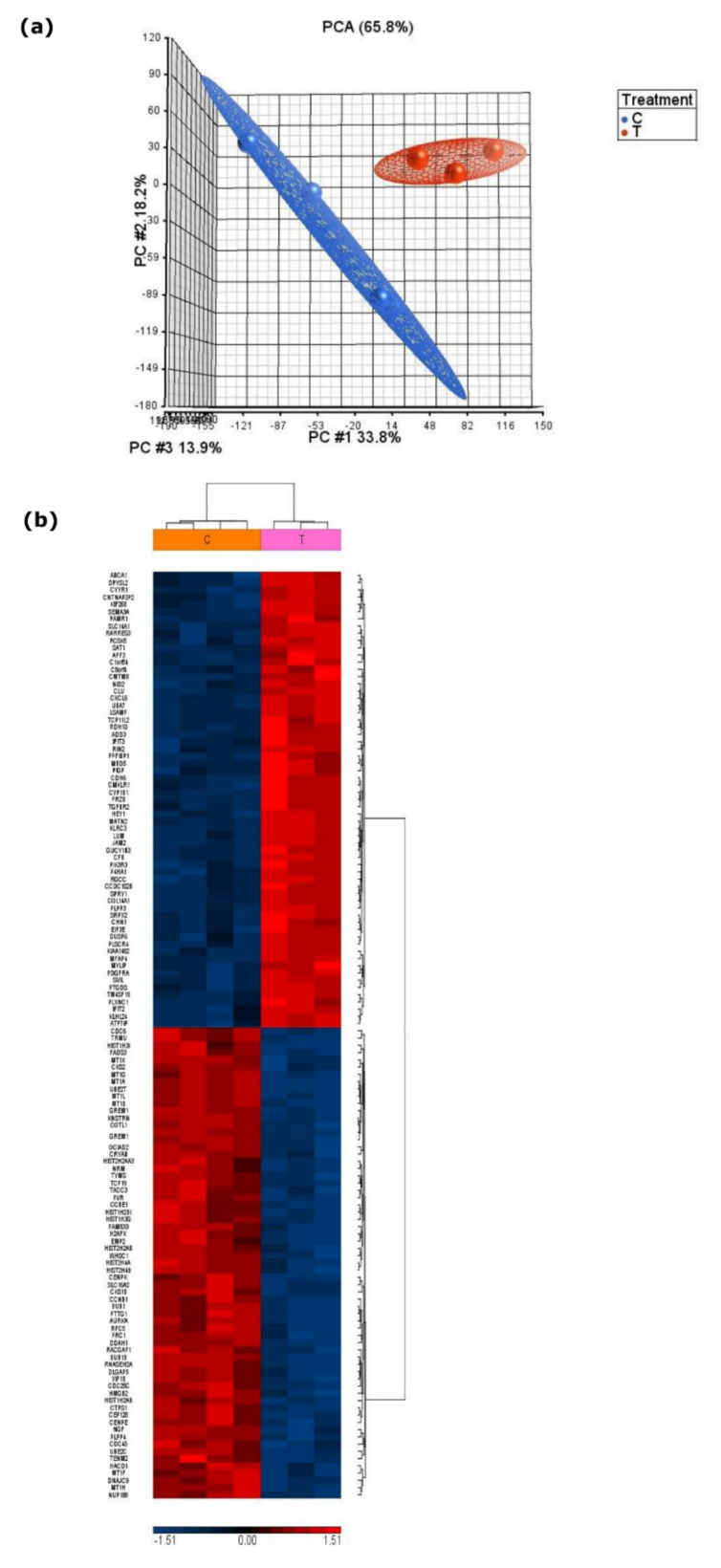
The integration of untargeted metabolomics and transcriptomics from the same population of cells or tissue enhances the confidence in the identified metabolic pathways and understanding of the enzyme-metabolite relationship. Here, we optimised a simultaneous extraction method of metabolites/lipids and RNA from ependymoma cells (BXD-1425). Relative to established RNA (mirVana kit) or metabolite (sequential solvent addition and shaking) single extraction methods, four dual-extraction techniques were evaluated and compared (methanol:water:chloroform ratios): cryomill/mirVana (1:1:2); cryomill-wash/Econospin (5:1:2); rotation/phenol-chloroform (9:10:1); Sequential/mirVana (1:1:3). All methods extracted the same metabolites, yet rotation/phenol-chloroform did not extract lipids. Cryomill/mirVana and sequential/mirVana recovered the highest amounts of RNA, at 70 and 68% of that recovered with mirVana kit alone. sequential/mirVana, involving RNA extraction from the interphase of our established sequential solvent addition and shaking metabolomics-lipidomics extraction method, was the most efficient approach overall. Sequential/mirVana was applied to study a) the biological effect caused by acute serum starvation in BXD-1425 cells and b) primary ependymoma tumour tissue. We found (a) 64 differentially abundant metabolites and 28 differentially expressed metabolic genes, discovering four gene-metabolite interactions, and (b) all metabolites and 62% lipids were above the limit of detection, and RNA yield was sufficient for transcriptomics, in just 10 mg of tissue.
对来自同一细胞群或组织的非靶向代谢组学和转录组学进行整合,可增强对所确定代谢途径的信心,并增进对酶 - 代谢物关系的理解。在此,我们优化了一种从室管膜瘤细胞(BXD - 1425)中同时提取代谢物/脂质和RNA的方法。相对于已有的RNA(mirVana试剂盒)或代谢物(顺序添加溶剂并振荡)单一提取方法,我们评估并比较了四种双提取技术(甲醇:水:氯仿比例):冷冻研磨/mirVana(1:1:2);冷冻研磨 - 洗涤/Econospin(5:1:2);旋转/酚 - 氯仿(9:10:1);顺序/mirVana(1:1:3)。所有方法都能提取相同的代谢物,但旋转/酚 - 氯仿法无法提取脂质。冷冻研磨/mirVana和顺序/mirVana回收的RNA量最高,分别为单独使用mirVana试剂盒回收量的70%和68%。顺序/mirVana,即从我们已建立的顺序添加溶剂并振荡的代谢组学 - 脂质组学提取方法的界面中提取RNA,总体上是最有效的方法。顺序/mirVana被用于研究:a)BXD - 1425细胞急性血清饥饿引起的生物学效应,以及b)原发性室管膜瘤肿瘤组织。我们发现:(a)64种差异丰富的代谢物和28个差异表达的代谢基因,发现了四个基因 - 代谢物相互作用;(b)在仅10mg组织中,所有代谢物和62%的脂质高于检测限,且RNA产量足以进行转录组学分析。