Centre for Analytical Bioscience, Advanced Materials and Healthcare Technology Division, School of Pharmacy, University of Nottingham, Nottingham, UK.
Pain Centre Versus Arthritis, University of Nottingham, Nottingham, UK.
Metabolomics. 2020 Feb 27;16(3):32. doi: 10.1007/s11306-020-01652-8.
Osteoarthritis (OA) is the most common form of joint disease, causing pain and disability. Previous studies have demonstrated the role of lipid mediators in OA pathogenesis.
To explore potential alterations in the plasma lipidomic profile in an established mouse model of OA, with a view to identification of potential biomarkers of pain and/or pathology.
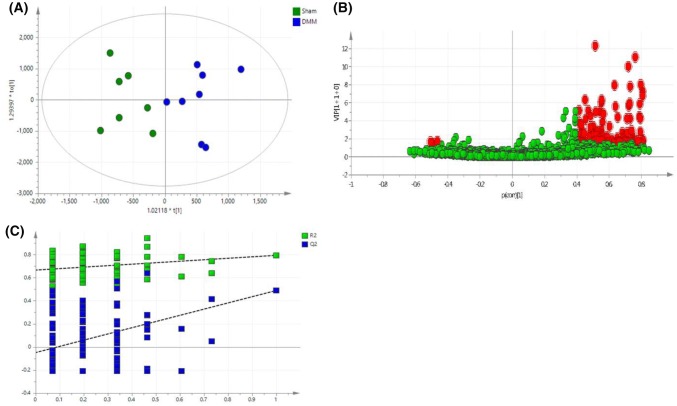
Pain behaviour was assessed following destabilisation of the medial meniscus (DMM) model of OA (n = 8 mice) and compared to sham controls (n = 7). Plasma and knee joints were collected at 16 weeks post-surgery. Plasma samples were analysed using ultra-high performance liquid chromatography accurate mass high resolution mass spectrometry (UHPLC-HR-MS) to identify potential differences in the lipidome, using multivariate and univariate statistical analyses. Correlations between pain behaviour, joint pathology and levels of lipids were investigated.
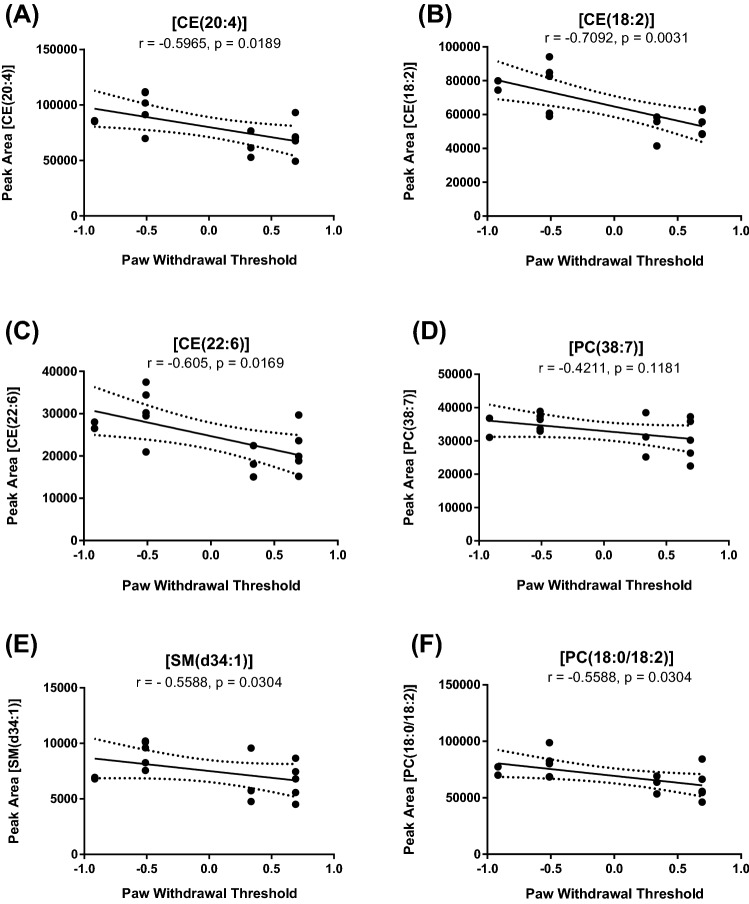
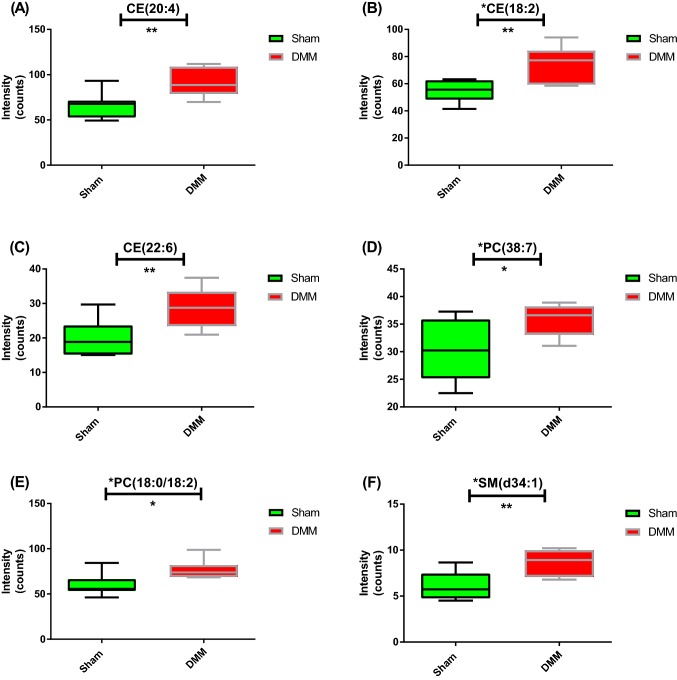
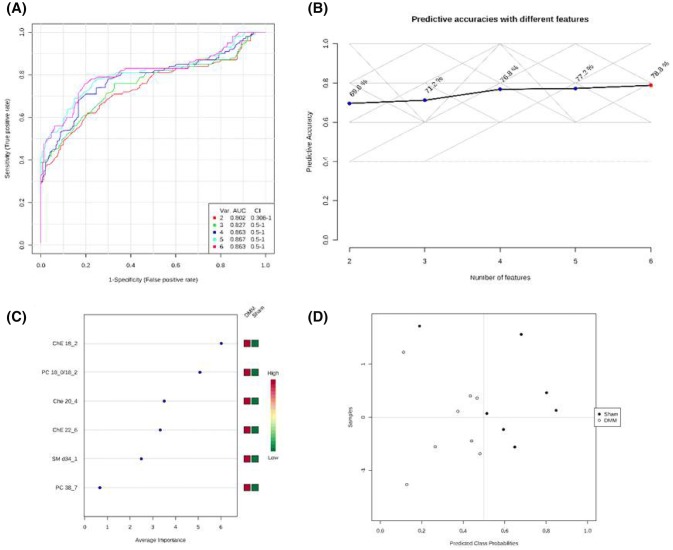
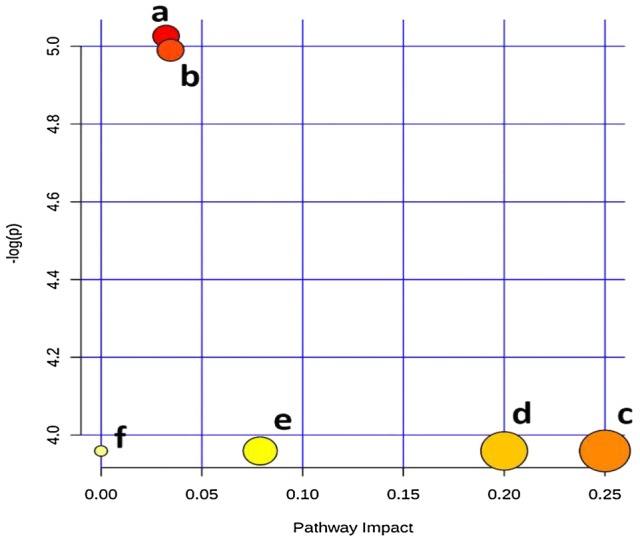
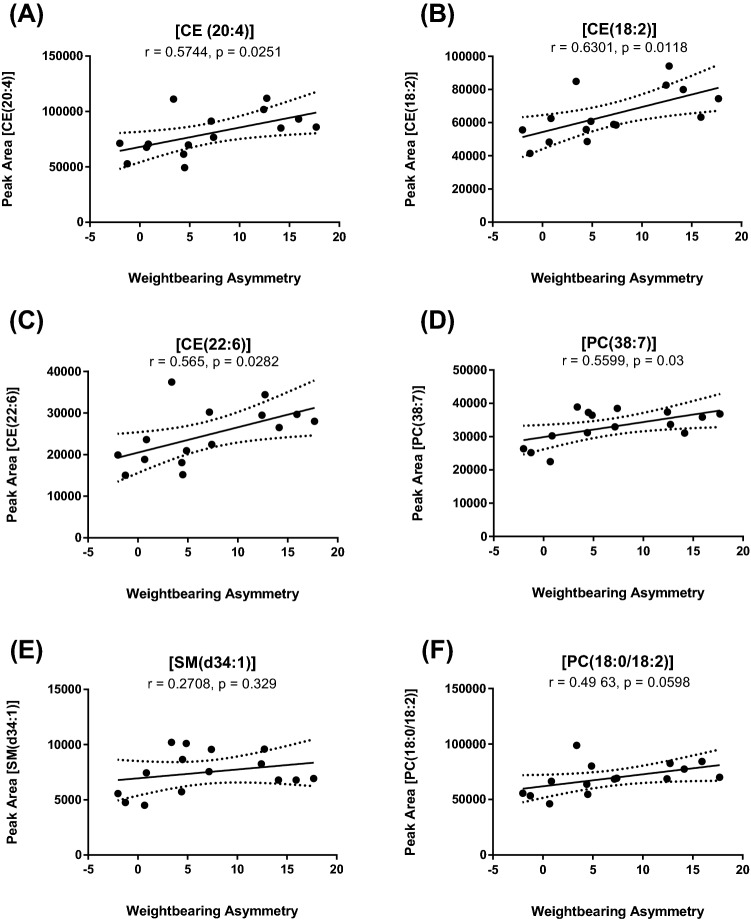
24 lipids, predominantly from the lipid classes of cholesterol esters (CE), fatty acids (FA), phosphatidylcholines (PC), N-acylethanolamines (NAE) and sphingomyelins (SM), were differentially expressed in DMM plasma compared to sham plasma. Six of these lipids which were increased in the DMM model were identified as CE(18:2), CE(20:4), CE(22:6), PC(18:0/18:2), PC(38:7) and SM(d34:1). CEs were positively correlated with pain behaviour and all six lipid species were positively correlated with cartilage damage. Pathways shown to be involved in altered lipid homeostasis in OA were steroid biosynthesis and sphingolipid metabolism.
We identify plasma lipid species associated with pain and/or pathology in a DMM model of OA.
骨关节炎(OA)是最常见的关节疾病,可导致疼痛和残疾。先前的研究表明,脂质介质在 OA 发病机制中起作用。
探索 OA 建立的小鼠模型中血浆脂质组谱的潜在变化,以期确定疼痛和/或病理的潜在生物标志物。
在 OA 的内侧半月板不稳定(DMM)模型(n = 8 只小鼠)后评估疼痛行为,并与假手术对照(n = 7 只)进行比较。手术后 16 周收集血浆和膝关节。使用超高效液相色谱准确质量高分辨率质谱(UHPLC-HR-MS)分析血浆样本,以确定脂质组的潜在差异,使用多变量和单变量统计分析。研究了疼痛行为、关节病理和脂质水平之间的相关性。
与 sham 血浆相比,DMM 血浆中有 24 种脂质,主要来自胆固醇酯(CE)、脂肪酸(FA)、磷脂酰胆碱(PC)、N-酰基乙醇胺(NAE)和神经酰胺(SM)脂质类,在 DMM 模型中表达不同。在 DMM 模型中增加的这六种脂质被鉴定为 CE(18:2)、CE(20:4)、CE(22:6)、PC(18:0/18:2)、PC(38:7)和 SM(d34:1)。CEs 与疼痛行为呈正相关,所有六种脂质与软骨损伤呈正相关。表明 OA 中脂质动态平衡改变涉及的途径有类固醇生物合成和鞘脂代谢。
我们确定了与 DMM 模型 OA 中的疼痛和/或病理相关的血浆脂质种类。