Fujii Yutaka, Abe Takuya, Ikegami Kikuo
Department of Clinical Engineering and Medical Technology, Niigata University of Health and Welfare, Niigata 950-3198, Japan.
Department of Health and Medical Sciences, Chiba Institute of Science, Choshi 288-0025, Japan.
Membranes (Basel). 2021 Apr 11;11(4):283. doi: 10.3390/membranes11040283.
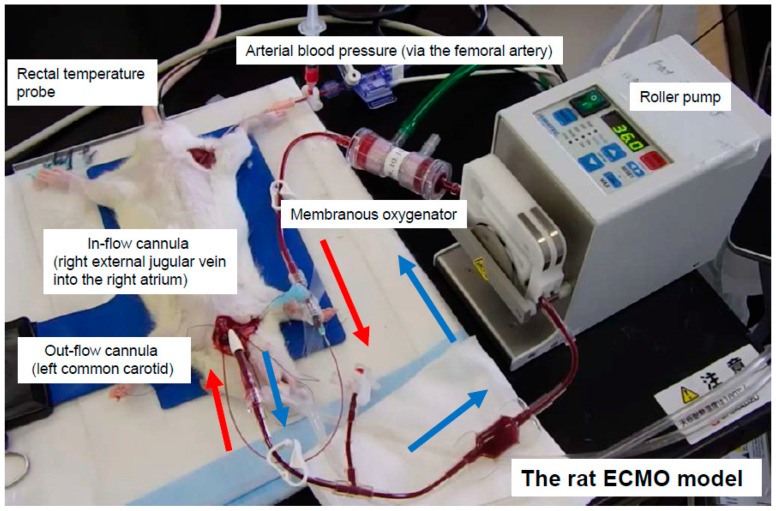
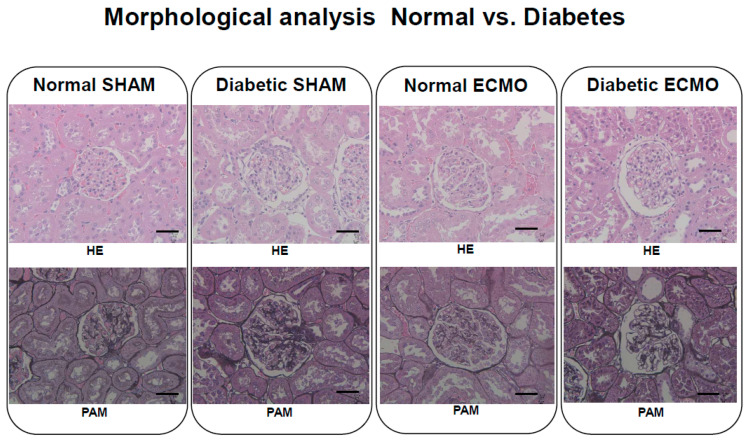
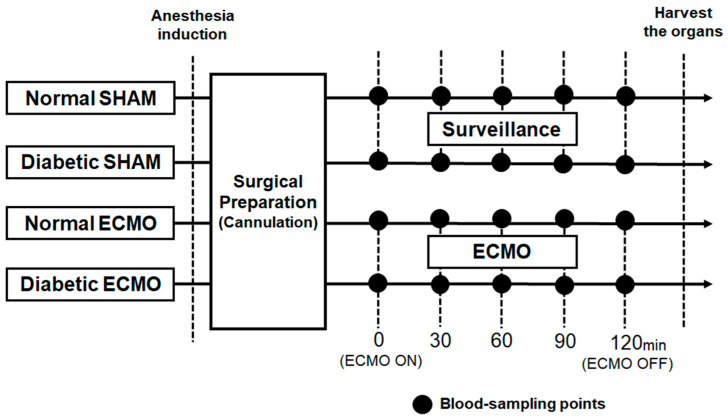
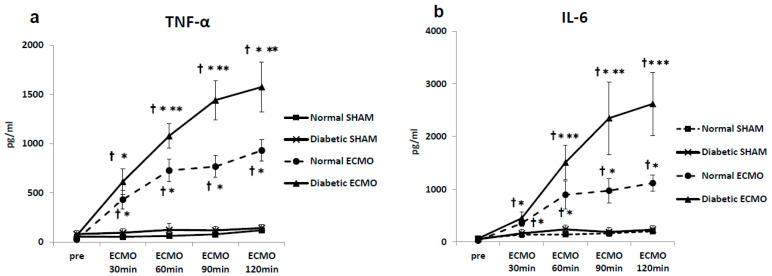
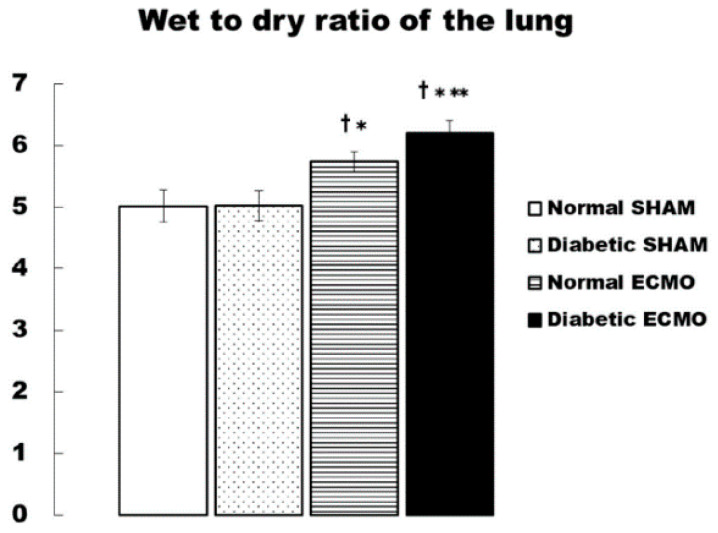
Systemic inflammatory responses in patients undergoing extracorporeal membrane oxygenation (ECMO) contribute significantly to ECMO-associated morbidity and mortality. In recent years, the number of type 2 diabetes mellitus patients has increased, and the number of these patients undergoing ECMO has also increased. Type 2 diabetes mellitus is a high-risk factor for complications during ECMO. We studied the effects of ECMO on inflammatory response in a diabetic rat ECMO model. Twenty-eight rats were divided into 4 groups: normal SHAM group (normal rats: = 7), diabetic SHAM group (diabetic rats: = 7), normal ECMO group (normal rats: = 7), and diabetic ECMO group (diabetic rats: = 7). We measured the plasma levels of cytokines, tumor necrosis factor-α, and interleukin-6. Aspartate aminotransferase (AST), alanine aminotransferase (ALT), lactate dehydrogenase (LDH), blood urea nitrogen (BUN), creatinine (Cr), and liver-type fatty acid binding protein (L-FABP) were examined in the rat cardiopulmonary bypass model to ascertain organ damage. In addition, the lung wet-to-dry weight (W/D) ratio was measured as an index of pulmonary tissue edema. A pathologic evaluation of kidneys was conducted by hematoxylin-eosin (HE) and periodic-acid-methenamine-silver (PAM) staining. In the diabetic ECMO group, levels of cytokines, AST, ALT, LDH, and L-FABP increased significantly, reaching a maximum at the end of ECMO in comparison with other groups ( < 0.05). In addition, hematoxylin-eosin and periodic acid-methenamine-silver staining of renal tissues showed marked injury in the ECMO group (normal ECMO and diabetic ECMO groups). Furthermore, when the normal ECMO and diabetic ECMO groups were compared, severe organ injury was seen in the diabetic ECMO group. There was remarkable organ injury in the diabetic ECMO group. These data demonstrate that diabetes enhances proinflammatory cytokine release, renal damage, and pulmonary edema during ECMO in an animal model.
接受体外膜肺氧合(ECMO)治疗的患者发生的全身炎症反应是导致ECMO相关发病和死亡的重要因素。近年来,2型糖尿病患者数量增加,接受ECMO治疗的此类患者数量也有所增加。2型糖尿病是ECMO期间发生并发症的高危因素。我们在糖尿病大鼠ECMO模型中研究了ECMO对炎症反应的影响。28只大鼠分为4组:正常假手术组(正常大鼠:n = 7)、糖尿病假手术组(糖尿病大鼠:n = 7)、正常ECMO组(正常大鼠:n = 7)和糖尿病ECMO组(糖尿病大鼠:n = 7)。我们检测了细胞因子、肿瘤坏死因子-α和白细胞介素-6的血浆水平。在大鼠体外循环模型中检测天冬氨酸转氨酶(AST)、丙氨酸转氨酶(ALT)、乳酸脱氢酶(LDH)、血尿素氮(BUN)、肌酐(Cr)和肝型脂肪酸结合蛋白(L-FABP),以确定器官损伤情况。此外,测量肺湿重与干重(W/D)比值作为肺组织水肿的指标。通过苏木精-伊红(HE)染色和高碘酸-亚甲胺银(PAM)染色对肾脏进行病理评估。与其他组相比,糖尿病ECMO组的细胞因子、AST、ALT、LDH和L-FABP水平显著升高,在ECMO结束时达到最高(P < 0.05)。此外,肾脏组织的苏木精-伊红和高碘酸-亚甲胺银染色显示ECMO组(正常ECMO组和糖尿病ECMO组)有明显损伤。此外,比较正常ECMO组和糖尿病ECMO组时,糖尿病ECMO组出现严重器官损伤。糖尿病ECMO组存在显著的器官损伤。这些数据表明,在动物模型中,糖尿病会增强ECMO期间促炎细胞因子的释放、肾脏损伤和肺水肿。