Program of Gene Therapy and Regulation of Gene Expression, Cima Universidad of Navarra, 31008 Pamplona, Spain.
Instituto de Investigacion Sanitaria de Navarra (IdiSNA), 31008 Pamplona, Spain.
Int J Mol Sci. 2021 Apr 17;22(8):4176. doi: 10.3390/ijms22084176.
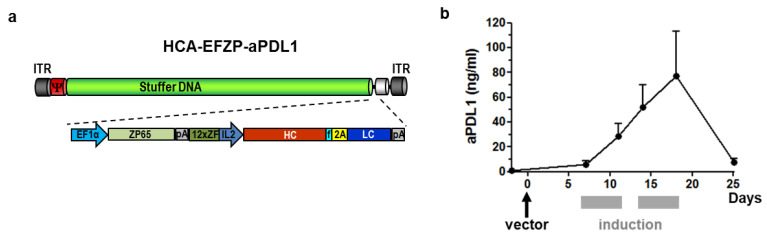
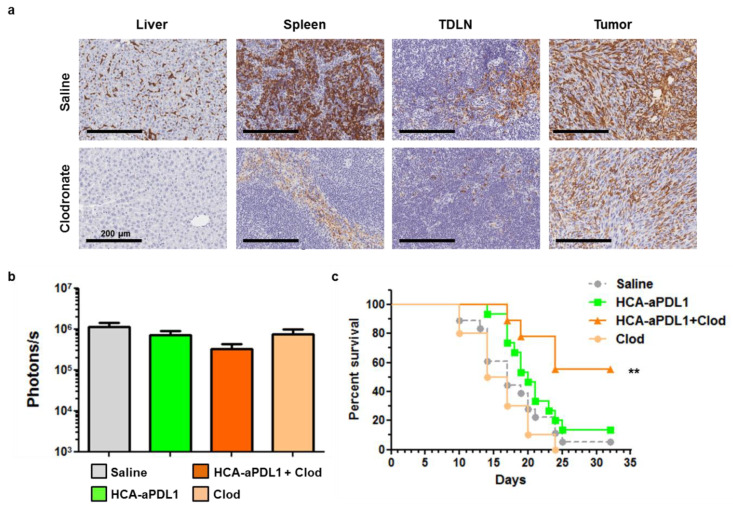
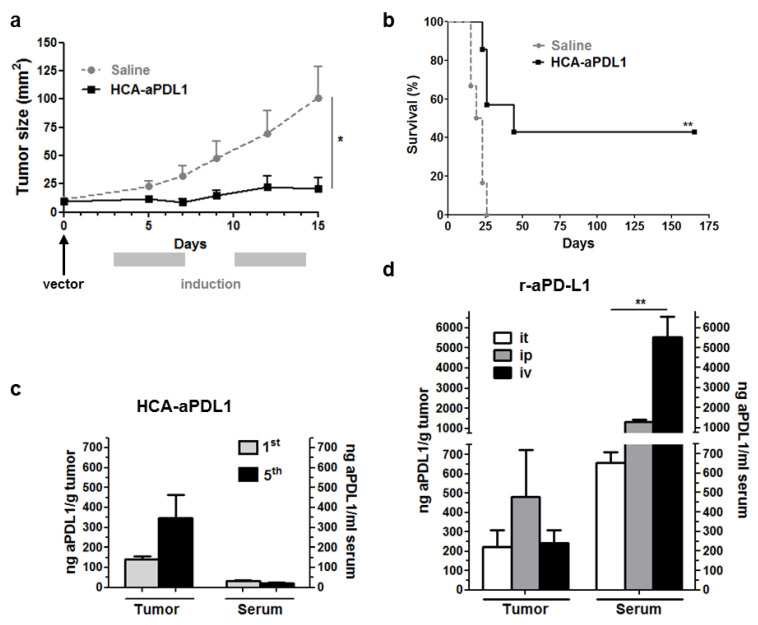
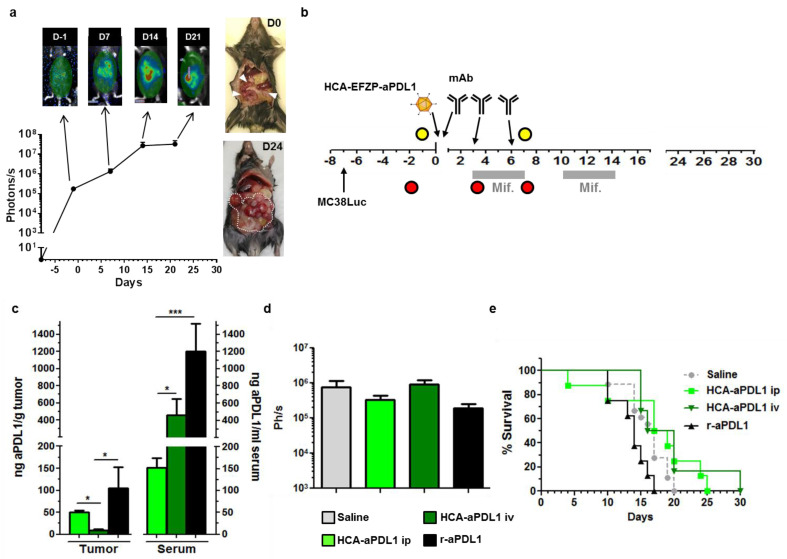
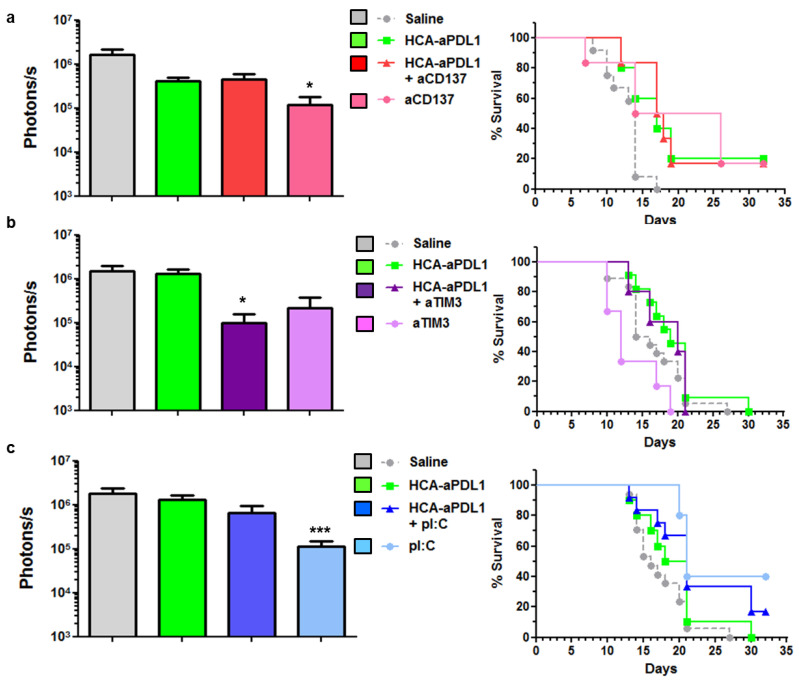
Immune checkpoint inhibitors (ICIs) have demonstrated remarkable efficacy in a growing number of malignancies. However, overcoming primary or secondary resistances is difficult due to pharmacokinetics issues and side effects associated with high systemic exposure. Local or regional expression of monoclonal antibodies (mAbs) using gene therapy vectors can alleviate this problem. In this work, we describe a high-capacity adenoviral vector (HCA-EFZP-aPDL1) equipped with a mifepristone-inducible system for the controlled expression of an anti-programmed death ligand 1 (PD-L1) blocking antibody. The vector was tested in an immune-competent mouse model of colorectal cancer based on implantation of MC38 cells. A single local administration of HCA-EFZP-aPDL1 in subcutaneous lesions led to a significant reduction in tumor growth with minimal release of the antibody in the circulation. When the vector was tested in a more stringent setting (rapidly progressing peritoneal carcinomatosis), the antitumor effect was marginal even in combination with other immune-stimulatory agents such as polyinosinic-polycytidylic acid (pI:C), blocking mAbs for T cell immunoglobulin, mucin-domain containing-3 (TIM-3) or agonistic mAbs for 4-1BB (CD137). In contrast, macrophage depletion by clodronate liposomes enhanced the efficacy of HCA-EFZP-aPDL1. These results highlight the importance of addressing macrophage-associated immunoregulatory mechanisms to overcome resistance to ICIs in the context of colorectal cancer.
免疫检查点抑制剂(ICIs)在越来越多的恶性肿瘤中显示出显著的疗效。然而,由于药代动力学问题和与高全身暴露相关的副作用,克服原发性或继发性耐药性是困难的。使用基因治疗载体局部或区域性表达单克隆抗体(mAbs)可以缓解这个问题。在这项工作中,我们描述了一种高容量腺病毒载体(HCA-EFZP-aPDL1),该载体配备了米非司酮诱导系统,用于控制表达抗程序性死亡配体 1(PD-L1)的阻断抗体。该载体在基于 MC38 细胞植入的结直肠癌免疫功能正常的小鼠模型中进行了测试。在皮下病变中单次局部给予 HCA-EFZP-aPDL1 导致肿瘤生长显著减少,而在循环中抗体的释放最小。当该载体在更严格的环境(快速进展的腹膜癌病)中进行测试时,即使与其他免疫刺激剂如聚肌苷酸-聚胞苷酸(pI:C)、阻断 T 细胞免疫球蛋白、粘蛋白结构域包含 3(TIM-3)的 mAbs 或激动性 mAbs 4-1BB(CD137)联合使用,其抗肿瘤作用也很有限。相比之下,氯膦酸脂质体对巨噬细胞的耗竭增强了 HCA-EFZP-aPDL1 的疗效。这些结果强调了在结直肠癌背景下解决与巨噬细胞相关的免疫调节机制以克服对 ICI 的耐药性的重要性。