Li Liyan, Miao Qianwei, Meng Fanqiang, Li Baoqi, Xue Tianyuan, Fang Tianliang, Zhang Zhirang, Zhang Jinxie, Ye Xinyu, Kang Yang, Zhang Xingding, Chen Qian, Liang Xin, Chen Hongbo, Zhang Xudong
Department of Pharmacology, Molecular Cancer Research Center, School of Medicine, Sun Yat-Sen University, Guangzhou/Shenzhen, China.
School of Life Sciences, Tsinghua University, Beijing 100084, P.R. China.
Theranostics. 2021 Apr 7;11(12):6033-6043. doi: 10.7150/thno.48868. eCollection 2021.
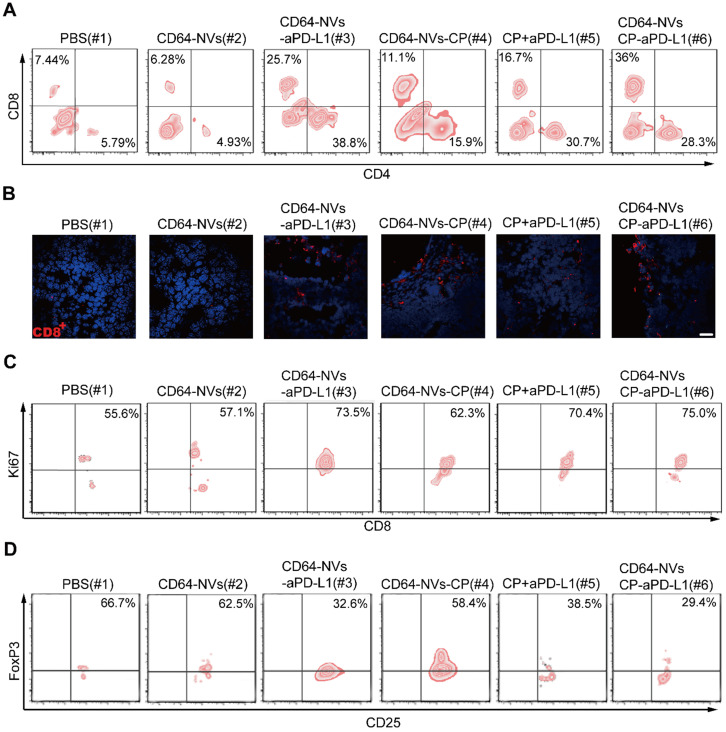
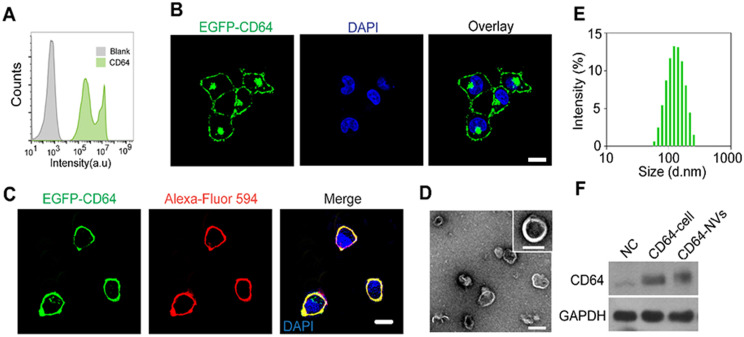
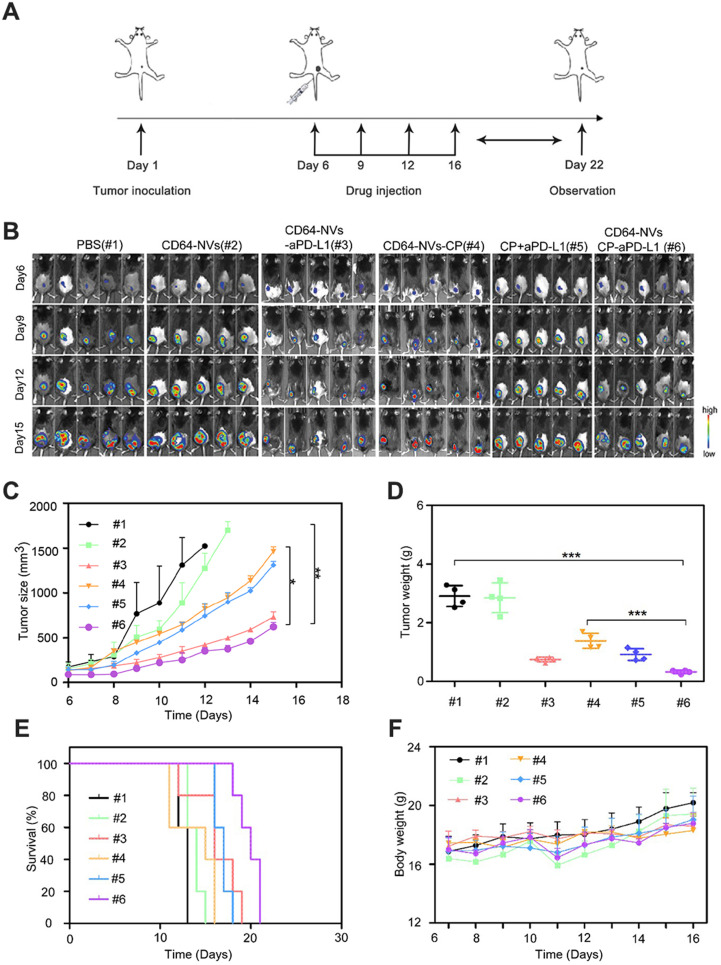
Immune checkpoint blockade therapies, especially those targeting the programmed death-1 (PD-1)/programmed death-ligand 1 (PD-L1) have achieved impressive clinical responses in multiple types of cancers. To optimize the therapeutic effect of the checkpoint antibodies, many strategies including targeting delivery, controlled release, and cellular synthesis have been developed. However, within these strategies, antibodies were attached to drug carriers by chemical bonding, which may affect the steric configuration and function of the antibodies. Herein, we prepared cluster of differentiation 64 (CD64), a natural catcher of the fragment crystalline (Fc) of monomeric immunoglobulin G (IgG), and over-expressed it on the cell membrane nanovesicles (NVs) as PD-L1 antibody delivery vehicle (CD64-NVs-aPD-L1), which was employed to disrupt the PD-1/PD-L1 immunosuppressive signal axis for boosting T cell dependent tumor elimination. Meanwhile, chemical immunomodulatory drug cyclophosphamide (CP) was also encapsulated in the vesicle (CD64-NVs-aPD-L1-CP), to simultaneously restrain the regulatory T cells (Tregs) and invigorate Ki67CD8 T cells, then further enhance their anti-tumor ability. : The cell membrane NVs overexpressing CD64 were incubated with PD-L1 antibody and chemotherapeutic agent CP to prepare CD64-NVs-aPD-L1-CP. The CD64-NVs-aPD-L1-CP could simultaneously interrupt the immunosuppressive effect of PD-L1 and decrease the inhibition of Tregs, leading to tumor growth suppression and survival time extension. Conclusion: CD64-NVs are charismatic carriers to achieve both checkpoint blockade and immunomodulatory drugs for combined cancer immunotherapy.
免疫检查点阻断疗法,尤其是那些靶向程序性死亡蛋白1(PD-1)/程序性死亡配体1(PD-L1)的疗法,已在多种癌症中取得了令人瞩目的临床疗效。为了优化检查点抗体的治疗效果,人们开发了许多策略,包括靶向递送、控释和细胞合成。然而,在这些策略中,抗体是通过化学键连接到药物载体上的,这可能会影响抗体的空间构型和功能。在此,我们制备了分化簇64(CD64),它是单体免疫球蛋白G(IgG)的片段结晶(Fc)的天然捕获剂,并将其在细胞膜纳米囊泡(NVs)上过表达,作为PD-L1抗体递送载体(CD64-NVs-aPD-L1),用于破坏PD-1/PD-L1免疫抑制信号轴,以促进T细胞依赖性肿瘤清除。同时,化学免疫调节药物环磷酰胺(CP)也被封装在囊泡中(CD64-NVs-aPD-L1-CP),以同时抑制调节性T细胞(Tregs)并激活Ki67 + CD8 + T细胞,进而进一步增强其抗肿瘤能力。:将过表达CD64的细胞膜纳米囊泡与PD-L1抗体和化疗药物CP孵育,制备CD64-NVs-aPD-L1-CP。CD64-NVs-aPD-L1-CP可同时中断PD-L1的免疫抑制作用并降低Tregs的抑制作用,从而抑制肿瘤生长并延长生存时间。结论:CD64-NVs是实现检查点阻断和免疫调节药物联合癌症免疫治疗的有吸引力的载体。