Hammershøj Marianne, Kristiansen Gitte Hald, Steenfeldt Sanna
Department of Food Science, Aarhus University, Agro Food Park 48, DK-8200 Aarhus, Denmark.
Department of Animal Science, Aarhus University, Blichers Alle 20, DK-8830 Tjele, Denmark.
Foods. 2021 Apr 19;10(4):897. doi: 10.3390/foods10040897.
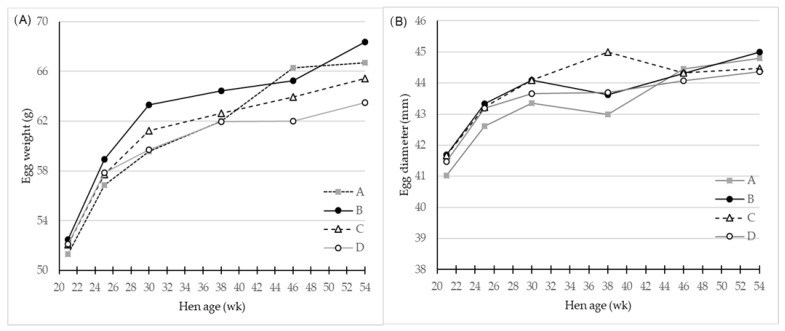
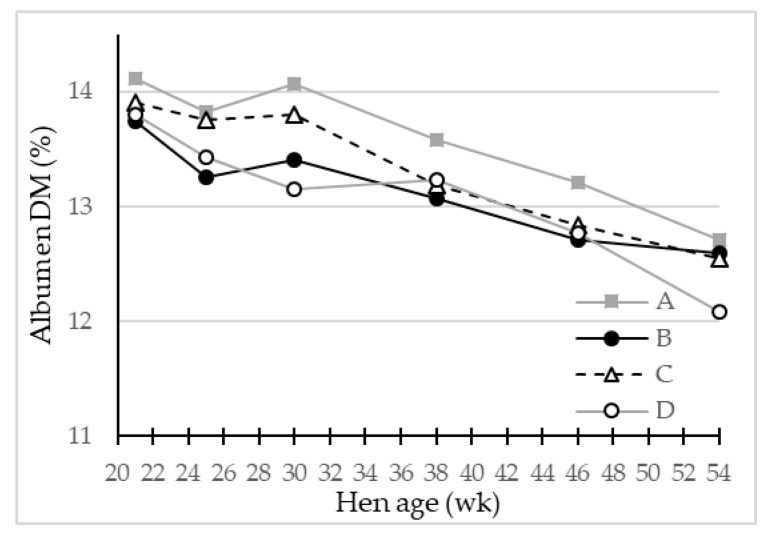
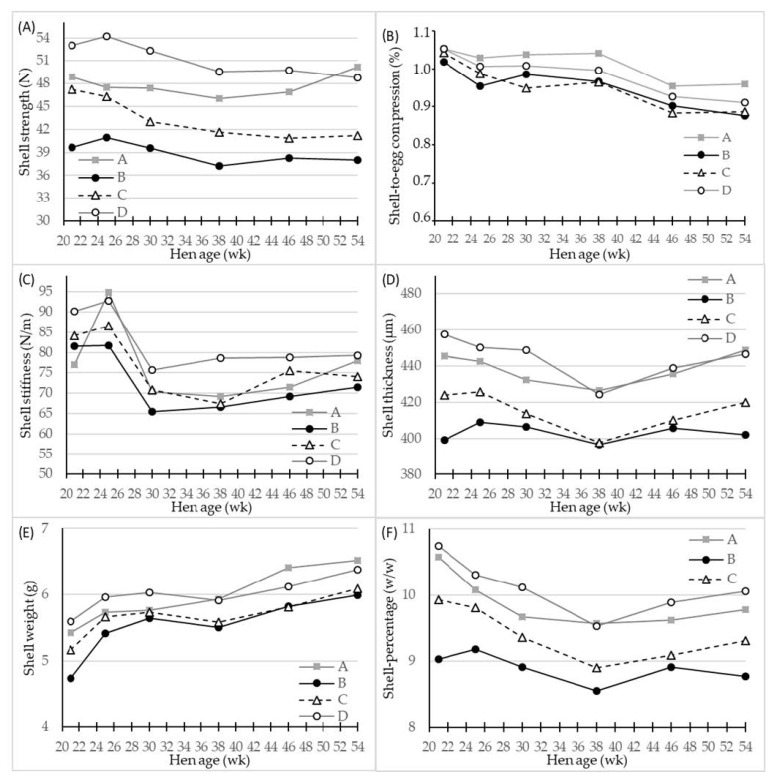
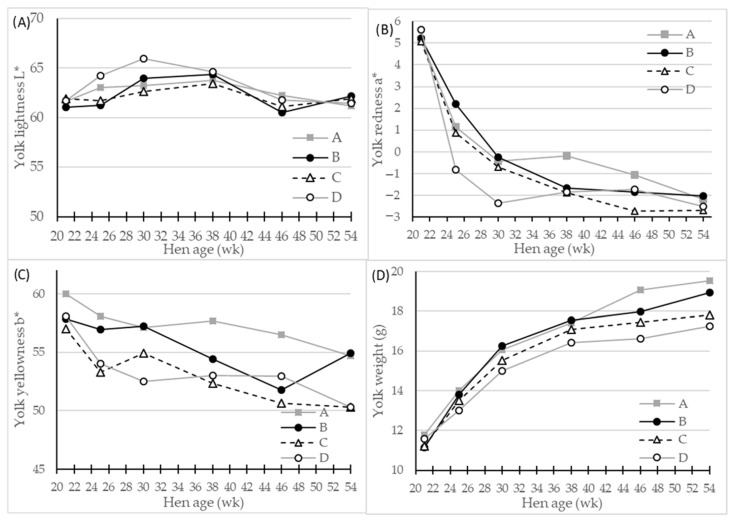
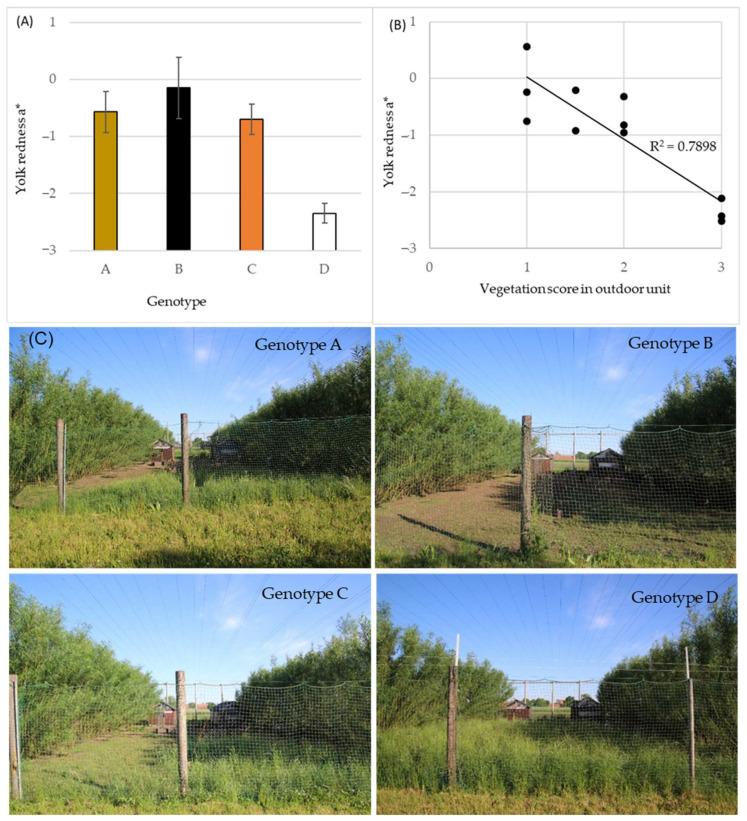
Egg laying genotypes have been selected for generations due to their high yield and egg quality, resulting in efficient feed utilization and low body weight; hence, they are not suitable for meat production. This imposes an issue for the male layer chicks, which are killed at one day old. Because of ethical and food waste concerns, the search for suitable dual-purpose genotypes in order to avoid euthanasia of male day-old chicks has intensified. The aim of the present study is to evaluate potential dual-purpose genotypes for their egg quality compared to a representative egg laying genotype. Two dual-purpose genotypes with divergent characteristics were evaluated: genotype A represented an experimental crossbreed based on a broiler type male and an egg layer female, and genotype C was a crossbreed of a layer type. These were compared to a rustic genotype B and a control genotype D, which was an egg layer. Eggs were collected six times during the period of 21–54 weeks of hen age, i.e., a total of 990 shell eggs were analyzed. Examined parameters were weights of egg, shell, yolk, and albumen, by calculating their relative proportions. Shell quality was assessed by shell strength, shell stiffness, and shell thickness. Yolk quality was determined as yolk color and inclusions of blood and meat spots, and albumen quality was evaluated in terms of pH and dry matter (DM) content. The egg layer genotype produced the smallest eggs with least blood and meat spot inclusions compared to that produced by the three dual-purpose genotypes. Shell quality was superior for the layer genotype. However, the experimental genotype A laid eggs of comparable shell quality, albumen DM, and yolk weight, but also with the darkest and most red-yellow colored yolk. The two other dual-purpose genotypes produced eggs of low-medium quality. In conclusion, the genotype A could serve as dual-purpose genotype from an egg quality perspective.
由于产蛋基因型具有高产和优质蛋的特点,已历经多代选育,从而实现了高效的饲料利用和较低的体重;因此,它们不适合用于肉类生产。这给雄性蛋鸡雏带来了一个问题,这些雏鸡在一日龄时就会被宰杀。出于伦理和食物浪费的考虑,为避免一日龄雄性雏鸡被安乐死而寻找合适的两用基因型的研究愈发深入。本研究的目的是与一种代表性的产蛋基因型相比,评估潜在两用基因型的蛋品质。评估了两种具有不同特征的两用基因型:基因型A是基于肉用型雄性和蛋用型雌性的实验杂交品种,基因型C是蛋用型的杂交品种。将它们与乡土基因型B和作为对照的蛋用型基因型D进行比较。在母鸡21至54周龄期间收集了六次鸡蛋,即总共分析了990枚带壳蛋。通过计算鸡蛋、蛋壳、蛋黄和蛋白的相对比例来检测相关参数。通过蛋壳强度、蛋壳硬度和蛋壳厚度评估蛋壳质量。蛋黄质量通过蛋黄颜色以及血斑和肉斑的存在情况来确定,蛋白质量则根据pH值和干物质(DM)含量进行评估。与三种两用基因型所产的蛋相比,蛋用型基因型所产的蛋最小,血斑和肉斑最少。蛋用型基因型的蛋壳质量更优。然而,实验基因型A所产蛋的蛋壳质量、蛋白干物质和蛋黄重量与之相当,但其蛋黄颜色最深且最呈红黄色。另外两种两用基因型所产的蛋质量为中低等。总之,从蛋品质角度来看,基因型A可作为两用基因型。