Rizzi Chiara
Department of Agronomy, Food, Natural Resources, Animals and Environment-University of Padova, 35020 Legnaro (PD), Italy.
Animals (Basel). 2020 Mar 31;10(4):584. doi: 10.3390/ani10040584.
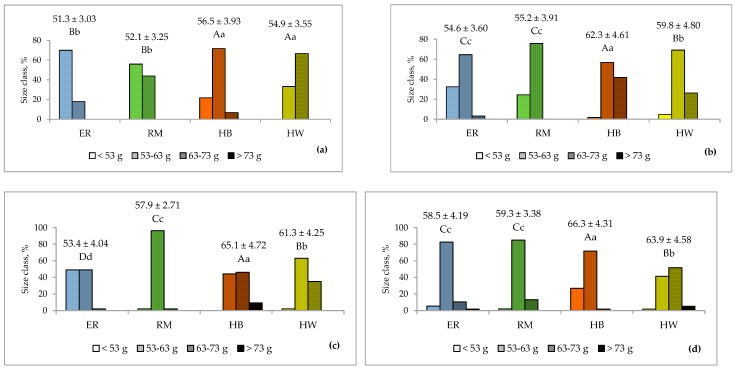
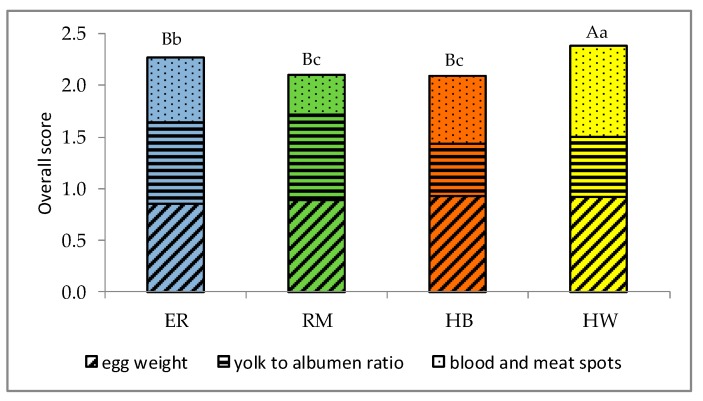
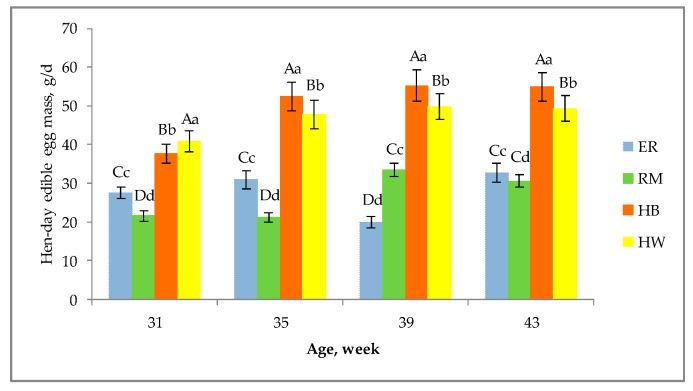
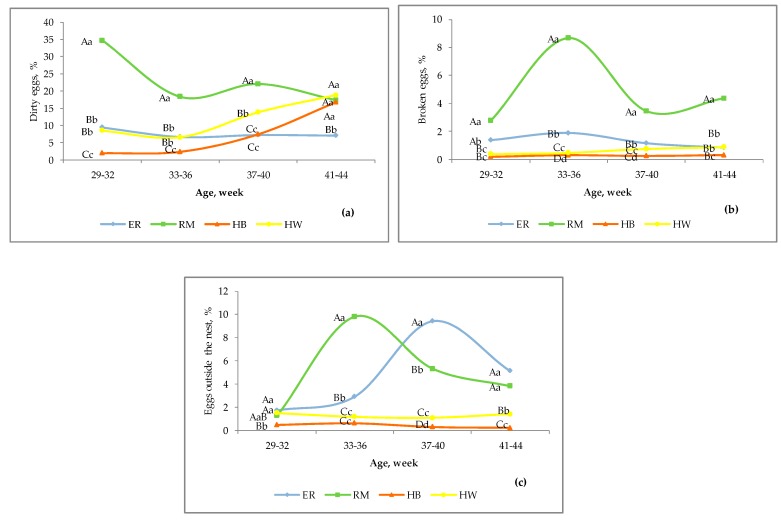
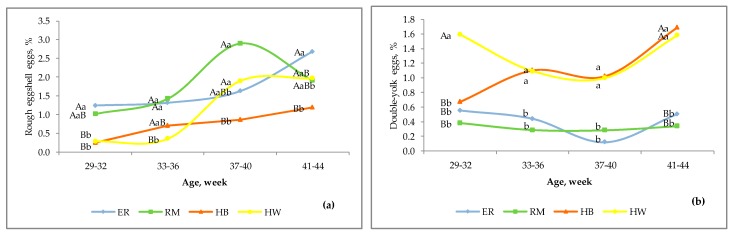
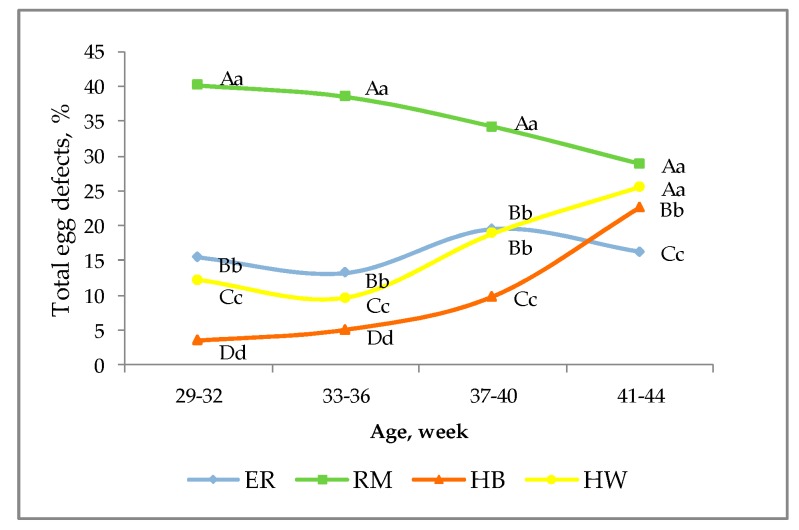
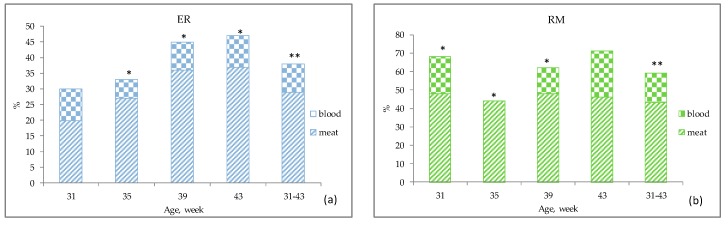
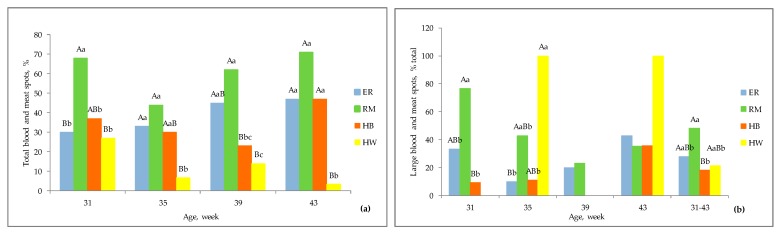
This study compared the yield performance, laying behavioural traits and egg quality of purebred and hybrid hens (from 28 until 44 weeks of age, considering four periods) reared under outdoor conditions. The four genotypes were reared on the same trial station, on four areas (one genotype/area), and under the same environmental conditions from hatching until the end of the trial. Italian dual-purpose purebred (Ermellinata di Rovigo-ER and Robusta maculata-RM) and hybrid (Hy-Line Brown-HB and Hy-Line White 36-HW) hens (flock size: 70 birds/genotype) were allowed outdoors (4 m/bird, good pasture during the growing period and poor pasture throughout the laying period, according to the season) and indoors (0.20 m/bird, five birds/individual nest) and fed commercial feed. Significant ( < 0.01) differences among genotypes were found. The hybrids showed a higher laying rate and hen-day edible egg mass, and a lower body weight than the purebreds. Broken and out-of-nest egg% were higher in RM and HW than ER and HB, respectively. Double-yolk egg% was higher in hybrids than in purebreds. The eggshell colour varied among brown eggshell ER, RM, and HB. The ER showed the lowest shape index. With aging, the yolk to albumen ratio linearly increased in all groups, eggshell% changed in ER, HW, RM (cubic) and in HB (linear). The purebreds showed meat spots% higher than blood spots; HW showed the lowest total inclusion%. In conclusion, according to an egg scoring evaluation (egg weight = medium-large size, yolk to albumen ratio = 0.5, total inclusions = none), HW showed a higher quality than HB and RM, and ER was intermediate. The RM hens showed the highest% of defective eggs, especially for overcrowding at nest, HB showed the lowest. Under outdoor conditions the laying behaviour of the purebred hens and the nest management are important factors for the saleable egg rate.
本研究比较了在户外条件下饲养的纯种母鸡和杂种母鸡(28至44周龄,分为四个阶段)的产蛋性能、产蛋行为特征和蛋品质。这四种基因型的母鸡在同一试验场的四个区域(每个区域一种基因型)饲养,从孵化到试验结束,环境条件相同。意大利兼用型纯种母鸡(埃梅利纳塔迪罗维戈鸡 - ER和斑纹罗布斯塔鸡 - RM)和杂种母鸡(海兰褐鸡 - HB和海兰白36 - HW)(每个基因型鸡群规模为70只)可在户外(每只鸡4平方米,生长期间牧场良好,产蛋期间牧场较差,根据季节而定)和室内(每只鸡0.20平方米,每个个体巢箱容纳5只鸡)活动,并饲喂商业饲料。发现基因型之间存在显著差异(<0.01)。杂种母鸡的产蛋率和母鸡日产可食用蛋量较高,体重低于纯种母鸡。RM和HW的破蛋率和离巢蛋率分别高于ER和HB。杂种母鸡的双黄蛋率高于纯种母鸡。蛋壳颜色在褐壳蛋的ER、RM和HB之间有所不同。ER的蛋形指数最低。随着年龄增长,所有组的蛋黄与蛋白比例呈线性增加,ER、HW、RM的蛋壳比例呈立方变化,HB呈线性变化。纯种母鸡的肉斑率高于血斑率;HW的总杂质率最低。总之,根据鸡蛋评分评估(蛋重 = 中大型,蛋黄与蛋白比例 = 0.5,无总杂质),HW的品质高于HB和RM,ER居中。RM母鸡的次品蛋率最高,尤其是因巢箱拥挤导致的,HB最低。在户外条件下,纯种母鸡的产蛋行为和巢箱管理是影响可售蛋率的重要因素。