Inflammation Immunobiology Section, Laboratory of Allergic Diseases, National Institute of Allergy and Infectious Diseases, National Institutes of Health, Bethesda, MD 20892, USA.
Lung and Vascular Inflammation Section, Laboratory of Allergic Diseases, National Institute of Allergy and Infectious Diseases, National Institutes of Health, Bethesda, MD 20892, USA.
Viruses. 2021 Apr 22;13(5):728. doi: 10.3390/v13050728.
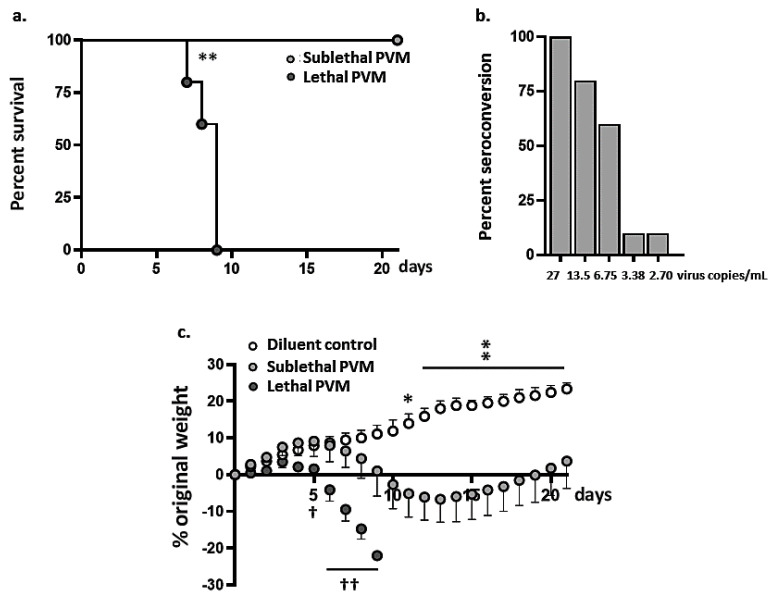
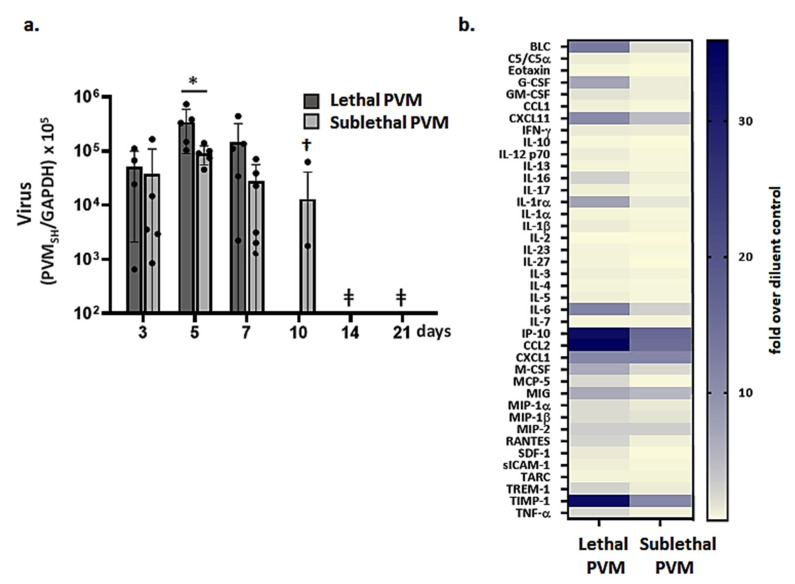
Respiratory virus infections can have long-term effects on lung function that persist even after the acute responses have resolved. Numerous studies have linked severe early childhood infection with respiratory syncytial virus (RSV) to the development of wheezing and asthma, although the underlying mechanisms connecting these observations remain unclear. Here, we examine airway hyperresponsiveness (AHR) that develops in wild-type mice after recovery from symptomatic but sublethal infection with the natural rodent pathogen, pneumonia virus of mice (PVM). We found that BALB/c mice respond to a limited inoculum of PVM with significant but reversible weight loss accompanied by virus replication, acute inflammation, and neutrophil recruitment to the airways. At day 21 post-inoculation, virus was no longer detected in the airways and the acute inflammatory response had largely resolved. However, and in contrast to most earlier studies using the PVM infection model, all mice survived the initial infection and all went on to develop serum anti-PVM IgG antibodies. Furthermore, using both invasive plethysmography and precision-cut lung slices, we found that these mice exhibited significant airway hyperresponsiveness at day 21 post-inoculation that persisted through day 45. Taken together, our findings extend an important and versatile respiratory virus infection model that can now be used to explore the role of virions and virion clearance as well as virus-induced inflammatory mediators and their signaling pathways in the development and persistence of post-viral AHR and lung dysfunction.
呼吸道病毒感染可对肺功能造成长期影响,即使急性反应已经消退,这些影响仍会持续存在。许多研究将严重的婴幼儿呼吸道合胞病毒(RSV)感染与喘息和哮喘的发展联系起来,尽管将这些观察结果联系起来的潜在机制仍不清楚。在这里,我们研究了在自然啮齿动物病原体鼠肺炎病毒(PVM)引起的有症状但亚致死性感染后,从症状中恢复过来的野生型小鼠中发生的气道高反应性(AHR)。我们发现,BALB/c 小鼠对有限剂量的 PVM 接种会产生明显但可逆转的体重减轻,伴随着病毒复制、急性炎症和中性粒细胞向气道募集。在接种后第 21 天,呼吸道中不再检测到病毒,急性炎症反应已基本消退。然而,与使用 PVM 感染模型的大多数早期研究不同,所有小鼠都在初始感染中存活下来,并且都产生了血清抗 PVM IgG 抗体。此外,通过使用侵入性肺量计和精密切割肺切片,我们发现这些小鼠在接种后第 21 天表现出明显的气道高反应性,这种反应一直持续到第 45 天。综上所述,我们的发现扩展了一个重要且多功能的呼吸道病毒感染模型,现在可以用于探索病毒粒子及其清除以及病毒诱导的炎症介质及其信号通路在病毒后 AHR 和肺功能障碍发展和持续中的作用。