Mączyńska Beata, Paleczny Justyna, Oleksy-Wawrzyniak Monika, Choroszy-Król Irena, Bartoszewicz Marzenna
Department of Pharmaceutical Microbiology and Parasitology, Faculty of Pharmacy, Medical University, 50-367 Wroclaw, Poland.
Department of Basic Sciences, Faculty of Health Sciences, Medical University, 50-367 Wroclaw, Poland.
Pathogens. 2021 Apr 23;10(5):512. doi: 10.3390/pathogens10050512.
Over the past few decades, strains increased their pathogenicity and antibiotic resistance, thereby becoming a major therapeutic challenge. One of the few available therapeutic options seems to be intravenous fosfomycin. Unfortunately, the determination of sensitivity to fosfomycin performed in hospital laboratories can pose a significant problem. Therefore, the aim of the present research was to evaluate the activity of fosfomycin against clinical, multidrug-resistant strains isolated from nosocomial infections between 2011 and 2020, as well as to evaluate the methods routinely used in hospital laboratories to assess bacterial susceptibility to this antibiotic.
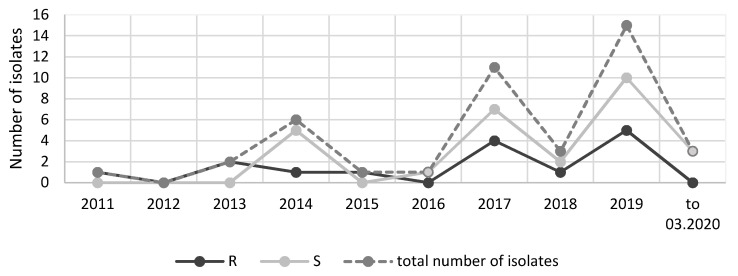
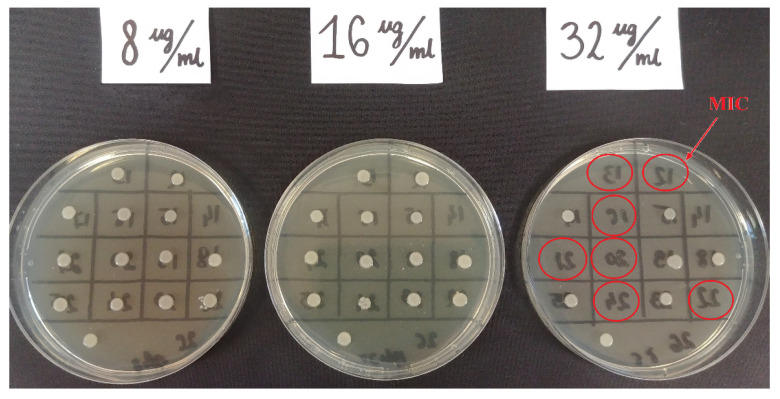
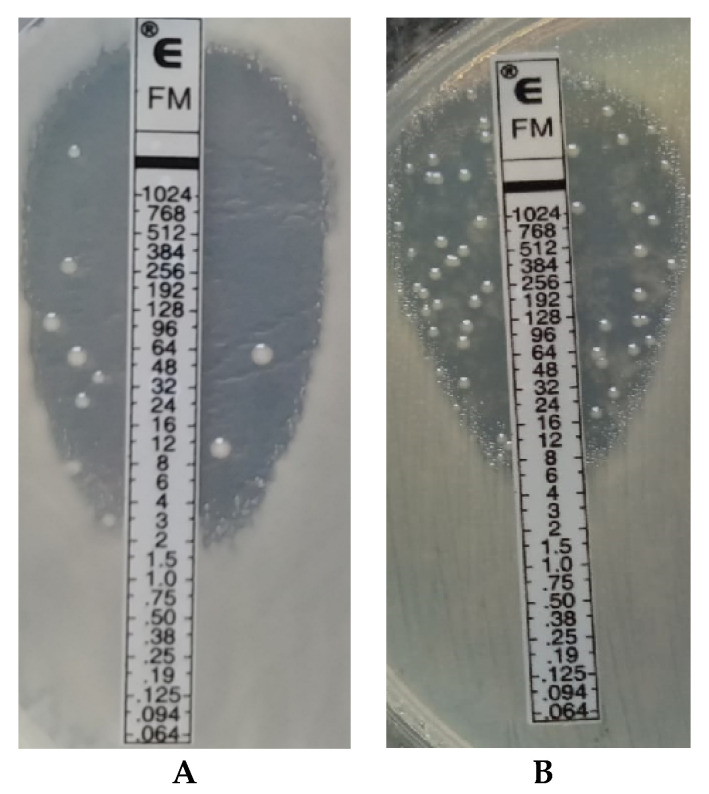
43 multidrug-resistant strains isolates from various infections were tested. All the strains had ESBL enzymes, and 20 also showed the presence of carbapenemases. Susceptibility was determined using the diffusion method (E-test) and the automated system (Phoenix), which were compared with the reference method (agar dilution).
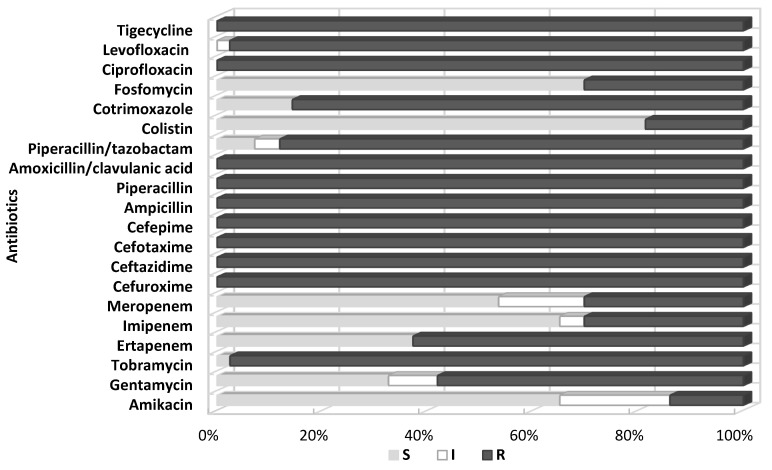
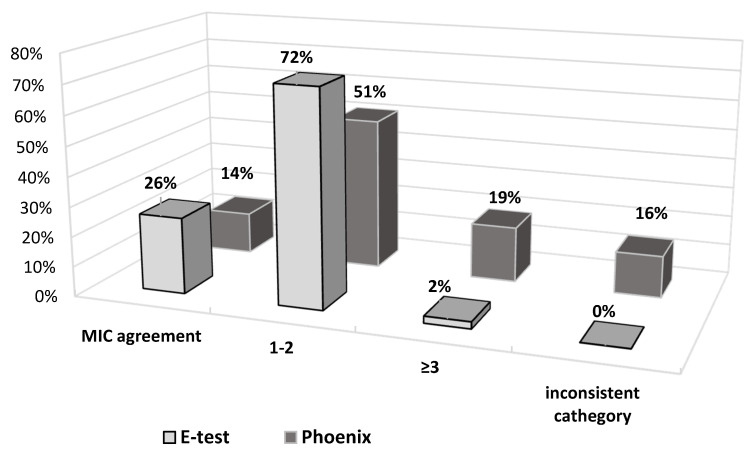
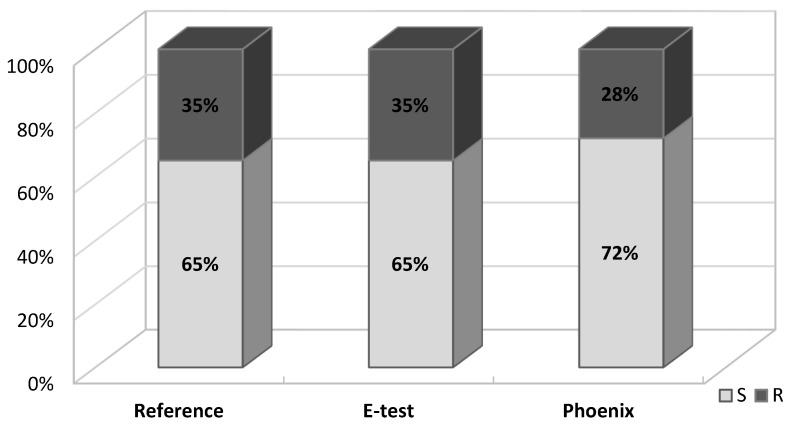
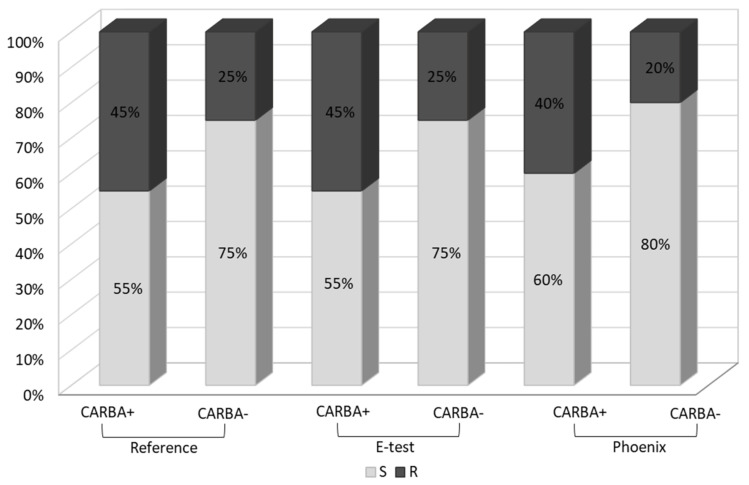
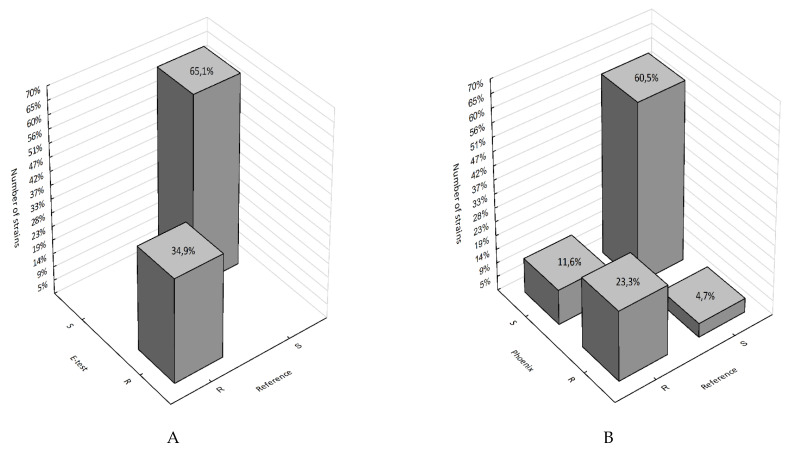
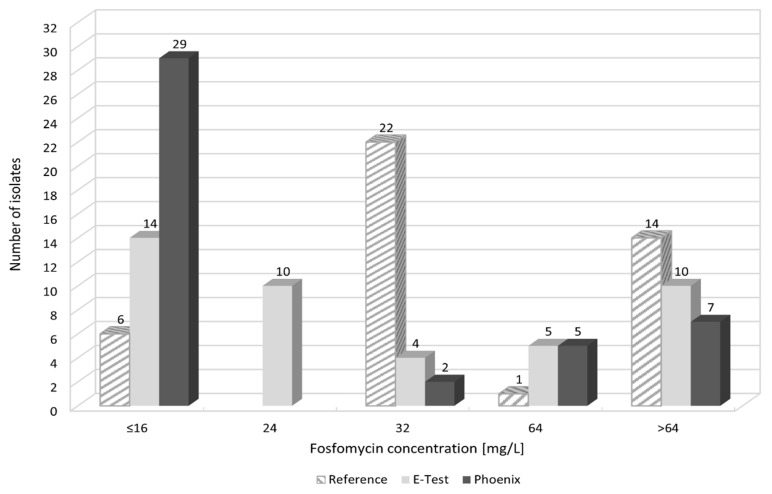
For the reference method and for the E-test, the percentage of strains sensitive to fosfomycin was 65%. For the Phoenix system, the percentage of susceptible strains was slightly higher and stood at 72%. The percentage of fosfomycin-resistant strains in the carbapenemase-producing group was higher (45% for the reference method and E-test and 40% for the Phoenix method) than in carbapenemase-negative strains (25%, 25%, and 20%, respectively). Full (100%) susceptibility categorical agreement was achieved for the E-test and the reference method. Agreement between the automated Phoenix system and the reference method reached 86%.
Fosfomycin appears to be the antibiotic with a potential for use in the treatment of infections with multidrug-resistant strains. Susceptibility to this drug is exhibited by some strains, which are resistant to colistin and carbapenems. The E-test, unlike the Phoenix method, can be an alternative to the reference method in the routine determination of fosfomycin susceptibility, as it shows agreement in terms of sensitivity categories and only slight differences in MIC values. The Phoenix system, in comparison to the reference method, shows large discrepancies in the MIC values and in the susceptibility category.
在过去几十年中,[具体菌株名称]的致病性和抗生素耐药性不断增强,从而成为一个重大的治疗挑战。少数可用的治疗选择之一似乎是静脉注射磷霉素。不幸的是,医院实验室进行的磷霉素敏感性测定可能会带来重大问题。因此,本研究的目的是评估磷霉素对2011年至2020年间从医院感染中分离出的临床多药耐药[具体菌株名称]的活性,以及评估医院实验室常规用于评估细菌对该抗生素敏感性的方法。
对从各种感染中分离出的43株多药耐药[具体菌株名称]进行了测试。所有菌株都有超广谱β-内酰胺酶(ESBL),其中20株还显示存在碳青霉烯酶。使用扩散法(E-test)和自动化系统(Phoenix)测定敏感性,并与参考方法(琼脂稀释法)进行比较。
对于参考方法和E-test,对磷霉素敏感的菌株百分比为65%。对于Phoenix系统,敏感菌株的百分比略高,为72%。产碳青霉烯酶组中对磷霉素耐药的菌株百分比(参考方法和E-test为45%,Phoenix方法为40%)高于碳青霉烯酶阴性菌株(分别为25%、25%和20%)。E-test和参考方法在完全(100%)敏感性分类一致性方面达成一致。自动化Phoenix系统与参考方法之间的一致性达到86%。
磷霉素似乎是一种有潜力用于治疗多药耐药[具体菌株名称]感染的抗生素。一些对黏菌素和碳青霉烯类耐药的菌株对该药物敏感。与Phoenix方法不同,E-test在常规测定磷霉素敏感性时可以替代参考方法,因为它在敏感性分类方面表现出一致性,且在最低抑菌浓度(MIC)值上只有轻微差异。与参考方法相比,Phoenix系统在MIC值和敏感性分类方面存在较大差异。