Department of Biological Sciences, Dartmouth College, Hanover, NH 03755, USA.
Department of Neurology, Miller School of Medicine, University of Miami, Miami, FL 33146, USA.
Int J Environ Res Public Health. 2021 Apr 24;18(9):4528. doi: 10.3390/ijerph18094528.
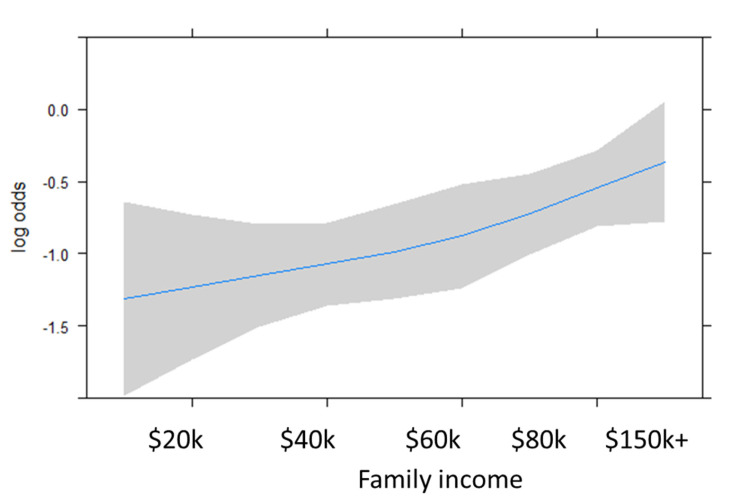
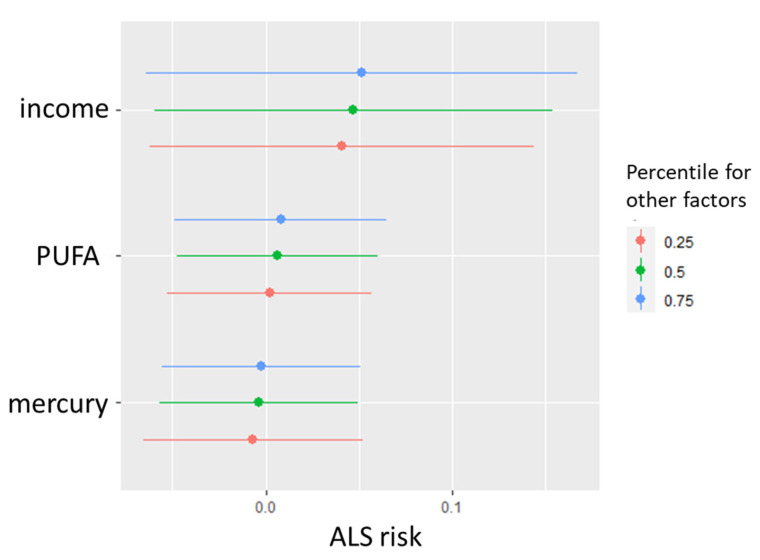
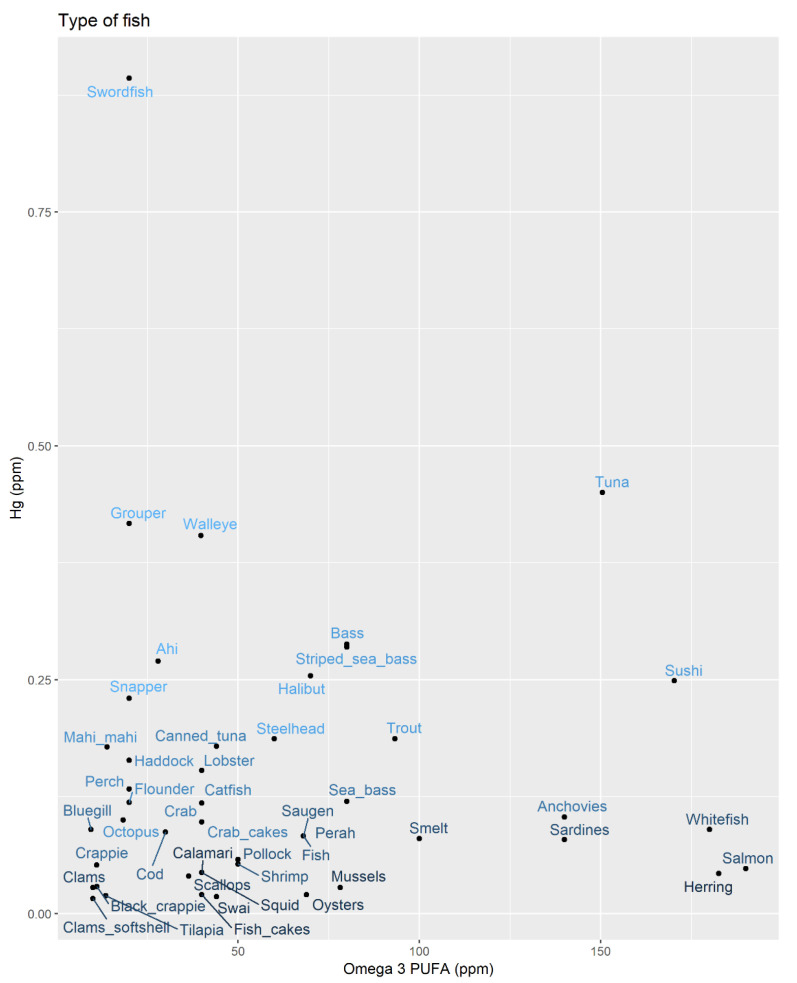
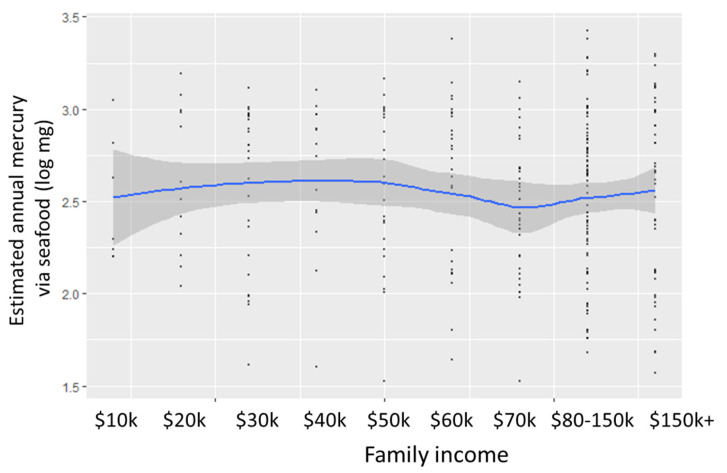
Most amyotrophic lateral sclerosis (ALS) cases are considered sporadic, without a known genetic basis, and lifestyle factors are suspected to play an etiologic role. We previously observed increased risk of ALS associated with high nail mercury levels as an exposure biomarker and thus hypothesized that mercury exposure via fish consumption patterns increases ALS risk. Lifestyle surveys were obtained from ALS patients ( = 165) and = 330 age- and sex-matched controls without ALS enrolled in New Hampshire, Vermont, or Ohio, USA. We estimated their annual intake of mercury and omega-3 polyunsaturated fatty acid (PUFA) via self-reported seafood consumption habits, including species and frequency. In our multivariable model, family income showed a significant positive association with ALS risk ( = 0.0003, adjusted for age, sex, family history, education, and race). Neither the estimated annual mercury nor omega-3 PUFA intakes via seafood were associated with ALS risk. ALS incidence is associated with socioeconomic status; however, consistent with a prior international study, this relationship is not linked to mercury intake estimated via fish or seafood consumption patterns.
大多数肌萎缩侧索硬化症(ALS)病例被认为是散发性的,没有已知的遗传基础,生活方式因素被怀疑在发病机制中起作用。我们之前观察到 ALS 与高指甲汞水平相关的风险增加,作为暴露生物标志物,因此假设通过鱼类消费模式暴露于汞会增加 ALS 风险。生活方式调查是从美国新罕布什尔州、佛蒙特州或俄亥俄州的 ALS 患者(n=165)和年龄和性别匹配的无 ALS 对照组(n=330)中获得的。我们根据自我报告的海鲜消费习惯,包括种类和频率,估计他们每年通过食用海鲜摄入的汞和欧米伽-3 多不饱和脂肪酸(PUFA)。在我们的多变量模型中,家庭收入与 ALS 风险呈显著正相关(=0.0003,调整了年龄、性别、家族史、教育和种族因素)。通过海鲜摄入估计的每年汞和欧米伽-3 PUFA 摄入量均与 ALS 风险无关。ALS 的发病率与社会经济地位有关;然而,与先前的国际研究一致,这种关系与通过鱼类或海鲜消费模式估计的汞摄入量无关。