Ph.D. Program in Translational Medicine, National Chung Hsing University, Taichung 402, Taiwan.
Institute of Biomedical Science, iEGG and Animal Biotechnology Center, National Chung-Hsing University, Taichung 402, Taiwan.
Molecules. 2021 Apr 24;26(9):2492. doi: 10.3390/molecules26092492.
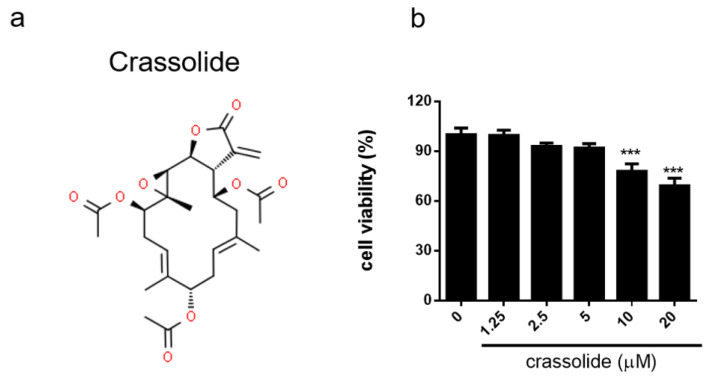
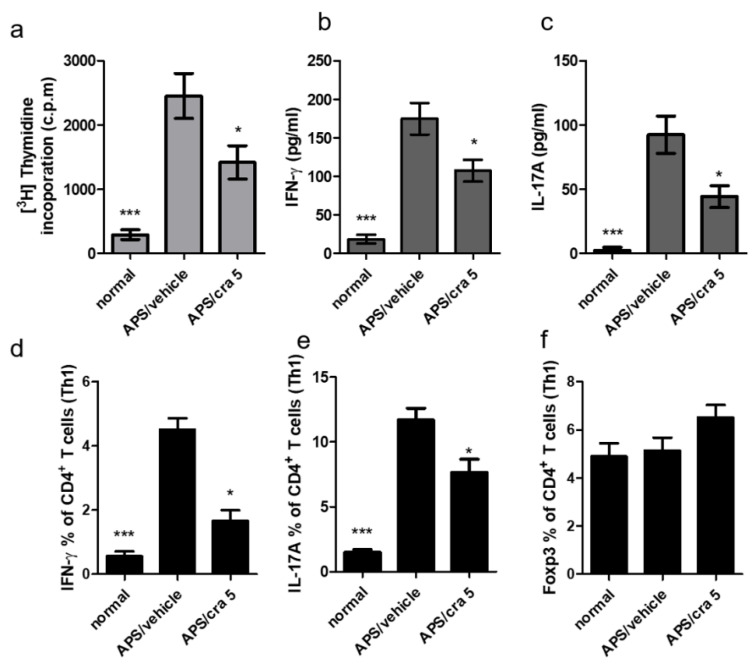
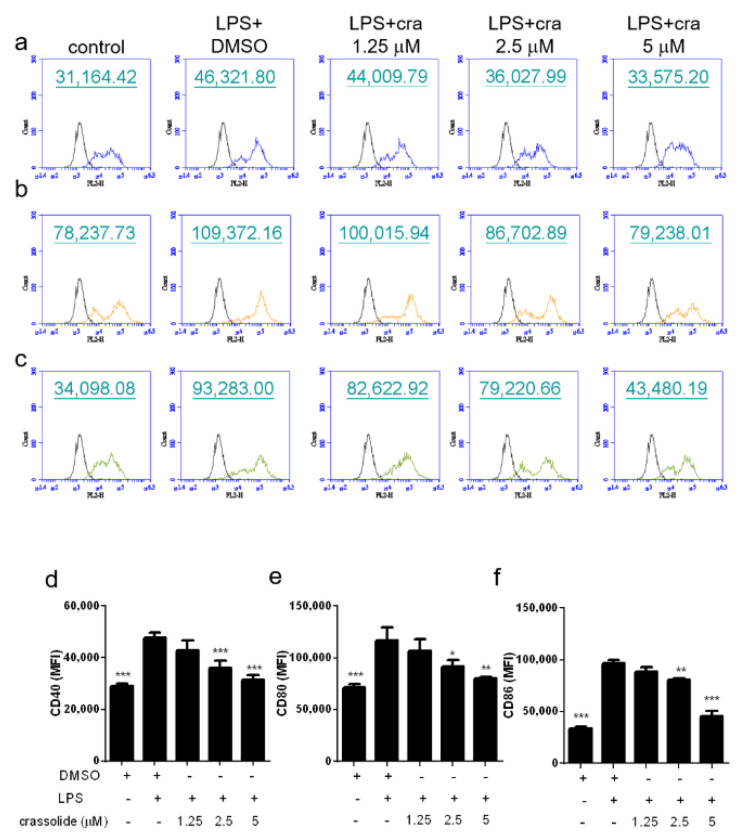
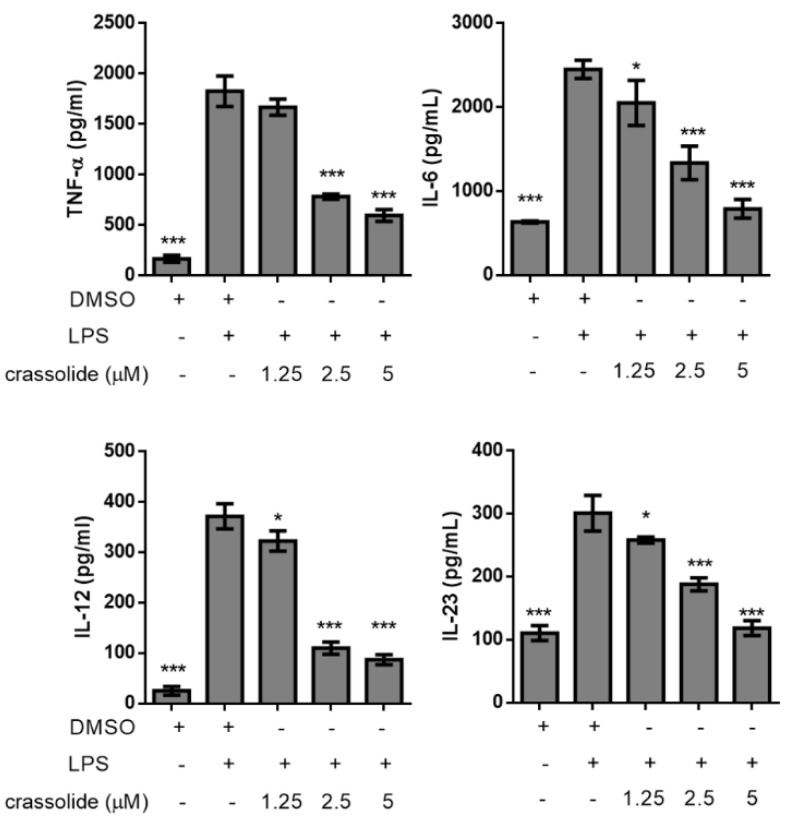
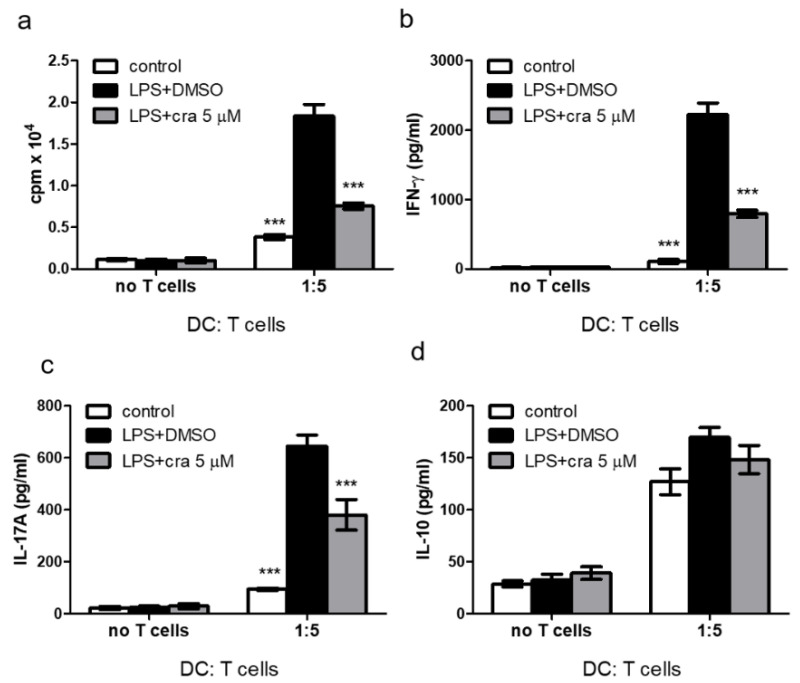
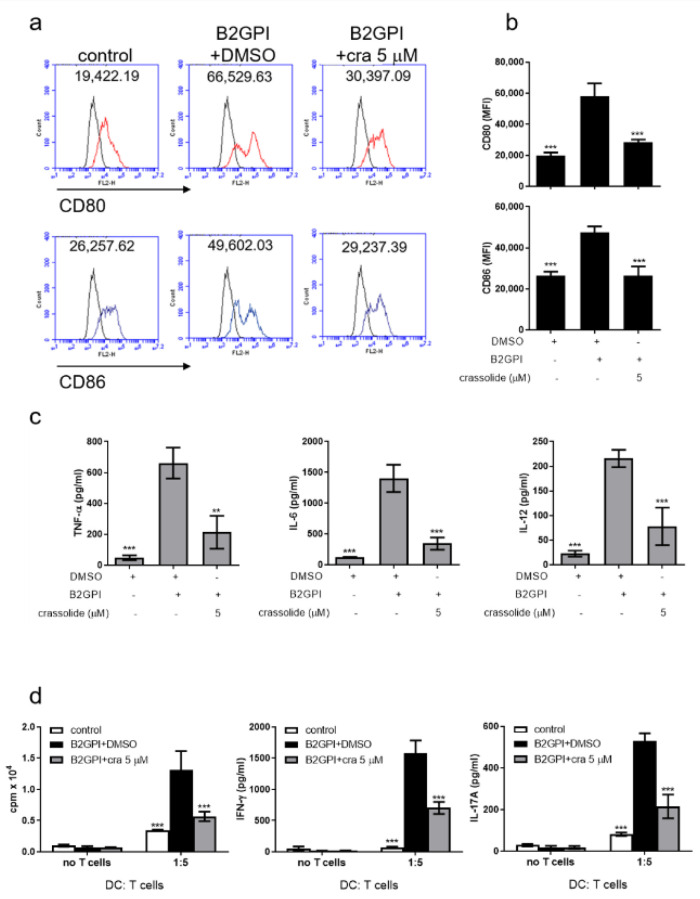
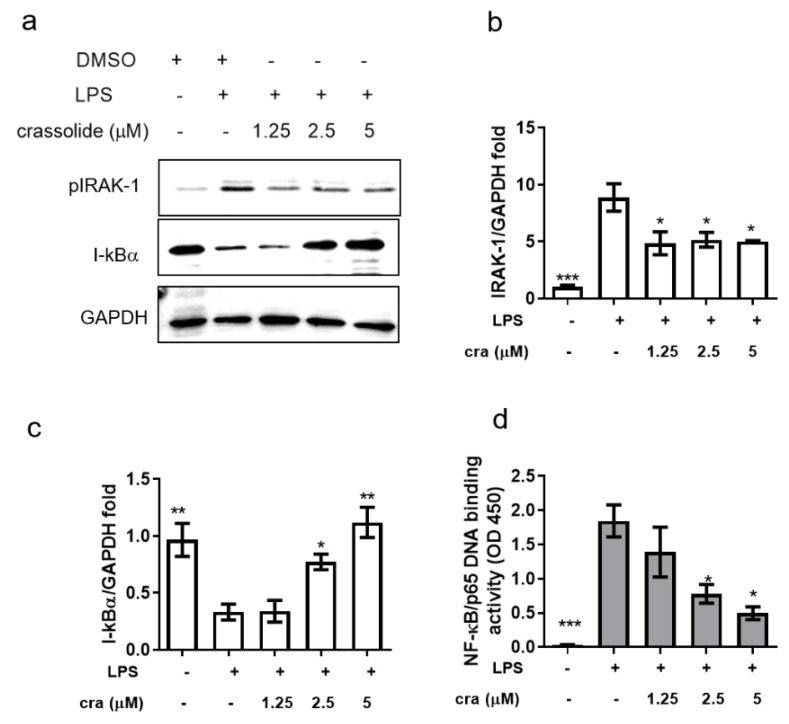
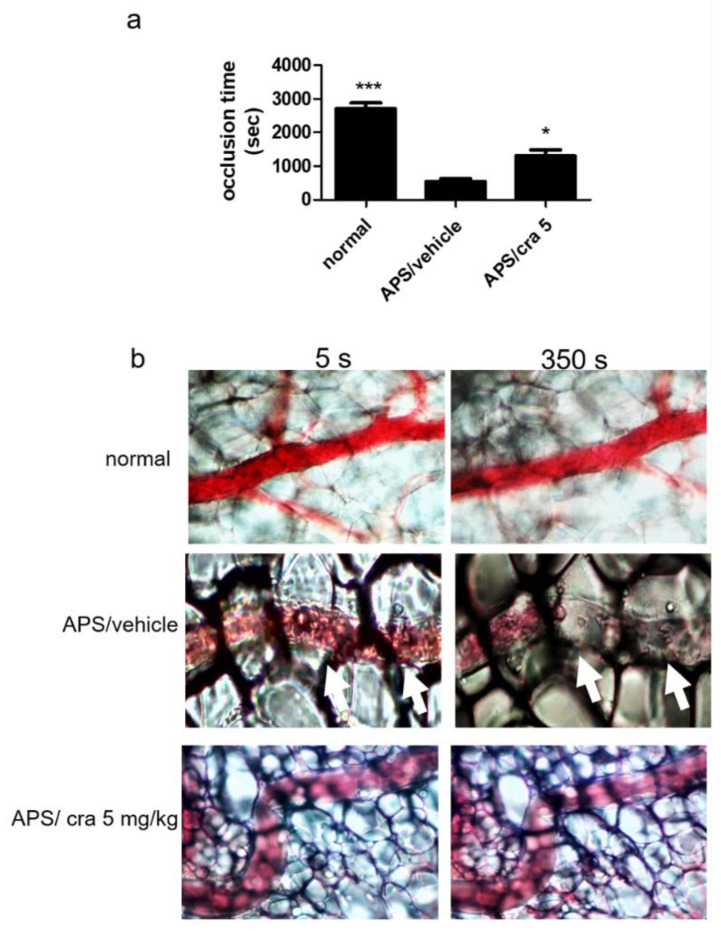
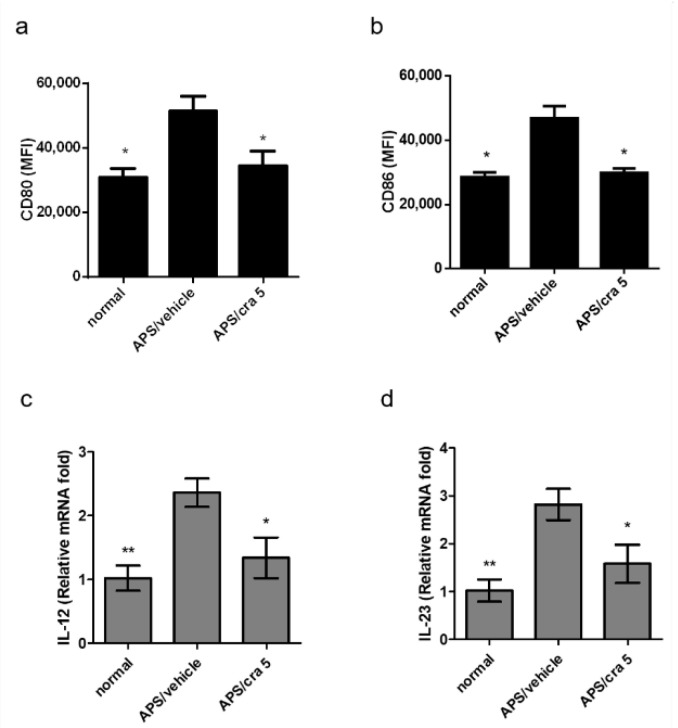
Antiphospholipid syndrome (APS) is an autoimmune disease characterized by the production of β2-glycoprotein I (β2GPI)-dependent autoantibodies, with vascular thrombosis or obstetrical complications. Around 20% of APS patients are refractory to current treatments. Crassolide, a cembranoid diterpene extracted from soft corals, is a potential therapeutic candidate. Here, to examine the anti-inflammatory properties of crassolide, we first determined its effects on bone marrow-derived and splenic dendritic cells (DC). Specifically, we applied lipopolysaccharide (LPS) or β2GPI stimulation and measured the expressions of CD80 and CD86, and secretions of cytokines. We also determined in the OT-II mice, if bone marrow-derived DC was able to stimulate antigen-specific T cells. Moreover, we examined the therapeutic potential of crassolide postimmunization in a murine model of APS that depended on active immunization with β2GPI. The vascular manifestations were evaluated in terms of fluorescein-induced thrombi in mesenteric microvessels, whereas the obstetric manifestations were evaluated based on the proportion of fetal loss after pregnancy. We also measured blood titers of anti-β2GPI antibody, splenic cell proliferative responses and cytokine secretions after β2GPI stimulation ex vivo. Finally, we determined in these mice, hematological, hepatic and renal toxicities of crassolide. Crassolide after LPS stimulation suppressed DC maturation and secretion of tumor necrosis factor (TNF)-α, interleukin (IL)-6, IL-12 and IL-23, and downstream T cell activation. Crassolide could partially ameliorate both the vascular and obstetric manifestations of APS in BALB/c mice. Both blood titers of anti-β2GPI antibody and splenic cell proliferation after β2GPI stimulation were reduced. Splenic Th1 and Th17 responses were also lowered after β2GPI stimulation. Finally, within therapeutic doses of crassolide, we found no evidence of its toxicity. In conclusion, we showed the ability of crassolide to suppress DC and downstream T cell responses. Crassolide is therefore a potential candidate for adjunctive therapy in APS.
抗磷脂综合征(APS)是一种自身免疫性疾病,其特征为产生β2-糖蛋白 I(β2GPI)依赖性自身抗体,并伴有血管血栓形成或产科并发症。大约 20%的 APS 患者对现有治疗方法无反应。克罗斯罗内酯是一种从软珊瑚中提取的枞烷二萜,是一种有前途的治疗候选药物。在这里,为了研究克罗斯罗内酯的抗炎特性,我们首先确定了它对骨髓来源和脾树突状细胞(DC)的影响。具体来说,我们应用脂多糖(LPS)或β2GPI 刺激,并测量 CD80 和 CD86 的表达以及细胞因子的分泌。我们还在 OT-II 小鼠中确定,骨髓来源的 DC 是否能够刺激抗原特异性 T 细胞。此外,我们还在一种依赖于用β2GPI 主动免疫的 APS 小鼠模型中检查了克罗斯罗内酯的治疗潜力。通过测量肠系膜微血管中荧光素诱导的血栓来评估血管表现,而通过妊娠后胎儿丢失的比例来评估产科表现。我们还测量了β2GPI 刺激后血液中抗β2GPI 抗体的滴度、脾细胞增殖反应和细胞因子的分泌。最后,我们在这些小鼠中测定了克罗斯罗内酯的血液学、肝和肾毒性。克罗斯罗内酯在 LPS 刺激后抑制 DC 成熟和肿瘤坏死因子(TNF)-α、白细胞介素(IL)-6、IL-12 和 IL-23 的分泌,以及下游 T 细胞的激活。克罗斯罗内酯可部分改善 BALB/c 小鼠的 APS 血管和产科表现。β2GPI 刺激后的血液中抗β2GPI 抗体的滴度和脾细胞增殖均降低。β2GPI 刺激后脾 Th1 和 Th17 反应也降低。最后,在克罗斯罗内酯的治疗剂量内,我们没有发现其毒性的证据。总之,我们表明克罗斯罗内酯能够抑制 DC 和下游 T 细胞的反应。因此,克罗斯罗内酯是 APS 辅助治疗的潜在候选药物。