Du Juan, Carroll Rory S, Steers Garett J, Wagner Brett A, O'Leary Brianne R, Jensen Chris S, Buettner Garry R, Cullen Joseph J
Free Radical and Radiation Biology Program, Department of Radiation Oncology, The University of Iowa Carver College of Medicine, Iowa City, IA 52242, USA.
Department of Surgery, The University of Iowa Carver College of Medicine, Iowa City, IA 52242, USA.
Antioxidants (Basel). 2021 Apr 16;10(4):614. doi: 10.3390/antiox10040614.
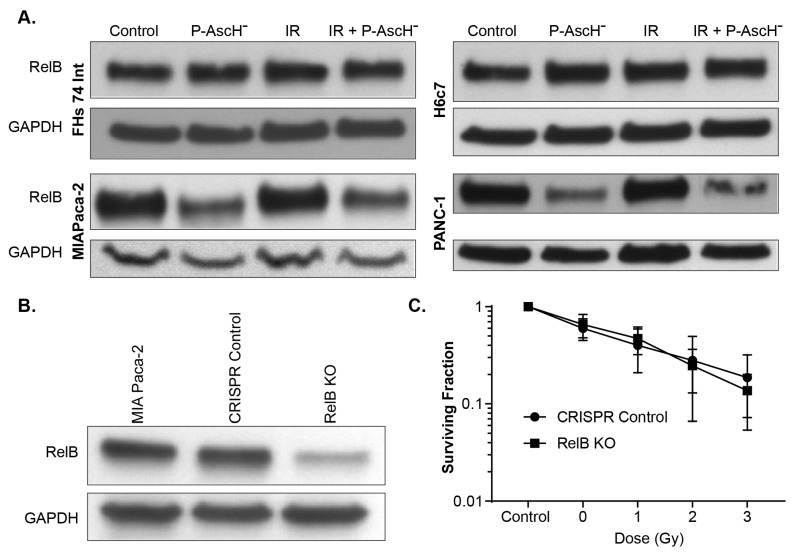
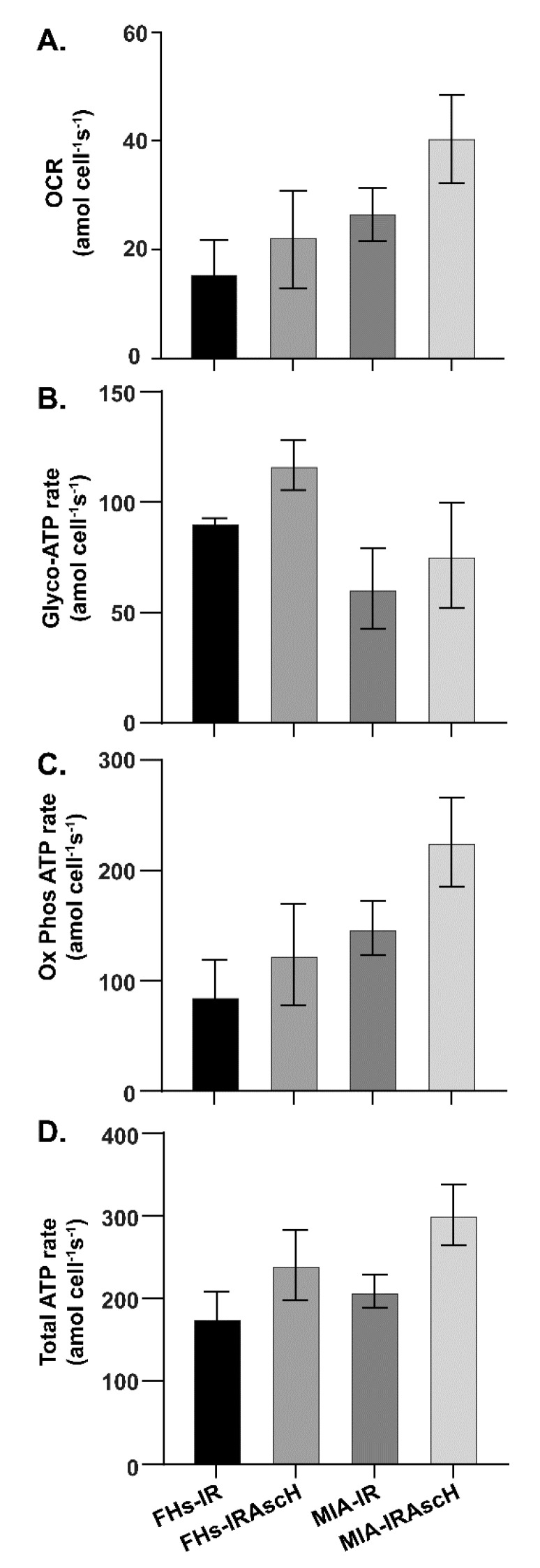
Pancreatic cancer cells (PDACs) are more susceptible to an oxidative insult than normal cells, resulting in greater cytotoxicity upon exposure to agents that increase pro-oxidant levels. Pharmacological ascorbate (P-AscH), i.e., large amounts given intravenously (IV), generates significant fluxes of hydrogen peroxide (HO), resulting in the killing of PDACs but not normal cells. Recent studies have demonstrated that P-AscH radio-sensitizes PDAC but is a radioprotector to normal cells and tissues. Several mechanisms have been hypothesized to explain the dual roles of P-AscH in radiation-induced toxicity including the activation of nuclear factor-erythroid 2-related factor 2 (Nrf2), RelB, as well as changes in bioenergetic profiles. We have found that P-AscH in conjunction with radiation increases Nrf2 in both cancer cells and normal cells. Although P-AscH with radiation decreases RelB in cancer cells vs. normal cells, the knockout of RelB does not radio-sensitize PDACs. Cellular bioenergetic profiles demonstrate that P-AscH with radiation increases the ATP demand/production rate (glycolytic and oxidative phosphorylation) in both PDACs and normal cells. Knocking out catalase results in P-AscH radio-sensitization in PDACs. In a phase I trial where P-AscH was included as an adjuvant to the standard of care, short-term survivors had higher catalase levels in tumor tissue, compared to long-term survivors. These data suggest that P-AscH radio-sensitizes PDACs through increased peroxide flux. Catalase levels could be a possible indicator for how tumors will respond to P-AscH.
胰腺癌细胞(PDACs)比正常细胞更容易受到氧化损伤,因此在接触能提高促氧化剂水平的药物时,会产生更大的细胞毒性。药理剂量的抗坏血酸(P-AscH),即静脉内大量给予,会产生大量的过氧化氢(HO),导致PDACs死亡,但对正常细胞无影响。最近的研究表明,P-AscH可使PDAC对放疗增敏,但对正常细胞和组织具有放射保护作用。已经提出了几种机制来解释P-AscH在辐射诱导毒性中的双重作用,包括核因子红细胞2相关因子2(Nrf2)、RelB的激活以及生物能量谱的变化。我们发现,P-AscH与放疗联合使用会使癌细胞和正常细胞中的Nrf2均增加。虽然与正常细胞相比,P-AscH联合放疗会使癌细胞中的RelB减少,但敲除RelB并不会使PDACs对放疗增敏。细胞生物能量谱表明,P-AscH联合放疗会增加PDACs和正常细胞中的ATP需求/产生率(糖酵解和氧化磷酸化)。敲除过氧化氢酶会导致PDACs对P-AscH放疗增敏。在一项将P-AscH作为标准治疗辅助药物的I期试验中,与长期存活者相比,短期存活者肿瘤组织中的过氧化氢酶水平更高。这些数据表明,P-AscH通过增加过氧化物通量使PDACs对放疗增敏。过氧化氢酶水平可能是肿瘤对P-AscH反应的一个潜在指标。