Department of Animal Developmental Biology, Faculty of Biological Sciences, University of Wroclaw, 50-335 Wroclaw, Poland.
Cells. 2021 Apr 13;10(4):883. doi: 10.3390/cells10040883.
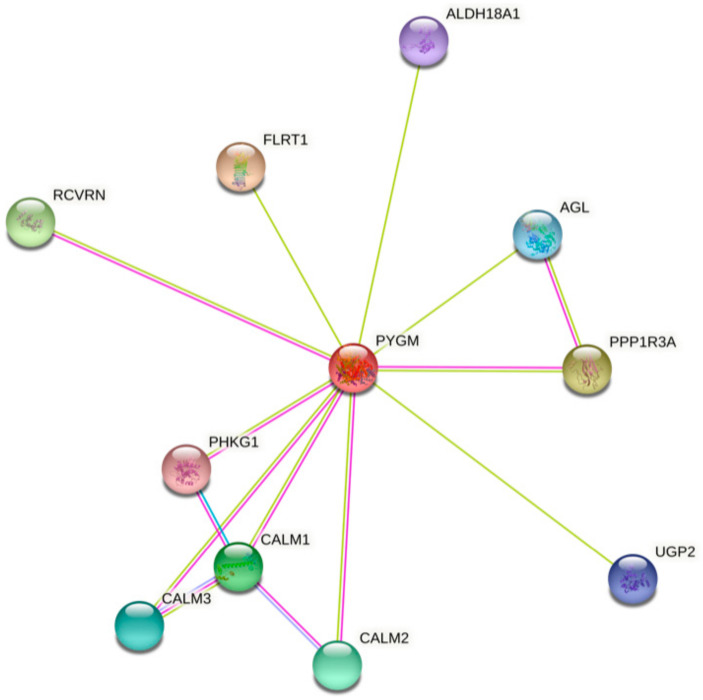
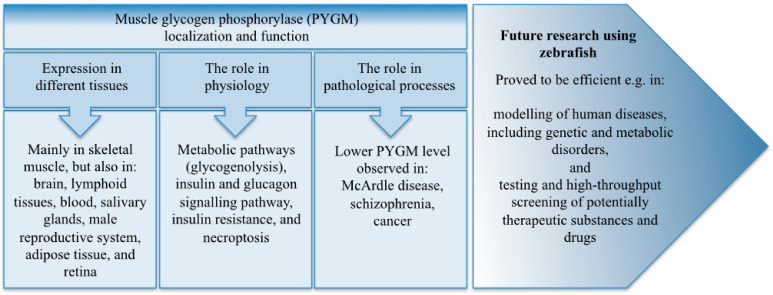
Glycogen phosphorylase (PG) is a key enzyme taking part in the first step of glycogenolysis. Muscle glycogen phosphorylase (PYGM) differs from other PG isoforms in expression pattern and biochemical properties. The main role of PYGM is providing sufficient energy for muscle contraction. However, it is expressed in tissues other than muscle, such as the brain, lymphoid tissues, and blood. PYGM is important not only in glycogen metabolism, but also in such diverse processes as the insulin and glucagon signaling pathway, insulin resistance, necroptosis, immune response, and phototransduction. PYGM is implicated in several pathological states, such as muscle glycogen phosphorylase deficiency (McArdle disease), schizophrenia, and cancer. Here we attempt to analyze the available data regarding the protein partners of PYGM to shed light on its possible interactions and functions. We also underline the potential for zebrafish to become a convenient and applicable model to study PYGM functions, especially because of its unique features that can complement data obtained from other approaches.
糖原磷酸化酶(PG)是参与糖原分解第一步的关键酶。肌肉糖原磷酸化酶(PYGM)在表达模式和生化特性上与其他 PG 同工酶不同。PYGM 的主要作用是为肌肉收缩提供足够的能量。然而,它不仅在肌肉组织中表达,还在大脑、淋巴组织和血液等组织中表达。PYGM 不仅在糖原代谢中很重要,而且在胰岛素和胰高血糖素信号通路、胰岛素抵抗、坏死性凋亡、免疫反应和光转导等多种过程中也很重要。PYGM 与几种病理状态有关,如肌肉糖原磷酸化酶缺乏症(McArdle 病)、精神分裂症和癌症。在这里,我们试图分析关于 PYGM 蛋白伴侣的现有数据,以阐明其可能的相互作用和功能。我们还强调了斑马鱼成为研究 PYGM 功能的一种方便和适用模型的潜力,特别是因为其独特的特征可以补充从其他方法获得的数据。