Department of Otolaryngology-Head and Neck Surgery, School of Medicine, University of Colorado Anschutz Medical Campus, Aurora, CO 80045, USA.
Center for Children's Surgery, Children's Hospital Colorado, Aurora, CO 80045, USA.
Genes (Basel). 2021 Apr 13;12(4):566. doi: 10.3390/genes12040566.
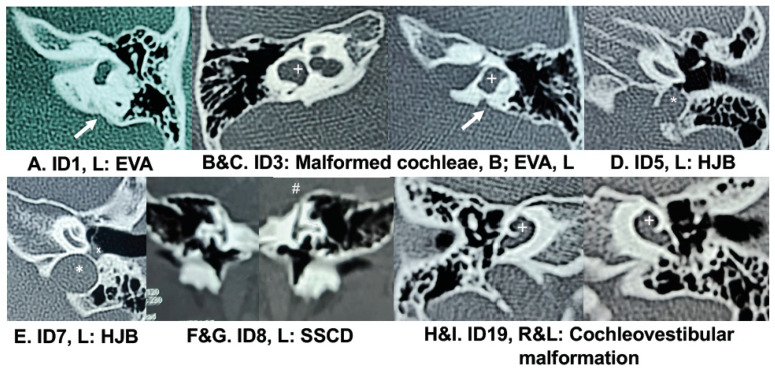
Hearing loss remains an important global health problem that is potentially addressed through early identification of a genetic etiology, which helps to predict outcomes of hearing rehabilitation such as cochlear implantation and also to mitigate the long-term effects of comorbidities. The identification of variants for hearing loss and detailed descriptions of clinical phenotypes in patients from various populations are needed to improve the utility of clinical genetic screening for hearing loss. Clinical and exome data from 15 children with hearing loss were reviewed. Standard tools for annotating variants were used and rare, putatively deleterious variants were selected from the exome data. In 15 children, 21 rare damaging variants in 17 genes were identified, including: 14 known hearing loss or neurodevelopmental genes, 11 of which had novel variants; and three candidate genes , and , two of which were identified in children with both hearing loss and enlarged vestibular aqueducts. Patients with variants within and had poorer outcomes after cochlear implantation. Our findings highlight the importance of identifying novel variants and genes in ethnic groups that are understudied for hearing loss.
听力损失仍然是一个重要的全球健康问题,可以通过早期确定遗传病因来解决,这有助于预测听力康复(如人工耳蜗植入)的结果,并减轻合并症的长期影响。需要对来自不同人群的患者的听力损失变体进行鉴定,并对临床表型进行详细描述,以提高临床遗传筛查在听力损失方面的应用。对 15 名听力损失儿童的临床和外显子数据进行了回顾。使用了用于注释变体的标准工具,并从外显子数据中选择了罕见的、可能有害的变体。在 15 名儿童中,确定了 17 个基因中的 21 个罕见的破坏性变体,包括:14 个已知的听力损失或神经发育基因,其中 11 个具有新的变体;以及 3 个候选基因,其中 2 个在既有听力损失又有扩大的前庭水管的儿童中被发现。在 和 内有变异的患者在人工耳蜗植入后的结果较差。我们的发现强调了在听力损失研究不足的种族群体中识别新的变体和基因的重要性。