Chen Mianhong, Li Ruyi, Gao Yuanyuan, Zheng Yeyu, Liao Liangkun, Cao Yupo, Li Jihua, Zhou Wei
Key Laboratory of Tropical Crop Products Processing of Ministry of Agriculture and Rural Affairs, Agricultural Products Processing Research Institute, Chinese Academy of Tropical Agricultural Sciences, Zhanjiang 524001, China.
State Key Laboratory of Food Science and Technology, Nanchang University, Nanchang 330047, China.
Foods. 2021 Apr 28;10(5):963. doi: 10.3390/foods10050963.
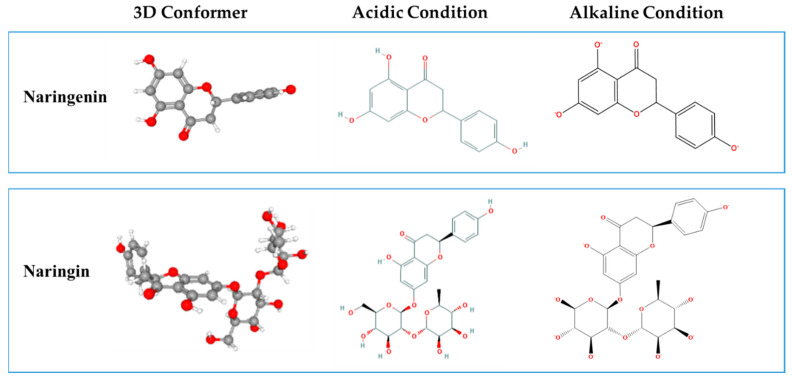
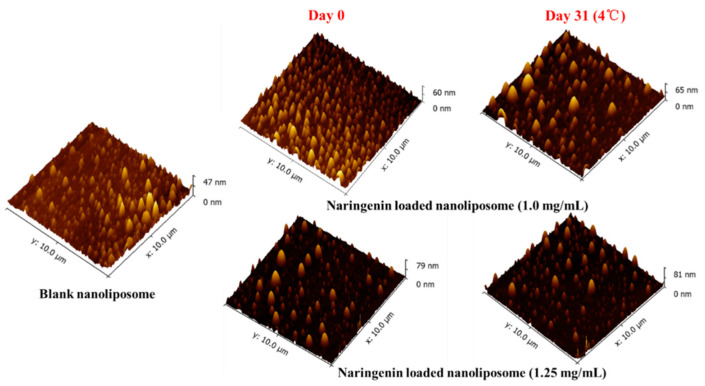
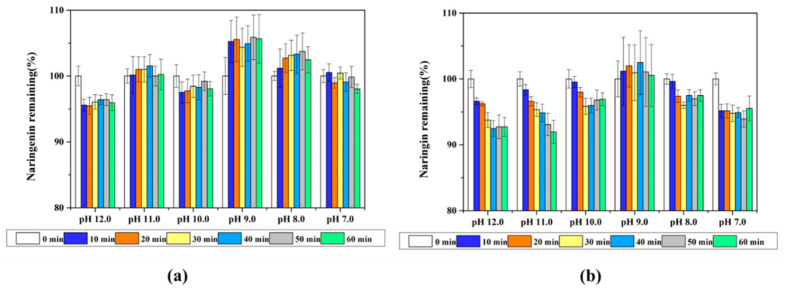
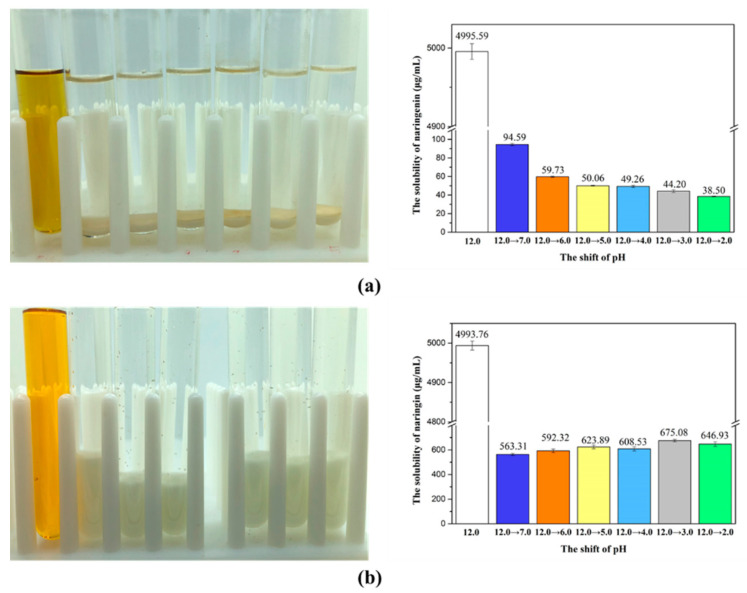
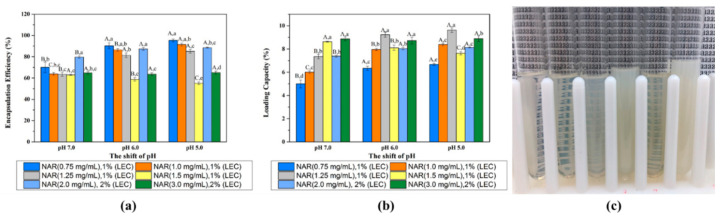
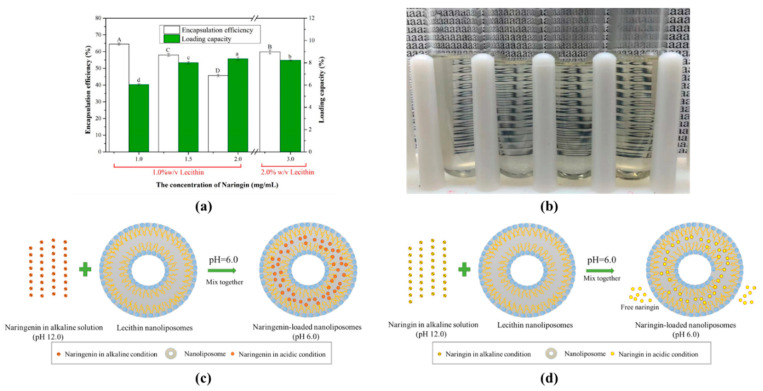
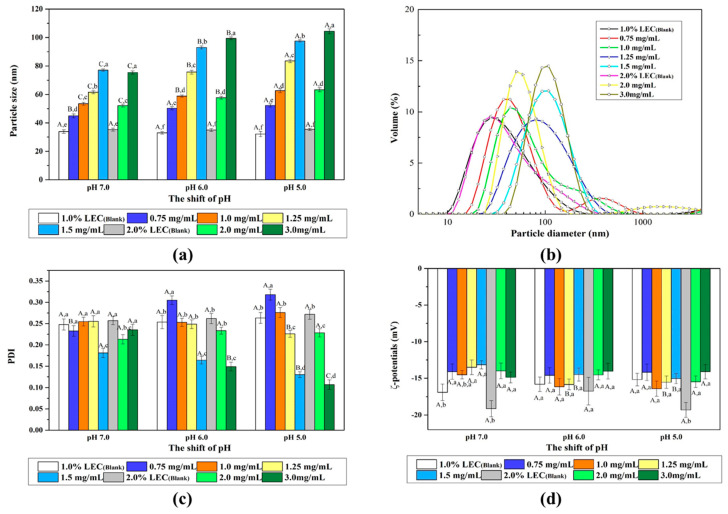
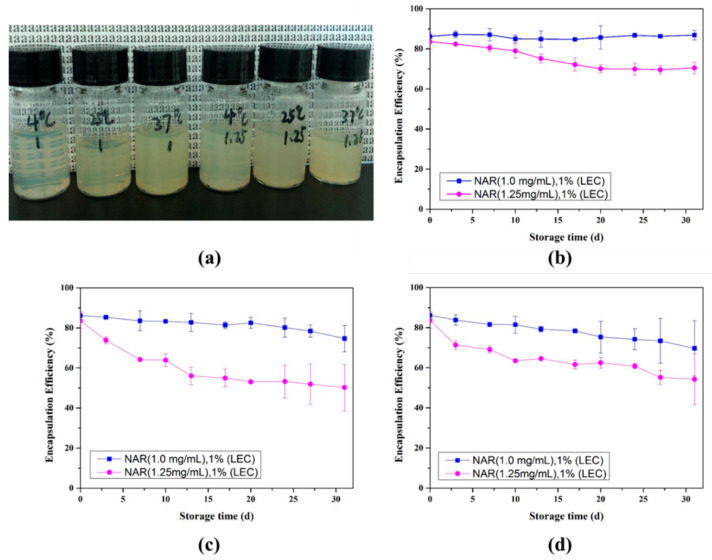
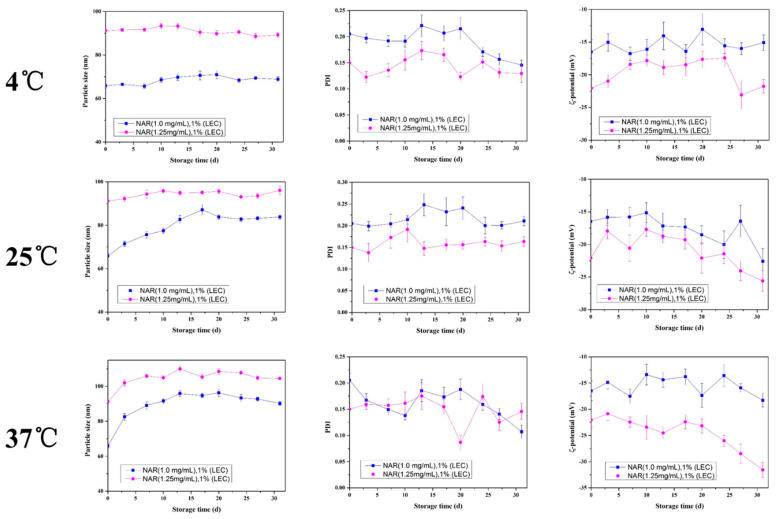
Naringenin and naringin are a class of hydrophobic polyphenol compounds and both have several biological activities containing antioxidant, anti-inflammatory and anti-tumor properties. Nevertheless, they have low water solubility and bioavailability, which limits their biological activity. In this study, an easy pH-driven method was applied to load naringenin or naringin into nanoliposomes based on the gradual reduction in their water solubility after the pH changed to acidity. Thus, the naringenin or naringin can be embedded into the hydrophobic region within nanoliposomes from the aqueous phase. A series of naringenin/naringin-loaded nanoliposomes with different pH values, lecithin contents and feeding naringenin/naringin concentrations were prepared by microfluidization and a pH-driven method. The naringin-loaded nanoliposome contained some free naringin due to its higher water solubility at lower pH values and had a relatively low encapsulation efficiency. However, the naringenin-loaded nanoliposomes were predominantly nanometric (44.95-104.4 nm), negatively charged (-14.1 to -19.3 mV) and exhibited relatively high encapsulation efficiency (EE = 95.34% for 0.75 mg/mL naringenin within 1% lecithin). Additionally, the naringenin-loaded nanoliposomes still maintained good stability during 31 days of storage at 4 °C. This study may help to develop novel food-grade colloidal delivery systems and apply them to introducing naringenin or other lipophilic polyphenols into foods, supplements or drugs.
柚皮素和柚皮苷是一类疏水性多酚化合物,二者均具有多种生物活性,包括抗氧化、抗炎和抗肿瘤特性。然而,它们的水溶性和生物利用度较低,这限制了它们的生物活性。在本研究中,基于pH值变为酸性后其水溶性逐渐降低,采用了一种简便的pH驱动方法将柚皮素或柚皮苷负载到纳米脂质体中。因此,柚皮素或柚皮苷可以从水相嵌入纳米脂质体的疏水区域。通过微流化和pH驱动方法制备了一系列具有不同pH值、卵磷脂含量和柚皮素/柚皮苷进料浓度的负载柚皮素/柚皮苷的纳米脂质体。由于柚皮苷在较低pH值下具有较高的水溶性,负载柚皮苷的纳米脂质体含有一些游离柚皮苷,并且包封率相对较低。然而,负载柚皮素的纳米脂质体主要为纳米级(44.95 - 104.4 nm),带负电荷(-14.1至-19.3 mV),并且表现出相对较高的包封率(对于1%卵磷脂中0.75 mg/mL的柚皮素,EE = 95.34%)。此外,负载柚皮素的纳米脂质体在4℃储存31天期间仍保持良好的稳定性。本研究可能有助于开发新型食品级胶体递送系统,并将其应用于将柚皮素或其他亲脂性多酚引入食品、补充剂或药物中。