Shaffaf Tina, Ghafar-Zadeh Ebrahim
Biologically Inspired Sensors and Actuators Laboratory (BioSA), York University, Toronto, ON M3J1P3, Canada.
Department of Biology, Faculty of Science, York University, Toronto, ON M3J1P3, Canada.
Bioengineering (Basel). 2021 Apr 28;8(5):54. doi: 10.3390/bioengineering8050054.
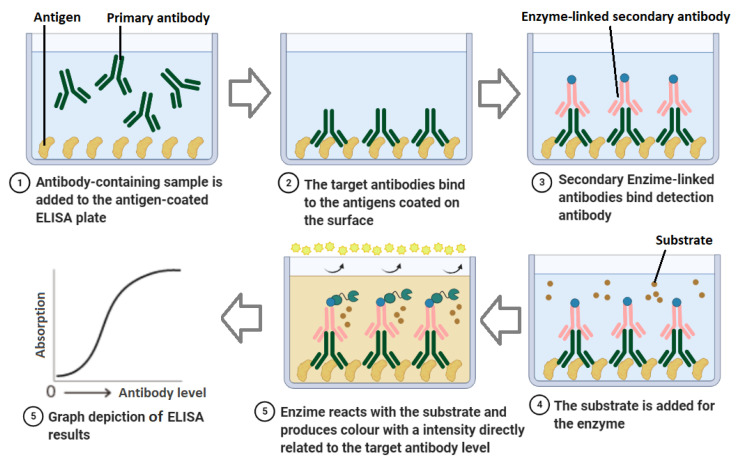
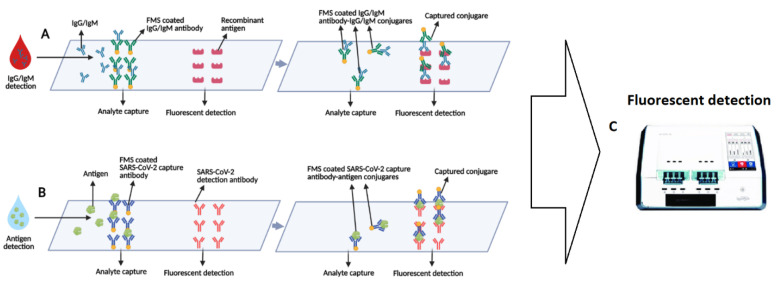
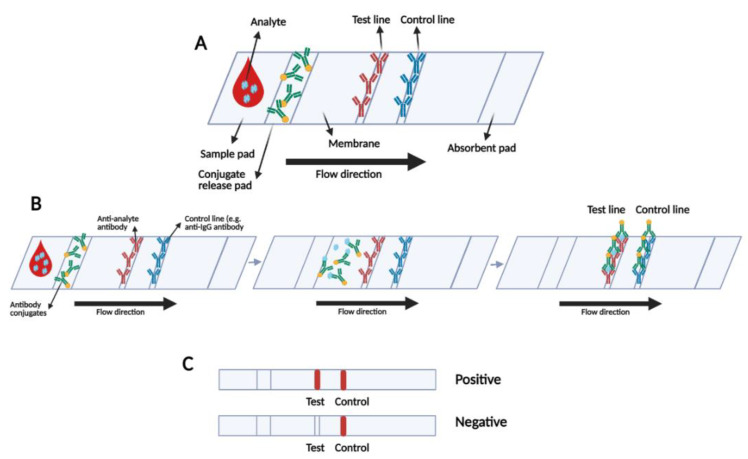
After the initiation of the current outbreak, humans' lives have been profoundly impacted by COVID-19. During the first months, no rapid and reliable detecting tool was readily available to sufficiently respond to the requirement of massive testing. In this situation, when the development of an effective vaccine requires at least a few months, it is crucial to be prepared by developing and commercializing affordable, accurate, rapid and adaptable biosensors not only to fight Severe Acute Respiratory Syndrome Coronavirus 2 (SARS-CoV-2) but also to be armed to avoid the pandemic in the earliest stages in the future. The COVID-19 diagnostic tools are categorized into two main groups of Nucleic Acid (NA)-based and protein-based tests. To date, nucleic acid-based detection has been announced as the gold-standard strategy for coronavirus detection; however, protein-based tests are promising alternatives for rapid and large-scale screening of susceptible groups. In this review, we discuss the current protein-based biosensing tools, the research advances and the potential protein-detecting strategies for COVID-19 detection. This narrative review aims to highlight the importance of the diagnostic tests, encourage the academic research groups and the companies to eliminate the shortcomings of the current techniques and step forward to mass-producing reliable point-of-care (POC) and point-of-need (PON) adaptable diagnostic tools for large-scale screening in the future outbreaks.
在当前疫情爆发后,人类生活受到了新冠病毒病(COVID-19)的深远影响。在最初的几个月里,没有快速可靠的检测工具能够充分满足大规模检测的需求。在这种情况下,由于开发一种有效的疫苗至少需要几个月的时间,因此通过开发和商业化价格合理、准确、快速且适应性强的生物传感器来做好准备至关重要,这不仅有助于对抗严重急性呼吸综合征冠状病毒2(SARS-CoV-2),还能在未来尽早阶段预防大流行。COVID-19诊断工具主要分为基于核酸(NA)的检测和基于蛋白质的检测两大类。迄今为止,基于核酸的检测已被宣布为冠状病毒检测的金标准策略;然而,基于蛋白质的检测是对易感人群进行快速大规模筛查的有前景的替代方法。在本综述中,我们讨论了当前基于蛋白质的生物传感工具、研究进展以及用于COVID-19检测的潜在蛋白质检测策略。这篇叙述性综述旨在强调诊断测试的重要性,鼓励学术研究团队和公司消除当前技术的缺点,并向前迈进,大规模生产可靠的即时检测(POC)和按需检测(PON)适应性诊断工具,以便在未来疫情爆发时进行大规模筛查。