Sp Nipin, Kang Dong Young, Lee Jin-Moo, Bae Se Won, Jang Kyoung-Jin
Department of Pathology, School of Medicine, Institute of Biomedical Science and Technology, Konkuk University, Chungju 27478, Korea.
Pharmacological Research Division, National Institute of Food and Drug Safety Evaluation, Osong Health Technology Administration Complex, Cheongju 28159, Korea.
Int J Mol Sci. 2021 Apr 28;22(9):4660. doi: 10.3390/ijms22094660.
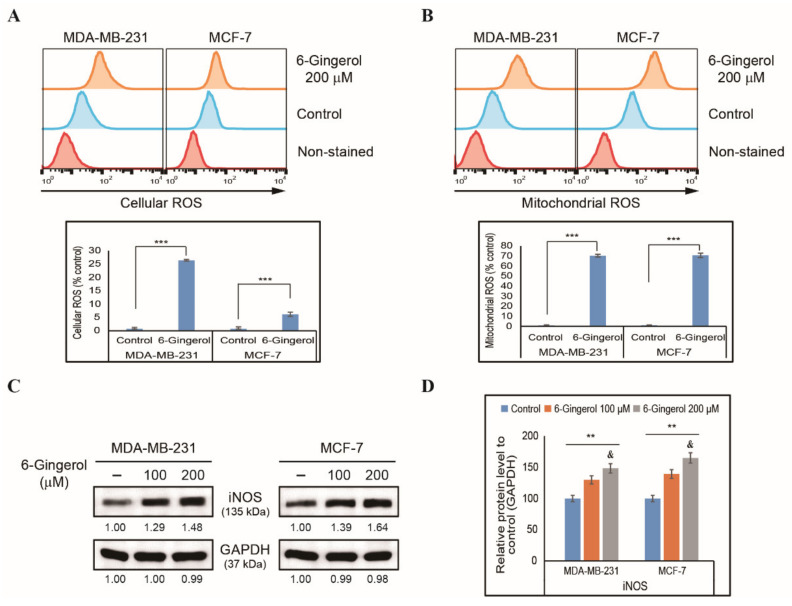
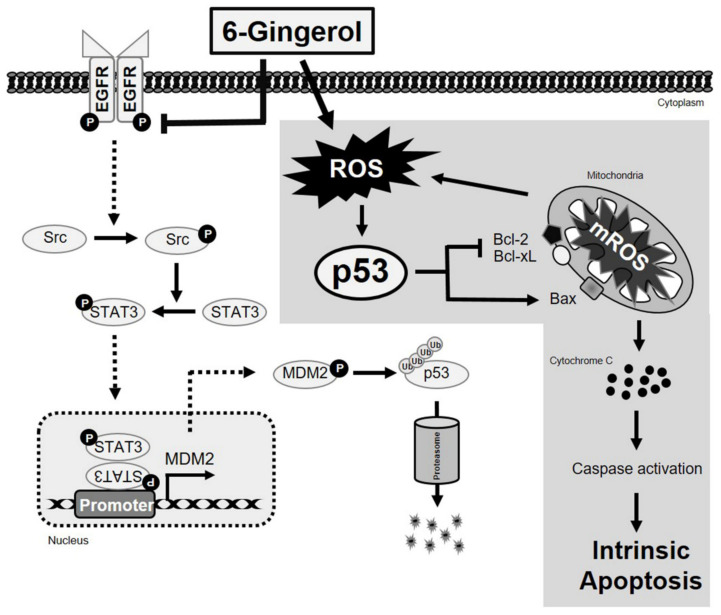
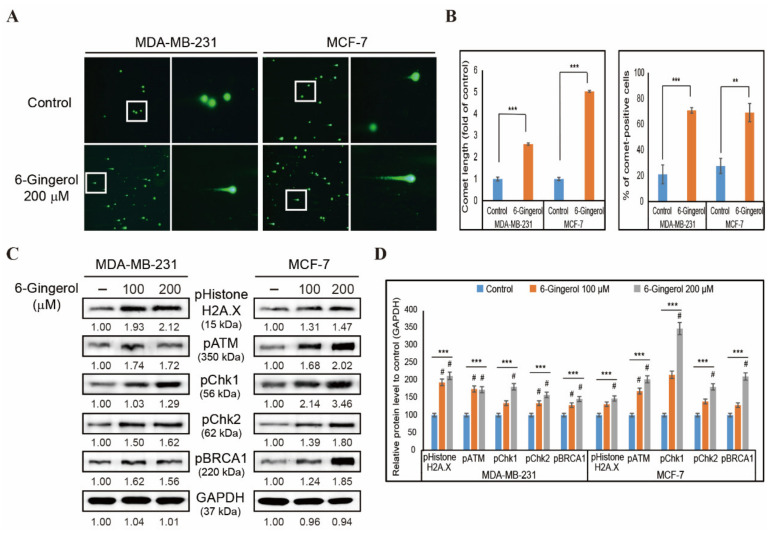
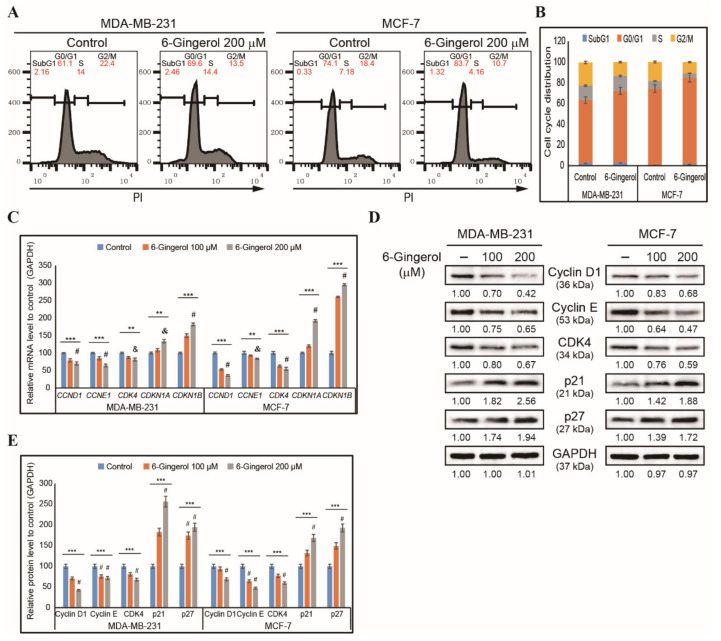
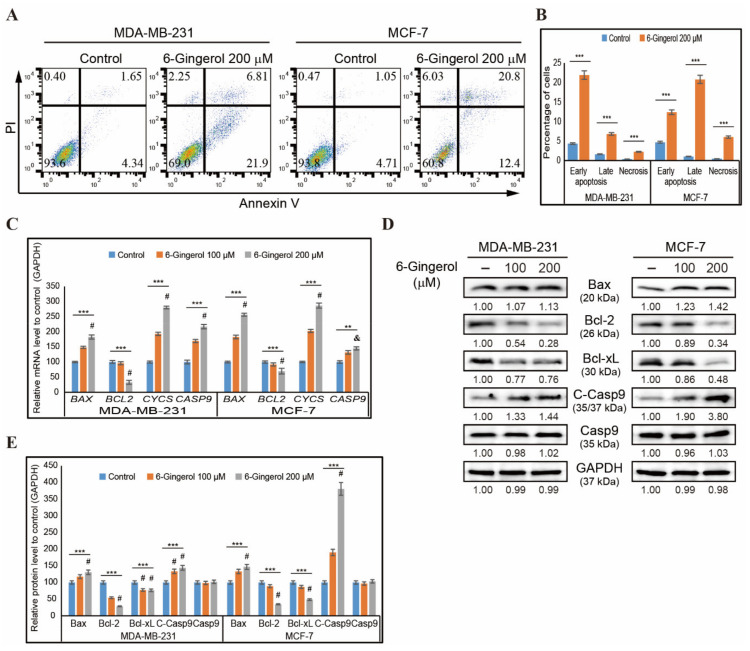
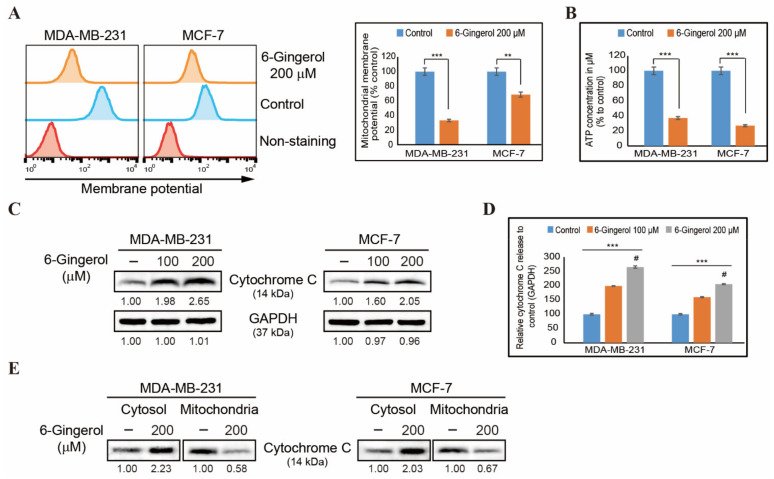
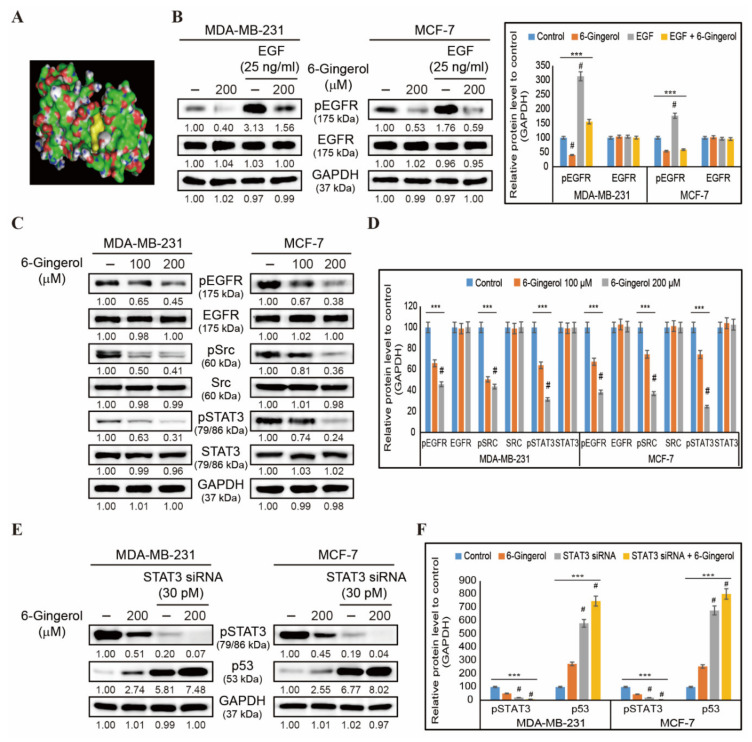
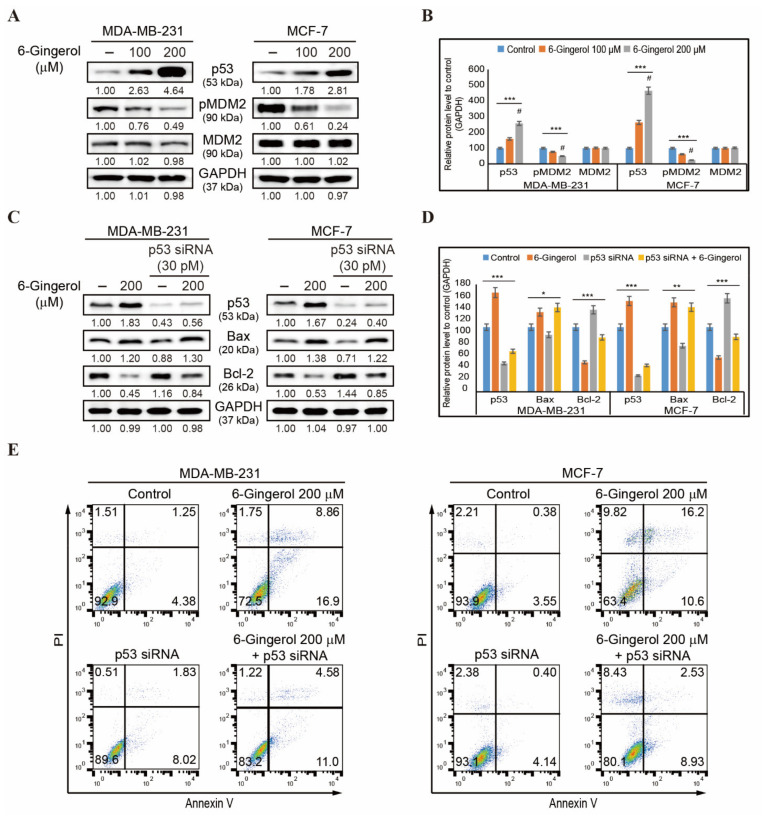
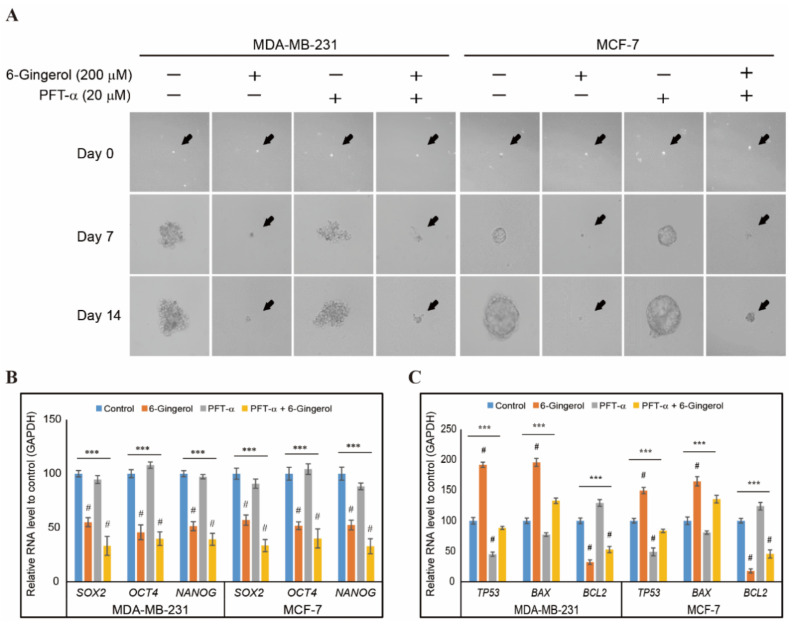
Hormone-specific anticancer drugs for breast cancer treatment can cause serious side effects. Thus, treatment with natural compounds has been considered a better approach as this minimizes side effects and has multiple targets. 6-Gingerol is an active polyphenol in ginger with various modalities, including anticancer activity, although its mechanism of action remains unknown. Increases in the level of reactive oxygen species (ROS) can lead to DNA damage and the induction of DNA damage response (DDR) mechanism, leading to cell cycle arrest apoptosis and tumorsphere suppression. Epidermal growth factor receptor (EGFR) promotes tumor growth by stimulating signaling of downstream targets that in turn activates tumor protein 53 (p53) to promote apoptosis. Here we assessed the effect of 6-gingerol treatment on MDA-MB-231 and MCF-7 breast cancer cell lines. 6-Gingerol induced cellular and mitochondrial ROS that elevated DDR through ataxia-telangiectasia mutated and p53 activation. 6-Gingerol also induced G0/G1 cell cycle arrest and mitochondrial apoptosis by mediating the BAX/BCL-2 ratio and release of cytochrome c. It also exhibited a suppression ability of tumorsphere formation in breast cancer cells. EGFR/Src/STAT3 signaling was also determined to be responsible for p53 activation and that 6-gingerol induced p53-dependent intrinsic apoptosis in breast cancer cells. Therefore, 6-gingerol may be used as a candidate drug against hormone-dependent breast cancer cells.
用于乳腺癌治疗的激素特异性抗癌药物会引起严重的副作用。因此,使用天然化合物进行治疗被认为是一种更好的方法,因为这种方法能将副作用降至最低且具有多个靶点。6-姜酚是生姜中的一种活性多酚,具有多种作用方式,包括抗癌活性,但其作用机制尚不清楚。活性氧(ROS)水平的升高会导致DNA损伤并诱导DNA损伤反应(DDR)机制,从而导致细胞周期停滞、凋亡和肿瘤球抑制。表皮生长因子受体(EGFR)通过刺激下游靶点的信号传导来促进肿瘤生长,进而激活肿瘤蛋白53(p53)以促进凋亡。在此,我们评估了6-姜酚处理对MDA-MB-231和MCF-7乳腺癌细胞系的影响。6-姜酚诱导细胞和线粒体ROS,通过共济失调毛细血管扩张突变和p53激活来提高DDR。6-姜酚还通过介导BAX/BCL-2比值和细胞色素c的释放诱导G0/G1细胞周期停滞和线粒体凋亡。它还表现出对乳腺癌细胞肿瘤球形成的抑制能力。EGFR/Src/STAT3信号传导也被确定与p53激活有关,并且6-姜酚诱导乳腺癌细胞中p53依赖性的内在凋亡。因此,6-姜酚可能用作抗激素依赖性乳腺癌细胞的候选药物。