Takahashi Go, Betsuyaku Shigeyuki, Okuzumi Natsuki, Kiyosue Tomohiro, Hirakawa Yuki
Graduate School of Science, Gakushuin University, Tokyo, Japan.
Faculty of Agriculture, Ryukoku University, Otsu, Japan.
Front Plant Sci. 2021 Apr 13;12:657548. doi: 10.3389/fpls.2021.657548. eCollection 2021.
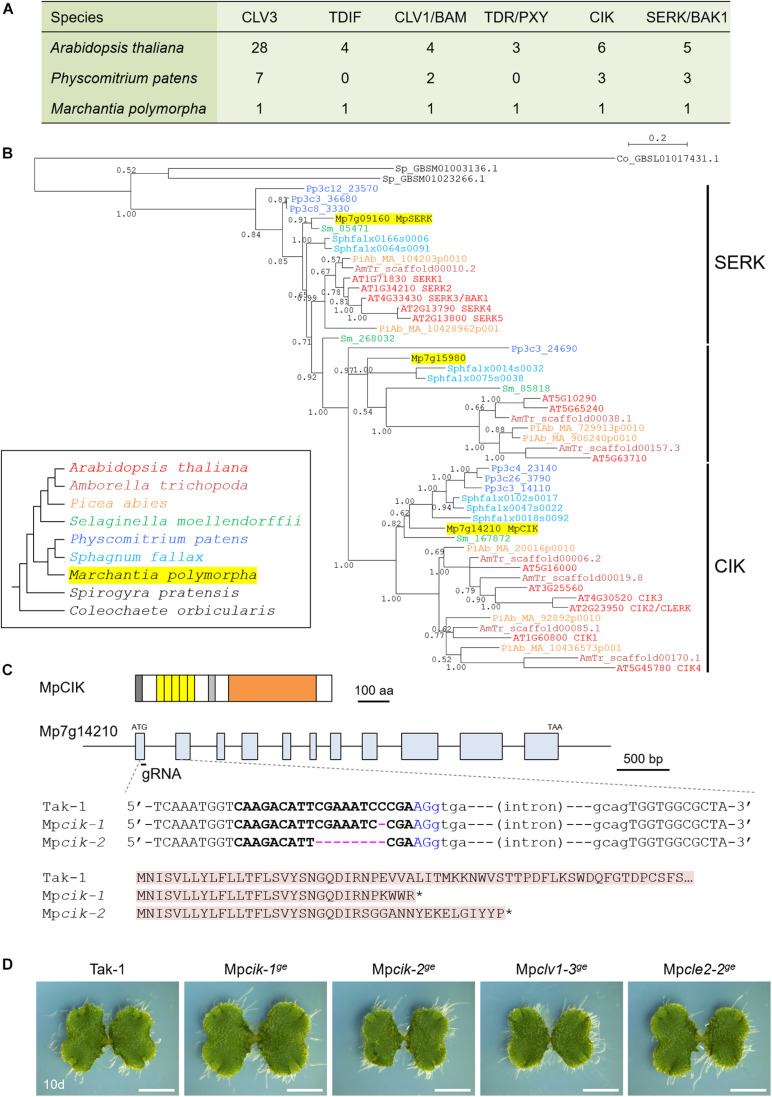
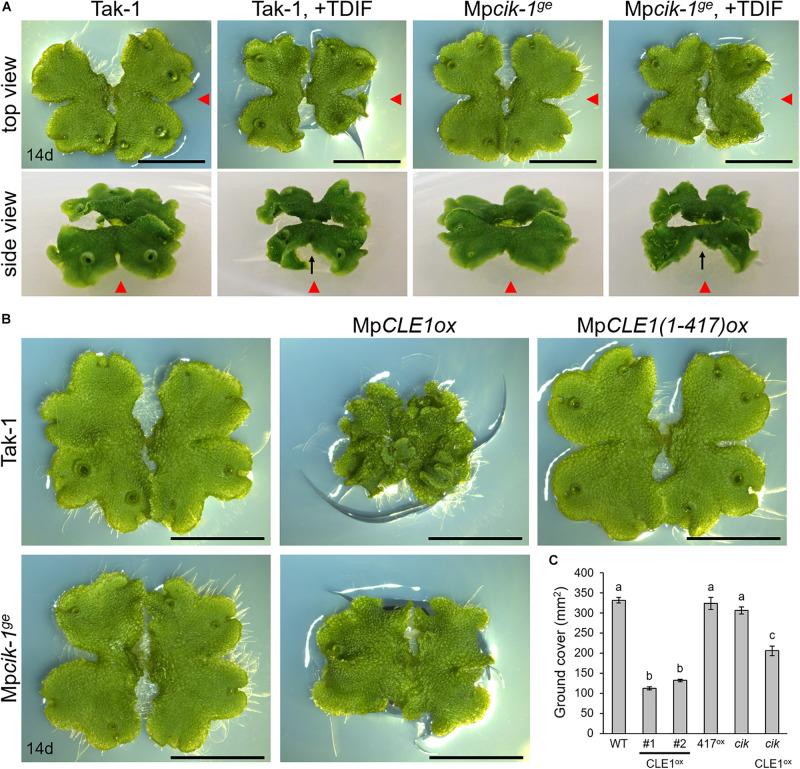
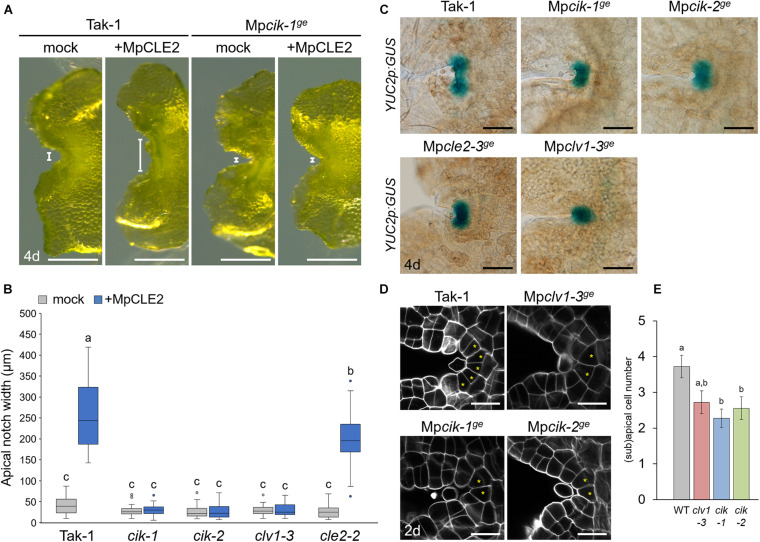
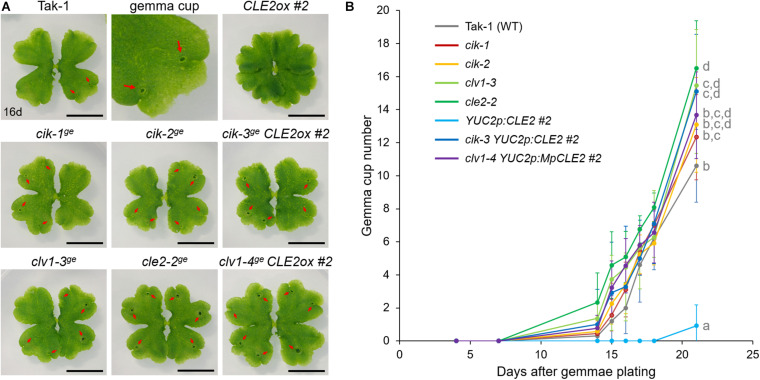
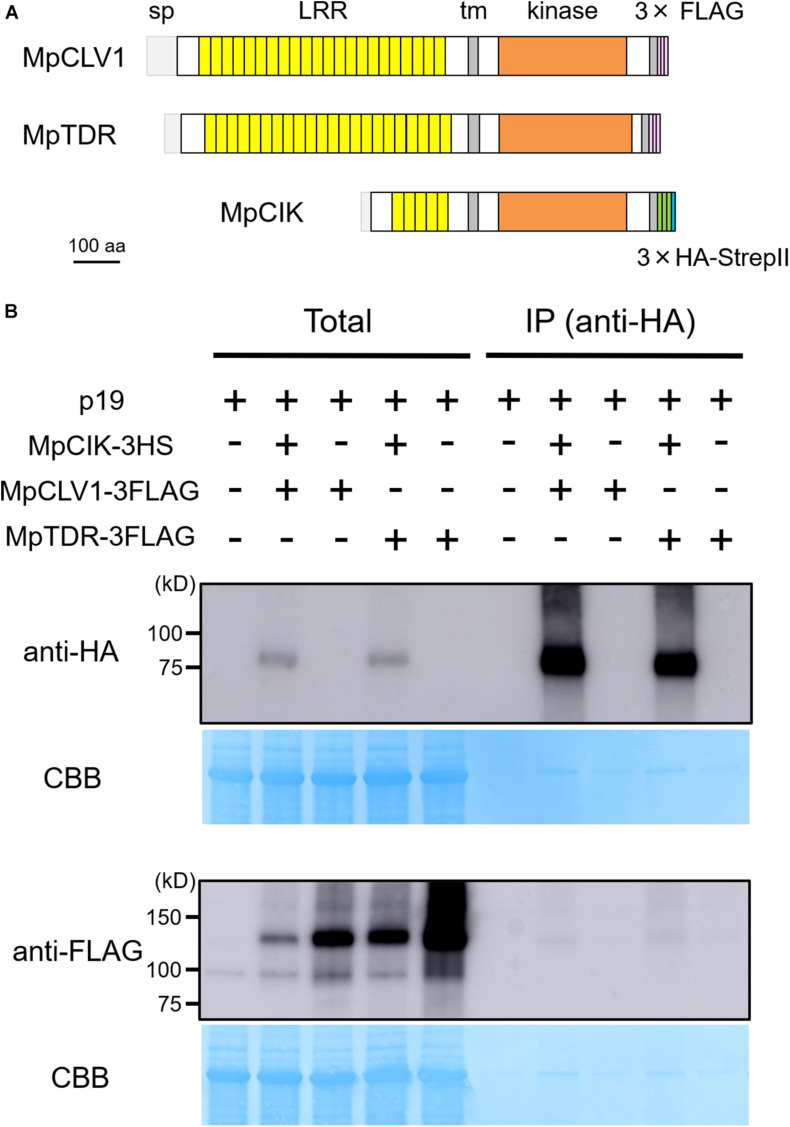
Growth and development of land plants are controlled by CLAVATA3/EMBRYO SURROUNDING REGION-related (CLE) family of peptide hormones. In contrast to the genetic diversity of CLE family in flowering plants, the liverwort possesses a minimal set of CLE, MpCLE1(TDIF homolog), and MpCLE2 (CLV3 homolog). MpCLE1 and MpCLE2 peptides exert distinct function at the apical meristem of gametophyte via specific receptors, MpTDIF RECEPTOR (MpTDR) and MpCLAVATA1 (MpCLV1), respectively, both belonging to the subclass XI of leucine-rich repeat receptor-like kinases (LRR-RLKs). Biochemical and genetic studies in Arabidopsis have shown that TDR/PXY family and CLV1/BAM family recognize the CLE peptide ligand in a heterodimeric complex with a member of subclass-II coreceptors. Here we show that three LRR-RLK genes of are classified into subclass II, representing three distinct subgroups evolutionarily conserved in land plants. To address the involvement of subclass-II coreceptors in CLE signaling, we performed molecular genetic analysis on one of them, Mp (Mp). Two knockout alleles for Mp formed narrow apical meristems marked by Mp marker, which were not expanded by MpCLE2 peptide treatment, phenocopying Mp. Loss of sensitivity to MpCLE2 peptide was also observed in gemma cup formation in both Mp and Mp. Biochemical analysis using a transient expression system revealed weak association between MpCIK and MpCLV1, as well as MpCIK and MpTDR. While MpCIK may also participate in MpCLE1 signaling, our data show that the conserved CLV3-CLV1-CIK module functions in , controlling meristem activity for development and organ formation for asexual reproduction.
陆地植物的生长和发育受CLAVATA3/胚珠周围区域相关(CLE)肽激素家族的控制。与开花植物中CLE家族的遗传多样性不同,地钱仅拥有一组最小的CLE,即MpCLE1(TDIF同源物)和MpCLE2(CLV3同源物)。MpCLE1和MpCLE2肽分别通过特定受体MpTDIF受体(MpTDR)和MpCLAVATA1(MpCLV1)在配子体的顶端分生组织发挥不同功能,这两种受体均属于富含亮氨酸重复序列受体样激酶(LRR-RLKs)的XI亚类。拟南芥中的生化和遗传学研究表明,TDR/PXY家族和CLV1/BAM家族在与II亚类共受体成员形成的异源二聚体复合物中识别CLE肽配体。在这里,我们表明三种LRR-RLK基因被分类为II亚类,代表了在陆地植物中进化保守的三个不同亚组。为了研究II亚类共受体在CLE信号传导中的作用,我们对其中一个基因Mp(Mp)进行了分子遗传学分析。Mp的两个敲除等位基因形成了以Mp标记为特征的狭窄顶端分生组织,用MpCLE2肽处理后未扩展,这与Mp的表型相似。在Mp和Mp的芽杯形成中也观察到对MpCLE2肽的敏感性丧失。使用瞬时表达系统的生化分析表明,MpCIK与MpCLV1以及MpCIK与MpTDR之间存在弱关联。虽然MpCIK也可能参与MpCLE1信号传导,但我们的数据表明,保守的CLV3-CLV1-CIK模块在地钱中发挥作用,控制分生组织活性以促进发育和无性繁殖的器官形成。