Christian Albrechts University, Department of Oral and Maxillofacial Surgery, University Hospital of Schleswig-Holstein, Campus Kiel, Arnold-Heller-Straße 3, 24105, Kiel, Germany.
Department of oral and Maxillofacial Surgery, School of Medicine, 2nd Affiliated Hospital of Zhejiang University, Hangzhou, Zhejiang, China.
Int J Implant Dent. 2021 Apr 30;7(1):45. doi: 10.1186/s40729-021-00322-1.
The aim of the study is to evaluate the accuracy of a new implant navigation system on two different digital workflows.
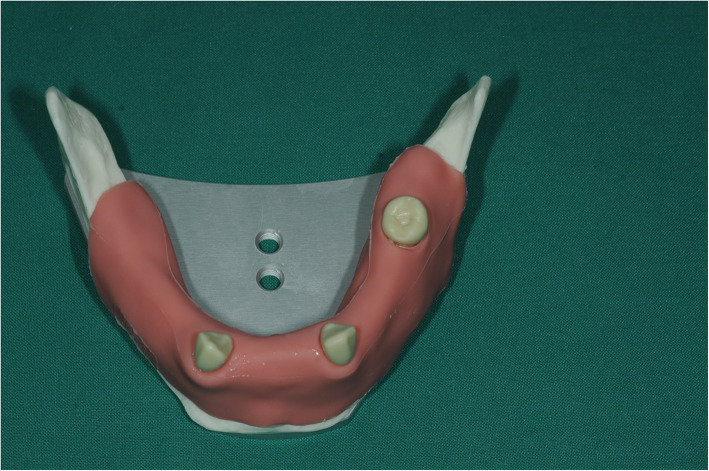
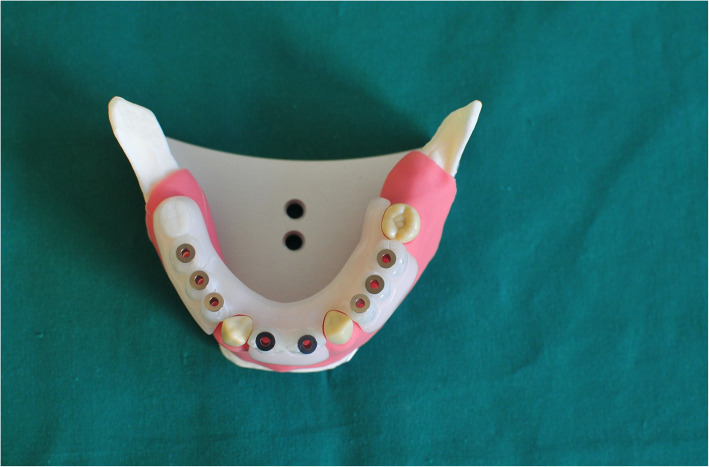
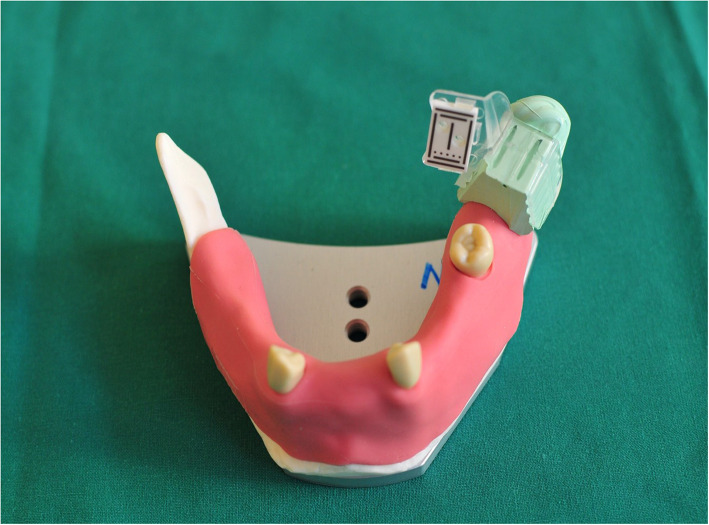
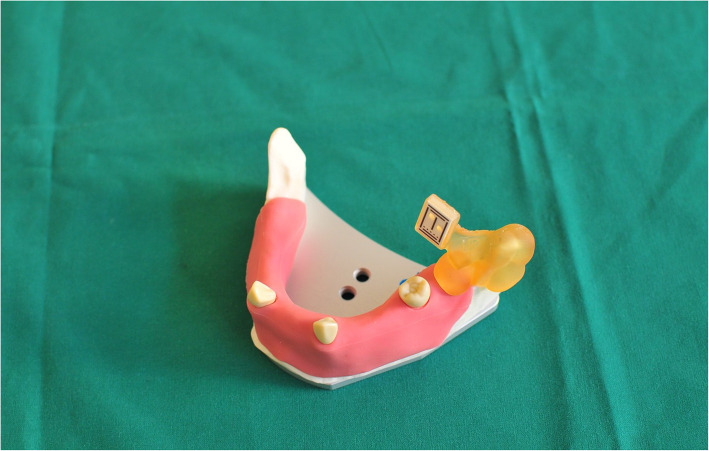
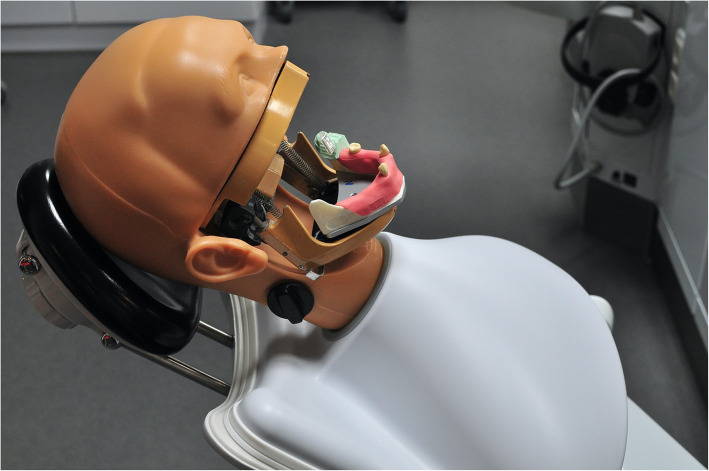
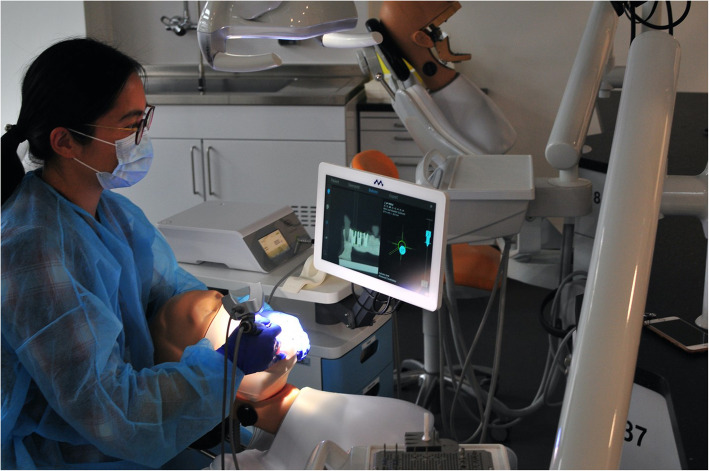
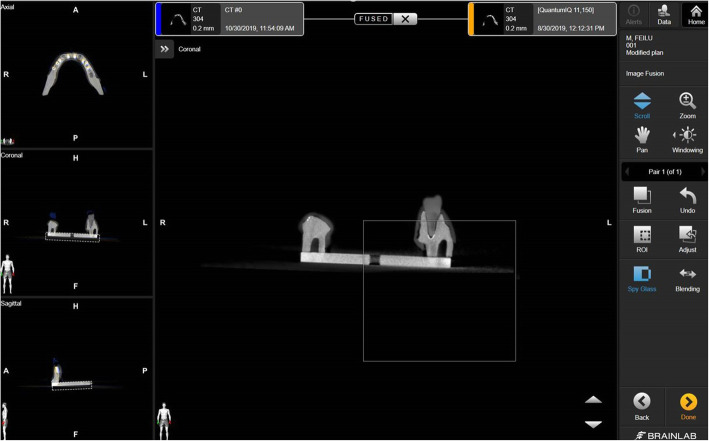
A total of 18 phantom jaws consisting of hard and non-warping plastic and resembling edentulous jaws were used to stimulate a clinical circumstance. A conventional pilot-drill guide was conducted by a technician, and a master model was set by using this laboratory-produced guide. After cone beam computed tomography (CBCT) and 3D scanning of the master models, two different digital workflows (marker tray in CBCT and 3D-printed tray) were performed based on the Digital Imaging Communication in Medicine files and standard tessellation language files. Eight Straumann implants (4.1 mm × 10 mm) were placed in each model, six models for each group, resulting in 144 implant placements in total. Postoperative CBCT were taken, and deviations at the entry point and apex as well as angular deviations were measured compared to the master model.
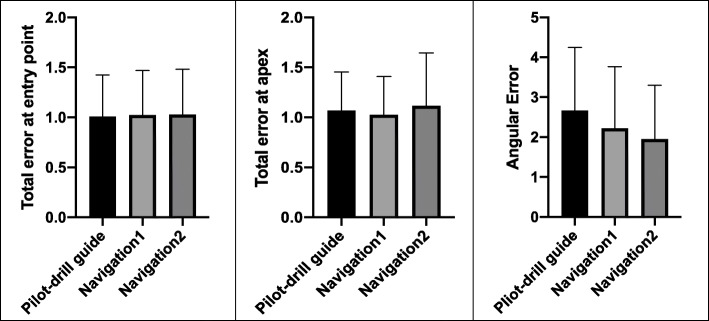
The mean total deviations at the implant entry point for MTC (marker tray in CBCT), 3dPT (3d-printed tray), and PDG (pilot-drill guide) were 1.024 ± 0.446 mm, 1.027 ± 0.455 mm, and 1.009 ± 0.415 mm, respectively, and the mean total deviations at the implant apex were 1.026 ± 0.383 mm, 1.116 ± 0.530 mm, and 1.068 ± 0.384 mm. The angular deviation for the MTC group was 2.22 ± 1.54°. The 3dPT group revealed an angular deviation of 1.95 ± 1.35°, whereas the PDG group showed a mean angular deviation of 2.67 ± 1.58°. Although there were no significant differences among the three groups (P > 0.05), the navigation groups showed lesser angular deviations compared to the pilot-drill-guide (PDG) group. Implants in the 3D-printed tray navigation group showed higher deviations at both entry point and apex.
The accuracy of the evaluated navigation system was similar with the accuracy of a pilot-drill guide. Accuracy of both preoperative workflows (marker tray in CBCT or 3D-printed tray) was reliable for clinical use.
本研究旨在评估一种新型种植体导航系统在两种不同数字化工作流程中的准确性。
共使用 18 个由硬而不易变形的塑料制成的模拟无牙颌的赝复体,以模拟临床情况。技工首先使用传统的导板钻制作引导模板,然后使用实验室制作的引导模板设置主模型。完成锥形束 CT(CBCT)和主模型的 3D 扫描后,根据数字成像通信在医学文件和标准 tessellation language 文件的基础上,分别进行两种不同的数字化工作流程(CBCT 中的标记托盘和 3D 打印托盘)。每个模型中植入 8 颗 Straumann 种植体(4.1mm×10mm),每组 6 个模型,总共植入 144 颗种植体。术后进行 CBCT 检查,测量种植体入口点和根尖的偏差以及角度偏差,并与主模型进行比较。
在种植体入口点处,MTC(CBCT 中的标记托盘)、3dPT(3D 打印托盘)和 PDG(导板钻)的总偏差平均值分别为 1.024±0.446mm、1.027±0.455mm 和 1.009±0.415mm,种植体根尖处的总偏差平均值分别为 1.026±0.383mm、1.116±0.530mm 和 1.068±0.384mm。MTC 组的角度偏差为 2.22±1.54°。3dPT 组的角度偏差为 1.95±1.35°,而 PDG 组的平均角度偏差为 2.67±1.58°。尽管三组之间无显著性差异(P>0.05),但导航组的角度偏差明显小于导板钻组(PDG 组)。3D 打印托盘导航组的种植体在入口点和根尖处的偏差均较高。
评估的导航系统的准确性与导板钻的准确性相似。两种术前工作流程(CBCT 中的标记托盘或 3D 打印托盘)的准确性均可用于临床。