CIC bioGUNE, Basque Research and Technology Alliance (BRTA), Bizkaia Technology Park, Building 800, 48160 Derio, Spain.
lkerbasque, Basque Foundation for Science, Maria Diaz de Haro 13, 48009 Bilbao, Spain.
Acc Chem Res. 2021 Jun 1;54(11):2552-2564. doi: 10.1021/acs.accounts.1c00021. Epub 2021 Apr 30.
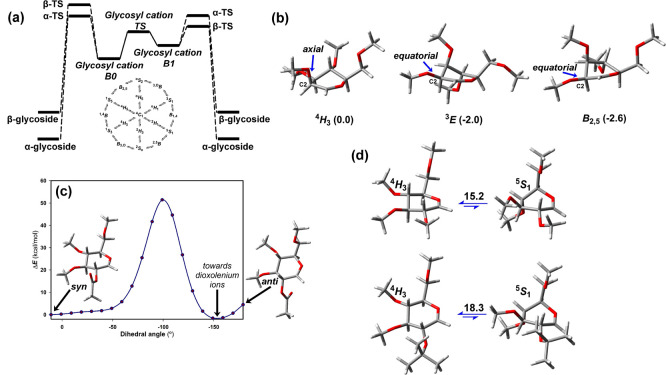
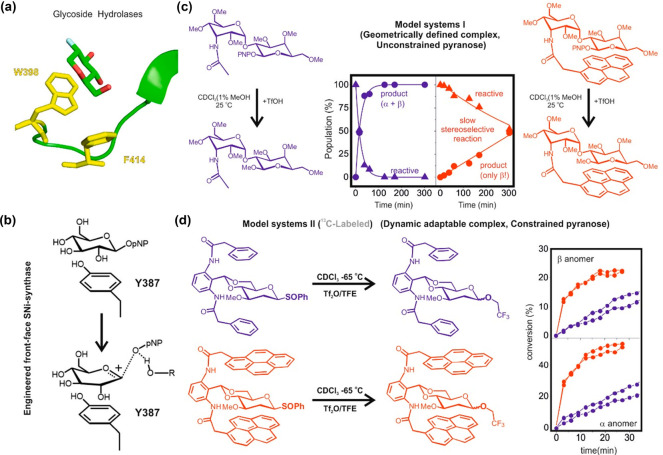
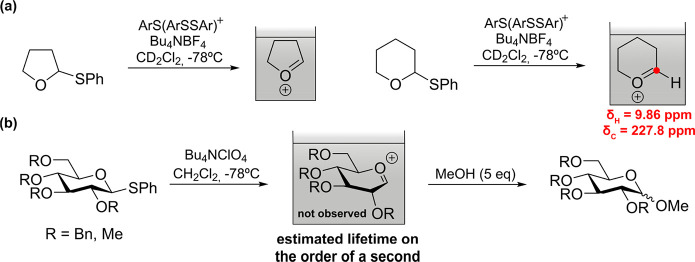
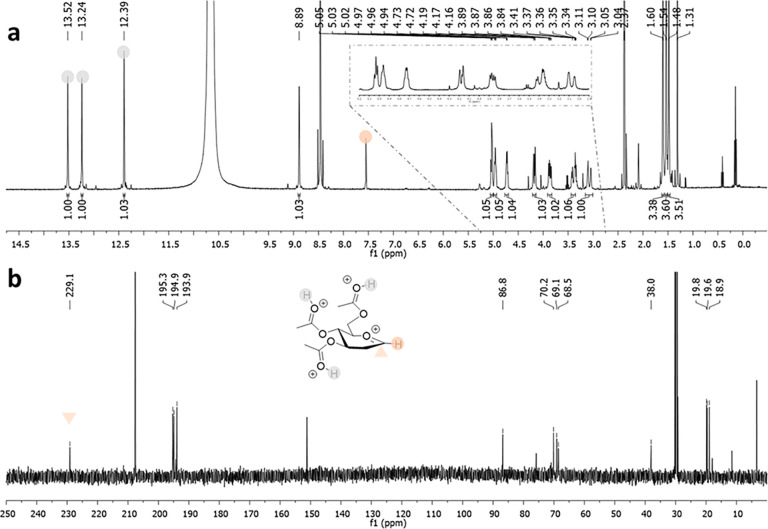
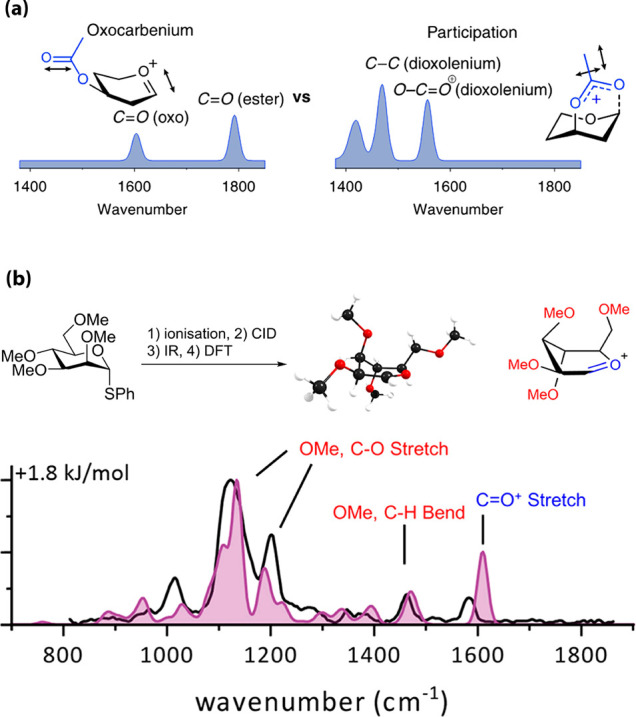
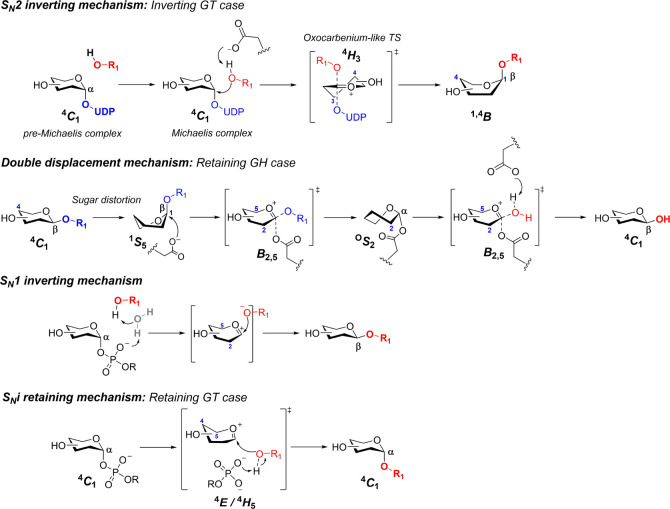
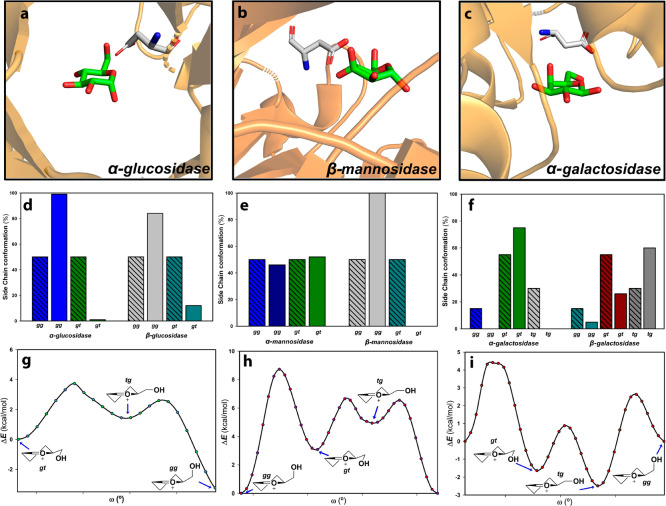
Carbohydrates (glycans, saccharides, and sugars) are essential molecules in all domains of life. Research on glycoscience spans from chemistry to biomedicine, including material science and biotechnology. Access to pure and well-defined complex glycans using synthetic methods depends on the success of the employed glycosylation reaction. In most cases, the mechanism of the glycosylation reaction is believed to involve the oxocarbenium ion. Understanding the structure, conformation, reactivity, and interactions of this glycosyl cation is essential to predict the outcome of the reaction. In this Account, building on our contributions on this topic, we discuss the theoretical and experimental approaches that have been employed to decipher the key features of glycosyl cations, from their structures to their interactions and reactivity.We also highlight that, from a chemical perspective, the glycosylation reaction can be described as a continuum, from unimolecular S1 with naked oxocarbenium cations as intermediates to bimolecular S2-type mechanisms, which involve the key role of counterions and donors. All these factors should be considered and are discussed herein. The importance of dissociative mechanisms (involving contact ion pairs, solvent-separated ion pairs, solvent-equilibrated ion pairs) with bimolecular features in most reactions is also highlighted.The role of theoretical calculations to predict the conformation, dynamics, and reactivity of the oxocarbenium ion is also discussed, highlighting the advances in this field that now allow access to the conformational preferences of a variety of oxocarbenium ions and their reactivities under S1-like conditions.Specifically, the ground-breaking use of superacids to generate these cations is emphasized, since it has permitted characterization of the structure and conformation of a variety of glycosyl oxocarbenium ions in superacid solution by NMR spectroscopy.We also pay special attention to the reactivity of these glycosyl ions, which depends on the conditions, including the counterions, the possible intra- or intermolecular participation of functional groups that may stabilize the cation and the chemical nature of the acceptor, either weak or strong nucleophile. We discuss recent investigations from different experimental perspectives, which identified the involved ionic intermediates, estimating their lifetimes and reactivities and studying their interactions with other molecules. In this context, we also emphasize the relationship between the chemical methods that can be employed to modulate the sensitivity of glycosyl cations and the way in which glycosyl modifying enzymes (glycosyl hydrolases and transferases) build and cleave glycosidic linkages in nature. This comparison provides inspiration on the use of molecules that regulate the stability and reactivity of glycosyl cations.
碳水化合物(糖,单糖和聚糖)是所有生命领域的基本分子。糖科学的研究涵盖了从化学到生物医学的各个领域,包括材料科学和生物技术。使用合成方法获得纯且定义明确的复杂聚糖取决于所采用的糖苷化反应的成功。在大多数情况下,糖苷化反应的机制被认为涉及氧鎓离子。理解这种糖基阳离子的结构、构象、反应性和相互作用对于预测反应结果至关重要。在本专题介绍中,基于我们在这一主题上的贡献,我们讨论了用于破译糖基阳离子关键特征的理论和实验方法,从它们的结构到它们的相互作用和反应性。我们还强调,从化学角度来看,糖苷化反应可以被描述为一个连续体,从涉及裸露氧鎓阳离子中间体的单分子 S1 到涉及反离子和供体关键作用的双分子 S2 型机制。所有这些因素都应该被考虑在内,并在本文中进行了讨论。在大多数反应中,涉及离解机制(涉及接触离子对、溶剂分离离子对、溶剂平衡离子对)的双分子特征的重要性也得到了强调。理论计算在预测氧鎓离子的构象、动力学和反应性方面的作用也进行了讨论,强调了这一领域的进展,现在可以获得各种氧鎓离子的构象偏好及其在 S1 样条件下的反应性。具体来说,强调了使用超酸来生成这些阳离子的开创性作用,因为它允许通过 NMR 光谱在超酸溶液中对各种糖基氧鎓离子的结构和构象进行表征。我们还特别关注这些糖基离子的反应性,这取决于条件,包括反离子、可能参与稳定阳离子的官能团的内或分子间参与以及接受体的化学性质,无论是弱亲核试剂还是强亲核试剂。我们从不同的实验角度讨论了最近的研究,这些研究确定了涉及的离子中间体,估计了它们的寿命和反应性,并研究了它们与其他分子的相互作用。在这方面,我们还强调了可以用来调节糖基阳离子敏感性的化学方法与糖苷修饰酶(糖苷水解酶和转移酶)在自然界中构建和切割糖苷键的方式之间的关系。这种比较为使用调节糖基阳离子稳定性和反应性的分子提供了启示。