Department of Medical Oncology, Sun Yat-sen University Cancer Center, Guangzhou, 510060, Guangdong, People's Republic of China.
Department of Radiotherapy, Sun Yat-sen University Cancer Center, Guangzhou, 510060, Guangdong, People's Republic of China.
J Exp Clin Cancer Res. 2021 Apr 30;40(1):149. doi: 10.1186/s13046-021-01932-8.
Radiotherapy is a conventional and effective local treatment for breast cancer. However, residual or recurrent tumors appears frequently because of radioresistance. Novel predictive marker and the potential therapeutic targets of breast cancer radioresistance needs to be investigated.
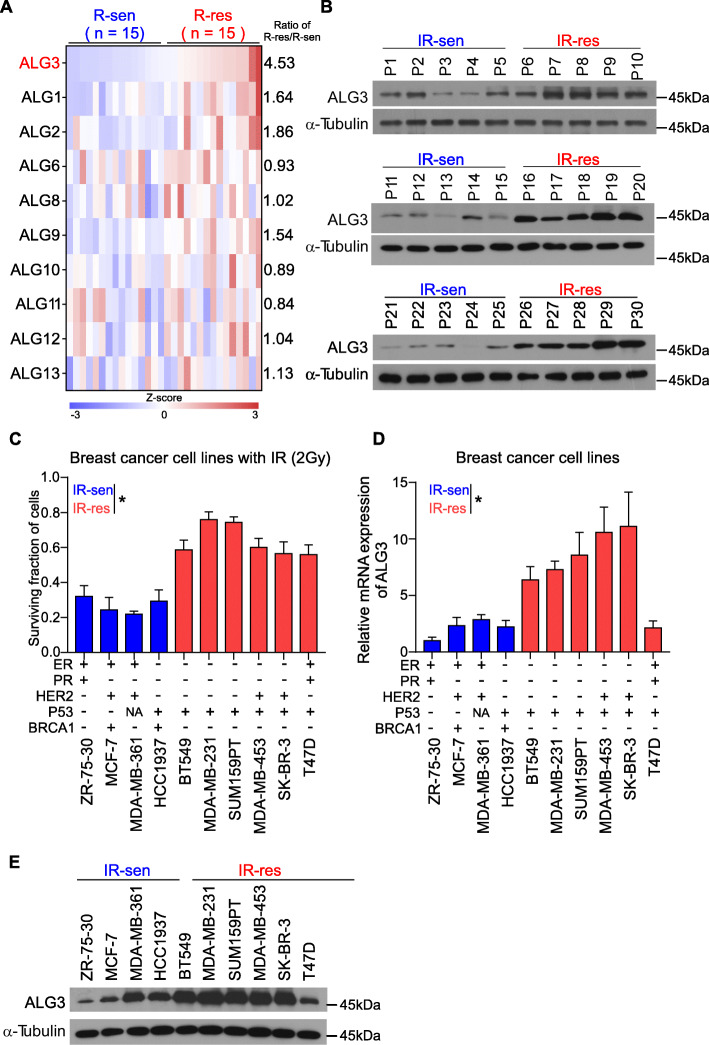
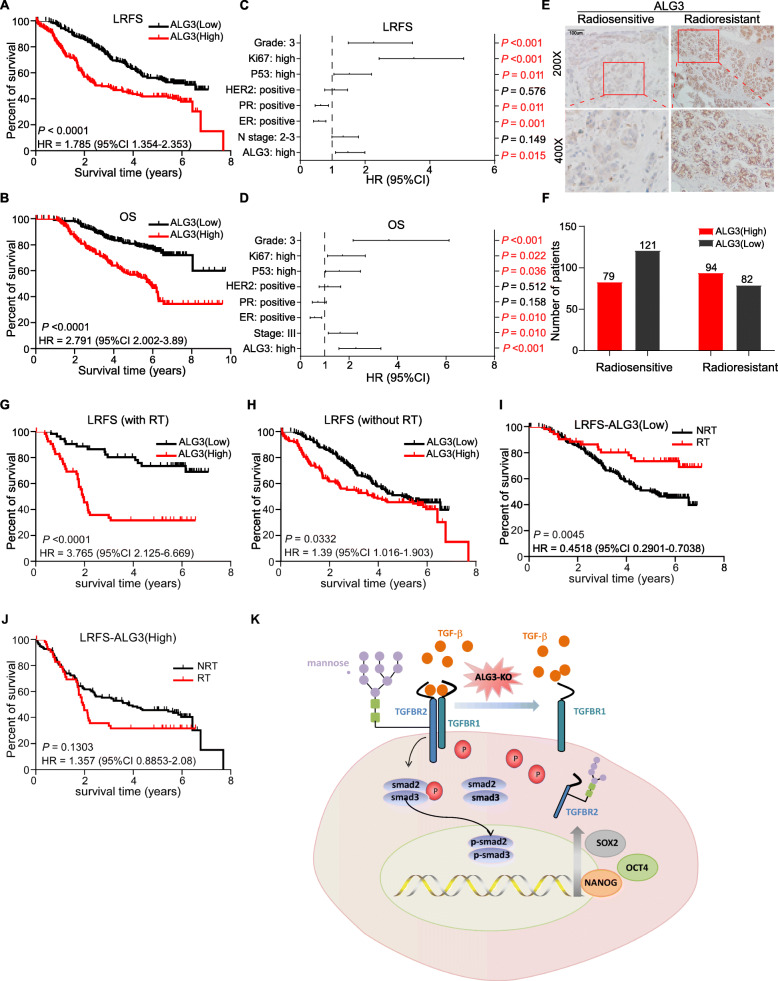
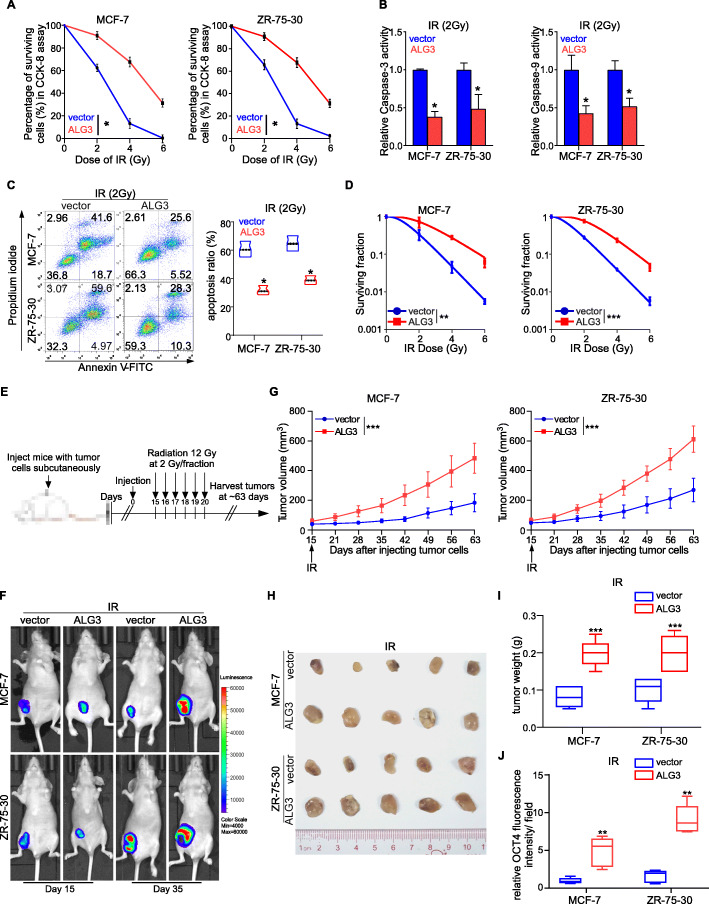
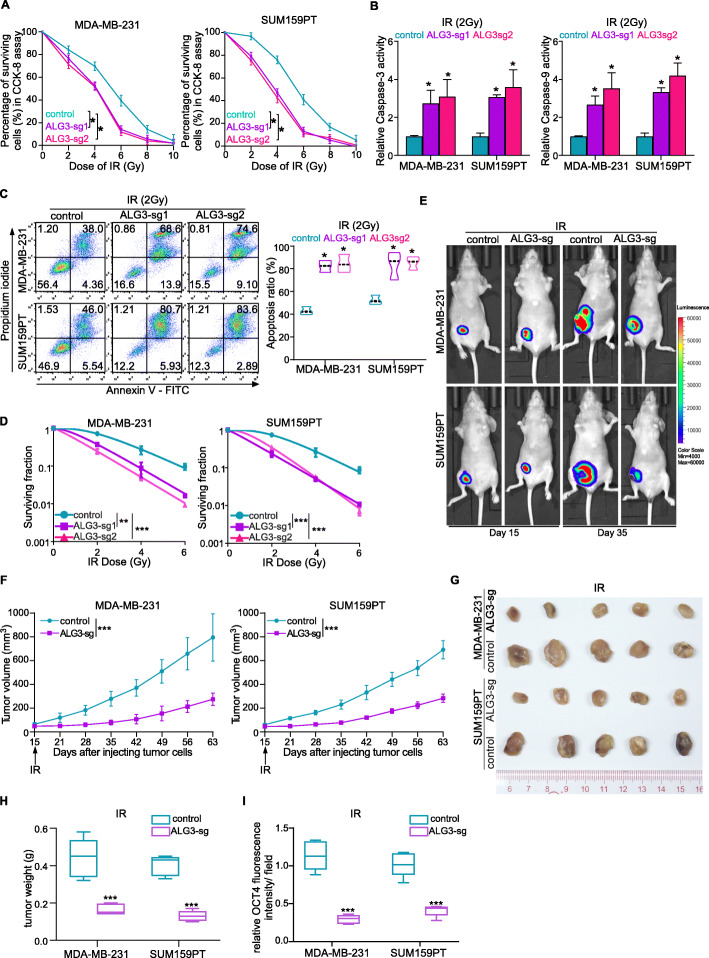
In this study, we screened all 10 asparagine-linked glycosylation (ALG) members in breast cancer patients' samples by RT-PCR. Cell viability after irradiation (IR) was determined by CCK-8 assay and flow cytometry. The radiosensitivity of cell lines with different ALG3 expression was determined with the colony formation assay by fitting the multi-target single hit model to the surviving fractions. Cancer stem-like traits were assessed by RT-PCR, Western blot, and flow cytometry. The mechanisms of ALG3 influencing radiosensitivity was detected by Western blot and immunoprecipitation. And the effect of ALG3 on tumor growth after IR was verified in an orthotopic xenograft tumor models. The association of ALG3 with prognosis of breast cancer patients was confirmed by immunohistochemistry.
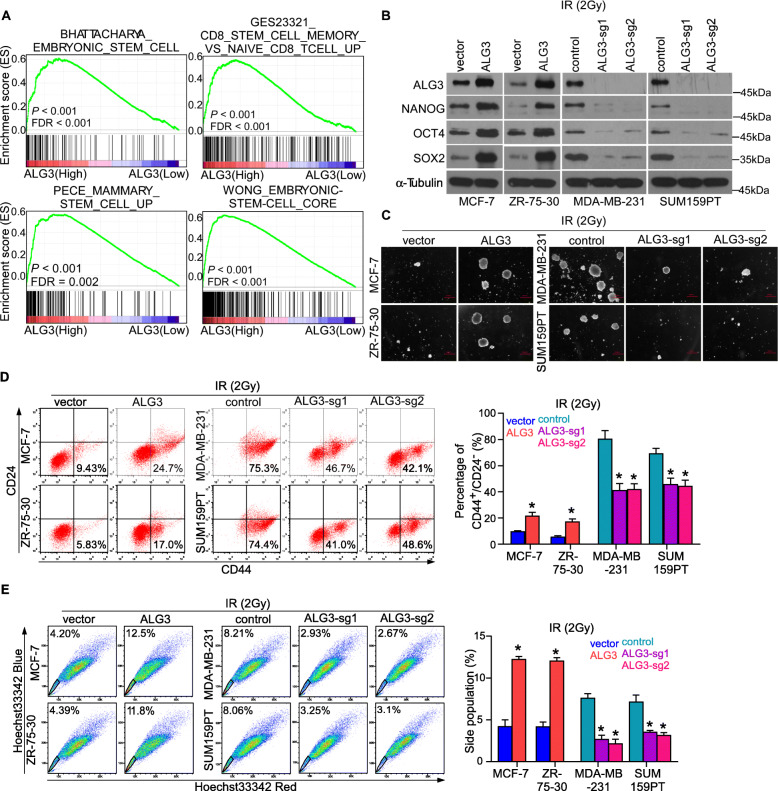
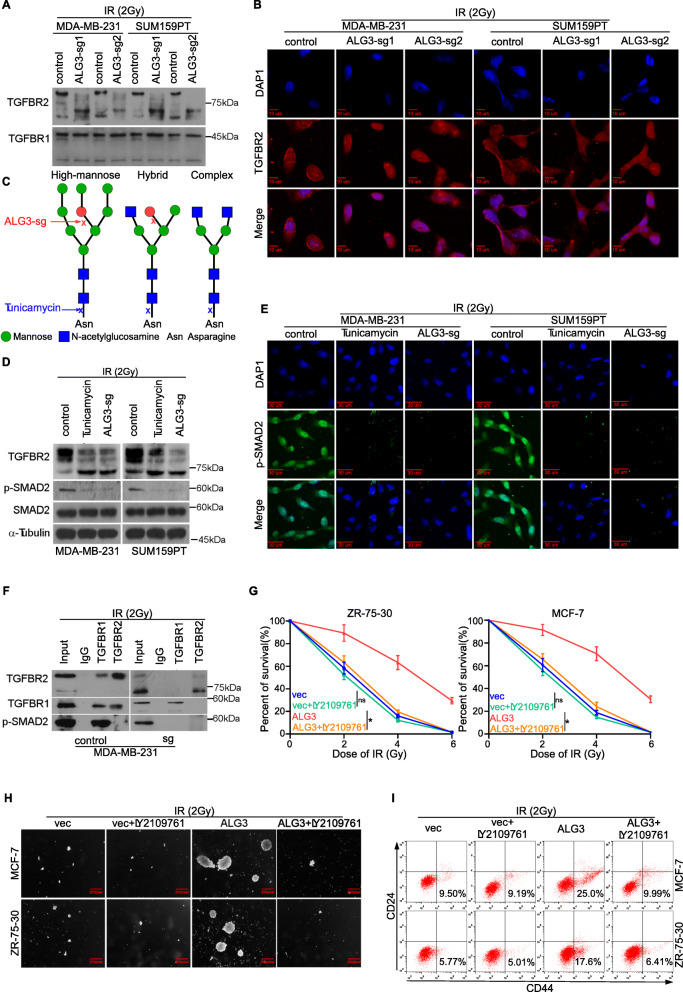
ALG3 was the most significantly overexpressing gene among ALG family in radioresistant breast cancer tissue. Overexpression of ALG3 predicted poor clinicopathological characteristics and overall survival (OS), and early local recurrence-free survival (LRFS) in breast cancer patients. Upregulating ALG3 enhanced radioresistance and cancer stemness in vitro and in vivo. Conversely, silencing ALG3 increased the radiosensitivity and repressed cancer stemness in vitro, and more importantly inhibition of ALG3 effectively increased the radiosensitivity of breast cancer cells in vivo. Mechanistically, our results further revealed ALG3 promoted radioresistance and cancer stemness by inducing glycosylation of TGF-β receptor II (TGFBR2). Importantly, both attenuation of glycosylation using tunicamycin and inhibition of TGFBR2 using LY2109761 differentially abrogated the stimulatory effect of ALG3 overexpression on cancer stemness and radioresistance. Finally, our findings showed that radiation played an important role in preventing early recurrence in breast cancer patients with low ALG3 levels, but it had limited efficacy in ALG3-overexpressing breast cancer patients.
Our results suggest that ALG3 may serve as a potential radiosensitive marker, and an effective target to decrease radioresistance by regulating glycosylation of TGFBR2 in breast cancer. For patients with low ALG3 levels, radiation remains an effective mainstay therapy to prevent early recurrence in breast cancer.
放射治疗是乳腺癌的一种常规且有效的局部治疗方法。然而,由于放射抵抗,残留或复发性肿瘤经常出现。需要研究新的预测标志物和乳腺癌放射抵抗的潜在治疗靶点。
在这项研究中,我们通过 RT-PCR 筛选了乳腺癌患者样本中的所有 10 个天冬酰胺连接糖基化(ALG)成员。通过 CCK-8 测定和流式细胞术测定照射(IR)后的细胞活力。通过拟合多靶单点模型到存活分数来确定具有不同 ALG3 表达的细胞系的放射敏感性。通过 RT-PCR、Western blot 和流式细胞术评估癌症干细胞样特征。通过 Western blot 和免疫沉淀检测 ALG3 影响放射敏感性的机制。并在原位异种移植肿瘤模型中验证了 ALG3 对 IR 后肿瘤生长的影响。通过免疫组化证实了 ALG3 与乳腺癌患者预后的关系。
在放射抵抗的乳腺癌组织中,ALG3 是 ALG 家族中表达最显著上调的基因。ALG3 的过表达预示着乳腺癌患者的临床病理特征不良和总生存期(OS)以及早期局部无复发生存期(LRFS)差。体外和体内上调 ALG3 增强了放射抵抗性和癌症干性。相反,沉默 ALG3 增加了体外的放射敏感性并抑制了癌症干性,更重要的是,ALG3 的抑制有效地增加了体内乳腺癌细胞的放射敏感性。从机制上讲,我们的结果进一步表明,ALG3 通过诱导 TGF-β 受体 II(TGFBR2)糖基化促进放射抵抗和癌症干性。重要的是,使用衣霉素减弱糖基化和使用 LY2109761 抑制 TGFBR2 可不同程度地阻断 ALG3 过表达对癌症干性和放射抵抗的刺激作用。最后,我们的研究结果表明,在 ALG3 水平较低的乳腺癌患者中,放射治疗在预防早期复发方面起着重要作用,但在 ALG3 过表达的乳腺癌患者中,放射治疗的疗效有限。
我们的研究结果表明,ALG3 可能是一种潜在的放射敏感标志物,并且通过调节 TGFBR2 的糖基化,成为降低乳腺癌放射抵抗的有效靶点。对于 ALG3 水平较低的患者,放射治疗仍然是预防乳腺癌早期复发的有效主要治疗方法。